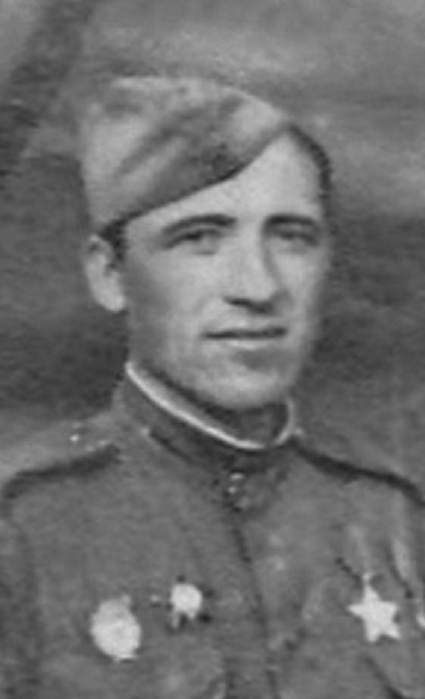
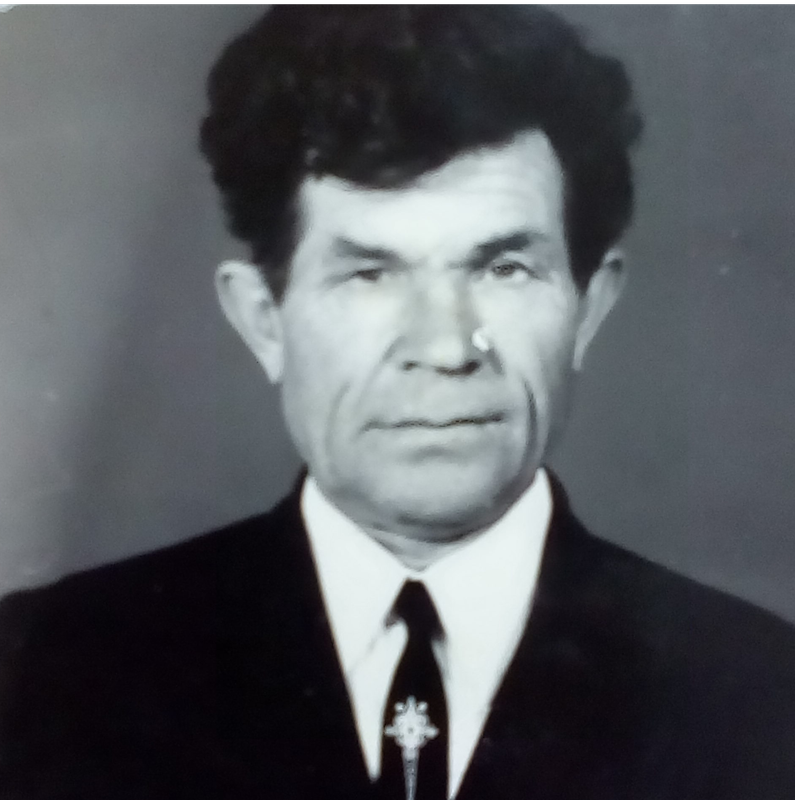
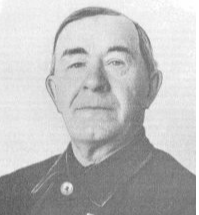
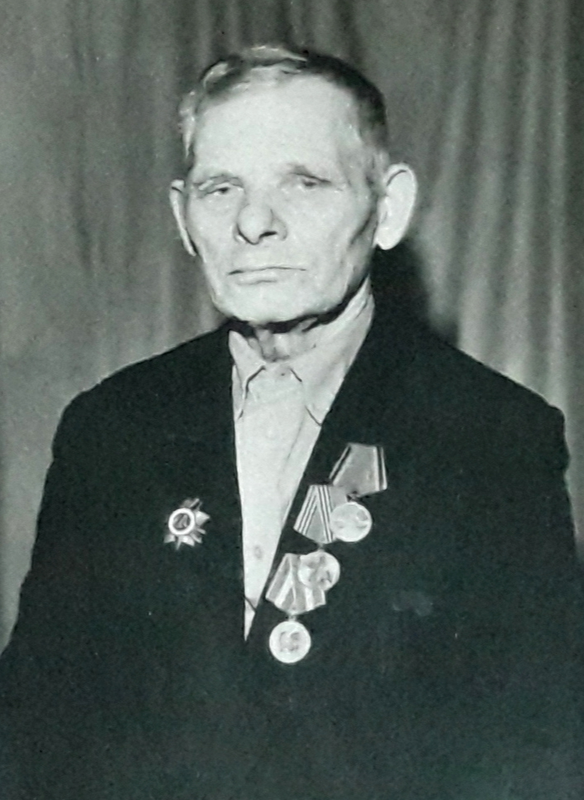
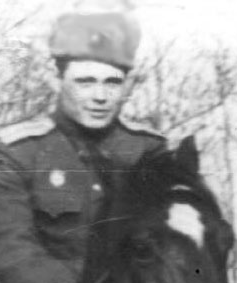
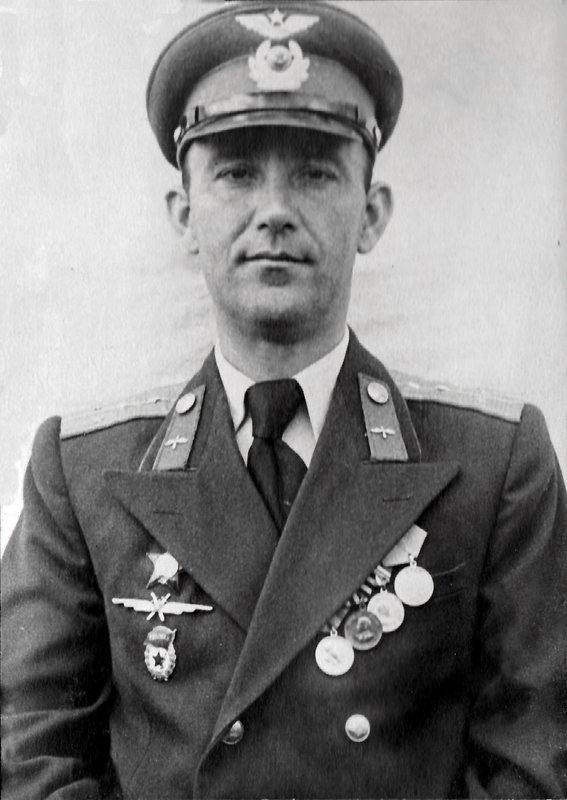
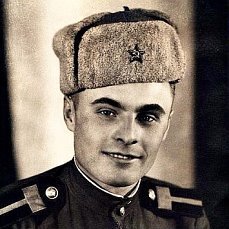
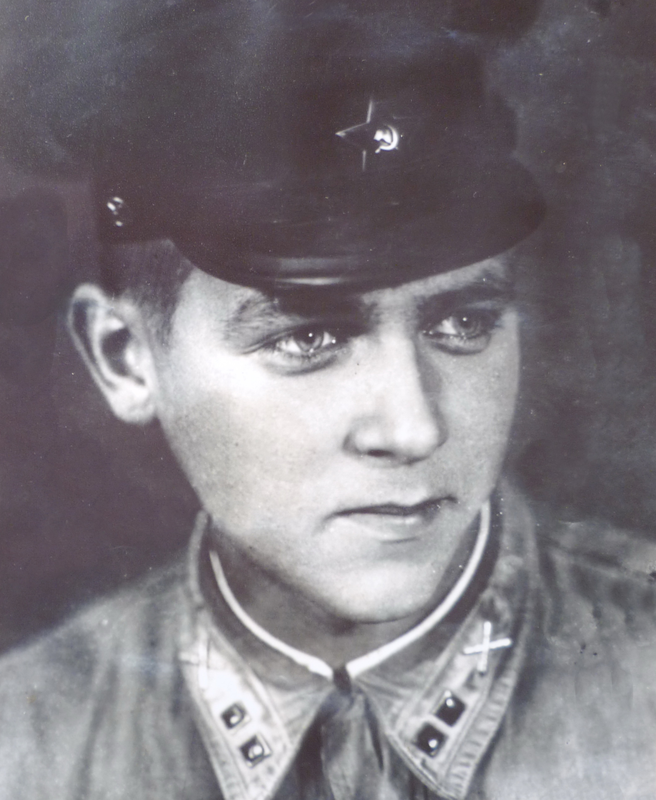
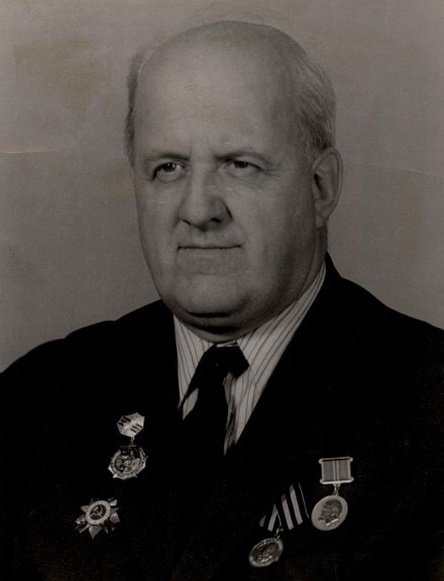
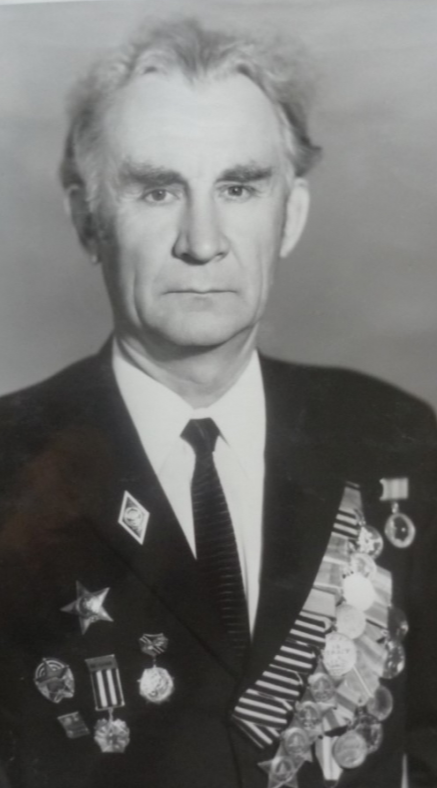
Zyatkov Alexey Vasilievich
I, Alexey Vasilyevich Zyatkov, was drafted into the Soviet army in October 1940 and ended up serving in the city of Minusinsk, Krasnoyarsk Territory. After completing the course of a young soldier, he was sent to a regimental school. The school taught what a person is capable of and his capabilities, everyone had to have twice the strength of a soldier. War was declared at the school, the cadets were awarded titles according to the knowledge gained at the school, and were distributed in parts. I was awarded the title of deputy political commander of a rifle company and given the green light to the front. Before reaching Orsha, the railway line was bombed, and we had to walk day and night to the front line. In one of the morning dawns, reconnaissance reported that the Germans were ahead. The command was given to the first battalion, without having breakfast, to defeat the German landing, and then to have breakfast. Half an hour later, the second battalion was raised, and then the third. It was not a landing, but regular units. As a political officer, I knew the situation better than the rank and file. There were no neighbors on the left or on the right. The regiment entered the battle. All our attacks were repulsed. This is how the war began for me. In this battle, I was wounded and went to the hospital. After my recovery, I was sent to the sapper courses, after the completion of the short-term courses I was assigned to units. In March 1942, when the First Panzer Army was organized, I, as a junior commander, was sent to the First Panzer Army under the command of General Katukov. In a hurry, I was appointed junior commander in the 19th mech. a brigade, a communications platoon. On the shoulders a coil of wire, a telephone set, a gas mask and a carbine were then replaced with an automatic machine. Communication is the nerve of the army. Without communication, the army is incapable of combat. At the beginning of the war, the main communication was wired, there was little radio, but the commanders were afraid of them: so that the Germans would not track them. The tanks stopped, the infantry lay down, the connection was broken, and now the signalman, where by dashes, where crawling with a full load, is looking for a breakthrough, connects the wires, without disconnecting from the line again a gust. Around the pitch hell, shells, mines burst, bullets whistle the infantry dig in, and the signalman, crawling on his stomach, eliminates the breakthroughs. The first battles began on the Kalinin Front. Our brigade rushed first to break through, then to plug the gaps made by the Germans. We were not kept in one place for a long time. We were in motion all the time. After completing the task, they are transferred to another area. At first they tried to keep us thrown over at night, and when our planes began to appear, threatening areas were thrown over during the day. Our First Panzer took part on all fronts, from the Kalinin Front and southward to the Carpathians. On the Kalinin Front, Bogoroditskoye, Kholm, Ostashkovo were liberated. From there they were transferred to Kursk, Oboyan. I saw a tank battle near Prokhorovka. It is difficult for the human mind to imagine what the battle of tanks was. Burnt, turned upside down by caterpillars, torn apart from the inside. They are standing vertically, leaning against each other, and around the burned tankers. In two months we were transferred to Kursk. The troops trained to repel the tank armada of the Germans, and we won. Our unit was in Ukraine. Bakhmach, Chertkov, Kolomys were freed. On the central front, we were thrown to a breakthrough, and we occupied the fortifications prepared by the Germans - they had to repel our attacks without using the fortifications erected by them. Then our First Tank Army was sent to encircle Warsaw, for which I was awarded the medal "For the Liberation of Warsaw". How many cases have been - you see that death flies at you. I especially remember the case - it was in the Kursk region. I was returning from headquarters to my unit. The steppe was bare, and suddenly I saw: a huge pit, several kilometers away, overgrown with trees below, and there was a mass of carts, cars, people, and suddenly I heard the hum of planes. I looked into the sky, and there were a dozen fascist planes. I lay down under the edge of the ravine, with me two more fighters. Panic began in the pit. The planes went to bomb this yar. I jumped up and ran into the steppe towards the planes. He ran until the bombs whistled. Then I fell. A bomb exploded fifty to sixty meters ahead. I was thrown up, clods of earth fell, and I became deaf, although I covered my ears. When the planes took off, I went to the yar. Where I and two fighters lay, the edge of the yar was mowed, the bushes that grew along the edge lay far below, and in the yar there was something terrible: people, horses were shouting, cars were burning. Everything was black. After a while, I went blind. They didn't send me anywhere. I was at the unit. After three or four days, vision was restored. Our unit fought for Neustadt, Küstrin, Berlin. The storming of Berlin was terrible. Not only the Germans, but also us, the Russians, were given huge searchlights. An order was given to remove the blackout from the headlights of cars and tanks. And suddenly everything lit up, rumbled, and the team was - forward! It was hell, the Germans were still responding with artillery. But everything moved forward. Awards For the capture of Berlin was awarded the medal "For the capture of Berlin". For bravery, perseverance and courage in the fight against the German invaders he was awarded: in 1942 Medal "For Courage" No. 284416.In 1943 Medal "For Courage" 610882 In 1944 Medal "For Courage" No. 995448 Medal "For the Liberation of Warsaw". For the capture of Berlin Order of the Red Star No. 1118046. Order of the Red Star. In 1971, he was awarded the Order of Lenin for his long and impeccable work.