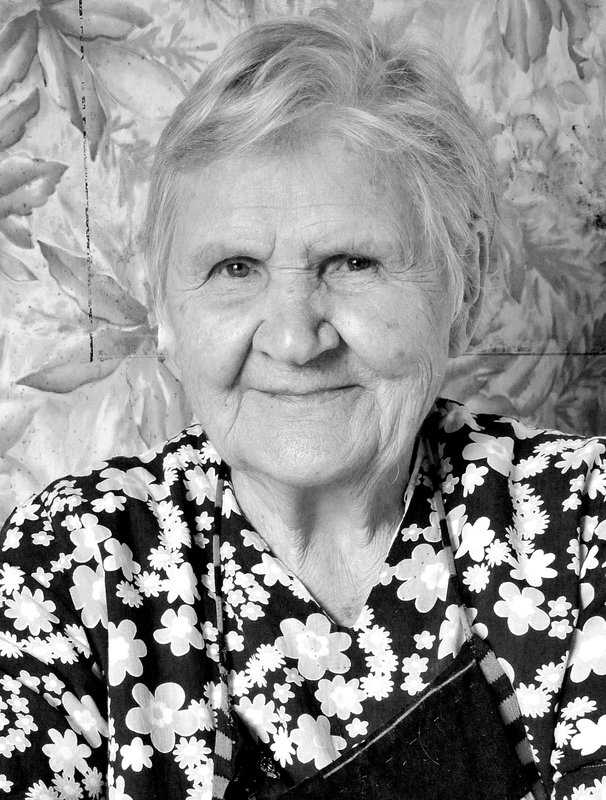
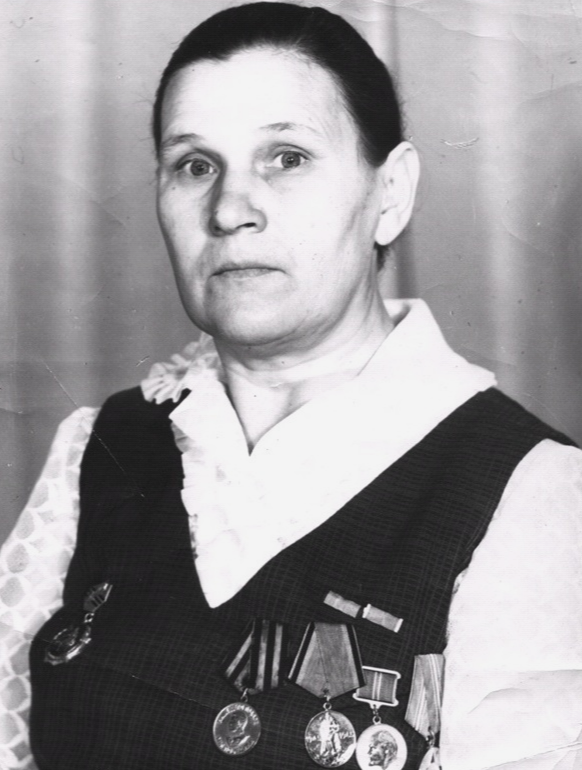
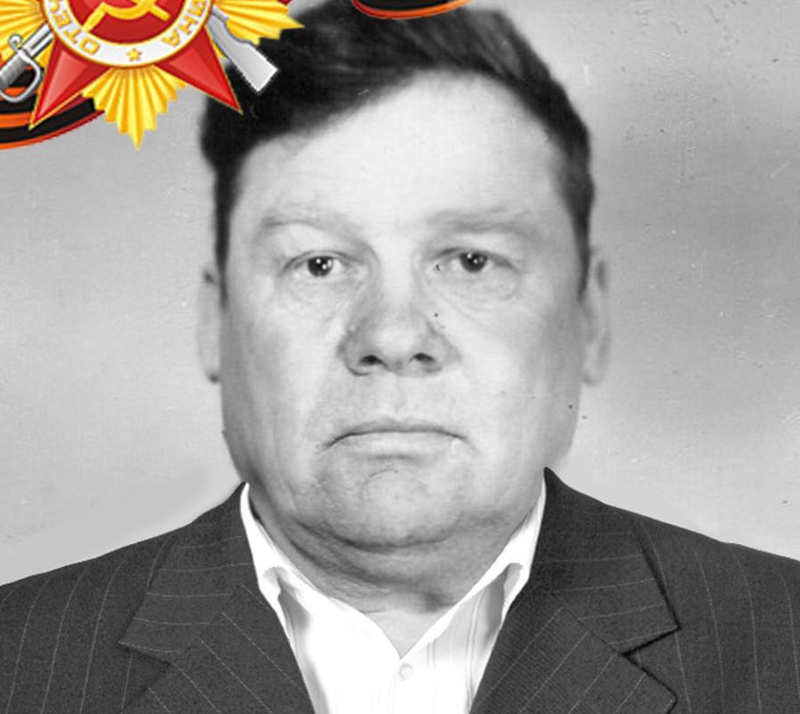


Krivosheev Sergey Lukich
Rank: Lieutenant. Military Branch: Land Forces, Air Force (except Naval Aviation), Coastal Service, NKVD Troops, Border Guard Unit: 241st Rifle Vinnytsia Orders of Bogdan Khmelnitsky and the Red Star Division № 213. So, behind Khurmuli in the once Komsomolsk district of the Khabarovsk Territory, they once called the site where the special settlers lived, who worked in the first post-war years at logging. They were expelled from all parts of Mother Russia under the article for parasitism (there was one in the old Criminal Code), and as sympathizers of Bandera they were assigned to expulsions. The families built their own houses. At a distance of two hundred and thirteen kilometers there was a bakery and a public bath in the village, the command house, where people went every day to celebrate. And then they took an ax in their hands and went into the taiga to cut wood. This kilometer was lost between the hills, where the only road leading to was the one paved by Japanese prisoners of war in 1945. To the next village of the DSZ, in a straight line, on the road, five kilometers, no more. I - a seventh grader, my father and his colleague Lukich (that was the home name of Sergey Lukich Krivosheev), came on an old motorbike "Ural" to this decay to hunt. It was early autumn. Thin spider webs from the willow go down to the water of the stream, creating lace, framed by drops of early dew. After we have chopped dead wood, we drag it to the fire. She scooped water into the pot at the fontanelle, raised her head, and was stunned. Opposite, behind a cheerfully splashing spring, a hazel grouse sits on a branch of an old cedar tree. The feathers are puffed up, the head is small, and it speaks mischievously in its bird language. It looks like a young, intrepid male. Lukich had an ax in his hand at that moment. Before I knew it, he swung it almost imperceptibly towards the feathered bird. The weapon did not reach its target, it stood with its shaft "on the butt of the gun" near the tree behind which the bird shot itself without flying away. We came to a standstill. After a while the grouse looked out timidly behind the trunk, turned its head in different directions, as if it was looking around, saying, what was that? And it must have happened, at that moment the ax gently lowered the wooden butt on the bird's head. Bird fell around. In wading boots, Lukich quickly rushed to a tree and went to the fire, happily shaking ptarmigan. We just gasped. Water gurgles in taganka and the sweet brew of a freshly disemboweled bird stinks. I had to peel the potatoes and put them in the brew. During a break, there is a leisurely conversation about the work, about the team of the forest office where the men worked, about the premiums that the 'authorities' slaughtered". After the first glass of broth, which gave off a bitter smoke of pine resin, they began to talk "for life". At that time I did not know much about the fact that Sergey Lukich Krivosheev had fought on the fronts of the Great Patriotic War, had military awards, had passed through the fire trails as a corporal and had reached the rank of captain at the beginning of the Victory. In the cradle of the Urals, the recipient sings his songs after receiving the Mayak radio station and relaxes into a heart-to-heart conversation. But the damn mosquitoes will not let me sit still, and I hide from them under a tent roof where an old radio is purring. Suddenly Lukich became silent, turned his head towards the motorbike and exclaimed: "Here is my favorite melody, we heard it at the front, in moments of silence, with the whole train ... Waltz - "Boston" ... only years later I found out where it all began. And then I just liked the smooth melody. There was an old gramophone in the company, in rare moments of silence it was switched on, the nurses came to us to dance in the clearing. How long has it been"... Many years later I became interested in the genesis of this waltz and tried to understand why ordinary Soviet soldiers of wartime had a preference for Western music. There was also the Viennese Waltz and others. The explanation of this phenomenon haunted me. And here is a piece from the history of the waltz, you can read about it in Wikipedia. It is often referred to as Boston Waltz or the Candlelight Waltz. It was born in Boston in the early 20th century and quickly gained popularity because of its simplicity and elegance. For this reason, it is often chosen by wedding couples for their newlywed show, which amazes and awe friends and parents. Perhaps this beautiful, exciting motif led the fighter into another, peaceful life, leaving his relatives and friends behind in his little home? Who knows? But "Boston" was extremely popular in the army. - Sergey Lukich, tell us about the war, I asked him. Sergey Lukich slyly smiling, sipping from a bowl of manure, answers me: - And what about remembering and telling it? Many of our brothers died in the unknown fields, and they are still lying in gray hills, and some of the graves are probably already overgrown with grass. What did you get your medal for? - I asked my childishly naïve question: "I was a sergeant then," he began. - Commanded a division of the 93rd Tank Brigade's motorized rifle-machine gun battalion Tank Brigade. That was the turning point of the Great Patriotic War of 1943. The direction - Kharkov. We were on the advance. They gave the order to bury themselves in a small burnt-down village, to strengthen their defenses and not to give the Fritz any chance to attack and break out of the cauldron. In the middle of August. It was warm, and the field smelled of bitter wormwood, as I now remember. And the heavy smell of war. My troops and I took up the defenses we were sent into. We sat in the trenches, sniffed this summer air, remembered each of us to our home side, and the lookout at the edge of the parapet called out to us: "Brothers, the Germans are flooded! Immediately they reached for their rifles and prepared to repel the attack. And they are right through the middle of the bar at our command. It would cause confusion. But I already had some combat experience. The counterattack was fought back. They stayed there forever, in the field, dirty Krauts. We did not lose a single soldier in this battle, although there were losses in other areas," the veteran continues. - After the battle I report to the commander that the attack was repulsed. He and the team that collected the bodies counted 20 dead Germans. 9 people were captured wounded. This did not go unnoticed by the authorities and I was awarded the medal "for bravery". But I was not the only one who received it, many of our fighters from this battle were marked by their commanders. In his artless story I felt the extraordinary modesty of a man who was not used to being the center of attention and who always lost himself when attention was focused on him. Sergey Lukich, how skilfully you have drawn the grouse - Yes, in my young years I learned how to throw knives! - smiles my interlocutor. Instructors taught us this at the courses of junior command personnel. Mosin's machine gun, machine pistol and rifle were taken apart and put together with eyes closed. At the front, this skill came in handy when we were training young recruits. My father lit a cigarette and Lukich said to him: "You, Hera, stop smoking. There is no reason for this indulgence. Since I smoked during the war, you could not do without a roll-up. You probably know yourself: constant deprivation, cold, slime, sitting in a trench, and so at least one move beckons to do. When I was badly injured, I gave up that pampering in hospital. My body was weakened. And once I quit, I did not take a cigarette for the rest of my life. Many years have passed since then, erased from memory the names of Humulina, who once lived near us, we went to other places. But in the family album that I occasionally look at, flashing a photo of Sergei Lukich with my father sitting in our village KBO. They are the ones who, out of old memories and friendship, went after work to take a photo without even suspecting that the photo would be the last greeting for them about their previous work together. Despite the age difference in 15 years, they are strong male friends. Sometimes I was a guest of the hospitable Krivoshevs couple. I liked the Burgundian velvet on the round table in the big hall, where there was always a bowl of sweets and biscuits. An orange lampshade hung low from the ceiling and lit up a large family who were having dinner in the evening.
The Ottoman in the corner was the veteran's favorite place near TV. I also noticed an abundance of magazines. The newspapers were on the bedside table, on the table, on the windowsill, on the floor by the couch. He loved to read newspapers and keep up to date with the events in Krivosheev. And he not only read, but shared news with his colleagues about what was happening in the world. My father remembers how in the morning in Klyuchevoye, where he worked with Sergey Lukich, a rare morning went by completely without political information. Years passed. On the 50th anniversary of the Victory, after gaining access to TSAMO's archival documents, we began to take an interest in the soldier biographies of compatriots. I also found the documents on Sergey Lukich Krivosheev. I began to ask her daughter Nina, who lives in Germany, about her father. And it turned out that his life, as it turned out, was "Oh, what a difficult life". Many years later I learned from the time of our hunting trip that Sergey Lukich was awarded two medals in 1945 in addition to medals. And he never boasted about awards, did not want to say why they were awarded. We will never learn interesting stories and details about his military youth from his lips. Only when the "Botston" waltz sounds, I pause for a moment and I see this man with red hair, narrowed eyes and thin, strong lips. And then archive documents helped. They told me about my countryman's path of struggle. Here is one of them: Sergey Lukich Krivosheev was born in 1921 in the region of Ussuri in the district of Khankai in the village Novo-Kachalovka in the family of Luka Karpovich Krivosheev. After finishing school he joined the Institute, wanted to become a geographer, but after completing two courses at the Faculty of Geography he received a summons to the Conscription Recruitment Office. He received a valid summons. And Sergei Krivoshev began to teach geography already at real events of the Great Patriotic War. I used to travel during the seminars with a pointer in my hand on the blackboard, but now a boy from a small village had to see first-hand the whole vastness of huge Russia. In 1941 they were not sent to the front, but left to train the Junior Command Staff in Ussuriysk. From the service card, which is kept in the central military archive of the Ministry of Defense, we learn that during the period of study the company in which the soldier served was transferred to the protection of the Far Eastern borders. For two years the soldier Krivosheev guarded the Soviet-Japanese border, then they are sent from the Khankaiskaya station to be relocated, loaded into teplushki, and by the beginning of 1943, Sergeant Krivosheev was a member of the 93 tank Zhitomir Red Banner, the orders of Suvorov, Kutuzov and Bohdan Khmelnitsky brigade- clothing and ration allowance. The way of the 93rd TBR is heroic. On August 4, 1943 it was subordinated to the 27th army of the Voronezh Front (from 20.10.1943 - 1st Ukrainian Front). On November 25, 1943 it was again subordinated to the 1st Guard Army of the 1st Ukrainian Front. In the award list for the commander of the department, Sergeant Krivosheev, we red : " an enemy group of soldiers and officers, which numbered up to 20 people, rushed to counter-attack on 19.08.43 on the defense section occupied by the Krivosheev detachment. Сomrade Krivosheуv did not flip out, skilfully organized the fire extinguishing system (this is where the completed courses came in handy for a soldier!-note from the author), successfully repulsed the numerically inferior enemy with precise rifle and machine gun fire, and on the battlefield up to 18 Krauts were killed. The rest are scattered. The enemy attack was successfully repelled. Throughout the entire duration of the fighting, Comrade Krivosheev and his troops took part in many attacks with the enemy without losing any soldiers, proved to be a courageous, persistent and brave commander. For the outstanding performance of a combat mission in defending enemy counterattacks, the skilful leadership of the enemy, he is worthy of a government award, the Medal "for Bravery". In the notes to this award it is written that the sergeant has no wounds or bruises and was a member of the Komsomol. As a part of the heroic armored brigade, Sergey Lukich continues its fighting way, and one month after the awarding, the bullet of the enemy finally found the fighter. Fortunately, the wound was not severe, but the arm was jammed. He was in hospital, and through the military transfer point, already an Junior Lieutenant, falls into the 264 Rifle Gorlitsko red banner regiment of the 241 Rifle Vinnytsia Division. There is a rapid rise on the military career ladder. After the award documents, we learned that Sergey Lukich in the battalion was a Komsomol organizer, by that time he was included in the party, issued a party ticket for number 3888204. In a summary of his personal combat performance it is written: "since August 1943 involved in combat operations. During the liberation of Alatyrki on 23.08.43 he was slightly wounded during a combat mission in the 93rd Tank Corps of the Steppe Front. During the liberation of the Sumy region he was seriously wounded on 9.09.43 in the same unit. In the 241st Rifle Division during the offensive he was lightly wounded on 19.02.45 in the Borovets forest and on 15.04.45 in the same regiment for the fourth time. Krivoshev proved to be a brave and courageous warrior during his stay in the 264-gun Gorlitsko-red Banner Regiment from January 1945, which worked as a Komsomol 2-Rifle Battalion in the battles with the Nazi invaders. In the battle formations, his personal example inspired the soldiers to top performances time and again. During the offensive battles, 53 people were taken into the ranks of the Komsomol. The members of the Komsomol, who were brought up by Krivosheev, fought bravely and courageously. In the area of the village Velka, the enemy pushed back our units with a strong counter-attack. On the order of the battalion commander, Krivosheev, who was in combat formations, the battalion was raised and the height of the enemy was pushed back". For this fight on March 9, 1945, Sergey Lukich was awarded the Government Prize, the Order of the Red Star. The Komsomol received its third military award - the Order of the Patriotic War Second Degree before the capitulation of the Wehrmacht. It was March, the beginning of spring, and in the air, together with the melting snow, there was a joyful expectation of the end of the war. Excerpt from the award list of 7th March 1945: "During the reflection on a strong enemy counterattack in the area of the village Kasinka Mala, Krivosheev personally destroyed three Hitlerites with fire from a light machine gun and scattered at least eight Nazis. On 18.02.45, in battle, while repelling the enemy's counterattack in the area west of Strumen, Comrade Krivosheev replaced the wounded rifle platoon commander and, acting staunchly and decisively, threw the enemy back to the starting lines. Throughout the entire offensive path, being in battle formations, in a subunit, he daily dealt with the growth of the battalion's Komsomol organizations and political and educational work. During the passage of documents through various instances, with the firm hand of Major General, Chief of the Political Department of the 38th Army, Ortenberg, there is a strong record: "Worthy of being awarded the Order of the Patriotic War of the 1st degree." So our Lukich found the Order not of the second but of the first degree, although on the website "Feat of the people" there is an erroneous entry about the Order of the 2nd degree. His daughter, Nina, who keeps the awards, confirmed that her father had received the Order of the Patriotic War of the 1st degree. And he had something to reward for. In all orders it is mentioned that harmaline did not hide for his comrades back during the battle and was always "in the first line". Daughter Nina recalls her father's stingy stories about the war. How they were transported from the front on the warm-ups of the wounded to the rear hospital. Because of the lack of medicine and insufficient medical care, the soldiers' wounds festered. They crawled into the cracks of the plank wagon, picked worms out of the wounds and threw them directly onto the railway embankment. And unfortunately this was the case. The stories shocked her daughter. The post-war fate of the sergeant, who climbed the career ladder to become a captain, developed in a spiral. When he returned to his small homeland- Primorsky Krai he met a Ukrainian girl Irina from Shepetovka. Soon she became his wife. He brought her to her native village in Primorye. The firstborn Fyodor was born in the family. In 1950 Sergei Lukich was called up for active duty again. He went to Khabarovsk for service. Here a daughter, Nina, was born. Lukitsch gave his local army another six years until he was finally demobilized. At the end of the 1950s Krivosheev was sent along the party line to the village of Khurmuli. The country needed a forest. According to my father's memories, the village was closed in 1947, and you needed a pass to enter it. On every kilometer of the road there was a Japanese military settler, and tamped holes, which made by heavy transport, taking out the forest from the taiga. The train went to Duki station only once a week. There were no other railway tracks. Everything was replaced by simple roads. By the beginning of the fifties, the Japanese were sent to their small homeland, since they had served their sentence, but the government needed specialists from a cohort of local people. Sergei Lukich came to work at the Key foreman of the cutting site. The work consisted of heavy manual labor with an ax. The forest was exported directly from the Taiga to the S-80. There it was received by teams and brought to the required condition: knots cut off, led through a stream. The post-war country needed not only metal but also wood. It provided hard currency in the Far Eastern region, and Koreans, Chinese and Japanese paid for it. Sergey Lukich's colleagues recall how the brigade constantly produced a wall newspaper and kept idlers and lazybones in it, as they wrote about the production managers by placing photos. The wall newspaper was a kind of mouthpiece of the time. Sometimes poems by Socceroos were placed in it, including home-made talent. For some reason, the veteran remembered them at the first look. And often later during his work he quoted lines from local opuses. Everyone marveled at his memory. Lukich was also invited to school, so that he was engaged in the military-patriotic education of the younger generation, he was an active assistant and the Komsomol organization of the local school. He went to their meetings. He also found time for pioneers. Almost the whole history of his work is connected with the forest. In the 70s he came to the forest station as a simple lumberjack, working in a way that the youth could not keep up with him (and I wondered where he got the ability to throw an ax.) Life has passed imperceptibly, retirement age came. At night he suffered from shrapnel wounds on his leg because for once not all of them were pulled out for him, and they, according to his daughter, rolled in the muscles like peas. There were problems with his lower back - also a consequence of the injury in 1945. Sergey Lukich retreated from the Orsa base, where he did not fail to "mark" the party trade. A sudden tragic accident ended his earthly life, exactly on Christmas Day, January 7, 1985. He was buried in the village cemetery. The village council presented the veteran with a humble obelisk bearing a five-pointed star. I do not know if the old -contemporaries of the village remember Krivosheev Sergey Lukich, but when I hear the waltz - Boston - the image of the POP veteran comes to my mind: Resinous branches crackle in a clearing in the taiga for two hundred and thirteen kilometers - the former camp of the special settlers -, water gurgles in Taganka, and a living legend of the Second World War sits in profile before me.
Krivosheev Sergey Lukich
Rank: Lieutenant. Military Branch: Land Forces, Air Force (except Naval Aviation), Coastal Service, NKVD Troops, Border Guard Unit: 241st Rifle Vinnytsia Orders of Bogdan Khmelnitsky and the Red Star Division № 213. So, behind Khurmuli in the once Komsomolsk district of the Khabarovsk Territory, they once called the site where the special settlers lived, who worked in the first post-war years at logging. They were expelled from all parts of Mother Russia under the article for parasitism (there was one in the old Criminal Code), and as sympathizers of Bandera they were assigned to expulsions. The families built their own houses. At a distance of two hundred and thirteen kilometers there was a bakery and a public bath in the village, the command house, where people went every day to celebrate. And then they took an ax in their hands and went into the taiga to cut wood. This kilometer was lost between the hills, where the only road leading to was the one paved by Japanese prisoners of war in 1945. To the next village of the DSZ, in a straight line, on the road, five kilometers, no more. I - a seventh grader, my father and his colleague Lukich (that was the home name of Sergey Lukich Krivosheev), came on an old motorbike "Ural" to this decay to hunt. It was early autumn. Thin spider webs from the willow go down to the water of the stream, creating lace, framed by drops of early dew. After we have chopped dead wood, we drag it to the fire. She scooped water into the pot at the fontanelle, raised her head, and was stunned. Opposite, behind a cheerfully splashing spring, a hazel grouse sits on a branch of an old cedar tree. The feathers are puffed up, the head is small, and it speaks mischievously in its bird language. It looks like a young, intrepid male. Lukich had an ax in his hand at that moment. Before I knew it, he swung it almost imperceptibly towards the feathered bird. The weapon did not reach its target, it stood with its shaft "on the butt of the gun" near the tree behind which the bird shot itself without flying away. We came to a standstill. After a while the grouse looked out timidly behind the trunk, turned its head in different directions, as if it was looking around, saying, what was that? And it must have happened, at that moment the ax gently lowered the wooden butt on the bird's head. Bird fell around. In wading boots, Lukich quickly rushed to a tree and went to the fire, happily shaking ptarmigan. We just gasped. Water gurgles in taganka and the sweet brew of a freshly disemboweled bird stinks. I had to peel the potatoes and put them in the brew. During a break, there is a leisurely conversation about the work, about the team of the forest office where the men worked, about the premiums that the 'authorities' slaughtered". After the first glass of broth, which gave off a bitter smoke of pine resin, they began to talk "for life". At that time I did not know much about the fact that Sergey Lukich Krivosheev had fought on the fronts of the Great Patriotic War, had military awards, had passed through the fire trails as a corporal and had reached the rank of captain at the beginning of the Victory. In the cradle of the Urals, the recipient sings his songs after receiving the Mayak radio station and relaxes into a heart-to-heart conversation. But the damn mosquitoes will not let me sit still, and I hide from them under a tent roof where an old radio is purring. Suddenly Lukich became silent, turned his head towards the motorbike and exclaimed: "Here is my favorite melody, we heard it at the front, in moments of silence, with the whole train ... Waltz - "Boston" ... only years later I found out where it all began. And then I just liked the smooth melody. There was an old gramophone in the company, in rare moments of silence it was switched on, the nurses came to us to dance in the clearing. How long has it been"... Many years later I became interested in the genesis of this waltz and tried to understand why ordinary Soviet soldiers of wartime had a preference for Western music. There was also the Viennese Waltz and others. The explanation of this phenomenon haunted me. And here is a piece from the history of the waltz, you can read about it in Wikipedia. It is often referred to as Boston Waltz or the Candlelight Waltz. It was born in Boston in the early 20th century and quickly gained popularity because of its simplicity and elegance. For this reason, it is often chosen by wedding couples for their newlywed show, which amazes and awe friends and parents. Perhaps this beautiful, exciting motif led the fighter into another, peaceful life, leaving his relatives and friends behind in his little home? Who knows? But "Boston" was extremely popular in the army. - Sergey Lukich, tell us about the war, I asked him. Sergey Lukich slyly smiling, sipping from a bowl of manure, answers me: - And what about remembering and telling it? Many of our brothers died in the unknown fields, and they are still lying in gray hills, and some of the graves are probably already overgrown with grass. What did you get your medal for? - I asked my childishly naïve question: "I was a sergeant then," he began. - Commanded a division of the 93rd Tank Brigade's motorized rifle-machine gun battalion Tank Brigade. That was the turning point of the Great Patriotic War of 1943. The direction - Kharkov. We were on the advance. They gave the order to bury themselves in a small burnt-down village, to strengthen their defenses and not to give the Fritz any chance to attack and break out of the cauldron. In the middle of August. It was warm, and the field smelled of bitter wormwood, as I now remember. And the heavy smell of war. My troops and I took up the defenses we were sent into. We sat in the trenches, sniffed this summer air, remembered each of us to our home side, and the lookout at the edge of the parapet called out to us: "Brothers, the Germans are flooded! Immediately they reached for their rifles and prepared to repel the attack. And they are right through the middle of the bar at our command. It would cause confusion. But I already had some combat experience. The counterattack was fought back. They stayed there forever, in the field, dirty Krauts. We did not lose a single soldier in this battle, although there were losses in other areas," the veteran continues. - After the battle I report to the commander that the attack was repulsed. He and the team that collected the bodies counted 20 dead Germans. 9 people were captured wounded. This did not go unnoticed by the authorities and I was awarded the medal "for bravery". But I was not the only one who received it, many of our fighters from this battle were marked by their commanders. In his artless story I felt the extraordinary modesty of a man who was not used to being the center of attention and who always lost himself when attention was focused on him. Sergey Lukich, how skilfully you have drawn the grouse - Yes, in my young years I learned how to throw knives! - smiles my interlocutor. Instructors taught us this at the courses of junior command personnel. Mosin's machine gun, machine pistol and rifle were taken apart and put together with eyes closed. At the front, this skill came in handy when we were training young recruits. My father lit a cigarette and Lukich said to him: "You, Hera, stop smoking. There is no reason for this indulgence. Since I smoked during the war, you could not do without a roll-up. You probably know yourself: constant deprivation, cold, slime, sitting in a trench, and so at least one move beckons to do. When I was badly injured, I gave up that pampering in hospital. My body was weakened. And once I quit, I did not take a cigarette for the rest of my life. Many years have passed since then, erased from memory the names of Humulina, who once lived near us, we went to other places. But in the family album that I occasionally look at, flashing a photo of Sergei Lukich with my father sitting in our village KBO. They are the ones who, out of old memories and friendship, went after work to take a photo without even suspecting that the photo would be the last greeting for them about their previous work together. Despite the age difference in 15 years, they are strong male friends. Sometimes I was a guest of the hospitable Krivoshevs couple. I liked the Burgundian velvet on the round table in the big hall, where there was always a bowl of sweets and biscuits. An orange lampshade hung low from the ceiling and lit up a large family who were having dinner in the evening.
The Ottoman in the corner was the veteran's favorite place near TV. I also noticed an abundance of magazines. The newspapers were on the bedside table, on the table, on the windowsill, on the floor by the couch. He loved to read newspapers and keep up to date with the events in Krivosheev. And he not only read, but shared news with his colleagues about what was happening in the world. My father remembers how in the morning in Klyuchevoye, where he worked with Sergey Lukich, a rare morning went by completely without political information. Years passed. On the 50th anniversary of the Victory, after gaining access to TSAMO's archival documents, we began to take an interest in the soldier biographies of compatriots. I also found the documents on Sergey Lukich Krivosheev. I began to ask her daughter Nina, who lives in Germany, about her father. And it turned out that his life, as it turned out, was "Oh, what a difficult life". Many years later I learned from the time of our hunting trip that Sergey Lukich was awarded two medals in 1945 in addition to medals. And he never boasted about awards, did not want to say why they were awarded. We will never learn interesting stories and details about his military youth from his lips. Only when the "Botston" waltz sounds, I pause for a moment and I see this man with red hair, narrowed eyes and thin, strong lips. And then archive documents helped. They told me about my countryman's path of struggle. Here is one of them: Sergey Lukich Krivosheev was born in 1921 in the region of Ussuri in the district of Khankai in the village Novo-Kachalovka in the family of Luka Karpovich Krivosheev. After finishing school he joined the Institute, wanted to become a geographer, but after completing two courses at the Faculty of Geography he received a summons to the Conscription Recruitment Office. He received a valid summons. And Sergei Krivoshev began to teach geography already at real events of the Great Patriotic War. I used to travel during the seminars with a pointer in my hand on the blackboard, but now a boy from a small village had to see first-hand the whole vastness of huge Russia. In 1941 they were not sent to the front, but left to train the Junior Command Staff in Ussuriysk. From the service card, which is kept in the central military archive of the Ministry of Defense, we learn that during the period of study the company in which the soldier served was transferred to the protection of the Far Eastern borders. For two years the soldier Krivosheev guarded the Soviet-Japanese border, then they are sent from the Khankaiskaya station to be relocated, loaded into teplushki, and by the beginning of 1943, Sergeant Krivosheev was a member of the 93 tank Zhitomir Red Banner, the orders of Suvorov, Kutuzov and Bohdan Khmelnitsky brigade- clothing and ration allowance. The way of the 93rd TBR is heroic. On August 4, 1943 it was subordinated to the 27th army of the Voronezh Front (from 20.10.1943 - 1st Ukrainian Front). On November 25, 1943 it was again subordinated to the 1st Guard Army of the 1st Ukrainian Front. In the award list for the commander of the department, Sergeant Krivosheev, we red : " an enemy group of soldiers and officers, which numbered up to 20 people, rushed to counter-attack on 19.08.43 on the defense section occupied by the Krivosheev detachment. Сomrade Krivosheуv did not flip out, skilfully organized the fire extinguishing system (this is where the completed courses came in handy for a soldier!-note from the author), successfully repulsed the numerically inferior enemy with precise rifle and machine gun fire, and on the battlefield up to 18 Krauts were killed. The rest are scattered. The enemy attack was successfully repelled. Throughout the entire duration of the fighting, Comrade Krivosheev and his troops took part in many attacks with the enemy without losing any soldiers, proved to be a courageous, persistent and brave commander. For the outstanding performance of a combat mission in defending enemy counterattacks, the skilful leadership of the enemy, he is worthy of a government award, the Medal "for Bravery". In the notes to this award it is written that the sergeant has no wounds or bruises and was a member of the Komsomol. As a part of the heroic armored brigade, Sergey Lukich continues its fighting way, and one month after the awarding, the bullet of the enemy finally found the fighter. Fortunately, the wound was not severe, but the arm was jammed. He was in hospital, and through the military transfer point, already an Junior Lieutenant, falls into the 264 Rifle Gorlitsko red banner regiment of the 241 Rifle Vinnytsia Division. There is a rapid rise on the military career ladder. After the award documents, we learned that Sergey Lukich in the battalion was a Komsomol organizer, by that time he was included in the party, issued a party ticket for number 3888204. In a summary of his personal combat performance it is written: "since August 1943 involved in combat operations. During the liberation of Alatyrki on 23.08.43 he was slightly wounded during a combat mission in the 93rd Tank Corps of the Steppe Front. During the liberation of the Sumy region he was seriously wounded on 9.09.43 in the same unit. In the 241st Rifle Division during the offensive he was lightly wounded on 19.02.45 in the Borovets forest and on 15.04.45 in the same regiment for the fourth time. Krivoshev proved to be a brave and courageous warrior during his stay in the 264-gun Gorlitsko-red Banner Regiment from January 1945, which worked as a Komsomol 2-Rifle Battalion in the battles with the Nazi invaders. In the battle formations, his personal example inspired the soldiers to top performances time and again. During the offensive battles, 53 people were taken into the ranks of the Komsomol. The members of the Komsomol, who were brought up by Krivosheev, fought bravely and courageously. In the area of the village Velka, the enemy pushed back our units with a strong counter-attack. On the order of the battalion commander, Krivosheev, who was in combat formations, the battalion was raised and the height of the enemy was pushed back". For this fight on March 9, 1945, Sergey Lukich was awarded the Government Prize, the Order of the Red Star. The Komsomol received its third military award - the Order of the Patriotic War Second Degree before the capitulation of the Wehrmacht. It was March, the beginning of spring, and in the air, together with the melting snow, there was a joyful expectation of the end of the war. Excerpt from the award list of 7th March 1945: "During the reflection on a strong enemy counterattack in the area of the village Kasinka Mala, Krivosheev personally destroyed three Hitlerites with fire from a light machine gun and scattered at least eight Nazis. On 18.02.45, in battle, while repelling the enemy's counterattack in the area west of Strumen, Comrade Krivosheev replaced the wounded rifle platoon commander and, acting staunchly and decisively, threw the enemy back to the starting lines. Throughout the entire offensive path, being in battle formations, in a subunit, he daily dealt with the growth of the battalion's Komsomol organizations and political and educational work. During the passage of documents through various instances, with the firm hand of Major General, Chief of the Political Department of the 38th Army, Ortenberg, there is a strong record: "Worthy of being awarded the Order of the Patriotic War of the 1st degree." So our Lukich found the Order not of the second but of the first degree, although on the website "Feat of the people" there is an erroneous entry about the Order of the 2nd degree. His daughter, Nina, who keeps the awards, confirmed that her father had received the Order of the Patriotic War of the 1st degree. And he had something to reward for. In all orders it is mentioned that harmaline did not hide for his comrades back during the battle and was always "in the first line". Daughter Nina recalls her father's stingy stories about the war. How they were transported from the front on the warm-ups of the wounded to the rear hospital. Because of the lack of medicine and insufficient medical care, the soldiers' wounds festered. They crawled into the cracks of the plank wagon, picked worms out of the wounds and threw them directly onto the railway embankment. And unfortunately this was the case. The stories shocked her daughter. The post-war fate of the sergeant, who climbed the career ladder to become a captain, developed in a spiral. When he returned to his small homeland- Primorsky Krai he met a Ukrainian girl Irina from Shepetovka. Soon she became his wife. He brought her to her native village in Primorye. The firstborn Fyodor was born in the family. In 1950 Sergei Lukich was called up for active duty again. He went to Khabarovsk for service. Here a daughter, Nina, was born. Lukitsch gave his local army another six years until he was finally demobilized. At the end of the 1950s Krivosheev was sent along the party line to the village of Khurmuli. The country needed a forest. According to my father's memories, the village was closed in 1947, and you needed a pass to enter it. On every kilometer of the road there was a Japanese military settler, and tamped holes, which made by heavy transport, taking out the forest from the taiga. The train went to Duki station only once a week. There were no other railway tracks. Everything was replaced by simple roads. By the beginning of the fifties, the Japanese were sent to their small homeland, since they had served their sentence, but the government needed specialists from a cohort of local people. Sergei Lukich came to work at the Key foreman of the cutting site. The work consisted of heavy manual labor with an ax. The forest was exported directly from the Taiga to the S-80. There it was received by teams and brought to the required condition: knots cut off, led through a stream. The post-war country needed not only metal but also wood. It provided hard currency in the Far Eastern region, and Koreans, Chinese and Japanese paid for it. Sergey Lukich's colleagues recall how the brigade constantly produced a wall newspaper and kept idlers and lazybones in it, as they wrote about the production managers by placing photos. The wall newspaper was a kind of mouthpiece of the time. Sometimes poems by Socceroos were placed in it, including home-made talent. For some reason, the veteran remembered them at the first look. And often later during his work he quoted lines from local opuses. Everyone marveled at his memory. Lukich was also invited to school, so that he was engaged in the military-patriotic education of the younger generation, he was an active assistant and the Komsomol organization of the local school. He went to their meetings. He also found time for pioneers. Almost the whole history of his work is connected with the forest. In the 70s he came to the forest station as a simple lumberjack, working in a way that the youth could not keep up with him (and I wondered where he got the ability to throw an ax.) Life has passed imperceptibly, retirement age came. At night he suffered from shrapnel wounds on his leg because for once not all of them were pulled out for him, and they, according to his daughter, rolled in the muscles like peas. There were problems with his lower back - also a consequence of the injury in 1945. Sergey Lukich retreated from the Orsa base, where he did not fail to "mark" the party trade. A sudden tragic accident ended his earthly life, exactly on Christmas Day, January 7, 1985. He was buried in the village cemetery. The village council presented the veteran with a humble obelisk bearing a five-pointed star. I do not know if the old -contemporaries of the village remember Krivosheev Sergey Lukich, but when I hear the waltz - Boston - the image of the POP veteran comes to my mind: Resinous branches crackle in a clearing in the taiga for two hundred and thirteen kilometers - the former camp of the special settlers -, water gurgles in Taganka, and a living legend of the Second World War sits in profile before me.
0 comment




2026 © Russian Military Historical Society Developed by Jetmix