


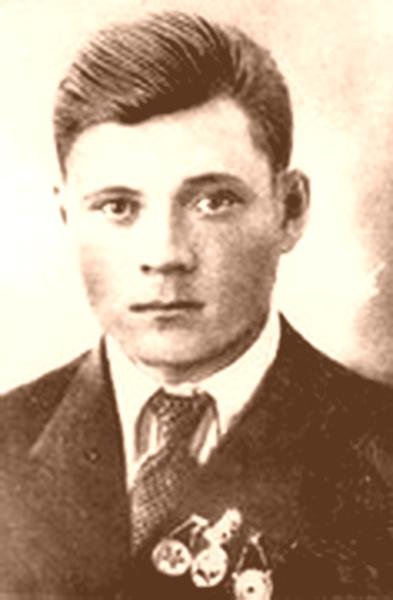


Korotkov Grigory Danilovich
Rank: Corporal. Service rank: Artillery. Subdivision: 4th Guards Heavy Cannon Artillery Smolensk Red Banner Orders of Suvorov and Kutuzov Division. Grigory Korotkov - a participant of the Great Patriotic War, a guard corporal, bearer of a medal, passed through the front line from Stalingrad to Berlin. He was born in September 1916 in the village Verkhne-Kumsky, which is situated on the Donskoy army land of the Oktyabrsky district of the Stalingrad region. Before the war he served in the Red Army, in 1939 he married a cossack Polina, and in 1940 he had a daughter, Julia. He worked as a tractor driver in the Ilyich collective farm. The young family made plans for the future, but the war destroyed these plans and dreams. On June 6, 1942 he was called to the front by the military commissariat of the Voroshilov district for the Stalingrad region. He was immediately sent to the Stalingrad front. At that time everyone, young and old, felt like soldiers of the Great War. He ended up in the 3rd Division of the 123rd Guards Army Cannon Artillery Order of Bogdan Khmelnitsky, 2nd Class, Red Banner Brigade. So he continued his journey at the front on his tractor - he became a tractor driver. Usually the tractor is a field worker, but during the war the tractor became the main assistant to the gunners. Tractors were used for towing high-powered cannons. He drove on many military roads in Ukraine, Belarus, Latvia, Lithuania, Hungary and Austria. He came under enemy fire, lost friends - comrades, saw wounded soldiers in pain dying painfully infront of his eyes. Death haunted the young fighter. As part of his brigade he carried guns to the position and pulled damaged tanks from the battlefield. His task was to bury the tractor by hand for camouflage. They moved mostly furtively - in the dark. During the break always remembered about home and family. From newspapers, letters and military reports he learned that the enemy had taken his home farm, Verkhnekumsky, and was raging on his land. Later he learned about the heavy fighting in the Oktyabrskiy District, when the 4th Tank Army of Gotha tried to liberate the main forces of the 6th German Army from the "cauldron". And he was happy when news of the liberation of his district from the fascist evil spiritsreached him - this happened at the end of December 1942. His tank behaved perfectly on unpaved roads, but on asphalt and impassable terrain the chain links broke, all fastenings came loose and bolts were cut off, and the oil seals of the side clutches flowed. Grigory, however, managed to drive a worn out car from the Vistula to the Oder through forests, gorges and thicket. The tractor mechanic has received several awards for his ingenuity, hard work and performance of combat tasks. From July 1943 to October 1944 he fought at the 2nd Ukrainian front, from November 1944 to May 1945 at the 3rd Ukrainian front. In January 1945 he was seriously wounded in a battle near the town of Zamol (Hungary), but the young body did not let him down- he quickly returned to the ranks and continued to fight as a tractor mechanic. On 16 March 1945, during a change of battle lines in the Szekesfehervar area (the most important town in Hungary where the royal residence was located, 70 km from Budapest) a tractor column was heavily bombed by enemy planes, putting several tractors out of action. But thanks to his ingenuity and courage, the fighter Korotkov was able to bring his tractor and cannon out of the enemy's fire unharmed. And on April 9, 1945, while delivering ammunition to the firing position of his battery on the nearby approaches to the city of Vienna (Austria), he was fired upon by enemy artillery on the way, causing a fragment of a grenade that exploded near the fuel tank to be penetrated. It appears that the tractor has been disabled. But the tractor was driven by an experienced mechanic Korotkov. Thanks to excellent knowledge of his profession, coupled with courage and bravery, he managed to get his car with ammunition into fighting position in time under enemy fire. For these heroic deeds he received a government award, the medal "for bravery" and "for the capture of Vienna". In the battles for the city of Vienna, 18 thousand Red Army soldiers died, and in the liberation of Austria - almost 27 thousand people. 271 thousand Soviet soldiers were awarded the medal "for the capture of Vienna". On August 19, 1945, just 4 months after the capture of Vienna, a monument to Soviet soldiers-liberators was erected and unveiled. Having gone on a "combat" tractor throughout the war, the soldier Korotkov met victory on the outskirts of Berlin. In his arsenal - the Order of the Patriotic War 2nd degree, "Decoration of Honor", medals "for bravery", "for taking Budapest", "for taking Vienna", "for victory over Germany". In November 1945 he returned to his home farm Verkhne-Kumsky. For a long time he lived in the city of Stalingrad, where he died. We want our children and grandchildren, who are still touched by the glory of the Great Patriotic War, to remember with gratitude those, who without sparing themselves, defended a peaceful heaven and a happy life for us. And one of them was the guard corporal Korotkov.
Korotkov Grigory Danilovich
Rank: Corporal. Service rank: Artillery. Subdivision: 4th Guards Heavy Cannon Artillery Smolensk Red Banner Orders of Suvorov and Kutuzov Division. Grigory Korotkov - a participant of the Great Patriotic War, a guard corporal, bearer of a medal, passed through the front line from Stalingrad to Berlin. He was born in September 1916 in the village Verkhne-Kumsky, which is situated on the Donskoy army land of the Oktyabrsky district of the Stalingrad region. Before the war he served in the Red Army, in 1939 he married a cossack Polina, and in 1940 he had a daughter, Julia. He worked as a tractor driver in the Ilyich collective farm. The young family made plans for the future, but the war destroyed these plans and dreams. On June 6, 1942 he was called to the front by the military commissariat of the Voroshilov district for the Stalingrad region. He was immediately sent to the Stalingrad front. At that time everyone, young and old, felt like soldiers of the Great War. He ended up in the 3rd Division of the 123rd Guards Army Cannon Artillery Order of Bogdan Khmelnitsky, 2nd Class, Red Banner Brigade. So he continued his journey at the front on his tractor - he became a tractor driver. Usually the tractor is a field worker, but during the war the tractor became the main assistant to the gunners. Tractors were used for towing high-powered cannons. He drove on many military roads in Ukraine, Belarus, Latvia, Lithuania, Hungary and Austria. He came under enemy fire, lost friends - comrades, saw wounded soldiers in pain dying painfully infront of his eyes. Death haunted the young fighter. As part of his brigade he carried guns to the position and pulled damaged tanks from the battlefield. His task was to bury the tractor by hand for camouflage. They moved mostly furtively - in the dark. During the break always remembered about home and family. From newspapers, letters and military reports he learned that the enemy had taken his home farm, Verkhnekumsky, and was raging on his land. Later he learned about the heavy fighting in the Oktyabrskiy District, when the 4th Tank Army of Gotha tried to liberate the main forces of the 6th German Army from the "cauldron". And he was happy when news of the liberation of his district from the fascist evil spiritsreached him - this happened at the end of December 1942. His tank behaved perfectly on unpaved roads, but on asphalt and impassable terrain the chain links broke, all fastenings came loose and bolts were cut off, and the oil seals of the side clutches flowed. Grigory, however, managed to drive a worn out car from the Vistula to the Oder through forests, gorges and thicket. The tractor mechanic has received several awards for his ingenuity, hard work and performance of combat tasks. From July 1943 to October 1944 he fought at the 2nd Ukrainian front, from November 1944 to May 1945 at the 3rd Ukrainian front. In January 1945 he was seriously wounded in a battle near the town of Zamol (Hungary), but the young body did not let him down- he quickly returned to the ranks and continued to fight as a tractor mechanic. On 16 March 1945, during a change of battle lines in the Szekesfehervar area (the most important town in Hungary where the royal residence was located, 70 km from Budapest) a tractor column was heavily bombed by enemy planes, putting several tractors out of action. But thanks to his ingenuity and courage, the fighter Korotkov was able to bring his tractor and cannon out of the enemy's fire unharmed. And on April 9, 1945, while delivering ammunition to the firing position of his battery on the nearby approaches to the city of Vienna (Austria), he was fired upon by enemy artillery on the way, causing a fragment of a grenade that exploded near the fuel tank to be penetrated. It appears that the tractor has been disabled. But the tractor was driven by an experienced mechanic Korotkov. Thanks to excellent knowledge of his profession, coupled with courage and bravery, he managed to get his car with ammunition into fighting position in time under enemy fire. For these heroic deeds he received a government award, the medal "for bravery" and "for the capture of Vienna". In the battles for the city of Vienna, 18 thousand Red Army soldiers died, and in the liberation of Austria - almost 27 thousand people. 271 thousand Soviet soldiers were awarded the medal "for the capture of Vienna". On August 19, 1945, just 4 months after the capture of Vienna, a monument to Soviet soldiers-liberators was erected and unveiled. Having gone on a "combat" tractor throughout the war, the soldier Korotkov met victory on the outskirts of Berlin. In his arsenal - the Order of the Patriotic War 2nd degree, "Decoration of Honor", medals "for bravery", "for taking Budapest", "for taking Vienna", "for victory over Germany". In November 1945 he returned to his home farm Verkhne-Kumsky. For a long time he lived in the city of Stalingrad, where he died. We want our children and grandchildren, who are still touched by the glory of the Great Patriotic War, to remember with gratitude those, who without sparing themselves, defended a peaceful heaven and a happy life for us. And one of them was the guard corporal Korotkov.
0 comment



2026 © Russian Military Historical Society Developed by Jetmix