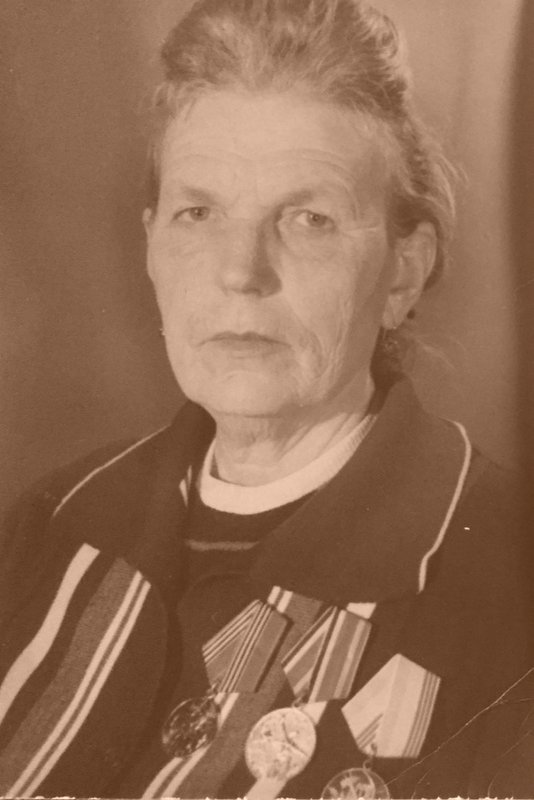
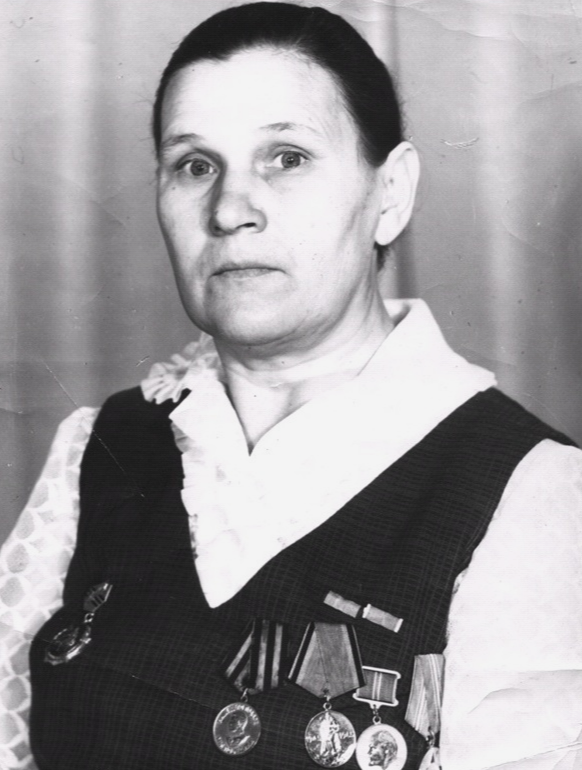



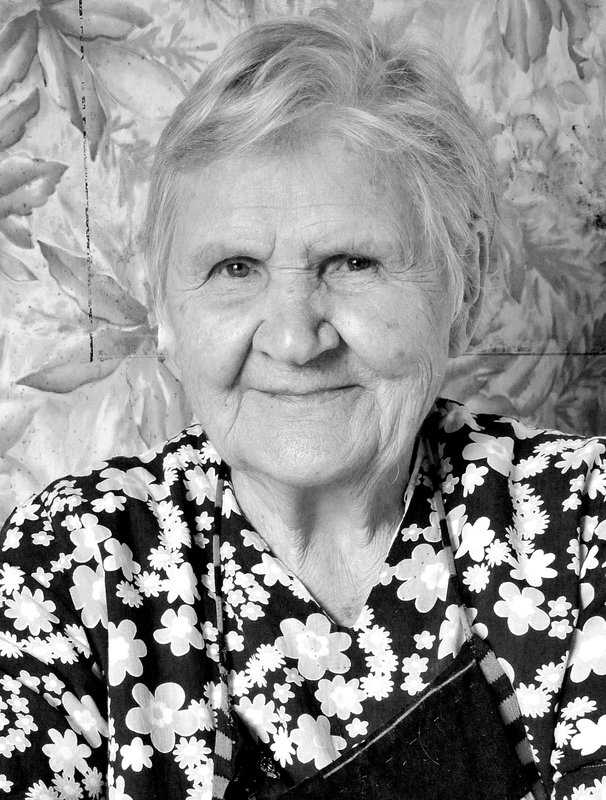
Kostina (Krutikova) Zoya Andreyevna
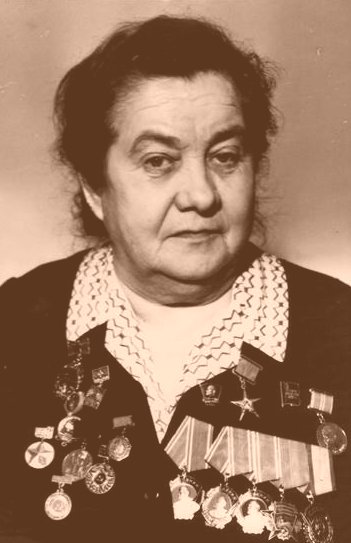
Type of troops: Military-economic and administrative structure. The most "touching" stories I have not learned from movies and books (although I know literature quite well, since I am a writer by nature), but from my mother. Many people were probably moved to tears when they read Hugo's novel "Les Miserables": A little girl is forced to carry a huge bucket of water through the forest on a cold night. But how would they perceive this story: a slightly older girl - 14 years old, completely voluntary (because during the war the workers were given 800 grams of bread and the dependents - 200 grams), she gets up at 4 o'clock in the morning, puts on a ragged coat with sleeves up to the elbows and holey felt boots, hooks a horse to a cart with a barrel and goes to the waterhole in the river to water the kolkhoz calves. My mother is 18 years old and she registered in a military unit in the Prechistensky district of the Yaroslavl region. From the front zones, shells are brought here in boxes - for sorting, cleaning, recycling and so on. Girls unload wagons with grenades - each grenade 50 kg, boxes - up to 150 kg. It is necessary to lift, move and lower this load very carefully, even gently, and at the same time quickly set the stacks without the slightest roll, because you cannot allow a single box to fall. The girls were not professional dock workers, but they did a good job. Tell me, is it easy to find a person who thinks that cleaning a pot is an easy task? But if you clean the shell! Not one, the whole shift - 12 hours. The slightest inaccuracy - and explosion. But they just did not think about it. It was only scary during a fire, when the shells exploded everywhere, the shrapnel whistling near their heads. Two girls were mutilated. But nobody complained. Despite years of malnutrition and hard work, the young people were cheerful, happy, confident in their fate and destiny. In the evenings they sang in the choir and read newspapers and books. They lived in dormitories, twenty or thirty people at a time, sometimes two on a mattress and a blanket. The most fashionable clothing was considered a sweatshirt, the highest luxury - a sheepskin coat of the army. Bright memories of motherhood... When the war ended, the reconstruction of the destroyed economy began. The country needed a forest. My mother is 20 years old. Together with a friend they harnessed horses in the early morning (according to modern ideas - at night) and often walked 16 km into the forest - often - on snow virgin land. They arrived, cleared the land and started cutting down the forest with simple axes and saws. They will cut branches, light a fire, warm themselves, drink an empty cup of tea - and again for work. The daily rate is 6 cubic meters. Two carts per shift must be delivered to the collective farm, from darkness to darkness. That is why my mother smiles when she hears "horror stories" about the sawmill, because it was a happy time for her. The way she talks about horses! About each one - a story of its own that brings joy and sadness. After all, they are like people, says my mother, only unrequited, and therefore only a man-beast can offend a horse. The girls never sat on a loaded cart, they walked alongside all the way, helping in difficult places. And so they came to Prokopyevsk. Here the "building sites of the century" were built, and here the future of Russia was forged. When my mother was recruited in 1946, she came to Prokopievsk and immediately entered the Stalin mine (after all, she had no specialties and an education - 2 classes). She worked as a haulage contractor, but her habit and love of the forest soon led her mother to the forest yard of the Voroshilov Mine (5-6), where she worked for 33 years. The work was familiar - loading and unloading cars (with "Hooray!", four of them for 6-7 hours). But basically, she worked on a "belt" - a structure open to all the winds with a long conveyor-belt, along which different forest moves from the sawmill: a block, a plank, a slab, a roll ... The task of a team of three women is to throw off in time this forest in different openings-windows: the block - to the block, the block - to the block, etc. One of the women sits "on the button" so that if something happens, she will stop the conveyor, while the others only have time to turn. I have never been able to understand how my mother manages to cope with the roll - a thick, long tree trunk, because its weight and size are simply threatening, and the belt moves fast. Of course, there were injuries, but my mother practically never went to the hospital. But she had to work in any weather in two shifts, from 8 to 4 o'clock, and from 4 to 12. She was happy to work on weekends - for a "double payment", because she raised me alone. She worked conscientiously and was respected. They were repeatedly awarded, placed on the board of honor, wrote in the newspaper. Her work was appreciated with medals and the Order of Labor Glory. 2006 Stepanova O.F. (and the whole family)
Kostina (Krutikova) Zoya Andreyevna
Type of troops: Military-economic and administrative structure. The most "touching" stories I have not learned from movies and books (although I know literature quite well, since I am a writer by nature), but from my mother. Many people were probably moved to tears when they read Hugo's novel "Les Miserables": A little girl is forced to carry a huge bucket of water through the forest on a cold night. But how would they perceive this story: a slightly older girl - 14 years old, completely voluntary (because during the war the workers were given 800 grams of bread and the dependents - 200 grams), she gets up at 4 o'clock in the morning, puts on a ragged coat with sleeves up to the elbows and holey felt boots, hooks a horse to a cart with a barrel and goes to the waterhole in the river to water the kolkhoz calves. My mother is 18 years old and she registered in a military unit in the Prechistensky district of the Yaroslavl region. From the front zones, shells are brought here in boxes - for sorting, cleaning, recycling and so on. Girls unload wagons with grenades - each grenade 50 kg, boxes - up to 150 kg. It is necessary to lift, move and lower this load very carefully, even gently, and at the same time quickly set the stacks without the slightest roll, because you cannot allow a single box to fall. The girls were not professional dock workers, but they did a good job. Tell me, is it easy to find a person who thinks that cleaning a pot is an easy task? But if you clean the shell! Not one, the whole shift - 12 hours. The slightest inaccuracy - and explosion. But they just did not think about it. It was only scary during a fire, when the shells exploded everywhere, the shrapnel whistling near their heads. Two girls were mutilated. But nobody complained. Despite years of malnutrition and hard work, the young people were cheerful, happy, confident in their fate and destiny. In the evenings they sang in the choir and read newspapers and books. They lived in dormitories, twenty or thirty people at a time, sometimes two on a mattress and a blanket. The most fashionable clothing was considered a sweatshirt, the highest luxury - a sheepskin coat of the army. Bright memories of motherhood... When the war ended, the reconstruction of the destroyed economy began. The country needed a forest. My mother is 20 years old. Together with a friend they harnessed horses in the early morning (according to modern ideas - at night) and often walked 16 km into the forest - often - on snow virgin land. They arrived, cleared the land and started cutting down the forest with simple axes and saws. They will cut branches, light a fire, warm themselves, drink an empty cup of tea - and again for work. The daily rate is 6 cubic meters. Two carts per shift must be delivered to the collective farm, from darkness to darkness. That is why my mother smiles when she hears "horror stories" about the sawmill, because it was a happy time for her. The way she talks about horses! About each one - a story of its own that brings joy and sadness. After all, they are like people, says my mother, only unrequited, and therefore only a man-beast can offend a horse. The girls never sat on a loaded cart, they walked alongside all the way, helping in difficult places. And so they came to Prokopyevsk. Here the "building sites of the century" were built, and here the future of Russia was forged. When my mother was recruited in 1946, she came to Prokopievsk and immediately entered the Stalin mine (after all, she had no specialties and an education - 2 classes). She worked as a haulage contractor, but her habit and love of the forest soon led her mother to the forest yard of the Voroshilov Mine (5-6), where she worked for 33 years. The work was familiar - loading and unloading cars (with "Hooray!", four of them for 6-7 hours). But basically, she worked on a "belt" - a structure open to all the winds with a long conveyor-belt, along which different forest moves from the sawmill: a block, a plank, a slab, a roll ... The task of a team of three women is to throw off in time this forest in different openings-windows: the block - to the block, the block - to the block, etc. One of the women sits "on the button" so that if something happens, she will stop the conveyor, while the others only have time to turn. I have never been able to understand how my mother manages to cope with the roll - a thick, long tree trunk, because its weight and size are simply threatening, and the belt moves fast. Of course, there were injuries, but my mother practically never went to the hospital. But she had to work in any weather in two shifts, from 8 to 4 o'clock, and from 4 to 12. She was happy to work on weekends - for a "double payment", because she raised me alone. She worked conscientiously and was respected. They were repeatedly awarded, placed on the board of honor, wrote in the newspaper. Her work was appreciated with medals and the Order of Labor Glory. 2006 Stepanova O.F. (and the whole family)
0 comment




2026 © Russian Military Historical Society Developed by Jetmix