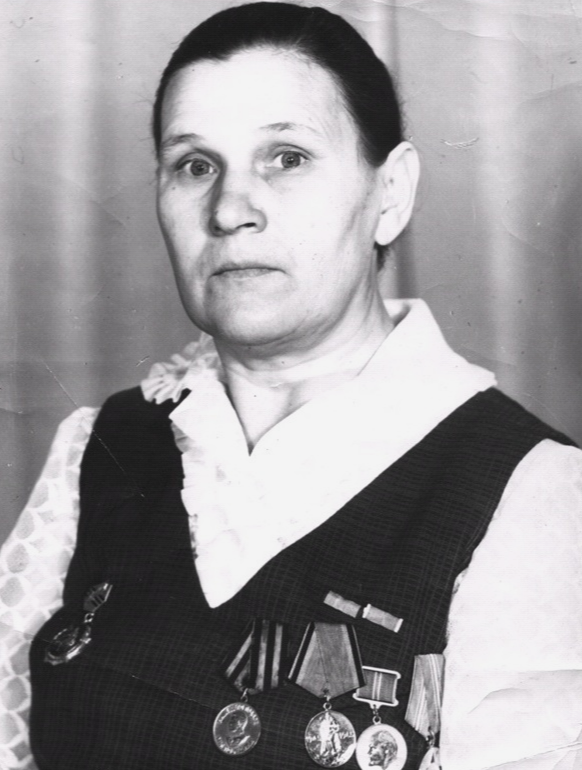
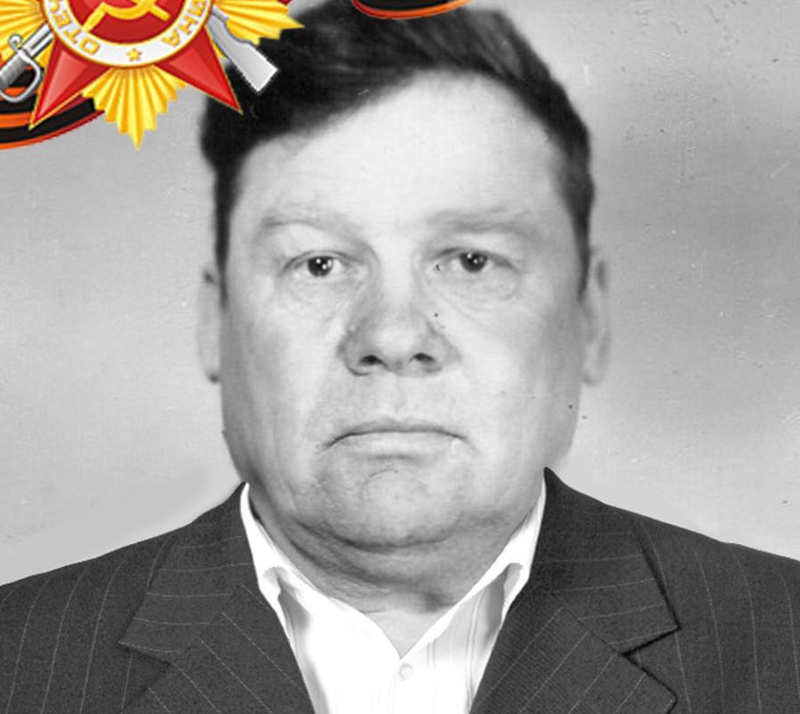


Kostin Vasily Ivanovich
Title: Senior Lieutenant. Troop type: Armored and mechanized troops. Vasily Ivanovich was born on 21 January 1924. Completed seven classes of the school, not four like the rest. From fifth to seventh grade had to go to Hoshino to study. He was drafted into the army when he turned 18 in 1942. Because his education was higher, he was sent to Vetluga to study as a tank officer. During the whole war he never managed to return home. From the first days of service the young, inexperienced officer became a tank commander, and he was lucky with the crew - both tank drivers came from their homeland - the best friend of Kulakov from Diveevo and Smirnov from Pervomaysk. The spirit was always combative, they were not afraid of death, if they would be killed – so let that be but they will not give up to the enemy so easily. That is why they rushed desperately into battle and were wounded more than once. Vasily Ivanovich received a horrible wound on the head in one of the battles, the skull was split in half. He did not want to stay in the hospital, so he asked to go back to the front. He took part in the battles at the Kursk bulge, but unfortunately his widow does not know the details of these battles. She knows only the fact that the fighting was terrible, the tank sometimes could not pass through to its destination because of the bodies of the soldiers blocking the road. The battle, which took place in the summer of 1943 on the front Soviet-German near Kursk, was the worst of the whole Second World War, up to our time. The front line before the start of the battle was a giant arc protruding deeply relative to the northern and southern flanks to the West. Hence the name "Kursk bulge". In the book" Steel Guard " Pavel Alekseevich Rotmistrov described this battle, which literally began and took place before his eyes: "Two huge avalanches of tanks were moving towards us. When the sun rose in the east, it blinded the eyes of the German armored vehicles and brightly illuminated the outlines of the Nazi tanks. A few minutes later the tanks of the first squadron of our 29th and 18th Corps, under fire in motion, crashed head-on into the battle lines of the German-Fascist troops and literally penetrated the enemy battle lines with a rapid fire. The Nazis had not expected to encounter such a large mass of our combat vehicles and such a determined attack. The leadership in the advanced units and divisions was clearly injured. Its "Tigers" and "Panthers", which were robbed of their fire advantage in close combat, which they used at the beginning of the offensive in a collision with our other tank formations, now successfully hit by the Soviet T-34 and even T-70 tanks at close range. The battlefield was filled with smoke and dust, and the ground was shaken by violent explosions. Tanks ran into each other and could not separate, fighting to the death until one of them flashed a torch or stopped with broken chains. But even the damaged tanks kept on shooting, if their weapons did not fail", for Vasily Ivanovich the war ended only in 1946, after Hungary and Budapest. Despite the serious condition after the malaria they did not hurry to let the officer go home, and only after Malinovsky's personal instruction Vasily Ivanovich could go home to get treatment. He returned in autumn, young, handsome, with a silver medal and medals on his chest. He began to approach former front line soldiers and it was considered prestigious to be friends with Vasily Ivanovich because he was an officer. His closest friends were the two Grischin brothers - Nikolai and Andrei, who were also former front soldiers. In their family he met beautiful and lively Tanya, who already worked on the farm during the war years and after the war - as a hostler on the farm. This girl became his wife. Life in v. Keselica after the war was bad enough, and a young family with a three-year-old baby and all the livestock was taken to the Far East with 60 villagers to recruit in the village of Selikhino under Komsomolsk-on-Amur. They traveled in a freight wagon for a month, but upon arrival settled badly. He lived there for six years and returned to Koshelih. Vasily Ivanovich died in 1997, leaving behind seven children, and his wife Tatyana Grigoryevna died in 2016.
Kostin Vasily Ivanovich
Title: Senior Lieutenant. Troop type: Armored and mechanized troops. Vasily Ivanovich was born on 21 January 1924. Completed seven classes of the school, not four like the rest. From fifth to seventh grade had to go to Hoshino to study. He was drafted into the army when he turned 18 in 1942. Because his education was higher, he was sent to Vetluga to study as a tank officer. During the whole war he never managed to return home. From the first days of service the young, inexperienced officer became a tank commander, and he was lucky with the crew - both tank drivers came from their homeland - the best friend of Kulakov from Diveevo and Smirnov from Pervomaysk. The spirit was always combative, they were not afraid of death, if they would be killed – so let that be but they will not give up to the enemy so easily. That is why they rushed desperately into battle and were wounded more than once. Vasily Ivanovich received a horrible wound on the head in one of the battles, the skull was split in half. He did not want to stay in the hospital, so he asked to go back to the front. He took part in the battles at the Kursk bulge, but unfortunately his widow does not know the details of these battles. She knows only the fact that the fighting was terrible, the tank sometimes could not pass through to its destination because of the bodies of the soldiers blocking the road. The battle, which took place in the summer of 1943 on the front Soviet-German near Kursk, was the worst of the whole Second World War, up to our time. The front line before the start of the battle was a giant arc protruding deeply relative to the northern and southern flanks to the West. Hence the name "Kursk bulge". In the book" Steel Guard " Pavel Alekseevich Rotmistrov described this battle, which literally began and took place before his eyes: "Two huge avalanches of tanks were moving towards us. When the sun rose in the east, it blinded the eyes of the German armored vehicles and brightly illuminated the outlines of the Nazi tanks. A few minutes later the tanks of the first squadron of our 29th and 18th Corps, under fire in motion, crashed head-on into the battle lines of the German-Fascist troops and literally penetrated the enemy battle lines with a rapid fire. The Nazis had not expected to encounter such a large mass of our combat vehicles and such a determined attack. The leadership in the advanced units and divisions was clearly injured. Its "Tigers" and "Panthers", which were robbed of their fire advantage in close combat, which they used at the beginning of the offensive in a collision with our other tank formations, now successfully hit by the Soviet T-34 and even T-70 tanks at close range. The battlefield was filled with smoke and dust, and the ground was shaken by violent explosions. Tanks ran into each other and could not separate, fighting to the death until one of them flashed a torch or stopped with broken chains. But even the damaged tanks kept on shooting, if their weapons did not fail", for Vasily Ivanovich the war ended only in 1946, after Hungary and Budapest. Despite the serious condition after the malaria they did not hurry to let the officer go home, and only after Malinovsky's personal instruction Vasily Ivanovich could go home to get treatment. He returned in autumn, young, handsome, with a silver medal and medals on his chest. He began to approach former front line soldiers and it was considered prestigious to be friends with Vasily Ivanovich because he was an officer. His closest friends were the two Grischin brothers - Nikolai and Andrei, who were also former front soldiers. In their family he met beautiful and lively Tanya, who already worked on the farm during the war years and after the war - as a hostler on the farm. This girl became his wife. Life in v. Keselica after the war was bad enough, and a young family with a three-year-old baby and all the livestock was taken to the Far East with 60 villagers to recruit in the village of Selikhino under Komsomolsk-on-Amur. They traveled in a freight wagon for a month, but upon arrival settled badly. He lived there for six years and returned to Koshelih. Vasily Ivanovich died in 1997, leaving behind seven children, and his wife Tatyana Grigoryevna died in 2016.
0 comment



2026 © Russian Military Historical Society Developed by Jetmix