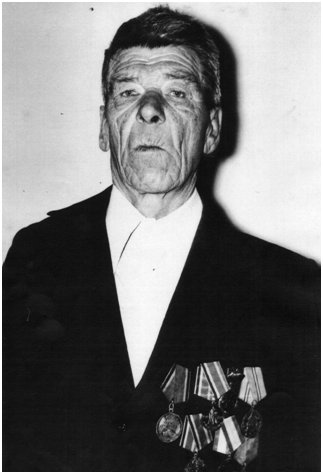
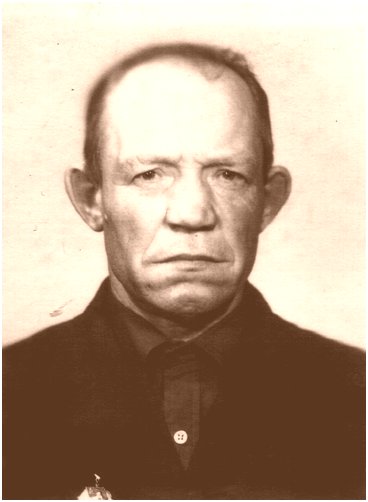


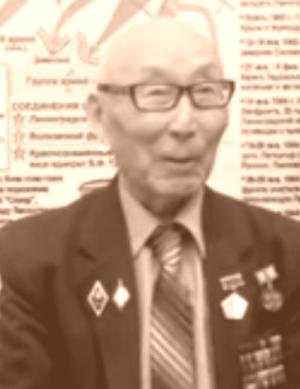


Alyazhin Ivan Romanovich
CITY: the village of Nizhnee Ablyazovo, Penza Region DATE OF BIRTH: 03/22/1922 DATE OF DEATH: 12/16/2006 HISTORY: WHO SAYS THAT IS NOT SCARY AT THE WAR, THE ONE KNOWS NOTHING ABOUT THE WAR ...... Grandfather did not like to talk about the war, like many who have walked this path from beginning to end. The holiday on May 9 was always celebrated in the village with grandfather and grandmother, in the Klyuchi of the Penza region. As a large family, they went out into the countryside or set tables near the house, celebrating the Victory Day with numerous friends and neighbors. Even on that day, grandfather said little about that wartime. Throughout the war, my grandfather Ivan Romanovich kept a front diary, where he described the events taking place with him. From this diary, we - his children and grandchildren, know what life trials he had to go through. When the war began, my grandfather was 19 years old. Before the war he worked as a tractor driver in the village of Krasny Yar, Saratov region. He was drafted into military service in August 1941 by the Balakovo RVK - in the "hottest" wheat harvest. He participated in battles - from November 1942 to May 1945. His service began in the Far East, from 09/21/1941 to 11/07/1942. - at the 50th radio beacon of the Pacific Fleet, with the rank of private Red Navy - signalman. He took the oath of office in November 1941. After completing the training of personnel, in early November 1942, the formed marching battalion was sent to the front. 11/25/1942 after arriving in the Tambov region. the recruits were housed in a forest camp. Local front-line soldiers warmly and amicably greeted the Far Eastern sailors, who walked on a frosty winter evening in boots, paper socks and light sailor black greatcoats. Of the warm things there were only hats, and even then not all of them. After the formation, the sailors were sent to the bathhouse, where they had to part with the naval clothes. Because there were no warm fur coats and felt boots, the soldiers were given gray overcoats and boots with windings (footcloths) 3 meters long. Began training for military operations in the PTR company (anti-tank company). Grandfather and his comrade, corporal Sorokin, were given one weapon for two, weighing 16 kg., With which they crawled all day through the deep snows of the Tambov region. It's time to go to the front. From the Rada station, echelon after echelon, rifle units began to withdraw to the Stalingrad Front. After arriving on the very front line of the front, the squad leaders ordered to prepare for battle. A large number of enemy tanks were expected. The division, which included my grandfather and his partner in the anti-tank gun Sorokin, must hold off the onslaught of the Germans, who tried in every possible way to break through to their units, into the ring near Stalingrad. Grandfather knew that the fight would be tough. All night long, everyone prepared for it very carefully, dug trenches in turn. The ground was very hard, and you had to hit a dozen times with a heavy pickaxe to dig out a small patch of earth. So the whole night passed in work, the morning that came was calm, only in some places there was a small skirmish. The aviation did not operate due to bad weather. The first battle of my grandfather at Stalingrad and his first serious wound in the right shoulder blade. An excerpt from the diary: “... Early in the morning, after breakfast, a command was given to prepare for battle and carefully observe the enemy. I put my carbine on the parapet, took out cartridges and two grenades from the bag and put them next to me. My partner and I lay down at the bottom of our trench, which looked like an oblong and not deep hole. Bullets began to whistle, enemy aircraft appeared in the air, which immediately began to bomb and shoot from machine guns at our defenses. All lay quietly in their trenches in their places and waited for the appearance of German tanks. The platoon leader constantly looked through binoculars. Suddenly the roar of engines was heard from the direction of the German defense. - Tanks, tanks, - someone shouted from the right flank. Noticing them, the platoon commander gave the command to crawl forward 100-200 meters with anti-tank rifles. The bullet rain intensified. Sorokin and I, hearing the command, jumped out of our hiding place and ran with a gun to a small hill. Ahead, at a distance of 400 meters, there were about 40 German tanks, shelling our defenses with artillery and machine-gun fire. With every minute the battle flared up more strongly, artillery hit from both sides. Airplanes appeared, but whose they were, I could not make out. Black smoke emanated from the burning German tanks, which obscured all visibility. “They are burning, they are burning,” the soldiers shouted, and everyone began to run down to the river. Raising the gun, Sorokin crawled forward and I followed him, dragging a carbine and cartridges from the Antitank company behind me. The heavy bag was difficult to pull in the snow, and the ammo pouch hanging on the waist belt slowed down the movement even more. On the right side of me, 10 meters away, signalmen were crawling, pulling coils of cable behind them. Suddenly one of them shouted "mom" and, crying, fell into the snow. What happened to him, no one knew, it was not up to him, most likely, he simply did not endure the tests in such an "atmosphere".Shells exploded near me and Sorokin, bullets flew almost over the ear. I did not understand what was wrong with me, I was shooting and firing at the German tanks, which were burning like candles on the steep opposite bank of the river. I could hear the groans of wounded soldiers who asked for help. The number of those killed grew. First wound. Suddenly, I noticed how the German infantry ran out from behind the tanks. Sorokin chose a convenient place and prepared to repel the attack, the Germans crawled closer and closer to our defenses. Suddenly deafening explosions rang out near us. Sorokin began to crawl to another place, hoping that there would be less shelling. I followed him, but after another explosion I suddenly felt a severe burn in my back, under my right shoulder blade, blood immediately flowed under my shirt and from my mouth. I wanted to turn on my left side, but my strength was running out. With great difficulty, he lay down on his back again, the blood pouring from his mouth began to flood his face and did not let him breathe. Turning, Sorokin saw me wounded and shouted orderlies, but there was no one nearby. Suddenly two people ran up to me, one of whom was an old friend of mine from the Far East. Taking me, they crawled to the first dugout, which contained the ENP of some artillery unit. Shouts of contradiction were heard that this was not a sanitary point. A fat lieutenant was shouting, wrapped in a huge fur coat and holding a telephone receiver in his hands. “We’ll only bandage his wound and take it away,” the soldiers answered. Well, you don't feel sorry for the man, let some stray splinter finish him off, ”the soldiers continued to say. But the fat lieutenant was silent. They bandaged my wound, put it on my overcoat and dragged me back to the trenches ... ... .. ". Then there was treatment in a hospital from 12/22/1942 to 02/12/1943 in the village of Mokraya Olkhovka, then referral to the convalescent battalion, to the village of Lapshinka, which was 13 km away. from the hospital. Two weeks later, my grandfather was sent to the 1st Infantry Battalion, the reserve 31st Infantry Regiment, in the village of Oberdorf, where there were again training sessions that took place in the fields. Soon there was talk that this regiment should move closer to the front. According to the reports, they learned that the Germans were retreating far to the west, to Oryol. For the front, reserves were needed, and on April 24, 1943, the soldiers were gathered in a small clearing outside the village and reported that representatives from the same tank army had arrived. Oryol-Kursk battle From July 1943, my grandfather began service in the 107th tank brigade of the Central Front, in a command company, in a communications platoon and was already a signalman-telephone operator. The "rookies" were taught the telephone business in a hurry, in a small clearing with telephones and cable wires. An excerpt from the diary: “... They stretched a cable line for 100 meters, connected telephones and began to learn to receive calls from each other, transmit telephone messages, find a damaged line and quickly fix it. The forest in which we were located was under enemy fire all day, shells flew overhead and exploded somewhere nearby. This is how my comrades Podsoblyaev, Demin, Sviridov and I began a new life at the front. Days passed, our unit took up defenses north of the village of Olkhovatka, Kursk region, and heavy battles began, formidable front-line everyday life. The night shelling subsided a little, I knew that after that there would be a short silence, so I had to hurry to establish communication and, taking some cable with me, I ran across the field to the forest. I was approaching the front line of the defense. The Germans began to fire more flares more often. they were afraid of our soldiers approaching their defenses. I came across a lot of fresh funnels, during the day they were not here, which means that the connection was broken somewhere in this place, - I reasoned. Suddenly a piece of cable fell out of my hands, which means that the other end of the cable will have to be looked for, - I continued to say to myself. I tied one end of the cable to a pole of some kind of suspension line and began to look for the other end of the line that was broken. For two hours I wandered between the funnels on the tall grass in search of this cable and still found it. I was waiting for help from the Observation Point or from the CTS, but as a result I never got it. I took the broken end of the cable line and pulled in the direction of the second end, which was tied to the pole, I didn't have to drag it for a long time, I felt that the line was stretched exactly across the field, but there were another 200 meters to the other end. I scolded myself many times for that he didn't take a spare cable with him. And as time went on, it dawned, in the morning the Germans always made small attacks, so it was necessary to quickly connect all the units of the unit, especially the Observation Point and Command Post, with communications. - And then suddenly a battle will flare up, but there is no connection, - I thought. Fortunately for me, the cable was found quickly, and I connected it to my line, which was working properly. After that, I ran to my trench, where there was a telephone set at the headquarters of the 1st tank battalion, to check if the communication was working. Having reached the trench, I quickly grabbed the telephone receiver and wanted to press the call button, but suddenly I heard a conversation between the command post and the Observation Point.The brigade commander said that the Germans had scheduled an attack at 06-00 in the morning and that they needed to be ahead of them and start the attack 1 hour earlier ………. ”. Then the grandfather took part in the battles: - Korsun-Shevchenko operation. - battle for the liberation of Vapnyarka. - the crossing of the Dniester, the capture of the city and the important railway junction Balti. - battle during the capture of the city of Warsaw. - East Pomeranian operation - In these battles, under heavy shelling, many soldiers and officers died, who can hardly ever be forgotten after the February battles in Pomerania. While already in Germany, on April 25, 1945, grandfather Ivan was wounded in the head for the second time. He was treated in a hospital in the city of Neudamm. There he also learned about the end of the war. An excerpt from the diary: “… .On May 02, 1945, all the patients in the hospital learned about the surrender of Berlin, no one believed about the end of the war, which had lasted for 4 years. On the night of May 9, 1945, all the wounded were awakened by the shooting from machine guns. At first, everyone was scared, they thought that some gang had attacked the city, then they calmed down when they found out what really happened. The hospital attendant learned from the city commandant that it was a salute in honor of the victory over Nazi Germany. Early in the morning of May 10, the captain, the deputy head of the hospital for political affairs, entered our ward and read a leaflet on which it was written about the surrender of Germany, and the wounded immediately revived from such unexpected and pleasant news. Only those wounded, whose eyes were knocked out, their arms and legs were torn off, didn’t have fun, they grieved that they did not live to see the Victory in good health ……. ”. Grandfather Ivan ended the war in the 49th Guards Tank Brigade - the 12th Guards Tank Corps, the 2nd Guards Tank Army, the 1st Belorussian Front, under the command of the Guards Colonel Abramov Tikhon Porfirievich. Battle wounds: in November 1942 - at Stalingrad in the right shoulder blade, in April 1945 in Berlin in the head. Passage of military service: - 09/21/1941 - 11/07/1942 - 50th radio beacon of the Pacific Fleet, private Red Navy - signalman. - 11/25/1942 - 12/21/1942 - training battalion of machine gunners 98 Rifle Division- machine gunner. - 03/04/1943 - 03/24/1943 - 31st reserve rifle regiment, 1st rifle battalion - shooter. - 07/05/1943 - 11/20/1944 - 107th Tank Vapnyar Red Banner Order of Kutuzov Brigade, control company - telephone operator. - 20.11.1944 - 15.11.1946 - 49th Guards Tank Brigade - control company - senior telephone operator. Demobilized: November 15, 1946 with the rank of junior sergeant of the guard - senior telephone operator. This is how they survived, this is how they won the war. You ask - how was this war given to them? She was given to them by a terrible blood. For military operations he was awarded: Order of the Red Star. Medal "For the Liberation of Warsaw". Medal "For the capture of Berlin." Medal "For Victory over Germany". He had a guard badge "Guard", which was issued only to servicemen of regiments with a guards battle banner.
Alyazhin Ivan Romanovich
CITY: the village of Nizhnee Ablyazovo, Penza Region DATE OF BIRTH: 03/22/1922 DATE OF DEATH: 12/16/2006 HISTORY: WHO SAYS THAT IS NOT SCARY AT THE WAR, THE ONE KNOWS NOTHING ABOUT THE WAR ...... Grandfather did not like to talk about the war, like many who have walked this path from beginning to end. The holiday on May 9 was always celebrated in the village with grandfather and grandmother, in the Klyuchi of the Penza region. As a large family, they went out into the countryside or set tables near the house, celebrating the Victory Day with numerous friends and neighbors. Even on that day, grandfather said little about that wartime. Throughout the war, my grandfather Ivan Romanovich kept a front diary, where he described the events taking place with him. From this diary, we - his children and grandchildren, know what life trials he had to go through. When the war began, my grandfather was 19 years old. Before the war he worked as a tractor driver in the village of Krasny Yar, Saratov region. He was drafted into military service in August 1941 by the Balakovo RVK - in the "hottest" wheat harvest. He participated in battles - from November 1942 to May 1945. His service began in the Far East, from 09/21/1941 to 11/07/1942. - at the 50th radio beacon of the Pacific Fleet, with the rank of private Red Navy - signalman. He took the oath of office in November 1941. After completing the training of personnel, in early November 1942, the formed marching battalion was sent to the front. 11/25/1942 after arriving in the Tambov region. the recruits were housed in a forest camp. Local front-line soldiers warmly and amicably greeted the Far Eastern sailors, who walked on a frosty winter evening in boots, paper socks and light sailor black greatcoats. Of the warm things there were only hats, and even then not all of them. After the formation, the sailors were sent to the bathhouse, where they had to part with the naval clothes. Because there were no warm fur coats and felt boots, the soldiers were given gray overcoats and boots with windings (footcloths) 3 meters long. Began training for military operations in the PTR company (anti-tank company). Grandfather and his comrade, corporal Sorokin, were given one weapon for two, weighing 16 kg., With which they crawled all day through the deep snows of the Tambov region. It's time to go to the front. From the Rada station, echelon after echelon, rifle units began to withdraw to the Stalingrad Front. After arriving on the very front line of the front, the squad leaders ordered to prepare for battle. A large number of enemy tanks were expected. The division, which included my grandfather and his partner in the anti-tank gun Sorokin, must hold off the onslaught of the Germans, who tried in every possible way to break through to their units, into the ring near Stalingrad. Grandfather knew that the fight would be tough. All night long, everyone prepared for it very carefully, dug trenches in turn. The ground was very hard, and you had to hit a dozen times with a heavy pickaxe to dig out a small patch of earth. So the whole night passed in work, the morning that came was calm, only in some places there was a small skirmish. The aviation did not operate due to bad weather. The first battle of my grandfather at Stalingrad and his first serious wound in the right shoulder blade. An excerpt from the diary: “... Early in the morning, after breakfast, a command was given to prepare for battle and carefully observe the enemy. I put my carbine on the parapet, took out cartridges and two grenades from the bag and put them next to me. My partner and I lay down at the bottom of our trench, which looked like an oblong and not deep hole. Bullets began to whistle, enemy aircraft appeared in the air, which immediately began to bomb and shoot from machine guns at our defenses. All lay quietly in their trenches in their places and waited for the appearance of German tanks. The platoon leader constantly looked through binoculars. Suddenly the roar of engines was heard from the direction of the German defense. - Tanks, tanks, - someone shouted from the right flank. Noticing them, the platoon commander gave the command to crawl forward 100-200 meters with anti-tank rifles. The bullet rain intensified. Sorokin and I, hearing the command, jumped out of our hiding place and ran with a gun to a small hill. Ahead, at a distance of 400 meters, there were about 40 German tanks, shelling our defenses with artillery and machine-gun fire. With every minute the battle flared up more strongly, artillery hit from both sides. Airplanes appeared, but whose they were, I could not make out. Black smoke emanated from the burning German tanks, which obscured all visibility. “They are burning, they are burning,” the soldiers shouted, and everyone began to run down to the river. Raising the gun, Sorokin crawled forward and I followed him, dragging a carbine and cartridges from the Antitank company behind me. The heavy bag was difficult to pull in the snow, and the ammo pouch hanging on the waist belt slowed down the movement even more. On the right side of me, 10 meters away, signalmen were crawling, pulling coils of cable behind them. Suddenly one of them shouted "mom" and, crying, fell into the snow. What happened to him, no one knew, it was not up to him, most likely, he simply did not endure the tests in such an "atmosphere".Shells exploded near me and Sorokin, bullets flew almost over the ear. I did not understand what was wrong with me, I was shooting and firing at the German tanks, which were burning like candles on the steep opposite bank of the river. I could hear the groans of wounded soldiers who asked for help. The number of those killed grew. First wound. Suddenly, I noticed how the German infantry ran out from behind the tanks. Sorokin chose a convenient place and prepared to repel the attack, the Germans crawled closer and closer to our defenses. Suddenly deafening explosions rang out near us. Sorokin began to crawl to another place, hoping that there would be less shelling. I followed him, but after another explosion I suddenly felt a severe burn in my back, under my right shoulder blade, blood immediately flowed under my shirt and from my mouth. I wanted to turn on my left side, but my strength was running out. With great difficulty, he lay down on his back again, the blood pouring from his mouth began to flood his face and did not let him breathe. Turning, Sorokin saw me wounded and shouted orderlies, but there was no one nearby. Suddenly two people ran up to me, one of whom was an old friend of mine from the Far East. Taking me, they crawled to the first dugout, which contained the ENP of some artillery unit. Shouts of contradiction were heard that this was not a sanitary point. A fat lieutenant was shouting, wrapped in a huge fur coat and holding a telephone receiver in his hands. “We’ll only bandage his wound and take it away,” the soldiers answered. Well, you don't feel sorry for the man, let some stray splinter finish him off, ”the soldiers continued to say. But the fat lieutenant was silent. They bandaged my wound, put it on my overcoat and dragged me back to the trenches ... ... .. ". Then there was treatment in a hospital from 12/22/1942 to 02/12/1943 in the village of Mokraya Olkhovka, then referral to the convalescent battalion, to the village of Lapshinka, which was 13 km away. from the hospital. Two weeks later, my grandfather was sent to the 1st Infantry Battalion, the reserve 31st Infantry Regiment, in the village of Oberdorf, where there were again training sessions that took place in the fields. Soon there was talk that this regiment should move closer to the front. According to the reports, they learned that the Germans were retreating far to the west, to Oryol. For the front, reserves were needed, and on April 24, 1943, the soldiers were gathered in a small clearing outside the village and reported that representatives from the same tank army had arrived. Oryol-Kursk battle From July 1943, my grandfather began service in the 107th tank brigade of the Central Front, in a command company, in a communications platoon and was already a signalman-telephone operator. The "rookies" were taught the telephone business in a hurry, in a small clearing with telephones and cable wires. An excerpt from the diary: “... They stretched a cable line for 100 meters, connected telephones and began to learn to receive calls from each other, transmit telephone messages, find a damaged line and quickly fix it. The forest in which we were located was under enemy fire all day, shells flew overhead and exploded somewhere nearby. This is how my comrades Podsoblyaev, Demin, Sviridov and I began a new life at the front. Days passed, our unit took up defenses north of the village of Olkhovatka, Kursk region, and heavy battles began, formidable front-line everyday life. The night shelling subsided a little, I knew that after that there would be a short silence, so I had to hurry to establish communication and, taking some cable with me, I ran across the field to the forest. I was approaching the front line of the defense. The Germans began to fire more flares more often. they were afraid of our soldiers approaching their defenses. I came across a lot of fresh funnels, during the day they were not here, which means that the connection was broken somewhere in this place, - I reasoned. Suddenly a piece of cable fell out of my hands, which means that the other end of the cable will have to be looked for, - I continued to say to myself. I tied one end of the cable to a pole of some kind of suspension line and began to look for the other end of the line that was broken. For two hours I wandered between the funnels on the tall grass in search of this cable and still found it. I was waiting for help from the Observation Point or from the CTS, but as a result I never got it. I took the broken end of the cable line and pulled in the direction of the second end, which was tied to the pole, I didn't have to drag it for a long time, I felt that the line was stretched exactly across the field, but there were another 200 meters to the other end. I scolded myself many times for that he didn't take a spare cable with him. And as time went on, it dawned, in the morning the Germans always made small attacks, so it was necessary to quickly connect all the units of the unit, especially the Observation Point and Command Post, with communications. - And then suddenly a battle will flare up, but there is no connection, - I thought. Fortunately for me, the cable was found quickly, and I connected it to my line, which was working properly. After that, I ran to my trench, where there was a telephone set at the headquarters of the 1st tank battalion, to check if the communication was working. Having reached the trench, I quickly grabbed the telephone receiver and wanted to press the call button, but suddenly I heard a conversation between the command post and the Observation Point.The brigade commander said that the Germans had scheduled an attack at 06-00 in the morning and that they needed to be ahead of them and start the attack 1 hour earlier ………. ”. Then the grandfather took part in the battles: - Korsun-Shevchenko operation. - battle for the liberation of Vapnyarka. - the crossing of the Dniester, the capture of the city and the important railway junction Balti. - battle during the capture of the city of Warsaw. - East Pomeranian operation - In these battles, under heavy shelling, many soldiers and officers died, who can hardly ever be forgotten after the February battles in Pomerania. While already in Germany, on April 25, 1945, grandfather Ivan was wounded in the head for the second time. He was treated in a hospital in the city of Neudamm. There he also learned about the end of the war. An excerpt from the diary: “… .On May 02, 1945, all the patients in the hospital learned about the surrender of Berlin, no one believed about the end of the war, which had lasted for 4 years. On the night of May 9, 1945, all the wounded were awakened by the shooting from machine guns. At first, everyone was scared, they thought that some gang had attacked the city, then they calmed down when they found out what really happened. The hospital attendant learned from the city commandant that it was a salute in honor of the victory over Nazi Germany. Early in the morning of May 10, the captain, the deputy head of the hospital for political affairs, entered our ward and read a leaflet on which it was written about the surrender of Germany, and the wounded immediately revived from such unexpected and pleasant news. Only those wounded, whose eyes were knocked out, their arms and legs were torn off, didn’t have fun, they grieved that they did not live to see the Victory in good health ……. ”. Grandfather Ivan ended the war in the 49th Guards Tank Brigade - the 12th Guards Tank Corps, the 2nd Guards Tank Army, the 1st Belorussian Front, under the command of the Guards Colonel Abramov Tikhon Porfirievich. Battle wounds: in November 1942 - at Stalingrad in the right shoulder blade, in April 1945 in Berlin in the head. Passage of military service: - 09/21/1941 - 11/07/1942 - 50th radio beacon of the Pacific Fleet, private Red Navy - signalman. - 11/25/1942 - 12/21/1942 - training battalion of machine gunners 98 Rifle Division- machine gunner. - 03/04/1943 - 03/24/1943 - 31st reserve rifle regiment, 1st rifle battalion - shooter. - 07/05/1943 - 11/20/1944 - 107th Tank Vapnyar Red Banner Order of Kutuzov Brigade, control company - telephone operator. - 20.11.1944 - 15.11.1946 - 49th Guards Tank Brigade - control company - senior telephone operator. Demobilized: November 15, 1946 with the rank of junior sergeant of the guard - senior telephone operator. This is how they survived, this is how they won the war. You ask - how was this war given to them? She was given to them by a terrible blood. For military operations he was awarded: Order of the Red Star. Medal "For the Liberation of Warsaw". Medal "For the capture of Berlin." Medal "For Victory over Germany". He had a guard badge "Guard", which was issued only to servicemen of regiments with a guards battle banner.
0 comment



2026 © Russian Military Historical Society Developed by Jetmix