


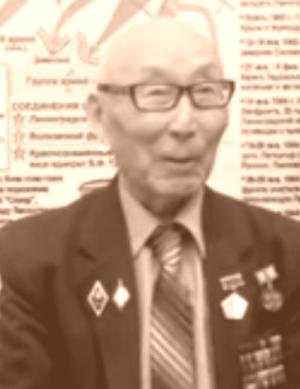
Alekseev Anton Semenovich
Alekseev Anton Semenovich was drafted into the army in 1942, took a direct part in the battles in breaking the blockade of Leningrad. In mid-June 1941, the last bells rang in schools throughout the country. On June 22, 1941, in the small collective farm Negda, Irkutsk region, graduates, including Anton Alekseev, dispersed to their homes after the school ball in the silence before dawn. In those minutes they did not yet know that the war had begun ... After the prom, the children of Nagdean High School gathered at the school to put things in order after the festivities. In the building, they were met by an alarmed technician: - War, guys. Molotov said on the radio that many cities had already been bombed in the west of the country. - I dreamed of going to Irkutsk, to learn to be a historian, - recalls the veteran of the Great Patriotic War. - Instead, I went to work on a collective farm. I knew that they would soon be drafted into the army. First, those guys who graduated from school a little earlier than us went to the front. They were put into a ZIS truck, about thirty people in total. They all got to the front. Only a few returned ... Some time later, summons from the military registration and enlistment office came to five of Anton Alekseev's classmates, but for some reason his name was not on the list. Anton asked his relatives to take his friends to the front. I jumped with them into the same car and drove to the recruiting station of the Cheremkhovsky district military registration and enlistment office. - I approached the captain - the head of the military registration and enlistment office: “There is no agenda. But I want to go to the front together with my classmates! Take them please!" He waved his hand and registered me. We were put on a train and sent to Ulan-Ude to the Divisional station for training at the military infantry school, where we stayed for almost eight months, '' recalls Anton Semenovich. At the beginning of the summer of 1942, almost half of the total number of cadets of the school were sent to the very millstones of the war - near Stalingrad. The remaining recruits remained to finish their training. Fighting near Leningrad .Ten days later, young guys from Siberia arrived in Leningrad, they were transported across Lake Ladoga on the steamer "Chapaev". It was dangerous to make such a transfer, because the city and its environs were under constant fire from German troops. “Of course, it was scary,” says Anton Semenovich Alekseev, a participant in the breakthrough of the blockade of Leningrad, not hiding his feelings of that time. - I saw the native Leningraders for the first time. People were exhausted ... Therefore, we decided to give extra rations - biscuits and butter - to all those in need. Anton Alekseev was appointed commander of the first platoon of the 136th rifle division. A few months later, he took part in breaking the blockade of Leningrad at the Pulkovo Heights. - From 15 to 18 January, we continued to persistently advance - this is the shock group of the Volkhov and Leningrad fronts, they went towards each other. The Germans were losing one position after another, - recalls Anton Semenovich. - In one of these attacks, I fought a German officer in hand-to-hand combat. And if not for my front-line comrade Sasha Baranov, a native of the Tver region, it is not known how this fight would have ended. He was next to him, took out my pistol and, while I was fighting the German, shot him twice. Another time we were with him on a reconnaissance sortie. Came under fire. One bullet grazed me and passed tangentially along my temple. For some time he lost consciousness, woke up from the wild cold. In the darkness I saw a branch of a fallen pine tree, caught on to it and got out of the hole. I found a bandage in my bag and bandaged my head. I called my contact, Sasha Baranov. Together they had to move to one of the workers' settlements - Zapashny. It turned out that while the soldiers went on reconnaissance, a battle began between the Germans and their fellow soldiers. When they headed for the location of their unit, they stumbled upon the Germans. We managed to escape from the pursuit and get to the place. In the field medical battalion, Anton was given the necessary assistance, after which he was sent for treatment to the hospital, where he stayed for two long months. And again to the front After being discharged, the young fighter again went to fight in the ranks of his own division. After breaking the blockade, she received the rank of 63rd Guards. Anton Alekseev, like all his fellow soldiers, fought in the 190th Guards Rifle Regiment under the command of Colonel Anatoly Georgievich Afanasyev. In 1944, Anton Semenovich took part in the battles on the Karelian Isthmus in the Vyborg direction. Here our troops broke through the enemy's defenses and liberated Vyborg on June 20, 1944, which created the conditions for the withdrawal of Finland from the war. In September - November 1944, the front formations took part in the battles in the Baltic States, in the breakthrough of the "Mannerheim Line". Here, in the western part of Latvia, the German group of troops was stationed - the 16th and 18th armies of the Wehrmacht. The place where fierce battles unfolded is listed in the historical data as the Courland Cauldron. The Soviet troops, in particular Afanasyev, were ordered not to let the German out of this cauldron, to conduct an offensive movement and eliminate the enemy.On February 16, the Courland offensive operation of the 2nd Baltic Front began, which lasted until May 8, 1945. - Here, during the storming of the fortress city of Lyubava, I received a second wound. The bullet went right through the left hand, pierced the right and got stuck inside. And again my faithful friend Sasha Baranov was next to me. He bandaged my hands and helped me get to the field hospital. It took me two more months to recover. However, Anton Semenovich did not have a chance to return to the front. He was given 45 days of leave and ordered to leave for his home. When he, together with a comrade in arms, who had to go to Arkhangelsk, arrived in Moscow, fireworks were given in the capital. “It thundered in honor of the capture of Vienna by our troops,” Anton Semyonovich continues his story. - I arrived home in April 1945. Literally a couple of weeks later, the news of Germany's surrender came to our village. For his courage and courage, Anton Semenovich was awarded the Orders of the Red Star, the Great Patriotic War I and II degrees. 70 years later Anton Semenovich shared his memories during a friendly meeting with the Minister of Social Protection of Buryatia T.A. Bykova. Looking at the family album, he recalled various episodes of his difficult life. He spoke with pride about children - he has five, grandchildren and great-grandchildren - there are eleven of them. After the war, he realized his dream - he became a historian, worked hard, managed to write and publish six books. And, despite being 91 years old, she is working on another publication of her own. At the same time, I typed all the texts on the computer. - When in besieged Leningrad we gave our rations to the civilian population, we were always told in response: "God grant that they survived, sons!" Perhaps this helped to return alive. And in recent years, the care of not only children, but also the state helps to prolong life. Free treatment at the Veterans' Hospital, the Center for Oriental Medicine, a decent pension, attention. Thanks to everyone who does not forget the veterans!
Alekseev Anton Semenovich
Alekseev Anton Semenovich was drafted into the army in 1942, took a direct part in the battles in breaking the blockade of Leningrad. In mid-June 1941, the last bells rang in schools throughout the country. On June 22, 1941, in the small collective farm Negda, Irkutsk region, graduates, including Anton Alekseev, dispersed to their homes after the school ball in the silence before dawn. In those minutes they did not yet know that the war had begun ... After the prom, the children of Nagdean High School gathered at the school to put things in order after the festivities. In the building, they were met by an alarmed technician: - War, guys. Molotov said on the radio that many cities had already been bombed in the west of the country. - I dreamed of going to Irkutsk, to learn to be a historian, - recalls the veteran of the Great Patriotic War. - Instead, I went to work on a collective farm. I knew that they would soon be drafted into the army. First, those guys who graduated from school a little earlier than us went to the front. They were put into a ZIS truck, about thirty people in total. They all got to the front. Only a few returned ... Some time later, summons from the military registration and enlistment office came to five of Anton Alekseev's classmates, but for some reason his name was not on the list. Anton asked his relatives to take his friends to the front. I jumped with them into the same car and drove to the recruiting station of the Cheremkhovsky district military registration and enlistment office. - I approached the captain - the head of the military registration and enlistment office: “There is no agenda. But I want to go to the front together with my classmates! Take them please!" He waved his hand and registered me. We were put on a train and sent to Ulan-Ude to the Divisional station for training at the military infantry school, where we stayed for almost eight months, '' recalls Anton Semenovich. At the beginning of the summer of 1942, almost half of the total number of cadets of the school were sent to the very millstones of the war - near Stalingrad. The remaining recruits remained to finish their training. Fighting near Leningrad .Ten days later, young guys from Siberia arrived in Leningrad, they were transported across Lake Ladoga on the steamer "Chapaev". It was dangerous to make such a transfer, because the city and its environs were under constant fire from German troops. “Of course, it was scary,” says Anton Semenovich Alekseev, a participant in the breakthrough of the blockade of Leningrad, not hiding his feelings of that time. - I saw the native Leningraders for the first time. People were exhausted ... Therefore, we decided to give extra rations - biscuits and butter - to all those in need. Anton Alekseev was appointed commander of the first platoon of the 136th rifle division. A few months later, he took part in breaking the blockade of Leningrad at the Pulkovo Heights. - From 15 to 18 January, we continued to persistently advance - this is the shock group of the Volkhov and Leningrad fronts, they went towards each other. The Germans were losing one position after another, - recalls Anton Semenovich. - In one of these attacks, I fought a German officer in hand-to-hand combat. And if not for my front-line comrade Sasha Baranov, a native of the Tver region, it is not known how this fight would have ended. He was next to him, took out my pistol and, while I was fighting the German, shot him twice. Another time we were with him on a reconnaissance sortie. Came under fire. One bullet grazed me and passed tangentially along my temple. For some time he lost consciousness, woke up from the wild cold. In the darkness I saw a branch of a fallen pine tree, caught on to it and got out of the hole. I found a bandage in my bag and bandaged my head. I called my contact, Sasha Baranov. Together they had to move to one of the workers' settlements - Zapashny. It turned out that while the soldiers went on reconnaissance, a battle began between the Germans and their fellow soldiers. When they headed for the location of their unit, they stumbled upon the Germans. We managed to escape from the pursuit and get to the place. In the field medical battalion, Anton was given the necessary assistance, after which he was sent for treatment to the hospital, where he stayed for two long months. And again to the front After being discharged, the young fighter again went to fight in the ranks of his own division. After breaking the blockade, she received the rank of 63rd Guards. Anton Alekseev, like all his fellow soldiers, fought in the 190th Guards Rifle Regiment under the command of Colonel Anatoly Georgievich Afanasyev. In 1944, Anton Semenovich took part in the battles on the Karelian Isthmus in the Vyborg direction. Here our troops broke through the enemy's defenses and liberated Vyborg on June 20, 1944, which created the conditions for the withdrawal of Finland from the war. In September - November 1944, the front formations took part in the battles in the Baltic States, in the breakthrough of the "Mannerheim Line". Here, in the western part of Latvia, the German group of troops was stationed - the 16th and 18th armies of the Wehrmacht. The place where fierce battles unfolded is listed in the historical data as the Courland Cauldron. The Soviet troops, in particular Afanasyev, were ordered not to let the German out of this cauldron, to conduct an offensive movement and eliminate the enemy.On February 16, the Courland offensive operation of the 2nd Baltic Front began, which lasted until May 8, 1945. - Here, during the storming of the fortress city of Lyubava, I received a second wound. The bullet went right through the left hand, pierced the right and got stuck inside. And again my faithful friend Sasha Baranov was next to me. He bandaged my hands and helped me get to the field hospital. It took me two more months to recover. However, Anton Semenovich did not have a chance to return to the front. He was given 45 days of leave and ordered to leave for his home. When he, together with a comrade in arms, who had to go to Arkhangelsk, arrived in Moscow, fireworks were given in the capital. “It thundered in honor of the capture of Vienna by our troops,” Anton Semyonovich continues his story. - I arrived home in April 1945. Literally a couple of weeks later, the news of Germany's surrender came to our village. For his courage and courage, Anton Semenovich was awarded the Orders of the Red Star, the Great Patriotic War I and II degrees. 70 years later Anton Semenovich shared his memories during a friendly meeting with the Minister of Social Protection of Buryatia T.A. Bykova. Looking at the family album, he recalled various episodes of his difficult life. He spoke with pride about children - he has five, grandchildren and great-grandchildren - there are eleven of them. After the war, he realized his dream - he became a historian, worked hard, managed to write and publish six books. And, despite being 91 years old, she is working on another publication of her own. At the same time, I typed all the texts on the computer. - When in besieged Leningrad we gave our rations to the civilian population, we were always told in response: "God grant that they survived, sons!" Perhaps this helped to return alive. And in recent years, the care of not only children, but also the state helps to prolong life. Free treatment at the Veterans' Hospital, the Center for Oriental Medicine, a decent pension, attention. Thanks to everyone who does not forget the veterans!
0 comment




2026 © Russian Military Historical Society Developed by Jetmix