

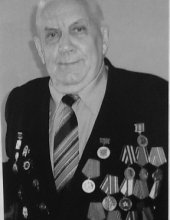




Lueva Elena Nikitichna
CITY: v. Ashurkovo Izdeshkovsky district of the Smolensk region DATE OF BIRTH: 10/30/1923 DATE OF DEATH: - HISTORY: Title: Junior Sergeant. Type of troops: artillery. Before the war, she studied at an agricultural college in the Smolensk region. She moved to Moscow to live with her parents in 1941. I would like to remember the beginning of the war. I was uploading the third year of the Western Basic Agricultural College, I had one exam to pass when they heard the declaration of war. So we did not pass the exam. By the way, my older brother studied there, and the guys the day before received diplomas of graduation from the technical school, and the next day they were mobilized into the army, and already in May 1943 a funeral came for my brother. A few days later we were taken by truck to the Dnieper. There, on the left bank of the river, in the rear of our troops, we dug an anti-tank ditch, more than three meters deep. We lived in sheds, worked in two or three shifts. They brought us food by car. We, students, worked not far from the bridge over the Dnieper (Western Front, Vyazemskaya line of defense). They worked, it seems, in the rear of the 16th army of the personnel Transcaucasian division. The officers assured us that the German tanks would not pass this ditch. How many German planes flew over our heads! Bombs, lighters fell, leaflets fell and fell. They said that our work was in vain, Moscow would still be German. It’s hard to remember when we dug the moat,me, a seventeen-year-old girl, was deciding what to do next. Of course, go to Moscow to my parents. I still remember what was said around: Moscow was bombed, and the population was evacuated. Somehow I got to Vyazma. Tickets to Moscow were given only according to Moscow documents. I stood in a long line, but they didn't give me a ticket. I again stood at the back of the line. What I hoped for is unclear. Shells burst all around, fires blazed, screams and groans were everywhere, me, hungry, was in someone's detached state. But my hope was justified. A teacher of our technical school accidentally saw me in the queue. He, already a military officer, traveled for an appointment and transported his family. He took me a ticket as a nanny of his children. What a joy it was when I saw Moscow almost unchanged. Of course it became stern, she was all in disguise, but her parents were safe and sound. Soon I was again mobilized to build fortifications in the Khimki area. It's strange to remember now, but while you get from Khimki to Maryina Roshcha, where I lived, they will announce three or four times, then alarms, then hang-ups. You’ll get home by morning, and an hour later you’ll go to work again. During alarms, transport stopped. Then she worked for a short time at a garment factory, sewing underwear for the army. We worked in shifts day and night. You fall asleep at a sewing machine, sew a finger with a needle, wake up from pain, go to the first-aid post (he was right in the shop), help and go to work again. In early April 1942, she was mobilized by the Oktyabrsky District Military Commissariat of Moscow on the recommendation of the District Komsomol Committee. She passed a medical examination at the regional military registration and enlistment office and instead of a passport received a summons to the Red Army. They said that our recruitment was the first official Komsomol recruitment of girls. We were sent to the 193rd Anti-Aircraft Artillery Regiment to defend Moscow on April 6, 1942. Conditions in the army for girls were initially somewhat different from those for men. For example, we were given 600 grams of bread each, men for as much as 800. Boots are two or three more numbers. But soon everything returned to normal - we became equal soldiers. Very soon they mastered the work on anti-aircraft fire control devices and replaced the men with these numbers. I had the best stereoscopic vision, and I became a stereoscopist (rangefinder). There were four of us in the calculation. The device increased the target by 24 times, so our data for firing guns at German aircraft were the main ones. We determined the type of aircraft, flight range, flight angle and transmitted it to the anti-aircraft fire control device (AAFCE). When the Nazi planes were not visible, the data was given from the command post, and we still observed, focusing on sounds, or illuminated with searchlights. I remember the first baptism of fire. Night, a heavy rumbling rumble with interruptions is heard. The target is not visible. In such cases, they fired at the command post data. From above, shell fragments fall like hail. The planes never reached Moscow and dropped their deadly cargo somewhere. How many such days and nights were there with visible and invisible goals! It was very annoying when a reconnaissance aircraft was flying at an altitude of 11-12 km, and the guns could effectively hit targets only up to an altitude of 9,600 m. But the bombers did not rise to such a height. And how much joy there was ... A heavy German bomber is flying. We observe, giving the coordinates of the flight. At a certain distance, when approaching Moscow, our anti-aircraft guns begin to work, and you look: the plane will circle, circle and fly back, dropping its cargo somewhere, not reaching Moscow. I don't remember a single case when a fascist vulture flew through our security zone. And how many of them, "under-flight", turned home! The intelligence officers flew many times at high altitudes, and here we were powerless, we could only observe whether they would suddenly lower the altitude in order to transmit the command to destroy them. German aircraft flew to Moscow in small and large groups, at different altitudes. It seemed that some were flying away, others were arriving. Sometimes during breaks it was possible to eat. All the time they lived in dugouts. Dampness, cold. We were sure to escort for visible targets. Sometimes they lowered the altitude, this was noticeable in winter. You catch the target with the eyepieces of the device and watch it for hours, especially the reconnaissance target; it is impossible to tear off the eyepieces, the entire nasopharynx freezes. I would like to remember the first fireworks. It is a pity that I do not remember which city was liberated. The battery received an order: the gunners with guns to arrive at the disposal of the command of the Moscow Military District. Only the instructors and the utility unit remained. We said goodbye to our boys from the gun crew (all of them were conscripts who had not served a little due to the outbreak of the war). They thought that they were being sent to the front line, since the army had already gone on the offensive. In the evening we hear a fireworks display, and a few hours later our guns returned with crews. Then our 6th battery always went to the fireworks. Combat German aircraft, reconnaissance aircraft flew almost until the end of the war, apparently, it was difficult for them to come to terms with the fact that Moscow remained undefeated. Moscow found itself under the reliable protection of anti-aircraft gunners and fighter pilots. The heavy fire of our anti-aircraft guns, the ability to conduct aimed fire - all this served to save Moscow from great destruction, to preserve our beloved capital. It is not for nothing that our division, the first of the anti-aircraft artillery divisions, was awarded the title of the Guards. Our division remained to protect Moscow until the end of the war. I served in it until the end of the war. She was demobilized in July 1945 with the rank of junior sergeant of the guard. During the war, parents worked in the manufacture of concrete structures for the construction of defensive fortifications. Soon my father was mobilized into the 302nd Separate City Battalion of the Moscow Air Defense Forces, where he served until May 17, 1945. Finally, the long-awaited Victory came. It is impossible to describe the joy with which we greeted the Victory salute! Now, after many years, it is still impossible to understand why it so happened that the Germans could bypass our fortifications on the Dnieper, surrounding several armies and divisions, and take hundreds of thousands of our soldiers and officers prisoner, from where the reports were taken that Moscow was bombed and etc. War. How much sorrow and suffering it brings! People who start wars probably have nothing human. Only in our little family did a brother die in the prime of his life, a sick father came from the war and soon died, and where I studied, everything was destroyed by the Germans, and therefore it was impossible to restore educational documents. And how I wanted to learn! But we loved the Motherland and did everything to win, sparing no effort. “The life of every soldier belongs to the Fatherland,” said the appeal of the Military Council of the Western Front, and we honorably performed our military duty. With great difficulty, through the teachers of the agricultural technical school in the ministry, she received a certificate of education and in 1961 she graduated with honors from the All-Union Correspondence College of Light Industry. In the same year, I was admitted to the All-Union Correspondence Institute of Textile and Light Industry without exams, but I could not graduate. She worked all her life, the last 25 years - at a fur factory. In August 1945, she married her commander Mikhail Kuzmich, Lyuev. We lived with him in good agreement for more than 55 years. He was a very kind person. He died in 2001. Blessed memory of him! And then our great-granddaughter was born.
Lueva Elena Nikitichna
CITY: v. Ashurkovo Izdeshkovsky district of the Smolensk region DATE OF BIRTH: 10/30/1923 DATE OF DEATH: - HISTORY: Title: Junior Sergeant. Type of troops: artillery. Before the war, she studied at an agricultural college in the Smolensk region. She moved to Moscow to live with her parents in 1941. I would like to remember the beginning of the war. I was uploading the third year of the Western Basic Agricultural College, I had one exam to pass when they heard the declaration of war. So we did not pass the exam. By the way, my older brother studied there, and the guys the day before received diplomas of graduation from the technical school, and the next day they were mobilized into the army, and already in May 1943 a funeral came for my brother. A few days later we were taken by truck to the Dnieper. There, on the left bank of the river, in the rear of our troops, we dug an anti-tank ditch, more than three meters deep. We lived in sheds, worked in two or three shifts. They brought us food by car. We, students, worked not far from the bridge over the Dnieper (Western Front, Vyazemskaya line of defense). They worked, it seems, in the rear of the 16th army of the personnel Transcaucasian division. The officers assured us that the German tanks would not pass this ditch. How many German planes flew over our heads! Bombs, lighters fell, leaflets fell and fell. They said that our work was in vain, Moscow would still be German. It’s hard to remember when we dug the moat,me, a seventeen-year-old girl, was deciding what to do next. Of course, go to Moscow to my parents. I still remember what was said around: Moscow was bombed, and the population was evacuated. Somehow I got to Vyazma. Tickets to Moscow were given only according to Moscow documents. I stood in a long line, but they didn't give me a ticket. I again stood at the back of the line. What I hoped for is unclear. Shells burst all around, fires blazed, screams and groans were everywhere, me, hungry, was in someone's detached state. But my hope was justified. A teacher of our technical school accidentally saw me in the queue. He, already a military officer, traveled for an appointment and transported his family. He took me a ticket as a nanny of his children. What a joy it was when I saw Moscow almost unchanged. Of course it became stern, she was all in disguise, but her parents were safe and sound. Soon I was again mobilized to build fortifications in the Khimki area. It's strange to remember now, but while you get from Khimki to Maryina Roshcha, where I lived, they will announce three or four times, then alarms, then hang-ups. You’ll get home by morning, and an hour later you’ll go to work again. During alarms, transport stopped. Then she worked for a short time at a garment factory, sewing underwear for the army. We worked in shifts day and night. You fall asleep at a sewing machine, sew a finger with a needle, wake up from pain, go to the first-aid post (he was right in the shop), help and go to work again. In early April 1942, she was mobilized by the Oktyabrsky District Military Commissariat of Moscow on the recommendation of the District Komsomol Committee. She passed a medical examination at the regional military registration and enlistment office and instead of a passport received a summons to the Red Army. They said that our recruitment was the first official Komsomol recruitment of girls. We were sent to the 193rd Anti-Aircraft Artillery Regiment to defend Moscow on April 6, 1942. Conditions in the army for girls were initially somewhat different from those for men. For example, we were given 600 grams of bread each, men for as much as 800. Boots are two or three more numbers. But soon everything returned to normal - we became equal soldiers. Very soon they mastered the work on anti-aircraft fire control devices and replaced the men with these numbers. I had the best stereoscopic vision, and I became a stereoscopist (rangefinder). There were four of us in the calculation. The device increased the target by 24 times, so our data for firing guns at German aircraft were the main ones. We determined the type of aircraft, flight range, flight angle and transmitted it to the anti-aircraft fire control device (AAFCE). When the Nazi planes were not visible, the data was given from the command post, and we still observed, focusing on sounds, or illuminated with searchlights. I remember the first baptism of fire. Night, a heavy rumbling rumble with interruptions is heard. The target is not visible. In such cases, they fired at the command post data. From above, shell fragments fall like hail. The planes never reached Moscow and dropped their deadly cargo somewhere. How many such days and nights were there with visible and invisible goals! It was very annoying when a reconnaissance aircraft was flying at an altitude of 11-12 km, and the guns could effectively hit targets only up to an altitude of 9,600 m. But the bombers did not rise to such a height. And how much joy there was ... A heavy German bomber is flying. We observe, giving the coordinates of the flight. At a certain distance, when approaching Moscow, our anti-aircraft guns begin to work, and you look: the plane will circle, circle and fly back, dropping its cargo somewhere, not reaching Moscow. I don't remember a single case when a fascist vulture flew through our security zone. And how many of them, "under-flight", turned home! The intelligence officers flew many times at high altitudes, and here we were powerless, we could only observe whether they would suddenly lower the altitude in order to transmit the command to destroy them. German aircraft flew to Moscow in small and large groups, at different altitudes. It seemed that some were flying away, others were arriving. Sometimes during breaks it was possible to eat. All the time they lived in dugouts. Dampness, cold. We were sure to escort for visible targets. Sometimes they lowered the altitude, this was noticeable in winter. You catch the target with the eyepieces of the device and watch it for hours, especially the reconnaissance target; it is impossible to tear off the eyepieces, the entire nasopharynx freezes. I would like to remember the first fireworks. It is a pity that I do not remember which city was liberated. The battery received an order: the gunners with guns to arrive at the disposal of the command of the Moscow Military District. Only the instructors and the utility unit remained. We said goodbye to our boys from the gun crew (all of them were conscripts who had not served a little due to the outbreak of the war). They thought that they were being sent to the front line, since the army had already gone on the offensive. In the evening we hear a fireworks display, and a few hours later our guns returned with crews. Then our 6th battery always went to the fireworks. Combat German aircraft, reconnaissance aircraft flew almost until the end of the war, apparently, it was difficult for them to come to terms with the fact that Moscow remained undefeated. Moscow found itself under the reliable protection of anti-aircraft gunners and fighter pilots. The heavy fire of our anti-aircraft guns, the ability to conduct aimed fire - all this served to save Moscow from great destruction, to preserve our beloved capital. It is not for nothing that our division, the first of the anti-aircraft artillery divisions, was awarded the title of the Guards. Our division remained to protect Moscow until the end of the war. I served in it until the end of the war. She was demobilized in July 1945 with the rank of junior sergeant of the guard. During the war, parents worked in the manufacture of concrete structures for the construction of defensive fortifications. Soon my father was mobilized into the 302nd Separate City Battalion of the Moscow Air Defense Forces, where he served until May 17, 1945. Finally, the long-awaited Victory came. It is impossible to describe the joy with which we greeted the Victory salute! Now, after many years, it is still impossible to understand why it so happened that the Germans could bypass our fortifications on the Dnieper, surrounding several armies and divisions, and take hundreds of thousands of our soldiers and officers prisoner, from where the reports were taken that Moscow was bombed and etc. War. How much sorrow and suffering it brings! People who start wars probably have nothing human. Only in our little family did a brother die in the prime of his life, a sick father came from the war and soon died, and where I studied, everything was destroyed by the Germans, and therefore it was impossible to restore educational documents. And how I wanted to learn! But we loved the Motherland and did everything to win, sparing no effort. “The life of every soldier belongs to the Fatherland,” said the appeal of the Military Council of the Western Front, and we honorably performed our military duty. With great difficulty, through the teachers of the agricultural technical school in the ministry, she received a certificate of education and in 1961 she graduated with honors from the All-Union Correspondence College of Light Industry. In the same year, I was admitted to the All-Union Correspondence Institute of Textile and Light Industry without exams, but I could not graduate. She worked all her life, the last 25 years - at a fur factory. In August 1945, she married her commander Mikhail Kuzmich, Lyuev. We lived with him in good agreement for more than 55 years. He was a very kind person. He died in 2001. Blessed memory of him! And then our great-granddaughter was born.
0 comment




2026 © Russian Military Historical Society Developed by Jetmix