


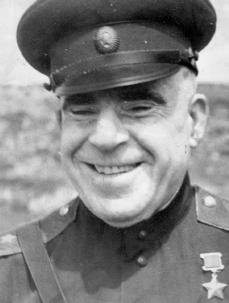

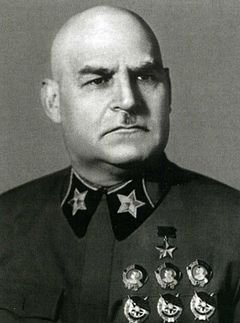
Kulik Grigory Ivanovich
Military Rank is Lieutenant General. Branch of Troops: Ground Forces, Military Air Forces (except Naval aviation), shore service, NKVD troops, Frontier troops.
Grigory Ivanovich Kulik, Marshal of the Soviet Union (1940). Hero of the Soviet Union (21.3.1940). Military ranks: 20 November 1935 he obtained the rank of Corps Commander (Komkor), 14 June 1937 he assigned the rank of Commander of the 2nd Rank, 8 February 1939 he assigned the rank of Commander of the 1st Rank, May 7 1940 he was awarded the rank of the Marshal of the Soviet Union, March 17 1942 he was given the rank of Major General, April 15 1943 he assigned the rank of Lieutenant General and July 19 1945 he assigned the rank of Major General. In the Russian Army since November 1912, in the rank of Warrant Officer. Participated in World War I on the Western front as the Commander of Artillery platoon. In the Red Guard since 1917. In the Red Army since 1918. He graduated from the Ensign school in 1915 and completed the Higher Command Staff courses in 1924. In 1932 he graduated from the Military Academy named after M. Frunze. During the February revolution of 1917 he was elected Chairman of the soldiers' Committee of the battery, artillery division, brigade and the 9th infantry division. He led revolutionary work among the soldiers, for which he was arrested. In November 1917, in Poltava, he formed a Red guard detachment, which under his command in 1918 fought against the Haidamaks and the Germans; in April 1918, the detachment became part of the 5th Ukrainian army. G. I. Kulik was elected Chief of artillery of this army. He had participated in the Civil war. In June 1918, during the reorganization of the 5th Army into the 10th G. I. Kulik was appointed Chief of artillery of the Army. In this position, he participated in the defense of Tsaritsyn 1918-1919. In March 1919, as a military Commissar of the Kharkiv province and head of the garrison of Kharkov, he led the suppression of the Menshevik and socialist-revolutionary uprisings in Belgorod, Sumy, and Kharkov. In May 1919, G. I. Kulik was the Chief of the artillery of the newly created 14th Army, which participated in the liquidation of the armed formations of N. A. Grigoriev and the defeat of the army of General V. May-Mayevsky near the city of Kromy (Oryol region). Since June 1920, he became the Chief of artillery of the 1st Cavalry army, which participated in the battles against the troops of A. I. Denikin, belopolyakov and P. N. Wrangel. In the interwar period, from June 1921, G. I. Kulik is the Chief of artillery of the SKVO (North Caucass Millitary District), and then Assistant Chief of artillery of the Red Army, from 1925, Deputy Chairman of the Military-industrial Committee of the Supreme Economic Council. Since November 1926 he is Chief of the Artillery Department of the Red Army. From April to October 1930, he commanded the Moscow Proletarian division. Since 1932, commander and Commissar of the 3rd Rifle corps, since May 1937, head of the Artillery Department of the Red Army. Since January 1939, the USSR Deputy People's Commissar of Defense and Head of the Main artillery Department of the Red Army. In the first days of the Great Patriotic War, G. I. Kulik was sent to help the command of the Western front. On June 23, he flew to Bialystok to direct the actions of the 3rd and 10th Armies and organize a counterattack by the cavalry-mechanized group. Together with the troops of the 10th Army, he was encircled, lost contact and came out to his own only two weeks later. In September 1941, he took command of the 54th Separate Army. In October G. I. Kulik was entrusted with the formation of the 56th Separate Army, aimed at protecting Rostov. On November 9, 1941, by personal order of J. V. Stalin, he was sent to Kerch to help the command of the 51st Army. The troops that he received under his command were in a deplorable state — most of the divisions had 300 men. It was not possible to hold the position, and on November 16 Kerch was surrendered. On 19 November, after the evacuees from the Crimea troops took defensive positions on the Taman Peninsula, Kulik, as Stavka’s representative on the Southern Front, departed for Rostov-on-Don. The next day, November 20, 1941, German troops entered the city. After another failure, he was recalled to Moscow. On February 16, 1942, Marshal Kulik G. I. was charged under article 193-21 of the Supreme Court of the USSR, point "b" of the Criminal Code of the Russian Federation in military misconduct, namely that he was in November 1941, as authorized by the Supreme Command on the Kerch direction contrary to the order Rate gave the troops the order the abandonment of the city of Kerch. The court found G. I. Kulik guilty and filed a petition before the Presidium of the Supreme Soviet of the USSR to deprive G. I. Kulik of the military rank of Marshal of the Soviet Union, the title of Hero of the Soviet Union and all government awards. In accordance with this verdict, the USSR Presidium of the Supreme Soviet adopted a decree on February 19, 1942, by which G. I. Kulik was stripped of the title of Hero of the Soviet Union, three orders of Lenin, three orders of the Red Banner and other awards, and stripped of the title of Marshal of the Soviet Union. Soon he was removed from the Central Committee of the CPSU(b). By the Decree of the Council of People's Commissars of the USSR on March 17, 1942, G. I. Kulik was awarded the military rank of Major General. From March 1942, Major General Kulik G. I. was at the disposal of the People's Commissar of Defense of the USSR. In September-October 1942, Major General G. I. Kulik was sent to the Kalinin front to clarify the situation and assist in organizing an offensive operation of the 22nd Army to defeat the enemy's Bely group (part of operation “Mars”, conducted by the troops of the Kalinin front against Army Center group and aimed at shackling the main enemy forces and preventing their transfer to the South-Western direction of the Soviet-German front). On April 15, 1943, he was promoted to the rank of Lieutenant General and appointed commander of the 4th Guards’ Army, which was part of the Steppe military district. With the beginning of the transformation of the district into the Steppe front, the Army was withdrawn to the Suptime Command reserve. From 19 to 23 July, during the fighting in the Belgorod-Kharkiv direction, the Army fought as part of the Steppe front. Then until August again in reserve. With the inclusion of the 4th Guards Army in the Voronezh front on August 13, 1943, G. I. Kulik took part in the Belgorod-Kharkiv strategic offensive operation. In September, he was removed from command of the army and transferred to the Main Directorate of personnel. From January 1944 to April 1945, he was Deputy head of the Main Department of formation and staffing of the red army. On April 12, 1945, G. I. Kulik was suspended from work "for inactivity". By the decree of the Council of People's Commissars of the USSR of July 19, 1945, Kulik G. I. was demoted to the rank of Major General. In the summer of 1945, he was appointed Deputy Commander of the Volga military district. On June 28, 1946, he was retired. On January 11, 1947, he was arrested. On August 23, 1950, he was sentenced to death by firing squad. On August 24, 1950, G. I. Kulik was shot. The body was buried on the territory of the Donskoy cemetery in Moscow. Kulik was rehabilitated in 1956. September 28, 1957 by the decree of the USSR Presidium of the Supreme Soviet G. I. Kulik was posthumously restored to the military rank of Marshal of the Soviet Union, the title of Hero of the Soviet Union and the rights to orders.
Kulik Grigory Ivanovich
Military Rank is Lieutenant General. Branch of Troops: Ground Forces, Military Air Forces (except Naval aviation), shore service, NKVD troops, Frontier troops.
Grigory Ivanovich Kulik, Marshal of the Soviet Union (1940). Hero of the Soviet Union (21.3.1940). Military ranks: 20 November 1935 he obtained the rank of Corps Commander (Komkor), 14 June 1937 he assigned the rank of Commander of the 2nd Rank, 8 February 1939 he assigned the rank of Commander of the 1st Rank, May 7 1940 he was awarded the rank of the Marshal of the Soviet Union, March 17 1942 he was given the rank of Major General, April 15 1943 he assigned the rank of Lieutenant General and July 19 1945 he assigned the rank of Major General. In the Russian Army since November 1912, in the rank of Warrant Officer. Participated in World War I on the Western front as the Commander of Artillery platoon. In the Red Guard since 1917. In the Red Army since 1918. He graduated from the Ensign school in 1915 and completed the Higher Command Staff courses in 1924. In 1932 he graduated from the Military Academy named after M. Frunze. During the February revolution of 1917 he was elected Chairman of the soldiers' Committee of the battery, artillery division, brigade and the 9th infantry division. He led revolutionary work among the soldiers, for which he was arrested. In November 1917, in Poltava, he formed a Red guard detachment, which under his command in 1918 fought against the Haidamaks and the Germans; in April 1918, the detachment became part of the 5th Ukrainian army. G. I. Kulik was elected Chief of artillery of this army. He had participated in the Civil war. In June 1918, during the reorganization of the 5th Army into the 10th G. I. Kulik was appointed Chief of artillery of the Army. In this position, he participated in the defense of Tsaritsyn 1918-1919. In March 1919, as a military Commissar of the Kharkiv province and head of the garrison of Kharkov, he led the suppression of the Menshevik and socialist-revolutionary uprisings in Belgorod, Sumy, and Kharkov. In May 1919, G. I. Kulik was the Chief of the artillery of the newly created 14th Army, which participated in the liquidation of the armed formations of N. A. Grigoriev and the defeat of the army of General V. May-Mayevsky near the city of Kromy (Oryol region). Since June 1920, he became the Chief of artillery of the 1st Cavalry army, which participated in the battles against the troops of A. I. Denikin, belopolyakov and P. N. Wrangel. In the interwar period, from June 1921, G. I. Kulik is the Chief of artillery of the SKVO (North Caucass Millitary District), and then Assistant Chief of artillery of the Red Army, from 1925, Deputy Chairman of the Military-industrial Committee of the Supreme Economic Council. Since November 1926 he is Chief of the Artillery Department of the Red Army. From April to October 1930, he commanded the Moscow Proletarian division. Since 1932, commander and Commissar of the 3rd Rifle corps, since May 1937, head of the Artillery Department of the Red Army. Since January 1939, the USSR Deputy People's Commissar of Defense and Head of the Main artillery Department of the Red Army. In the first days of the Great Patriotic War, G. I. Kulik was sent to help the command of the Western front. On June 23, he flew to Bialystok to direct the actions of the 3rd and 10th Armies and organize a counterattack by the cavalry-mechanized group. Together with the troops of the 10th Army, he was encircled, lost contact and came out to his own only two weeks later. In September 1941, he took command of the 54th Separate Army. In October G. I. Kulik was entrusted with the formation of the 56th Separate Army, aimed at protecting Rostov. On November 9, 1941, by personal order of J. V. Stalin, he was sent to Kerch to help the command of the 51st Army. The troops that he received under his command were in a deplorable state — most of the divisions had 300 men. It was not possible to hold the position, and on November 16 Kerch was surrendered. On 19 November, after the evacuees from the Crimea troops took defensive positions on the Taman Peninsula, Kulik, as Stavka’s representative on the Southern Front, departed for Rostov-on-Don. The next day, November 20, 1941, German troops entered the city. After another failure, he was recalled to Moscow. On February 16, 1942, Marshal Kulik G. I. was charged under article 193-21 of the Supreme Court of the USSR, point "b" of the Criminal Code of the Russian Federation in military misconduct, namely that he was in November 1941, as authorized by the Supreme Command on the Kerch direction contrary to the order Rate gave the troops the order the abandonment of the city of Kerch. The court found G. I. Kulik guilty and filed a petition before the Presidium of the Supreme Soviet of the USSR to deprive G. I. Kulik of the military rank of Marshal of the Soviet Union, the title of Hero of the Soviet Union and all government awards. In accordance with this verdict, the USSR Presidium of the Supreme Soviet adopted a decree on February 19, 1942, by which G. I. Kulik was stripped of the title of Hero of the Soviet Union, three orders of Lenin, three orders of the Red Banner and other awards, and stripped of the title of Marshal of the Soviet Union. Soon he was removed from the Central Committee of the CPSU(b). By the Decree of the Council of People's Commissars of the USSR on March 17, 1942, G. I. Kulik was awarded the military rank of Major General. From March 1942, Major General Kulik G. I. was at the disposal of the People's Commissar of Defense of the USSR. In September-October 1942, Major General G. I. Kulik was sent to the Kalinin front to clarify the situation and assist in organizing an offensive operation of the 22nd Army to defeat the enemy's Bely group (part of operation “Mars”, conducted by the troops of the Kalinin front against Army Center group and aimed at shackling the main enemy forces and preventing their transfer to the South-Western direction of the Soviet-German front). On April 15, 1943, he was promoted to the rank of Lieutenant General and appointed commander of the 4th Guards’ Army, which was part of the Steppe military district. With the beginning of the transformation of the district into the Steppe front, the Army was withdrawn to the Suptime Command reserve. From 19 to 23 July, during the fighting in the Belgorod-Kharkiv direction, the Army fought as part of the Steppe front. Then until August again in reserve. With the inclusion of the 4th Guards Army in the Voronezh front on August 13, 1943, G. I. Kulik took part in the Belgorod-Kharkiv strategic offensive operation. In September, he was removed from command of the army and transferred to the Main Directorate of personnel. From January 1944 to April 1945, he was Deputy head of the Main Department of formation and staffing of the red army. On April 12, 1945, G. I. Kulik was suspended from work "for inactivity". By the decree of the Council of People's Commissars of the USSR of July 19, 1945, Kulik G. I. was demoted to the rank of Major General. In the summer of 1945, he was appointed Deputy Commander of the Volga military district. On June 28, 1946, he was retired. On January 11, 1947, he was arrested. On August 23, 1950, he was sentenced to death by firing squad. On August 24, 1950, G. I. Kulik was shot. The body was buried on the territory of the Donskoy cemetery in Moscow. Kulik was rehabilitated in 1956. September 28, 1957 by the decree of the USSR Presidium of the Supreme Soviet G. I. Kulik was posthumously restored to the military rank of Marshal of the Soviet Union, the title of Hero of the Soviet Union and the rights to orders.
0 comment



2026 © Russian Military Historical Society Developed by Jetmix