


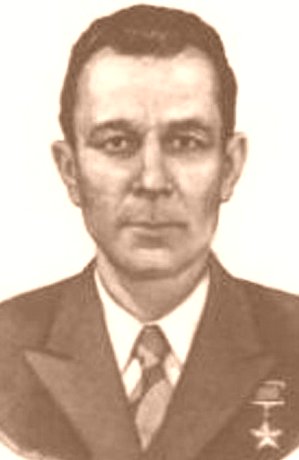


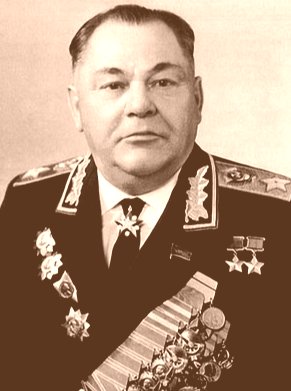
Koshevoy Petr Kirillovich
Petr Kirillovich Koshevoy (December 8, 1904-August 30, 1976) was a Soviet military commander. Commander of the Siberian military district (1957-1960), Kiev military district (1960-1965), commander-in-Chief of the group of Soviet troops in Germany (1965-1969). Marshal of The Soviet Union (1968). Twice Hero of the Soviet Union (may 16, 1944, April 19, 1945). Candidate for the Central Committee of the CPSU (1961-1971). Born on December 21, 1904 in the city of Alexandria, Kherson province of the Russian Empire (now part of the Kirovograd region of Ukraine) in a peasant family. By nationality-Ukrainian. In February 1920, at the age of 15, he joined the Red Army. The Civil war, a soldier of the 2nd regiment Cervoneascii 8th Chervonokutskyy divisions of the division commander V. M. Primakov fought in the South-Western front. He participated in the battles against the Polish army and Petliura, later fought with the detachments of N. Makhno and numerous gangs of those times in Ukraine. In August 1922, he was sent to study. In 1923, he graduated from the Crimean cavalry courses. From October 1923 to August 1924, he served in the 3rd cavalry regiment of the Chervonny Cossacks of the 1st cavalry division of the Chervonny Cossacks as a squadron Sergeant. Then he was sent to study again and in 1927 graduated From the Ukrainian cavalry school named After S. M. Budyonny. While studying in 1925, he joined the CPSU (b). From September 1927, he was a platoon commander of the 61st cavalry regiment of The Stalin Special cavalry brigade in the Moscow military district. In November 1931, he was assigned to assignments at the Department of higher education of the Moscow military district headquarters, but soon transferred as an assistant commander of a machine-gun squadron to the 1st Soviet United military school of the red army named after VTsIK (All-Russian Central Executive Comittee), then a platoon commander of a mechanized division in this school. In the same year, 1932, Koshevoy himself graduated from the Armored improvement courses of the red army command staff in Leningrad. From September 1932 to may 1936, he again served in the 61st cavalry regiment of the I. V. Special cavalry division. Stalin was head of the regimental school and assistant chief of operations of the division staff, and later became chief of staff of the 61st cavalry regiment. In 1936, he was sent to study at the Academy. In 1939, he graduated from the Frunze Military Academy of the red army. From January 1939-chief of staff of the 15th cavalry division of the TRANS-Baikal military district, from February 1940-commander of the 65th rifle division in this district. In October 1941, the division began moving to the front. On the way, the division was delayed for several days and took part in the parade in Kuibyshev on November 7, 1941. Then it was sent to the Volkhov front. Participant of the great Patriotic war since November 1941. Member of the Tikhvin offensive operation in the 4th separate army. From July 1942-commander of the 24th guards rifle division. The division under his command, after being replenished in the reserve in early August, was transferred to the 8th army of the Volkhov front, and participated in the Sinyavinsky offensive operation in 1942. In October, it was again withdrawn to the reserve of the VGK Headquarters and after replenishment in the Tambov region in December, it arrived at the Stalingrad front. Participated in the Kotelnikovskaya operation, repulsing the attempt of army group "Don " by field Marshal Manstein to unblock the 6th German army of General Paulus surrounded in Stalingrad. In January, the division moved to the southern front, where it participated in the North Caucasus and Rostov offensive operations, and in July-in the Mius offensive operation. From August 1943-commander of the 63rd rifle corps of the 51st army of the southern front, participated in the Donbass offensive operation. Then, in the 44th and 51st armies of the 4th Ukrainian front, he participated in the Melitopol offensive. The commander of the 63rd rifle corps (51st army, 4th Ukrainian front), major General P. K. Koshevoy, especially showed military skill during the Crimean offensive operation. During the breakout of the multi-layered German long-term defense, General Koshevoy's 63rd rifle corps broke through several enemy defense lines in the inter-lake defiles on the Karanka, TUI-tube section, occupied the strongly fortified points of Karanka, TUI-tube, Samay, Ass-man, Tomashevka, Chuchak, kirk-Yishun in stubborn battles from April 8 to April 10, and on April 10 broke out into the operational expanse of the Crimean Peninsula. At the same time, the corps was initially assigned the task of delivering an auxiliary strike, but its actions were so successful that the commander of the 51st army, General Ya. g. kreizer, moved the direction of the main attack of the army to the offensive zone of the 63rd rifle corps. Rapidly pursuing the enemy, the corps broke into Dzhankoy on April 11, and on April 13 — into Simferopol, cutting the enemy's 17th army in two. In subsequent battles, by April 18, 1944, the corps reached the border of the Chernaya river and the approaches to Sevastopol, liberating the cities of Bakhchisarai, Balaklava, Karasu-Bazar and more than 200 settlements. In these battles destroyed: 6371 soldiers and officers of the enemy, 121 machine guns, 181 artillery pieces of different calibers and 20 tanks. It was captured: 2120 horses, 8193 rifles and submachine guns, 775 hand and machine guns, 61 mortars, 304 guns of various calibers, a lot of small arms and military equipment, captured 8471 enemy soldiers and officers. The corps also performed well during the assault on Sevastopol, including the main German fortifications on Sapun mountain. By decree of the Presidium of the Supreme Soviet of the USSR on may 16, 1944, major General Pyotr Kirillovich Koshevoy was awarded the title Hero of the Soviet Union with the order of Lenin and the gold Star medal for his successful leadership of military formations and for his bravery and heroism. From may 1944-commander of the 71st rifle corps in the 31st army of the 3rd Belorussian front. He distinguished himself in the Belorussian and Gumbinnen-Goldap offensive operations. Since January 1945-commander of the 36th guards rifle corps of the 11th guards army of the 3rd Belorussian front. Under his command, the corps fought offensive battles in the East Prussian offensive, ending the war with participation in the Zemland offensive and in the storming of the fortress city of Pillau. But he especially proved himself during the assault on Konigsberg. By decree of the Presidium of the Supreme Soviet of the USSR on April 19, 1945, for exemplary performance of combat tasks of the command on the front of the fight against the Nazi invaders and the courage and heroism of the guard, Lieutenant General Pyotr Kirillovich Koshevoy was awarded the title Hero of the Soviet Union with the second gold Star medal. Pyotr Kirillovich Koshevoy proved to be an initiative and strong-willed commander. For the successful combat operations of the units that he commanded during the great Patriotic war, 15 times were noted in the orders of the Supreme Commander. Guards Lieutenant General P. K. Koshevoy commanded the combined regiment of the 3rd Belorussian front at the Victory parade. At the end of the great Patriotic war, he remains in the position of commander of the 36th guards rifle corps. From July 1946 to March 1947-commander of the 6th guards army (Baltic military district). From 1947 to 1948, he attended Higher academic courses at the Voroshilov Higher military Academy. From April 1948-commander of the 5th army (Primorsky and far Eastern military districts), from June 1954 — commander of the 11th guards army (Baltic military district). Since July 1955 — first Deputy commander-in-Chief Of the group of Soviet troops in Germany. From July 1957-commander of the Siberian military district, from April 1960-commander of the Kiev military district. The highest position held by P. K. Koshevoy — in January 1965, he was appointed commander-in-Chief Of the group of Soviet troops in Germany. During this time, he did much to strengthen the combat capability of the Group, which "should have been ready to reach Gibraltar in three days". On April 15, 1968, General of the army Koshevoy was awarded (together with P. F. Batitsky) the title of Marshal of the Soviet Union. As commander-in-Chief of the group of Soviet troops in Germany, Koshevoy took part in organizing the invasion of Czechoslovakia on August 20, 1968 by units of the 20th guards army from the Group, which, in accordance with the plans for Operation Danube, established control over the main objects of the Czechoslovak capital, Prague. In October 1969, Koshevoy was replaced as commander-in-Chief and replaced by V. G. Kulikov. From that time until the end of his life, he held the honorary position of inspector General of the Group of General inspectors of the Ministry of defense of the USSR." Deputy of the Supreme Soviet of the USSR of the 6th and 7th convocations (1962-1970). He died on August 30, 1976. P. K. Koshevoy was the first of those who died in the rank of Marshals of the Soviet Union, buried not at the Kremlin wall, but at the Novodevichy cemetery in Moscow (plot 7). Rewards: Twice Hero Of The Soviet Union (16.05.1944, 09.04.1945); five orders of Lenin (17.12.1941, 16.05.1944, 30.04.1945, 09.12.1964, 22.02.1968); order of the October Revolution (04.12.1974); three orders of the red banner (03.11.1944, 15.11.1950, 21.02.1969); Order of Suvorov 2nd degree (31.03.1943); two orders of Kutuzov 2nd degree (17.09.1943, 04.07.1944); order of Bogdan Khmelnitsky 1st degree (05.05.1945); USSR medals; foreign awards. By order Of the Minister of defense of the USSR of April 9, 1977, the name of Peter Kirillovich is assigned to the Omsk higher tank engineering school of the order of the red Star. Memorial plaque in memory of P. K. Koshevogo installed in Novosibirsk on the building where the headquarters of the Siberian military district (Derzhavina street, 3). The project 302 Viking Akun was named after Marshal Koshevoy. Bust in the city of Omsk. Bust in the city of Alexandria. Bust in the city of Volgodonsk and the street named after him. Honorary citizen of Sevastopol (6.05.1974). Works: P. K. Koshevoy In the years of the military. — Moscow: Voenizdat, 1978. - 283 p — - (Military memoirs). Koshevoy P. K. For Leningrad! For Stalingrad! For the Crimea!. - Moscow: Algorithm, 2017. - 331 p. - (Feat. Remember The Heroes Of The Soviet Union).
Koshevoy Petr Kirillovich
Petr Kirillovich Koshevoy (December 8, 1904-August 30, 1976) was a Soviet military commander. Commander of the Siberian military district (1957-1960), Kiev military district (1960-1965), commander-in-Chief of the group of Soviet troops in Germany (1965-1969). Marshal of The Soviet Union (1968). Twice Hero of the Soviet Union (may 16, 1944, April 19, 1945). Candidate for the Central Committee of the CPSU (1961-1971). Born on December 21, 1904 in the city of Alexandria, Kherson province of the Russian Empire (now part of the Kirovograd region of Ukraine) in a peasant family. By nationality-Ukrainian. In February 1920, at the age of 15, he joined the Red Army. The Civil war, a soldier of the 2nd regiment Cervoneascii 8th Chervonokutskyy divisions of the division commander V. M. Primakov fought in the South-Western front. He participated in the battles against the Polish army and Petliura, later fought with the detachments of N. Makhno and numerous gangs of those times in Ukraine. In August 1922, he was sent to study. In 1923, he graduated from the Crimean cavalry courses. From October 1923 to August 1924, he served in the 3rd cavalry regiment of the Chervonny Cossacks of the 1st cavalry division of the Chervonny Cossacks as a squadron Sergeant. Then he was sent to study again and in 1927 graduated From the Ukrainian cavalry school named After S. M. Budyonny. While studying in 1925, he joined the CPSU (b). From September 1927, he was a platoon commander of the 61st cavalry regiment of The Stalin Special cavalry brigade in the Moscow military district. In November 1931, he was assigned to assignments at the Department of higher education of the Moscow military district headquarters, but soon transferred as an assistant commander of a machine-gun squadron to the 1st Soviet United military school of the red army named after VTsIK (All-Russian Central Executive Comittee), then a platoon commander of a mechanized division in this school. In the same year, 1932, Koshevoy himself graduated from the Armored improvement courses of the red army command staff in Leningrad. From September 1932 to may 1936, he again served in the 61st cavalry regiment of the I. V. Special cavalry division. Stalin was head of the regimental school and assistant chief of operations of the division staff, and later became chief of staff of the 61st cavalry regiment. In 1936, he was sent to study at the Academy. In 1939, he graduated from the Frunze Military Academy of the red army. From January 1939-chief of staff of the 15th cavalry division of the TRANS-Baikal military district, from February 1940-commander of the 65th rifle division in this district. In October 1941, the division began moving to the front. On the way, the division was delayed for several days and took part in the parade in Kuibyshev on November 7, 1941. Then it was sent to the Volkhov front. Participant of the great Patriotic war since November 1941. Member of the Tikhvin offensive operation in the 4th separate army. From July 1942-commander of the 24th guards rifle division. The division under his command, after being replenished in the reserve in early August, was transferred to the 8th army of the Volkhov front, and participated in the Sinyavinsky offensive operation in 1942. In October, it was again withdrawn to the reserve of the VGK Headquarters and after replenishment in the Tambov region in December, it arrived at the Stalingrad front. Participated in the Kotelnikovskaya operation, repulsing the attempt of army group "Don " by field Marshal Manstein to unblock the 6th German army of General Paulus surrounded in Stalingrad. In January, the division moved to the southern front, where it participated in the North Caucasus and Rostov offensive operations, and in July-in the Mius offensive operation. From August 1943-commander of the 63rd rifle corps of the 51st army of the southern front, participated in the Donbass offensive operation. Then, in the 44th and 51st armies of the 4th Ukrainian front, he participated in the Melitopol offensive. The commander of the 63rd rifle corps (51st army, 4th Ukrainian front), major General P. K. Koshevoy, especially showed military skill during the Crimean offensive operation. During the breakout of the multi-layered German long-term defense, General Koshevoy's 63rd rifle corps broke through several enemy defense lines in the inter-lake defiles on the Karanka, TUI-tube section, occupied the strongly fortified points of Karanka, TUI-tube, Samay, Ass-man, Tomashevka, Chuchak, kirk-Yishun in stubborn battles from April 8 to April 10, and on April 10 broke out into the operational expanse of the Crimean Peninsula. At the same time, the corps was initially assigned the task of delivering an auxiliary strike, but its actions were so successful that the commander of the 51st army, General Ya. g. kreizer, moved the direction of the main attack of the army to the offensive zone of the 63rd rifle corps. Rapidly pursuing the enemy, the corps broke into Dzhankoy on April 11, and on April 13 — into Simferopol, cutting the enemy's 17th army in two. In subsequent battles, by April 18, 1944, the corps reached the border of the Chernaya river and the approaches to Sevastopol, liberating the cities of Bakhchisarai, Balaklava, Karasu-Bazar and more than 200 settlements. In these battles destroyed: 6371 soldiers and officers of the enemy, 121 machine guns, 181 artillery pieces of different calibers and 20 tanks. It was captured: 2120 horses, 8193 rifles and submachine guns, 775 hand and machine guns, 61 mortars, 304 guns of various calibers, a lot of small arms and military equipment, captured 8471 enemy soldiers and officers. The corps also performed well during the assault on Sevastopol, including the main German fortifications on Sapun mountain. By decree of the Presidium of the Supreme Soviet of the USSR on may 16, 1944, major General Pyotr Kirillovich Koshevoy was awarded the title Hero of the Soviet Union with the order of Lenin and the gold Star medal for his successful leadership of military formations and for his bravery and heroism. From may 1944-commander of the 71st rifle corps in the 31st army of the 3rd Belorussian front. He distinguished himself in the Belorussian and Gumbinnen-Goldap offensive operations. Since January 1945-commander of the 36th guards rifle corps of the 11th guards army of the 3rd Belorussian front. Under his command, the corps fought offensive battles in the East Prussian offensive, ending the war with participation in the Zemland offensive and in the storming of the fortress city of Pillau. But he especially proved himself during the assault on Konigsberg. By decree of the Presidium of the Supreme Soviet of the USSR on April 19, 1945, for exemplary performance of combat tasks of the command on the front of the fight against the Nazi invaders and the courage and heroism of the guard, Lieutenant General Pyotr Kirillovich Koshevoy was awarded the title Hero of the Soviet Union with the second gold Star medal. Pyotr Kirillovich Koshevoy proved to be an initiative and strong-willed commander. For the successful combat operations of the units that he commanded during the great Patriotic war, 15 times were noted in the orders of the Supreme Commander. Guards Lieutenant General P. K. Koshevoy commanded the combined regiment of the 3rd Belorussian front at the Victory parade. At the end of the great Patriotic war, he remains in the position of commander of the 36th guards rifle corps. From July 1946 to March 1947-commander of the 6th guards army (Baltic military district). From 1947 to 1948, he attended Higher academic courses at the Voroshilov Higher military Academy. From April 1948-commander of the 5th army (Primorsky and far Eastern military districts), from June 1954 — commander of the 11th guards army (Baltic military district). Since July 1955 — first Deputy commander-in-Chief Of the group of Soviet troops in Germany. From July 1957-commander of the Siberian military district, from April 1960-commander of the Kiev military district. The highest position held by P. K. Koshevoy — in January 1965, he was appointed commander-in-Chief Of the group of Soviet troops in Germany. During this time, he did much to strengthen the combat capability of the Group, which "should have been ready to reach Gibraltar in three days". On April 15, 1968, General of the army Koshevoy was awarded (together with P. F. Batitsky) the title of Marshal of the Soviet Union. As commander-in-Chief of the group of Soviet troops in Germany, Koshevoy took part in organizing the invasion of Czechoslovakia on August 20, 1968 by units of the 20th guards army from the Group, which, in accordance with the plans for Operation Danube, established control over the main objects of the Czechoslovak capital, Prague. In October 1969, Koshevoy was replaced as commander-in-Chief and replaced by V. G. Kulikov. From that time until the end of his life, he held the honorary position of inspector General of the Group of General inspectors of the Ministry of defense of the USSR." Deputy of the Supreme Soviet of the USSR of the 6th and 7th convocations (1962-1970). He died on August 30, 1976. P. K. Koshevoy was the first of those who died in the rank of Marshals of the Soviet Union, buried not at the Kremlin wall, but at the Novodevichy cemetery in Moscow (plot 7). Rewards: Twice Hero Of The Soviet Union (16.05.1944, 09.04.1945); five orders of Lenin (17.12.1941, 16.05.1944, 30.04.1945, 09.12.1964, 22.02.1968); order of the October Revolution (04.12.1974); three orders of the red banner (03.11.1944, 15.11.1950, 21.02.1969); Order of Suvorov 2nd degree (31.03.1943); two orders of Kutuzov 2nd degree (17.09.1943, 04.07.1944); order of Bogdan Khmelnitsky 1st degree (05.05.1945); USSR medals; foreign awards. By order Of the Minister of defense of the USSR of April 9, 1977, the name of Peter Kirillovich is assigned to the Omsk higher tank engineering school of the order of the red Star. Memorial plaque in memory of P. K. Koshevogo installed in Novosibirsk on the building where the headquarters of the Siberian military district (Derzhavina street, 3). The project 302 Viking Akun was named after Marshal Koshevoy. Bust in the city of Omsk. Bust in the city of Alexandria. Bust in the city of Volgodonsk and the street named after him. Honorary citizen of Sevastopol (6.05.1974). Works: P. K. Koshevoy In the years of the military. — Moscow: Voenizdat, 1978. - 283 p — - (Military memoirs). Koshevoy P. K. For Leningrad! For Stalingrad! For the Crimea!. - Moscow: Algorithm, 2017. - 331 p. - (Feat. Remember The Heroes Of The Soviet Union).
0 comment


2026 © Russian Military Historical Society Developed by Jetmix