





Korolyov Peter Ivanovich
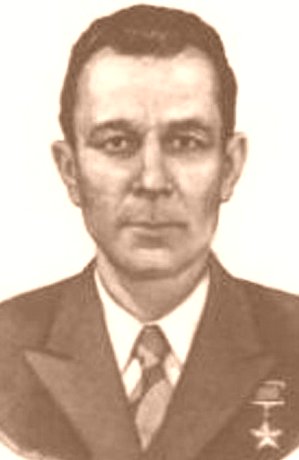
My niece, Tatyana Vladimirovna Semyonova, recalls: "My uncle, Pyotr Ivanovich Korolev, was born on October 13, 1921 in the city of Lublin, Moscow region (the city of Lublin is a part of Moscow). He had two brothers and three sisters. My uncle was a hardworking and optimistic person. He loved animals, especially horses. Peter Ivanovich Korolev was drafted into the Red Army in October 1940. Place of call: Lublin GVK, Lublin, Moscow region. From the first days of the Patriotic war, my uncle fought as a tank driver, participated in battles in Belarus as part of tank units, where, as a tank commander, he blew up an enemy's tank. In September 1941, after a concussion, he was sent to an infantry unit. In the battle, he replaced the retired company commander, personally captured a 37-mm gun and destroyed the enemy's machine-gun crew. In the battle of Stalingrad, he destroyed up to 30 Hitlerites. He was seriously wounded and could not continue to fight. He was awarded the Medal "for bravery". As noted in the order of his award, during his service in the regiment, my uncle showed himself to be a conscientious, honest, well-trained Sergeant, a good gunsmith. Excerpt from the order for the 731st anti-Aircraft artillery regiment from 14.06.1945 on awarding the Medal "for bravery":"Master of the gun of the 9th battery, Sergeant Korolyov Pyotr Ivanovich, for excellent personal training, high performance in daily work and discipline, courage and bravery shown in battles with the German invaders." After the hospital, my uncle Petya was sent to the city of Chuguev to repair an equipment and worked there until 1946. After returning home, my uncle worked at the Tupolev Aviation plant. He married, raised his son Alexander, and helped to raise his grandson Pavel. By the 40th anniversary of the Victory, my uncle was awarded the order of the Patriotic war of the II degree. Unfortunately, uncle Petya and his son Sasha are no longer with us. But there is his grandson Pavel and two great-granddaughters-Sashenka and Zhenechka. My uncle Petya loved painting and was engaged in coinage. He liked to read and had a collection of good library. I was always happy when uncle Petya came to visit us. My uncle didn't talk about the war. When I asked him about the war, I saw how his face changed and I didn't want to ask any more. I know that he repeatedly met his fellow soldiers. War is not an adventure film. This is the pain of loss, the pain of injuries, blood, the horror of bombing and shelling, the fear for the lives of their relatives. War is such a pain that you can't speak. Bright memory to those who fought!
Korolyov Peter Ivanovich
My niece, Tatyana Vladimirovna Semyonova, recalls: "My uncle, Pyotr Ivanovich Korolev, was born on October 13, 1921 in the city of Lublin, Moscow region (the city of Lublin is a part of Moscow). He had two brothers and three sisters. My uncle was a hardworking and optimistic person. He loved animals, especially horses. Peter Ivanovich Korolev was drafted into the Red Army in October 1940. Place of call: Lublin GVK, Lublin, Moscow region. From the first days of the Patriotic war, my uncle fought as a tank driver, participated in battles in Belarus as part of tank units, where, as a tank commander, he blew up an enemy's tank. In September 1941, after a concussion, he was sent to an infantry unit. In the battle, he replaced the retired company commander, personally captured a 37-mm gun and destroyed the enemy's machine-gun crew. In the battle of Stalingrad, he destroyed up to 30 Hitlerites. He was seriously wounded and could not continue to fight. He was awarded the Medal "for bravery". As noted in the order of his award, during his service in the regiment, my uncle showed himself to be a conscientious, honest, well-trained Sergeant, a good gunsmith. Excerpt from the order for the 731st anti-Aircraft artillery regiment from 14.06.1945 on awarding the Medal "for bravery":"Master of the gun of the 9th battery, Sergeant Korolyov Pyotr Ivanovich, for excellent personal training, high performance in daily work and discipline, courage and bravery shown in battles with the German invaders." After the hospital, my uncle Petya was sent to the city of Chuguev to repair an equipment and worked there until 1946. After returning home, my uncle worked at the Tupolev Aviation plant. He married, raised his son Alexander, and helped to raise his grandson Pavel. By the 40th anniversary of the Victory, my uncle was awarded the order of the Patriotic war of the II degree. Unfortunately, uncle Petya and his son Sasha are no longer with us. But there is his grandson Pavel and two great-granddaughters-Sashenka and Zhenechka. My uncle Petya loved painting and was engaged in coinage. He liked to read and had a collection of good library. I was always happy when uncle Petya came to visit us. My uncle didn't talk about the war. When I asked him about the war, I saw how his face changed and I didn't want to ask any more. I know that he repeatedly met his fellow soldiers. War is not an adventure film. This is the pain of loss, the pain of injuries, blood, the horror of bombing and shelling, the fear for the lives of their relatives. War is such a pain that you can't speak. Bright memory to those who fought!
0 comment




2026 © Russian Military Historical Society Developed by Jetmix