


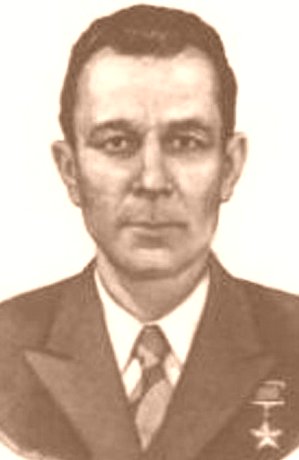
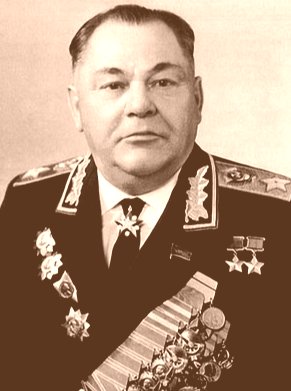


Belov Alexey Zinovievich
Our great-grandfather, Alexey Zinovievich Belov, was called up to the front in June 1942. He was 19 years old, when he finished the school. He got into the rifle regiment №1007 and became a submachine gunner. That summer, his rifle regiment participated in the battle for Stalingrad, where the great-grandfather was seriously wounded. He spent four months in a hospital. After the hospital, in January 1943, he was sent to the 193rd guards rifle regiment of the 327th rifle division with the rank of guard corporal, submachine gunner. As part of this regiment, he participated in all the battles with the Nazis and on July 17, 1943 was awarded the order of the red Star for courage and bravery shown in battles with the enemy. In September 1943, the great-grandfather was again seriously wounded and remained in the evacuation hospital until April 1944 (almost lost a leg). After being hospitalized and injuged his leg, he was assigned to the 2nd separate heavy tank brigade and became a loader. He fought as a tank driver until the victory. He went all over Europe on a tank and participated in the assault on Berlin. He celebrated Victory day in Berlin, and his signature is on the Reichstag. My great-grandfather was awarded the order of the red star and twice awarded the order of the Patriotic war. He also received the medal "for liberation of Warsaw", the medal" for victory over Germany", the medal "for the capture of Berlin". After the war, he served in Germany for two more years and was discharged in February 1947. My great-grandfather rarely talked about the war. He told his children how they crossed Dniester river on rafts, and at that time German planes flew in and began to bomb their rafts crossing the river. He was in the water in the middle of the river, but he could not swim, so he managed to grab a log that went under the water from the explosions, but swam on it to the shore. About Stalingrad nightmare he remembered once that they could not raise a head from the trench, and then a shell hit their trench, and the soldier next to him was torn to pieces, and he, like a madman, jumped out of the trench, but remained alive. Great-grandfather said that it's only scary at first, and then you think it would be better to be killed in order this whole nightmare was over. When he was in the infantry, in combat campaigns, especially in winter, they were so exhausted that were afraid to sit down at halts, because then they could not get up and could freeze, so rested and slept standing up, leaning against a tree. They felt more protected in a tank, but from explosions nearby and blows to the tank, my great-grandfather was twice shell-shocked. The real war is much more terrible than the one shown in the movies. And we must remember the feat of our great-grandfathers!
Belov Alexey Zinovievich
Our great-grandfather, Alexey Zinovievich Belov, was called up to the front in June 1942. He was 19 years old, when he finished the school. He got into the rifle regiment №1007 and became a submachine gunner. That summer, his rifle regiment participated in the battle for Stalingrad, where the great-grandfather was seriously wounded. He spent four months in a hospital. After the hospital, in January 1943, he was sent to the 193rd guards rifle regiment of the 327th rifle division with the rank of guard corporal, submachine gunner. As part of this regiment, he participated in all the battles with the Nazis and on July 17, 1943 was awarded the order of the red Star for courage and bravery shown in battles with the enemy. In September 1943, the great-grandfather was again seriously wounded and remained in the evacuation hospital until April 1944 (almost lost a leg). After being hospitalized and injuged his leg, he was assigned to the 2nd separate heavy tank brigade and became a loader. He fought as a tank driver until the victory. He went all over Europe on a tank and participated in the assault on Berlin. He celebrated Victory day in Berlin, and his signature is on the Reichstag. My great-grandfather was awarded the order of the red star and twice awarded the order of the Patriotic war. He also received the medal "for liberation of Warsaw", the medal" for victory over Germany", the medal "for the capture of Berlin". After the war, he served in Germany for two more years and was discharged in February 1947. My great-grandfather rarely talked about the war. He told his children how they crossed Dniester river on rafts, and at that time German planes flew in and began to bomb their rafts crossing the river. He was in the water in the middle of the river, but he could not swim, so he managed to grab a log that went under the water from the explosions, but swam on it to the shore. About Stalingrad nightmare he remembered once that they could not raise a head from the trench, and then a shell hit their trench, and the soldier next to him was torn to pieces, and he, like a madman, jumped out of the trench, but remained alive. Great-grandfather said that it's only scary at first, and then you think it would be better to be killed in order this whole nightmare was over. When he was in the infantry, in combat campaigns, especially in winter, they were so exhausted that were afraid to sit down at halts, because then they could not get up and could freeze, so rested and slept standing up, leaning against a tree. They felt more protected in a tank, but from explosions nearby and blows to the tank, my great-grandfather was twice shell-shocked. The real war is much more terrible than the one shown in the movies. And we must remember the feat of our great-grandfathers!
0 comment



2026 © Russian Military Historical Society Developed by Jetmix