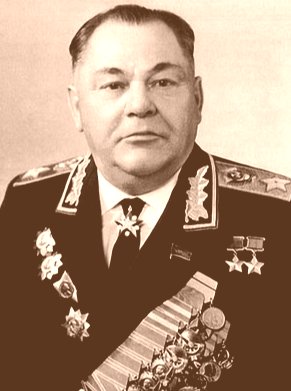


Kozlov Peter Ivanovich
My great-grandfather, Peter Ivanovich Kozlov, was born in 1908 in Nizhny Novgorod region. When the war started, he volunteered for the front. He was 33 years old. His wife and six children were waiting for him at home. I studied the documents of the military archive and learned that my great-grandfather began his military career in Tula region near the village of Shishlovo as part of the 1113th rifle regiment of the 330th rifle division of the Western front. In October 1941, the division in which my great-grandfather fought took part in the defense of Moscow, and it turned out that it fought very close to the legendary Podolsk cadets. At that time, my great-grandfather was a sanitary engineer. He carried wounded soldiers from the battlefield, saving their lives. From December 1941 to August 1942, he carried 89 people. For his bravery and dedication, he was awarded the Order of the red banner – an award he proud all his life, which he considered the most important and most expensive for himself. A few years ago, my grandmother (his daughter) showed me a book about the great Patriotic war, in which my great-grandfather marked his entire battle path on the map. And recently I was able to find the smilar map in the archives. My great-grandfather went half the country on foot and took part in the liberation of cities such as Kaluga, Smolensk, Mogilev and Minsk. In 1944, the Red Army fought bloody battles on the territory of Belarus. The Germans were pushed to the border of Poland and the USSR. Great-grandfather's division came for the city of Baranovichi. The Germans resisted fiercely. Many years later, the great-grandfather told his children that he often dreamed of these fights, he called them "meat grinder" - they were so bloody. It was the place, where my great-grandfather's battle path ended. One day, he was ordered to mine several bridges. While performing this combat mission, great-grandfather was seriously wounded, but still managed to mine most of them. Now I know for sure, thanks to the archives, that it was in the middle of July 1944. My great-grandfather was commissioned in August 1944. He was treated in the hospital for a long time. Half a foot was amputated, and for the rest of his life he carried in his body the splinter, which wondered him. After the war my great-grandfather worked in a collective farm. The family had three more children.
Kozlov Peter Ivanovich
My great-grandfather, Peter Ivanovich Kozlov, was born in 1908 in Nizhny Novgorod region. When the war started, he volunteered for the front. He was 33 years old. His wife and six children were waiting for him at home. I studied the documents of the military archive and learned that my great-grandfather began his military career in Tula region near the village of Shishlovo as part of the 1113th rifle regiment of the 330th rifle division of the Western front. In October 1941, the division in which my great-grandfather fought took part in the defense of Moscow, and it turned out that it fought very close to the legendary Podolsk cadets. At that time, my great-grandfather was a sanitary engineer. He carried wounded soldiers from the battlefield, saving their lives. From December 1941 to August 1942, he carried 89 people. For his bravery and dedication, he was awarded the Order of the red banner – an award he proud all his life, which he considered the most important and most expensive for himself. A few years ago, my grandmother (his daughter) showed me a book about the great Patriotic war, in which my great-grandfather marked his entire battle path on the map. And recently I was able to find the smilar map in the archives. My great-grandfather went half the country on foot and took part in the liberation of cities such as Kaluga, Smolensk, Mogilev and Minsk. In 1944, the Red Army fought bloody battles on the territory of Belarus. The Germans were pushed to the border of Poland and the USSR. Great-grandfather's division came for the city of Baranovichi. The Germans resisted fiercely. Many years later, the great-grandfather told his children that he often dreamed of these fights, he called them "meat grinder" - they were so bloody. It was the place, where my great-grandfather's battle path ended. One day, he was ordered to mine several bridges. While performing this combat mission, great-grandfather was seriously wounded, but still managed to mine most of them. Now I know for sure, thanks to the archives, that it was in the middle of July 1944. My great-grandfather was commissioned in August 1944. He was treated in the hospital for a long time. Half a foot was amputated, and for the rest of his life he carried in his body the splinter, which wondered him. After the war my great-grandfather worked in a collective farm. The family had three more children.
0 comment



2026 © Russian Military Historical Society Developed by Jetmix