


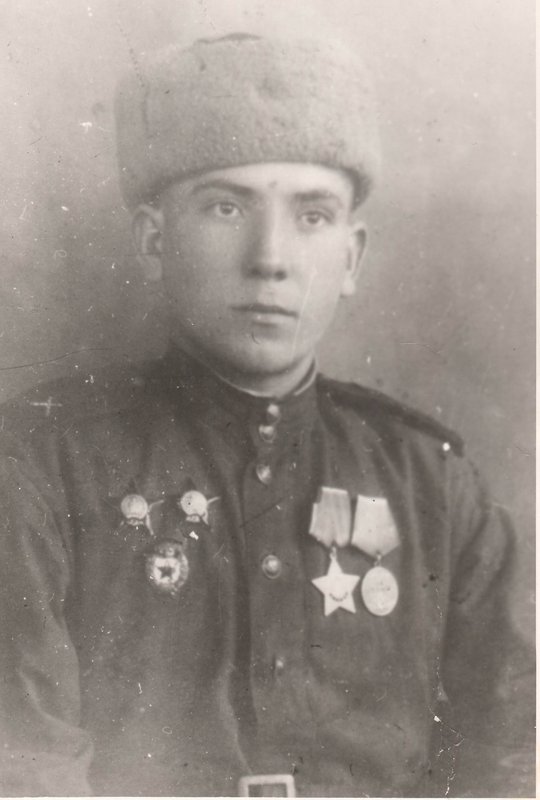


Guseva Tamara Mikhailovna
My mother, Tamara Guseva, was drafted into the Army in 1943 at the age of 17. She graduated from the courses of drivers of the 2nd training automobile regiment in Vyazniki and at the end of the courses was enrolled in the 50th Separate Chemical Protection battalion, in the 2nd company, as a chemical driver. According to the entry in the Red Army book, it happened on January 10, 1944. My mother said that when she arrived at the unit, they looked at her rather skeptically. She was a girl of 18 , 150 cm tall, with 45 kg weight, who wanted to be the driver. Nevertheless, she was allocated a car, a lorry and a ""polutorka"". Thet were going to see how she would cope. In such cars There was no starter at all in those cars, and it was necessary to start with a ""crooked starter"", by turning the handle. They wanted to check how the new super-driver would stast the car... And my mother did it badly in driving school. But then she put the handle in the car, turned it once, and the car started right away! Well, they said she'd be good... A separate chemical protection battalion followed the troops and was not thrown into battle. The command was afraid that the Germans would use chemical weapons and took care of the chemists. So in the beginning, my mother drove potatoes at the rear. In the summer of 1944, Soviet troops entered Poland. She had already fought here. Once the car she was driving was attacked by a German pilot. He made several passes, shooting the car with a machine gun. And my mother was rushing to the forest, hoping to hide there. The pilot was shot down. In Poland, our battalion and headquarters fell behind the main troops and were surrounded. She had to break through. Mom's car was hit by a faustpatron, and it burned down. My mother had to shoot. When I asked her if she had hit the enemy, she always said that everyone was shooting, people were falling, and it was impossible to understand who hit whom. After that battle, the battalion was awarded the Order of the ""Red Star"". On may 2, my mother's unit entered Berlin. It was already close to Victory, but soon the order to move to Prague came.The local population rebelled against the Germans in Prague, and our command sent troops to help. Some of the soldiers, including my mother, rode on tanks with the tank army of General Rybalko. When they arrived in Prague on May 8, it was all over. Local residents greeted the Soviet troops. On the night of May 9, 1945, my mother stood in the car where the battalion banner was installed and guarded it. Suddenly Sergeant Vedernikov appeared and said: ""Guseva, take turns, the war is over!» On this day, for the first time, she drank front-line 100 grams (until now, she regularly gave her vodka to fellow soldiers). And already on May 10, the Red Army soldier Guseva was sent to wokr in the laundry. However, she did not have to work that day – local Czech ladies came, sat her down to drink tea and did everything themselves. Soon the battalion of my mother returned to Berlin, and in June 1945, allwomen were demobilized. The war ended for my mother."
Guseva Tamara Mikhailovna
My mother, Tamara Guseva, was drafted into the Army in 1943 at the age of 17. She graduated from the courses of drivers of the 2nd training automobile regiment in Vyazniki and at the end of the courses was enrolled in the 50th Separate Chemical Protection battalion, in the 2nd company, as a chemical driver. According to the entry in the Red Army book, it happened on January 10, 1944. My mother said that when she arrived at the unit, they looked at her rather skeptically. She was a girl of 18 , 150 cm tall, with 45 kg weight, who wanted to be the driver. Nevertheless, she was allocated a car, a lorry and a ""polutorka"". Thet were going to see how she would cope. In such cars There was no starter at all in those cars, and it was necessary to start with a ""crooked starter"", by turning the handle. They wanted to check how the new super-driver would stast the car... And my mother did it badly in driving school. But then she put the handle in the car, turned it once, and the car started right away! Well, they said she'd be good... A separate chemical protection battalion followed the troops and was not thrown into battle. The command was afraid that the Germans would use chemical weapons and took care of the chemists. So in the beginning, my mother drove potatoes at the rear. In the summer of 1944, Soviet troops entered Poland. She had already fought here. Once the car she was driving was attacked by a German pilot. He made several passes, shooting the car with a machine gun. And my mother was rushing to the forest, hoping to hide there. The pilot was shot down. In Poland, our battalion and headquarters fell behind the main troops and were surrounded. She had to break through. Mom's car was hit by a faustpatron, and it burned down. My mother had to shoot. When I asked her if she had hit the enemy, she always said that everyone was shooting, people were falling, and it was impossible to understand who hit whom. After that battle, the battalion was awarded the Order of the ""Red Star"". On may 2, my mother's unit entered Berlin. It was already close to Victory, but soon the order to move to Prague came.The local population rebelled against the Germans in Prague, and our command sent troops to help. Some of the soldiers, including my mother, rode on tanks with the tank army of General Rybalko. When they arrived in Prague on May 8, it was all over. Local residents greeted the Soviet troops. On the night of May 9, 1945, my mother stood in the car where the battalion banner was installed and guarded it. Suddenly Sergeant Vedernikov appeared and said: ""Guseva, take turns, the war is over!» On this day, for the first time, she drank front-line 100 grams (until now, she regularly gave her vodka to fellow soldiers). And already on May 10, the Red Army soldier Guseva was sent to wokr in the laundry. However, she did not have to work that day – local Czech ladies came, sat her down to drink tea and did everything themselves. Soon the battalion of my mother returned to Berlin, and in June 1945, allwomen were demobilized. The war ended for my mother."
0 comment



2026 © Russian Military Historical Society Developed by Jetmix