





Gudaev Eugeniy Vasilievich
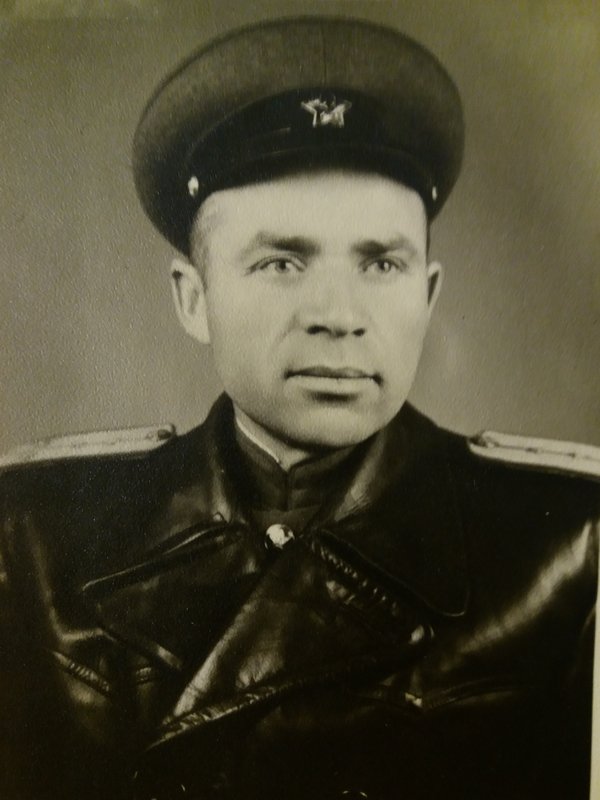
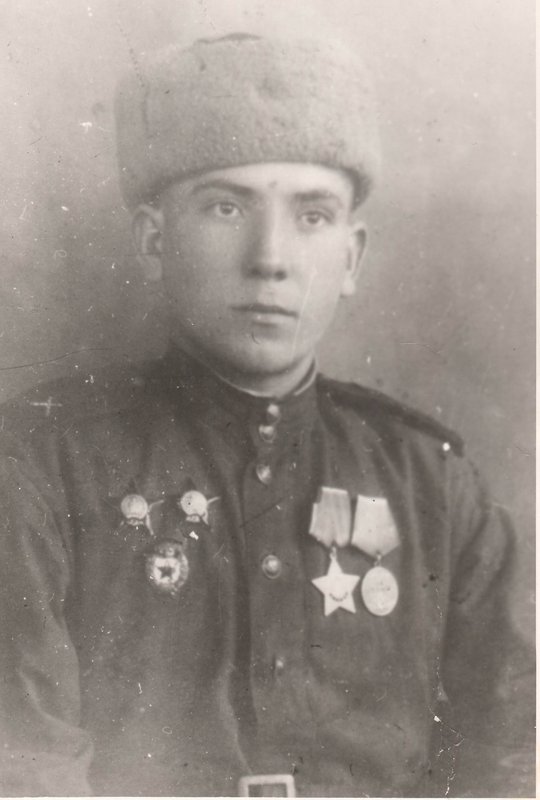
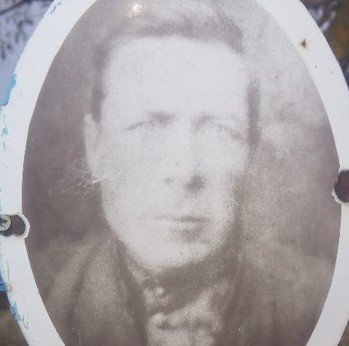
Type of Army: Land forces, Air Force (except for naval aviation), Coast service, NKVD troops, Border Guard. Yevgeny Gudaev was born in 1902. Russian. Place of birth: Arkhangelsk region, Mezensky district, Pogorelets village. Served in the Red Army since 1941. Place of call: RVC Mezen, Arkhangelsk region, Mezen district. Member of the CPSU (b) since 1942. He was the Guard Lieutenant Commander of a platoon of the pedestrian investigation in May 1944. Participant in the Finnish company's battles in 1939-1940. He participated in the battles on the Southern, Stalingrad, and 2nd Ukrainian Fronts. Awarded by the Order of the "Red Star", the Order of the "Patriotic war of 2nd class". I read the article " Mezen meetings. Feat of our fathers ". The author of the article is M. V. Gudaev, a nephew of Evgeny Vasilyevich. The article also contained photos. The residents of the Mezen district and the Arkhangelsk region also contributed to the Victory. Men were fighting at the fronts of the Patriotic War, and women, the elderly and children worked in the rear.Although our family left the Mezen district in 1949 and lived for many years in the village of Shoina, on the Kanin Nos Peninsula, all the ancestral roots remained there, in the Mezen district.My father was from the village of Pogorelets, and my mother was from the village of Koida. Many of our other relatives were scattered by fate in different parts of our large country, but still the Mezen district was our native land. My father was born here, died and is buried in Mezen in 1949. I have already written about my father, Vasily Gudaev, a participant in the great Patriotic war. The material is posted on the site. You can find it here http://grandkid.ru/?p=1604#more-1604.Wrote [ http://grandkid.ru/?p=1604#more-1604.He also wrote about two brothers on his mother's side — Malygin Klavdyi Mironovich (foreman of the 2nd article, commander of SKA-518, 4th division of the SKA OVR» Iokang naval Base of the BF, awarded the Order of the "Patriotic war of 2nd class") and Malygin Dmitry Mironovich (who went missing in August 1941 in the KFSSR, Loukhsky district, railway Loukhi-Kestenga, at the junction of 34 km (now at the village of Sosnovy), Red Army Rifleman of the 611th Rifle Regiment of the 88th Rifle Division). The material is posted on the site. You can find it here http://grandkid.ru/?p=2283#more-2283 [ http://grandkid.ru/?p=2283#more-2283 ] or by watching the second part of the film " Mironovna. War” — http://grandkid.ru/?cat=71&paged=3ince [ http://grandkid.ru/?cat=71&paged=3all ] they are natives of the Mezen district, Arkhangelsk region.In the late fifties, my mother found an opportunity to take me to Mezen to visit my father's grave and introduce me to my family living in the city of Mezen. It was the first time both she and I had flown on a plane. About my impressions of the flight, I wrote a short story "Mezen airport", which can be read at the link http://grandkid.ru/?p=11274#more-11274.Mother [ http://grandkid.ru/?p=11274#more-11274.My mother ] took me to my father's grave and showed me the city. We walked along the Mezen bridges. We looked at the post office building where my father used to work. We also visited the grave of Yevgeny Vasilyevich. By that time, Yevgeny Vasilyevich was no longer alive. We went to visit his wife Anisya, who lived in a Large Settlement with her old mother. Anisya and Eugene had three children. Son Vasily studied at Moscow State University, daughter Lydia lived in another city. The fate of their second son George was tragic. Together with his wife, they were hit by a train. George was killed, and his wife was left without arms and legs. Let the reader forgive me for writing about my relatives. I write because I know about them. The site "Feat of the people" that appeared not so long ago allows us to get information about our relatives, participants of the great Patriotic war. Link to the site http://www.podvignaroda.ru/podvig-flash/ "Let's remember, comrade ... our country was going through a difficult time at the end of the 1941. The enemy stood at the walls of Moscow. I found myself in the siege of Leningrad. The Germans entered the Crimea. And as often happened before, at this difficult moment the party turned to the Communists. A party mobilization was announced. According to this decision, Communists were selected and sent to the front not by the military enlistment office, but by the district party Committee. We needed good party members who could conduct political work among the Red Army. The district party organization, then numbering about 500 people, allocated eighteen Communists to send to the front. All of them were either on armor, or for health reasons were not subject to mobilization at all, as, for example, the teacher from Kamenka A. I. Novikov. and M. I. Lagunov, the braker of the sawmill. It was already 50 years old. It was difficult for the sawmill to part with the only boiler fitter P. F. Maleev, an Executive and highly qualified specialist. On November 13, the mobilized were taken to Kimzha on horseback. And then the way lay through Podolye and Pinega - to Arkhangelsk. On November 17, the mezentsi were already in Arkhangelsk. They joined the Communist battalion, which numbered about 750 people. Pyotr Vladimirovich Mishukov, a pensioner from Tselegory, tells us about the fate of these people: "the Command set us the task of completing military training in 15-20 days, then going as politboys to defend Moscow. However, due to the fact that our troops defeated the German at the walls of the capital, we were detained in Arkhangelsk until March 1942. In March, they were sent to Novorossiysk. The roads were clogged, and it took about a month to get to the Caucasus in tow trucks. We stopped at the Tunnel station before reaching Novorossiysk. Here we made a day's rest, washed in the bath and marched to Anapa, and from there along the Bank of the porya river-to Taman. In Taman, we were put on ships and transported to Kerch. The Strait was heavily bombed by the Germans. They were in Kerch for three days. From there we were transferred under Theodosius, where he distributed politaical at the national army units. Here I parted with my countrymen. So, the Arkhangelsk Communist battalion got to the Crimean front, the fate of which sadly ended in may with the defeat of our armies. A large number of Soviet soldiers died here in battle, drowned in the sea when crossing to the "mainland", many were missing. Among them was the Chairman of the Pogorelsky state farm “Shoots” Stepan Ivanovich Yarkov, a cheerful, cheerful, active person. He finished the course of military Sciences in Arkhangelsk on " 4 " and "5", and went to the front with the idea of honestly fulfilling the duty of a son of the Fatherland and a Communist. A thorny path fell to the share of the former Chairman of the district consumer Union Fyodor Seliverstovich Stryukov. This man left home at the age of fourteen, went to Zaakakurya, became an apprentice engineer on a port tug, and at nineteen became an assistant, and then the captain of a steamer. He served as a cadre in the Navy, and when he returned, he became the head of the water transport Department in Kamenka, which included the fleet serving the plant and port,and then headed the office of motor transport. And everywhere he justified the confidence of the party. In Arkhangelsk, during classes, he broke his leg. However, when he learned that his comrades were going to the front, he was discharged from the hospital ahead of schedule. The situation was such that Fyodor Seliverstovich was captured in the Crimea. On the way, he escaped from the train, wandered for a long time in Ukraine. In the end, he got to the partisans, and in 1943 became the Deputy commander of the detachment. As the red Army advanced, the partisans retreated to the West in accordance with the instructions of the Central headquarters of the partisan movement. And then one day the squad encountered the punishers, many of its soldiers were killed. F. S. Stryukov also fell in that battle. Gave their lives for their Homeland and head teacher of the school Kamensky, Aleksandr Konstantinovich Novikov, Brigadier Belogorskogo farm Ivan myronovych Burdaev, head of construction Department of the workshop Alexey Lemongrass, factory workers Pavel Fedorovich Maleev and Maxim I. Lagunov, employee gorkomhoz Stepan Terentyev, commander of the fire brigade from Kamenka Nikolay Redkin. With military orders returned to Mezen Alexander G. Terentyev from Pechishchi, Peter V. Mishukov from Calegory, Peter Carehow kalinic and Evgeniy Vasilyevich gudev of Mezen, Dmitry Epihin from the Heater. Three of the eighteen Communists who left 31 years ago due to party mobilization now live in the district and actively participate in public life. These are P. K. Korekhov, P. V. Mishukov and D. A. Shchepikhin. The Communists, who went to the front in November 1941, honestly fulfilled the task of the party. It was they, members of the great Bolshevik party, who cemented the ranks of our Army and raised the peoples of the country to repel the enemy. Reference: during the first year of the war, the Mezen district party organization sent more than 50% of its members to the front”" Yes, time is passing. And already our post-war generation is beginning to leave this world. Unfortunately, our childhood was not easy. The post-war years were very hard and hungry. All the more I want to leave the memory of our fathers, the defenders of our Fatherland, to our descendants.In the picture — Eugene V. Gudaev, mentioned along with other veterans of the Mezen district in this article. He has three orders on his chest: the order of the Patriotic war, 2nd class, and two orders of the red banner.E. V. Gudaev - during the war, guard Lieutenant, commander of a platoon of foot reconnaissance of the 15th Guards Airborne Rifle Regiment of the 4th guards Ovruch red banner, order of Bogdan Khmelnitsky Airborne division. He fought in the Finnish company, during world war II on the southern, Middle don and Ukrainian fronts. Called up in 1941 by the red army. Born in d. The victim of the Mezen district.Here are a few lines from the award lists:"Being in this position since may 1944, T. Gudaev proved to be a brave and courageous officer. So on July 13, 1944, in the battle to capture a control prisoner, T. Gudaev personally led the capture group and showed an exceptional example of action. Thanks to the clear and strong leadership, the swiftness and bravery of the team, the resilience and perseverance in the battle of the groups cover, courage, and personal involvement so Hudaeva in combat combat task was completed, control the prisoner was taken to headquarters, where he revealed important information about the enemy.” "On April 4, 1945, in the battle for the city of Bratislava, he and his platoon were the first to break into the city, where he personally destroyed 2 enemy soldiers and captured 4 soldiers.On August 20, 1944, when breaking through the enemy line, he showed himself as an experienced, brave scout, in difficult combat conditions he managed to find a weak spot in the enemy's defense, as a result of which the regiment had a good success – the enemy's defense was broken through. In this fierce battle, T. Gudaev, being twice wounded, continued to perform the task of reconnaissance, and only when he finally lost his strength, was taken out of the battlefield. Gudaev in the past combat operations showed an example and examples of courage and bravery.” When I read the article and found out that the men of our far Northern Mezen region fought in the Crimea and many died there, I thought how all this is in tune with today's days. Write about your family. This is necessary and useful for the current generation. I would like to Express my gratitude to Lydia Okhrimenko, who provided me with the materials of the published article. September 10, 2014 Novodvinsk Gudaev M. V.
Gudaev Eugeniy Vasilievich
Type of Army: Land forces, Air Force (except for naval aviation), Coast service, NKVD troops, Border Guard. Yevgeny Gudaev was born in 1902. Russian. Place of birth: Arkhangelsk region, Mezensky district, Pogorelets village. Served in the Red Army since 1941. Place of call: RVC Mezen, Arkhangelsk region, Mezen district. Member of the CPSU (b) since 1942. He was the Guard Lieutenant Commander of a platoon of the pedestrian investigation in May 1944. Participant in the Finnish company's battles in 1939-1940. He participated in the battles on the Southern, Stalingrad, and 2nd Ukrainian Fronts. Awarded by the Order of the "Red Star", the Order of the "Patriotic war of 2nd class". I read the article " Mezen meetings. Feat of our fathers ". The author of the article is M. V. Gudaev, a nephew of Evgeny Vasilyevich. The article also contained photos. The residents of the Mezen district and the Arkhangelsk region also contributed to the Victory. Men were fighting at the fronts of the Patriotic War, and women, the elderly and children worked in the rear.Although our family left the Mezen district in 1949 and lived for many years in the village of Shoina, on the Kanin Nos Peninsula, all the ancestral roots remained there, in the Mezen district.My father was from the village of Pogorelets, and my mother was from the village of Koida. Many of our other relatives were scattered by fate in different parts of our large country, but still the Mezen district was our native land. My father was born here, died and is buried in Mezen in 1949. I have already written about my father, Vasily Gudaev, a participant in the great Patriotic war. The material is posted on the site. You can find it here http://grandkid.ru/?p=1604#more-1604.Wrote [ http://grandkid.ru/?p=1604#more-1604.He also wrote about two brothers on his mother's side — Malygin Klavdyi Mironovich (foreman of the 2nd article, commander of SKA-518, 4th division of the SKA OVR» Iokang naval Base of the BF, awarded the Order of the "Patriotic war of 2nd class") and Malygin Dmitry Mironovich (who went missing in August 1941 in the KFSSR, Loukhsky district, railway Loukhi-Kestenga, at the junction of 34 km (now at the village of Sosnovy), Red Army Rifleman of the 611th Rifle Regiment of the 88th Rifle Division). The material is posted on the site. You can find it here http://grandkid.ru/?p=2283#more-2283 [ http://grandkid.ru/?p=2283#more-2283 ] or by watching the second part of the film " Mironovna. War” — http://grandkid.ru/?cat=71&paged=3ince [ http://grandkid.ru/?cat=71&paged=3all ] they are natives of the Mezen district, Arkhangelsk region.In the late fifties, my mother found an opportunity to take me to Mezen to visit my father's grave and introduce me to my family living in the city of Mezen. It was the first time both she and I had flown on a plane. About my impressions of the flight, I wrote a short story "Mezen airport", which can be read at the link http://grandkid.ru/?p=11274#more-11274.Mother [ http://grandkid.ru/?p=11274#more-11274.My mother ] took me to my father's grave and showed me the city. We walked along the Mezen bridges. We looked at the post office building where my father used to work. We also visited the grave of Yevgeny Vasilyevich. By that time, Yevgeny Vasilyevich was no longer alive. We went to visit his wife Anisya, who lived in a Large Settlement with her old mother. Anisya and Eugene had three children. Son Vasily studied at Moscow State University, daughter Lydia lived in another city. The fate of their second son George was tragic. Together with his wife, they were hit by a train. George was killed, and his wife was left without arms and legs. Let the reader forgive me for writing about my relatives. I write because I know about them. The site "Feat of the people" that appeared not so long ago allows us to get information about our relatives, participants of the great Patriotic war. Link to the site http://www.podvignaroda.ru/podvig-flash/ "Let's remember, comrade ... our country was going through a difficult time at the end of the 1941. The enemy stood at the walls of Moscow. I found myself in the siege of Leningrad. The Germans entered the Crimea. And as often happened before, at this difficult moment the party turned to the Communists. A party mobilization was announced. According to this decision, Communists were selected and sent to the front not by the military enlistment office, but by the district party Committee. We needed good party members who could conduct political work among the Red Army. The district party organization, then numbering about 500 people, allocated eighteen Communists to send to the front. All of them were either on armor, or for health reasons were not subject to mobilization at all, as, for example, the teacher from Kamenka A. I. Novikov. and M. I. Lagunov, the braker of the sawmill. It was already 50 years old. It was difficult for the sawmill to part with the only boiler fitter P. F. Maleev, an Executive and highly qualified specialist. On November 13, the mobilized were taken to Kimzha on horseback. And then the way lay through Podolye and Pinega - to Arkhangelsk. On November 17, the mezentsi were already in Arkhangelsk. They joined the Communist battalion, which numbered about 750 people. Pyotr Vladimirovich Mishukov, a pensioner from Tselegory, tells us about the fate of these people: "the Command set us the task of completing military training in 15-20 days, then going as politboys to defend Moscow. However, due to the fact that our troops defeated the German at the walls of the capital, we were detained in Arkhangelsk until March 1942. In March, they were sent to Novorossiysk. The roads were clogged, and it took about a month to get to the Caucasus in tow trucks. We stopped at the Tunnel station before reaching Novorossiysk. Here we made a day's rest, washed in the bath and marched to Anapa, and from there along the Bank of the porya river-to Taman. In Taman, we were put on ships and transported to Kerch. The Strait was heavily bombed by the Germans. They were in Kerch for three days. From there we were transferred under Theodosius, where he distributed politaical at the national army units. Here I parted with my countrymen. So, the Arkhangelsk Communist battalion got to the Crimean front, the fate of which sadly ended in may with the defeat of our armies. A large number of Soviet soldiers died here in battle, drowned in the sea when crossing to the "mainland", many were missing. Among them was the Chairman of the Pogorelsky state farm “Shoots” Stepan Ivanovich Yarkov, a cheerful, cheerful, active person. He finished the course of military Sciences in Arkhangelsk on " 4 " and "5", and went to the front with the idea of honestly fulfilling the duty of a son of the Fatherland and a Communist. A thorny path fell to the share of the former Chairman of the district consumer Union Fyodor Seliverstovich Stryukov. This man left home at the age of fourteen, went to Zaakakurya, became an apprentice engineer on a port tug, and at nineteen became an assistant, and then the captain of a steamer. He served as a cadre in the Navy, and when he returned, he became the head of the water transport Department in Kamenka, which included the fleet serving the plant and port,and then headed the office of motor transport. And everywhere he justified the confidence of the party. In Arkhangelsk, during classes, he broke his leg. However, when he learned that his comrades were going to the front, he was discharged from the hospital ahead of schedule. The situation was such that Fyodor Seliverstovich was captured in the Crimea. On the way, he escaped from the train, wandered for a long time in Ukraine. In the end, he got to the partisans, and in 1943 became the Deputy commander of the detachment. As the red Army advanced, the partisans retreated to the West in accordance with the instructions of the Central headquarters of the partisan movement. And then one day the squad encountered the punishers, many of its soldiers were killed. F. S. Stryukov also fell in that battle. Gave their lives for their Homeland and head teacher of the school Kamensky, Aleksandr Konstantinovich Novikov, Brigadier Belogorskogo farm Ivan myronovych Burdaev, head of construction Department of the workshop Alexey Lemongrass, factory workers Pavel Fedorovich Maleev and Maxim I. Lagunov, employee gorkomhoz Stepan Terentyev, commander of the fire brigade from Kamenka Nikolay Redkin. With military orders returned to Mezen Alexander G. Terentyev from Pechishchi, Peter V. Mishukov from Calegory, Peter Carehow kalinic and Evgeniy Vasilyevich gudev of Mezen, Dmitry Epihin from the Heater. Three of the eighteen Communists who left 31 years ago due to party mobilization now live in the district and actively participate in public life. These are P. K. Korekhov, P. V. Mishukov and D. A. Shchepikhin. The Communists, who went to the front in November 1941, honestly fulfilled the task of the party. It was they, members of the great Bolshevik party, who cemented the ranks of our Army and raised the peoples of the country to repel the enemy. Reference: during the first year of the war, the Mezen district party organization sent more than 50% of its members to the front”" Yes, time is passing. And already our post-war generation is beginning to leave this world. Unfortunately, our childhood was not easy. The post-war years were very hard and hungry. All the more I want to leave the memory of our fathers, the defenders of our Fatherland, to our descendants.In the picture — Eugene V. Gudaev, mentioned along with other veterans of the Mezen district in this article. He has three orders on his chest: the order of the Patriotic war, 2nd class, and two orders of the red banner.E. V. Gudaev - during the war, guard Lieutenant, commander of a platoon of foot reconnaissance of the 15th Guards Airborne Rifle Regiment of the 4th guards Ovruch red banner, order of Bogdan Khmelnitsky Airborne division. He fought in the Finnish company, during world war II on the southern, Middle don and Ukrainian fronts. Called up in 1941 by the red army. Born in d. The victim of the Mezen district.Here are a few lines from the award lists:"Being in this position since may 1944, T. Gudaev proved to be a brave and courageous officer. So on July 13, 1944, in the battle to capture a control prisoner, T. Gudaev personally led the capture group and showed an exceptional example of action. Thanks to the clear and strong leadership, the swiftness and bravery of the team, the resilience and perseverance in the battle of the groups cover, courage, and personal involvement so Hudaeva in combat combat task was completed, control the prisoner was taken to headquarters, where he revealed important information about the enemy.” "On April 4, 1945, in the battle for the city of Bratislava, he and his platoon were the first to break into the city, where he personally destroyed 2 enemy soldiers and captured 4 soldiers.On August 20, 1944, when breaking through the enemy line, he showed himself as an experienced, brave scout, in difficult combat conditions he managed to find a weak spot in the enemy's defense, as a result of which the regiment had a good success – the enemy's defense was broken through. In this fierce battle, T. Gudaev, being twice wounded, continued to perform the task of reconnaissance, and only when he finally lost his strength, was taken out of the battlefield. Gudaev in the past combat operations showed an example and examples of courage and bravery.” When I read the article and found out that the men of our far Northern Mezen region fought in the Crimea and many died there, I thought how all this is in tune with today's days. Write about your family. This is necessary and useful for the current generation. I would like to Express my gratitude to Lydia Okhrimenko, who provided me with the materials of the published article. September 10, 2014 Novodvinsk Gudaev M. V.
0 comment



2026 © Russian Military Historical Society Developed by Jetmix