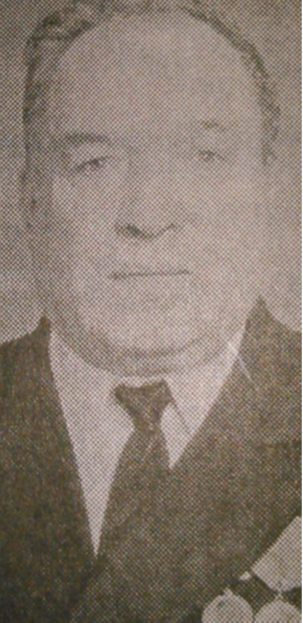


Ganskoy Alexander Fedorovich
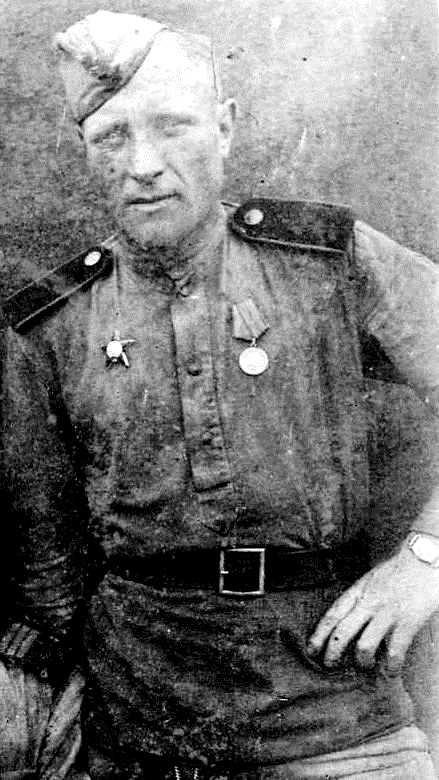
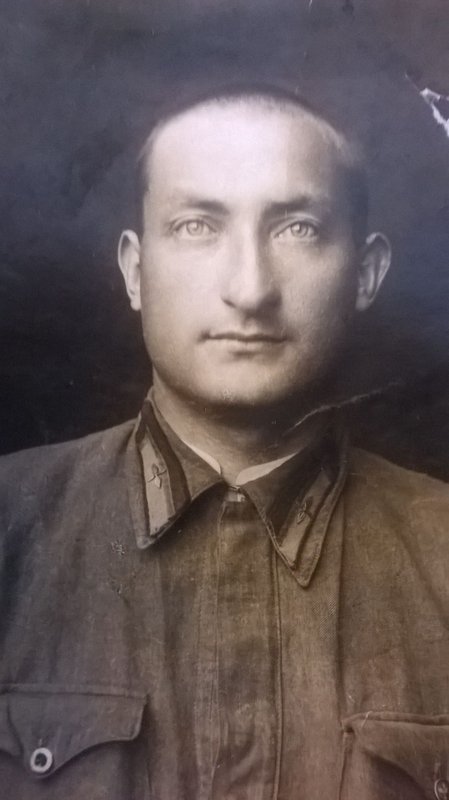
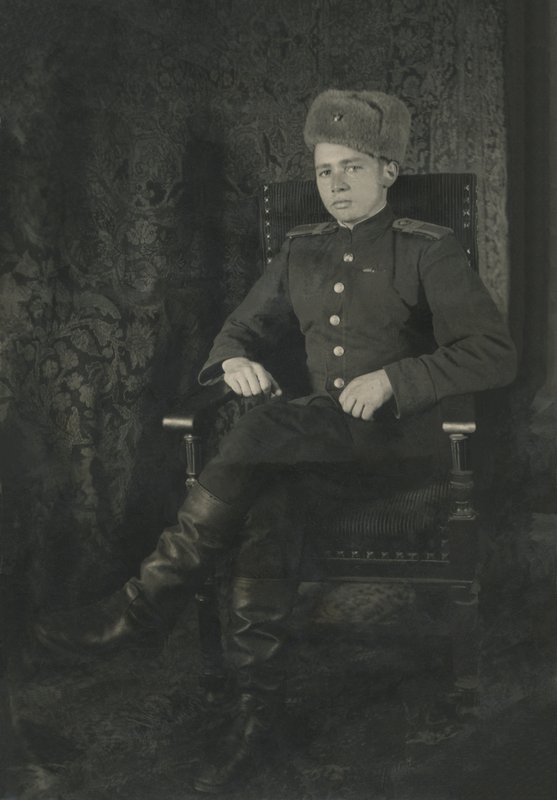
Rank: Sergeant. Type of Army: Engineers Corps.My beloved grandfather Ganskoy Alexander Fedorovich,the pride of our family, was born on September 30, 1917 in the village of Tatarbunary, Ukrainian SSR, Odessa region. My grandfather spent his childhood and youth in Kiev. From 1937 to 1940, A. F. Ganskoy served in the ranks of the Red Army as an air gunner and radio operator. He served in the police since 1940. He lived in the city of Belgorod-Dniester, Novorossiysk street,17 before the war. In March 1942, he was drafted to the front. Place of call: Belorechensk RVC, Krasnodar territory, Belorechensk district. He served as the Commander of the Anti-aircraft Machine-gun Platoon of the 97th Separate Motorized pontoon-bridge Svir Order of the Red Star Battalion of the 26th Sapper brigade of the 8th Sapper Army of the Southern and later Transcaucasian Front, 56th Army of the North Caucasus Front, 7th Army and 14th Army of the Karelian front, ( March 6, 1942- July 15, 1947). From July 2,1944, the Batallion was renamed the 97th Separate motorized pontoon bridge Svirsky Order of the Red Star Battalion. During battles he was woundedby shrapnel to the spine (non-operable, lived with shrapnel all his life). Rewards: 1. Order of the ""Red star» for Kerch-Eltigen amphibious operation in October 31-December 11, 1943. Description of the feat: ""Comrade Ganskoy showed a courageous and excellent work in the construction of piers. The work was carried out under enemy shelling, in stormy weather. The task was completed fully,which made the landing units possible"" 2. The Medal ""For the defense of the Caucasus"" 3. The Medal ""For the defense of the Soviet Arctic"" 4. Gratitude for the Petsamo-Kirkenes operation 5.The Medal ""For the victory over Germany"" 6. The Order of the ""Patriotic war of 2nd class"" 7. The Medal ""40 years of victory in the great Patriotic War of 1941-1945"" 8. The Medal ""50 years of the armed forces of the USSR"" 9. The Medal ""70 years of the Armed forces of the USSR ""10. The Medal ""For valiant labor "". He was the member of the Komsomol since 1943. After the war, none of the relatives and friends were left alive and my grandfather came to Altai, where he worked for 30 years on the West Siberian railway (Losikha-Bayunovo,Primorye). In 1947, Ganskoy married Natalia Ivanovna Dergunova and later they had four children: a son, Viktor, and daughters: Valentina, Lyudmila (my mother) and Nadezhda. His labor path is the following: for 30 years A. F. Ganskoy worked on the West Siberian railway of the Altai branch. For valiant work, the grandfather is included in the book of honor of the Biysk railways. My grandfather lived a wonderful, bright life. On July 13, 1989, my grandfather passed away. He was buried in the cemetery of Ovchinnikovo of the Altai territory. Combat path: 97th Separate Motorized pontoon-bridge Svirsky Order of the Red Star Battalion of the 26th Sapper Brigade of the 8th Sapper Army of the Southern and later Transcaucasian Front; 56th Army of the North Caucasus Front; 7th Army and 14th Army of the Karelian Front. In the active army, key dates: 1. In summer of 1942 he provided the retreat of the troops of the southern front. 2. In 1942-1943, he conducted defensive and offensive actions in the Caucasus. In may 1943, the battalion was assigned to the tank group of the North Caucasus front ( the 5th Guards Tank Brigade and the 63rd Tank Brigade), and provided the group's actions to liberate the village of Krymskaya. During the course of the fighting, he provided the crossing of troops across the Adagum, Second and Shibik rivers. Directly involved in the management of this operation was Marshal G.K. Zhukov, who was at the observation post of the 56th Army of the North Caucasus front. 3. In the fall of 1943 placed out of Commission in reserve. 4. In may 1944, he was transferred to the Svir defensive line, where he provided the crossing of the 7th Army troops through the Svir, and then through other water barriers. 5. In September 1944, he was transferred to the Arctic region, where he took part in the Petsamo-Kirkenes operation, ensuring the crossing of the Pechenga river. In the twenties of October 1944, supporting the troops of the 99th Rifle Corps, together with the 20th Motorized Assault Engineering and Sapper Brigade, he directed crossings over lake Salmi-Yarvi, Lang fjord, and Bek fjord, creating conditions for the assault on Kirkenes. After the end of the operation, he remained in the 14th Army and did not take part in the fighting again. History of formation of the 97th Datallion: it was formed in October 1941 in Bataysk, Rostov region and became part of the 26th Sapper Brigade of the 8th Sapper Army under No. 1606 Separate Sapper battalion. The battalion was re-formed on March 9, 1942 in Rostov-on-don, after which it was assigned the name of the 97th Separate pontoon bridge Battalion, which became part of the engineering forces of the Southern Front. Battalion commander: Senior Lieutenant Lukyanov .Military Commissar: political Commissar Solomonov. Chief of staff: military engineer of the 3rd rank Ryabov L. D. Technical assistant to the battalion commander: military engineer of the 3rd rank Maksimtsev N.E. Party organization Secretary: Captain Ignatenko. Komsomol Secretary: Timofeev. The battalion consisted of: • the 1st pontoon company (commander quartermaster technician of the 1st rank Bulgachev I. A.) • the 2nd pontoon company ( commander Lieutenant Kravchenko I. F.) • technical platoon (commander Junior Lieutenant Kalinichenko) • anti-aircraft machine gun platoon, (commander Lieutenant Dombrovsky V. V.) • management platoon • technical and repair and transport platoon • platoon of ammunition, fodder and baggage supplies • medical unit (430 people). But if many pontoon-bridge battalions were motorized that is the entire pontoon-bridge fleet was transported by motor vehicles, that is, the 97th battalion transported property by water transport on barges. The 97th Anti-aircraft machine gun platoon: 1. Commander- Lieutenant Vasily Ivanovich Apushev. 2. Commander of the anti-aircraft machine-gun platoon Sergeant Alexander Fedorovich Ganskoy. 3. Commander of the anti-aircraft machine-gun platoon Sergeant Majdannik Ikhil Leibovich 4.Machine gunner of the anti-aircraft machine gun platoon Red Army Aibulatov Berkulat.
Timeline of combat operations 97 OPMB: 1. from March to July 1942, the personnel of the 97th battalion, together with the workers of the Rostov factories ""Red don"" and ""Red Banner"", were engaged in the manufacture of a pontoon bridge Park. 2.13.07.1942, by order of the chief of staff of the Engineering Troops of the southern Front No. 120521, commander Lukyanov was ordered to "" ... relocate the 97th battalion by water to Belaya Kalitva. The time of arrival to the place of deployment is 17.07.1942"". On the same day, at 15.00, the battalion's property (KMP-26 ferry fleet) from the pier of the Rostov plant ""Red Fleet"" was loaded onto the barge No. 29 and sent along the route Rostov – on – don – Belaya Kalitva, accompanied by a group of battalion soldiers consisting of 115 people (from 1 company platoon with a team – 45 people, from 2 company platoon with a team – 45 people, bridge platoon with a platoon commander-17 people, household Department-8 people). The rest of the personnel of the battalion 14.07.1942 at 14.00 in the number of: * 256 people boarded the ship ""comrade"" and departed from the pier ""Aksai"" to a new location • * 59 people as part of the repair and transport platoon, headquarters management and ammunition moved to a new destination in several vehicles. 3. However, already on the way, due to changes in the operational situation at the front, the 97th battalion received a new order from the chief of staff of the Engineering Troops of the southern Front "" ... to build a pontoon bridge over the river together with the 98th opmb. Don in the area of art. Razdorskaya"". 4. Chronology of the Razdorskaya crossing over the don river (18.07.1942-22.07.1942): the Chronology is described in detail in the book by Anatoly Viktorovich Shatokhin ""Years scorched by war"" Chronicle-documentary narration. Two thousand eight The book tells about the events in the area of the village of Razdorskaya in July 1942 and January-February 1943. The book presents the scheme of military operations on the territory of the village. Anatoly Viktorovich Shatokhin kindly gave me a copy of his book. Excerpts from the book: ""the first signs of the retreat of our troops for residents of the village of Razdorskaya and neighboring localities were the appearance of refugees from Ukraine, Belarus and the Northern regions of the Rostov region, a huge number of cattle being driven to the rear, columns of tractors, combines and other agricultural and military equipment. In the village of Romanovskaya (most), Bronnitskaya, Tsymlyanskaya, Konstantinovskaya, Nikolaevskaya, Razdorskaya, Melekhovskaya, bagaevskaya, Aksay, ferry crossings were working and bridges were built that could not cope with such a mass of people, livestock and equipment. Sedimentation sites were organized in the area of these localities, where the order of crossing was established. There was a steady stream of people. At the crossings, there was a strict order - first military equipment and soldiers, then the civilian population. A huge stream of enemy troops moved rapidly South, accompanied by the air corps of the 4th German air fleet, which bombed railway stations, highway junctions and bridges, and continuously stormed the retreating red Army units from the air. The situation of the Soviet troops was difficult. Most of the artillery fell behind, there was little aviation, many rear institutions and bases lost contact with their formations, and there was not enough ammunition, fuel, and food. Scattered front-line and army engineering units, moving in the General flow of retreating troops, were in most cases deprived of communication with their superiors and acted on their own initiative. To the best of their abilities and capabilities, they helped the field troops break away from the enemy. However, in the conditions of flat terrain and dry weather, which allowed enemy columns to move off-road, the barriers installed by sappers on the roads were ineffective. There was no time, effort, or money to set up the barrier lanes. Significant assistance to the retreating troops during this period was provided by pontoon bridge units, whose personnel performed their duty with selfless courage. Today, with full confidence, we can name those who in July 1942 organized the crossing in the village of Razdorskaya and provided the retreating red Army troops with the opportunity to cross to the left Bank of the don. Those who at the cost of their own lives under a shower of bullets and bombs of enemy aircraft, connecting the two banks of the don river with thin threads of crossings ready to break at any moment saved hundreds of thousands of Soviet soldiers and civilians. The ones we didn't know about until today. 37th OEMB (separate motorized pontoon-bridge battalion) later received the name 37th separate motorized pontoon-bridge Polotsk, Orders of Bogdan Khmelnitsky and the red Star battalion of the southern, North Caucasus front, 9th pontoon-bridge brigade of the 2nd and 3rd Belorussian Front, TRANS-Baikal front in (25.06.1941-15.08.1946). 97th OPMB (separate pontoon-bridge battalion) of the 26th sapper brigade of the 8th Sapper Army of the southern and later Transcaucasian front, 56th Army of the North Caucasus Front, 7th Army and 14th Army of the Karelian front, Belomorsky VO (06.03.1942-15.07.1947). 98th OPMB, formed on 06.03.1942 from 1614 osapb (separate sapper battalion). 15.07.1943 year renamed in 137 ompmb. 170 th OIB (separate engineering battalion) of the southern, North Caucasus, Transcaucasian fronts. 19.06.1942 re-formed from 170 omstb (separate bridge-building battalion). 10.09.1943 renamed 131 OIB (separate engineer battalion), the war ended on 09.05.1945.. History of the Razdorskaya ferry.On July 16, 1942, he was the first in the village of Razdorskaya to organize a ferry crossing over the river. Don 37th OMPMB was part of the southern Front. The battalion arrived in the village Razdorskaya near the village of Klokovo in Kharkiv region, where the battalion in early July 1942, brought the ferry across the river. Seversky Donets, ensuring the withdrawal of our troops to new frontiers.Three ferries and two barges of the 37th OMPMB were brought to the village of Razdorskaya for six days continuously transported people and equipment. With the approach of the evening of July 18, 1942, a pontoon bridge was built to the don river of the 97th and 98th OMPMB near the village of Razdorskaya. """"The greatest damage caused by enemy aircraft fire during the night RAID was inflicted on the pontoon bridge that was built by the 97 and 98 battalions. From a direct hit of bombs in the pontoon bridge, the platoon commander of the 97th OPMB, Junior Lieutenant laipanov M. I., was killed, and ordinary pontooners Maly, Nedviga, and Goloshchapov were wounded, who, despite their injuries, did not leave the crossing, bringing together the broken links of the bridge until the end of the air RAID. During the air RAID, 82 half-pontoons were smashed (which is more than 80% of the bridge's fleet). Due to the fact that further bridge building was not possible, and the bridge ceased to exist, as well as there was no possibility of evacuation of the ferry Park, the command of 97 and 98 pontoon bridge battalions decided to destroy the remaining small part of the bridge Park, which was undermined and flooded on the left Bank of the don river in the area where the pontoon bridge was built. In the period from 18.07 to 22.07.1942, the forces of 97 and 98 OPMB were transported (skipped) over a pontoon bridge: • 10 units - 37 of the Army; • 3 parts - 8 Sapper army; • 12 parts - 9 Army; • 2 parts - vuos; • 4 parts - 24 Army; • 1 part - 21 Army; • 2 parts - 27 Army; • 4 parts - 38 Army; • 2 parts - 12 Army; Of them: • Cavalry corps – 1; • Rifle divisions – 8; • Artpolk – 3; Also: • cars – 115; • guns – 32; • tractor with trailer – 13; • wagons – 1,300; • cattle (2 herds) – 1,000 heads; • people – 85,000!!!! (in 4 days, 85 thousand people were transported!!!) Tens of thousands of soldiers and civilians passed through the crossing under continuous shelling and bombing, and thousands of tons of national economic cargo were transported. It became the crossing of life for many people fleeing from the advancing German troops. In total, according to preliminary data, more than 10,000 soldiers, red Army officers and civilians who were evacuated to the rear of the USSR died and went missing in the area of the Razdorskaya ferry. The Razdorskaya ferry is also mentioned in the book ""On the battle lines of the Caucasus"". Essays on engineering support for the battle of the Caucasus in the great Patriotic war. Author: badanin B. V. M.: Voenizdat, 1962. - 152 p. - Circulation 15,000. ""Significant assistance to the troops during this period was provided by pontoon bridge units, whose personnel performed their duty with selfless courage. This was the case, for example, when the formations of the 9th and 37th armies retreated beyond the don. In the village of Razdorskaya, the 37th pontoon bridge battalion organized a ferry crossing over the don. Three ferries continuously transported people and equipment for six days. With the approach to the river of the 97th and 98th pontoon bridge battalions, a pontoon bridge from the DMP parks was built in the same area. The entire area of the crossing was continuously bombed by Nazi aircraft. But the pontoons, despite the losses, quickly repaired the damage and, having fulfilled their duty to the end, provided a crossing not only for military formations,but also for many civil organizations and the local population who were evacuated to the South. "" 22.07.1942.Time 03: 00 Personnel of 97 and 98 pontoon bridge battalions left the area of the Razdorskaya ferry and went along the route: Razdorskaya-Susatsky-Kalinin-Vesely-Pozdeyevka-Novomikhailovskaya (Krasnodar territory). 5. from 22.07 to 06.09.1942, 97 OPMB performed combat missions for the construction of bridges, road repairs and construction of defensive structures as part of the law firm 6. May 1943. Battle for the village of Krymskaya companies of the pontoon bridge battalion were aimed at organizing crossings over the Adagum, Second and Shibik rivers. Marshal G. K. Zhukov, who was at the observation post of the 56th army of the North Caucasus front, took a direct part in leading this operation.
From the observation post of the commander of the 56th army A. A. Grechko, where G. K. Zhukov was located, the village of Krymskaya and the entire panorama of the air and ground battle were clearly visible.: ""I've seen a lot of fights, but I've never seen such fierce ones. The bravery of Soviet soldiers knows no bounds."" 7.Kerch-Eltigen landing operation (31 October — 11 December 1943), the Largest airborne operation of world war II troops of the North Caucasian front (from November 20, 1943 — a Separate Maritime army), the black sea fleet and Azov military flotilla conducted for the liberation of the Kerch Peninsula. The result of the operation was the capture of a bridgehead on the Crimean Peninsula.Short,specific presentation of the personal battle feat or merits of the Ghana F. A.: ""Compartment tov.The Ghana samples showed a courageous and excellent work in the construction of piers on the spit the Pig. The work was carried out under enemy shelling, in stormy weather. Excellent work tov.Ganskoy ensured the timely completion of the task - the construction of marinas, which made it possible to land landing units on time. For courage and bravery and excellent performance of tasks tov.""But the command, having evaluated the contribution of the Department to the outcome of the operation, by order No. 0151/n of the 56th army, awarded Sergeant A. F. Gansky the order of the red star. 8. in the Fall of 1943, 97 OPMB was placed in reserve. 9. in may 1944, 97 OPMB transferred to the Svir defensive line Provided the crossing of the 7th army troops across the Svir river, and then through other water barriers. The Svir-Petrozavodsk operation (June 21, 1944-August 9, 1944) was an offensive operation by Soviet troops of the left wing of the Karelian front, as well as the Ladoga and Onega flotillas, against Finnish troops in South Karelia.Part of the Vyborg-Petrozavodsk strategic offensive operation. By June 24, the Svir was forced along its entire length. On 24 June 1944. Moscow saluted the victory on the Svir. For military exploits, 44 units and formations of the Karelian front were awarded the title ""Svirsky"" (including 97 Opmbprivoenno title ""Svirsky""), and 51 soldiers were awarded the title Hero of the Soviet Union. The outcome of the Svir-Petrozavodsk operation was of great importance: Karelia was liberated, large military forces were released to participate in combat operations on other fronts. Soviet troops defeated the enemy, advanced in the Western and South-Western directions for 110-250 kilometers, liberated most of the Karelo-Finnish SSR and, thus, created the prerequisites for Finland's exit from the war. 10. in September 1944, the OMPB was transferred to the Arctic, where it took part in the Petsamo-Kirkenes operation, providing crossing of the Pechenga river from 12 to 16.10.1944. Petsamo-Kirkenes operation-offensive combat operations of the Karelian front and the Northern fleet of the Soviet Navy against Wehrmacht troops in Northern Finland in the Petsamo region and in Northern Norway from October 7 to November 1, 1944 during world war II.The actions of the 99th rifle corps were provided by the 20th assault brigade and the 97th separate pontoon bridge battalion . Using service equipment and improvised means, the engineering troops, almost without delaying the pace of the offensive, brought crossings over lake Salmi-yarvi, lang fjord, Bek fjord and created conditions for the assault of the last stronghold of the German fascist troops in the Far North of the city of Kirkenes. "" from 12 to 16 October 1944. completing the task, the sappers of the 109th, 64th assault, 97th and 30th pontoon, 31st army engineer battalions equipped 10 crossing points, including 6 bridges, 4 of which entered service within the first day after the advance units reached the river (Petsamo-yok). The actions of the 99th rifle corps were provided by the 20th assault brigade and the 97th separate pontoon bridge battalion.""Engineering troops in the battle for the Soviet Homeland. Cirlin A.D., Biryukov P. I., Istomin V. P., Fedoseev E. N. Voenizdat, 1970. 11. in October 20, 1944, the OPMB, supporting the troops of the 99th rifle corps, together with the 20th motorized assault engineering and sapper brigade, directed crossings over lake Salmi-yarvi, lang fjord, Bek fjord, creating conditions for the assault on Kirkenes(Norway). 12. after the end of the Petsamo-Kirkenes operation, 97 OMPMB remained in the 14th army and did not take part in combat operations again. From the memoirs of Hero of the Soviet Union Grigory Yakovlevich Smirnov (37 separate motorized pontoon bridge battalion):""Pontooners' military labor is hard. The specifics of pontoon troops are special. If other types of troops can use shelters in the initial positions for personnel and equipment during bomb attacks and artillery raids of the enemy, then pontoons do not have this opportunity. They serve pontoons, ferries, bridges and are always on the water-they ensure the survivability of watercraft. Ferries and pontoons have some maneuverability, of course relative and almost does not protect them from direct hit by bombs and shells. And water, of course, has never been a saving and protective environment, even from shrapnel. In the war, pontoons were called ""regular penalty boxers"". Why? Because of the guilty fighter from any of the armed forces gets in a penal battalion for a short time only. Either he manages to atone for his guilt with blood (then he is rehabilitated), or when completing the task, he remains lying in the ground. And the pontoon is always under fire, always in the state - ""penalty box"". When advancing, the pontoons in front of the troops organize a crossing, being on the water, and when withdrawing, they are always behind everyone, until they cross the last soldier, cart, car, and so on, and almost always the pontoons are overtaken by the enemy, stepping on their tail. In addition to the fact that at this time you have to fight off the enemy, you also need to disassemble the ferries and load the property on the cars. And this is never without victims. And this pontoon technology is constant throughout the war. Of course, a person gets used to everything, as they say in a scientific way, adapts. And, indeed, pontooners are brave, hardy, courageous fighters who look death in the eye boldly and firmly. Pontooners are selfless war workers. "" no matter what difficult life circumstances, my grandfather always remained a bright and truly kind Person! He's a real Hero! He's my pride! Glory To The Heroes Of The Great Patriotic War!!!"
Ganskoy Alexander Fedorovich
Rank: Sergeant. Type of Army: Engineers Corps.My beloved grandfather Ganskoy Alexander Fedorovich,the pride of our family, was born on September 30, 1917 in the village of Tatarbunary, Ukrainian SSR, Odessa region. My grandfather spent his childhood and youth in Kiev. From 1937 to 1940, A. F. Ganskoy served in the ranks of the Red Army as an air gunner and radio operator. He served in the police since 1940. He lived in the city of Belgorod-Dniester, Novorossiysk street,17 before the war. In March 1942, he was drafted to the front. Place of call: Belorechensk RVC, Krasnodar territory, Belorechensk district. He served as the Commander of the Anti-aircraft Machine-gun Platoon of the 97th Separate Motorized pontoon-bridge Svir Order of the Red Star Battalion of the 26th Sapper brigade of the 8th Sapper Army of the Southern and later Transcaucasian Front, 56th Army of the North Caucasus Front, 7th Army and 14th Army of the Karelian front, ( March 6, 1942- July 15, 1947). From July 2,1944, the Batallion was renamed the 97th Separate motorized pontoon bridge Svirsky Order of the Red Star Battalion. During battles he was woundedby shrapnel to the spine (non-operable, lived with shrapnel all his life). Rewards: 1. Order of the ""Red star» for Kerch-Eltigen amphibious operation in October 31-December 11, 1943. Description of the feat: ""Comrade Ganskoy showed a courageous and excellent work in the construction of piers. The work was carried out under enemy shelling, in stormy weather. The task was completed fully,which made the landing units possible"" 2. The Medal ""For the defense of the Caucasus"" 3. The Medal ""For the defense of the Soviet Arctic"" 4. Gratitude for the Petsamo-Kirkenes operation 5.The Medal ""For the victory over Germany"" 6. The Order of the ""Patriotic war of 2nd class"" 7. The Medal ""40 years of victory in the great Patriotic War of 1941-1945"" 8. The Medal ""50 years of the armed forces of the USSR"" 9. The Medal ""70 years of the Armed forces of the USSR ""10. The Medal ""For valiant labor "". He was the member of the Komsomol since 1943. After the war, none of the relatives and friends were left alive and my grandfather came to Altai, where he worked for 30 years on the West Siberian railway (Losikha-Bayunovo,Primorye). In 1947, Ganskoy married Natalia Ivanovna Dergunova and later they had four children: a son, Viktor, and daughters: Valentina, Lyudmila (my mother) and Nadezhda. His labor path is the following: for 30 years A. F. Ganskoy worked on the West Siberian railway of the Altai branch. For valiant work, the grandfather is included in the book of honor of the Biysk railways. My grandfather lived a wonderful, bright life. On July 13, 1989, my grandfather passed away. He was buried in the cemetery of Ovchinnikovo of the Altai territory. Combat path: 97th Separate Motorized pontoon-bridge Svirsky Order of the Red Star Battalion of the 26th Sapper Brigade of the 8th Sapper Army of the Southern and later Transcaucasian Front; 56th Army of the North Caucasus Front; 7th Army and 14th Army of the Karelian Front. In the active army, key dates: 1. In summer of 1942 he provided the retreat of the troops of the southern front. 2. In 1942-1943, he conducted defensive and offensive actions in the Caucasus. In may 1943, the battalion was assigned to the tank group of the North Caucasus front ( the 5th Guards Tank Brigade and the 63rd Tank Brigade), and provided the group's actions to liberate the village of Krymskaya. During the course of the fighting, he provided the crossing of troops across the Adagum, Second and Shibik rivers. Directly involved in the management of this operation was Marshal G.K. Zhukov, who was at the observation post of the 56th Army of the North Caucasus front. 3. In the fall of 1943 placed out of Commission in reserve. 4. In may 1944, he was transferred to the Svir defensive line, where he provided the crossing of the 7th Army troops through the Svir, and then through other water barriers. 5. In September 1944, he was transferred to the Arctic region, where he took part in the Petsamo-Kirkenes operation, ensuring the crossing of the Pechenga river. In the twenties of October 1944, supporting the troops of the 99th Rifle Corps, together with the 20th Motorized Assault Engineering and Sapper Brigade, he directed crossings over lake Salmi-Yarvi, Lang fjord, and Bek fjord, creating conditions for the assault on Kirkenes. After the end of the operation, he remained in the 14th Army and did not take part in the fighting again. History of formation of the 97th Datallion: it was formed in October 1941 in Bataysk, Rostov region and became part of the 26th Sapper Brigade of the 8th Sapper Army under No. 1606 Separate Sapper battalion. The battalion was re-formed on March 9, 1942 in Rostov-on-don, after which it was assigned the name of the 97th Separate pontoon bridge Battalion, which became part of the engineering forces of the Southern Front. Battalion commander: Senior Lieutenant Lukyanov .Military Commissar: political Commissar Solomonov. Chief of staff: military engineer of the 3rd rank Ryabov L. D. Technical assistant to the battalion commander: military engineer of the 3rd rank Maksimtsev N.E. Party organization Secretary: Captain Ignatenko. Komsomol Secretary: Timofeev. The battalion consisted of: • the 1st pontoon company (commander quartermaster technician of the 1st rank Bulgachev I. A.) • the 2nd pontoon company ( commander Lieutenant Kravchenko I. F.) • technical platoon (commander Junior Lieutenant Kalinichenko) • anti-aircraft machine gun platoon, (commander Lieutenant Dombrovsky V. V.) • management platoon • technical and repair and transport platoon • platoon of ammunition, fodder and baggage supplies • medical unit (430 people). But if many pontoon-bridge battalions were motorized that is the entire pontoon-bridge fleet was transported by motor vehicles, that is, the 97th battalion transported property by water transport on barges. The 97th Anti-aircraft machine gun platoon: 1. Commander- Lieutenant Vasily Ivanovich Apushev. 2. Commander of the anti-aircraft machine-gun platoon Sergeant Alexander Fedorovich Ganskoy. 3. Commander of the anti-aircraft machine-gun platoon Sergeant Majdannik Ikhil Leibovich 4.Machine gunner of the anti-aircraft machine gun platoon Red Army Aibulatov Berkulat.
Timeline of combat operations 97 OPMB: 1. from March to July 1942, the personnel of the 97th battalion, together with the workers of the Rostov factories ""Red don"" and ""Red Banner"", were engaged in the manufacture of a pontoon bridge Park. 2.13.07.1942, by order of the chief of staff of the Engineering Troops of the southern Front No. 120521, commander Lukyanov was ordered to "" ... relocate the 97th battalion by water to Belaya Kalitva. The time of arrival to the place of deployment is 17.07.1942"". On the same day, at 15.00, the battalion's property (KMP-26 ferry fleet) from the pier of the Rostov plant ""Red Fleet"" was loaded onto the barge No. 29 and sent along the route Rostov – on – don – Belaya Kalitva, accompanied by a group of battalion soldiers consisting of 115 people (from 1 company platoon with a team – 45 people, from 2 company platoon with a team – 45 people, bridge platoon with a platoon commander-17 people, household Department-8 people). The rest of the personnel of the battalion 14.07.1942 at 14.00 in the number of: * 256 people boarded the ship ""comrade"" and departed from the pier ""Aksai"" to a new location • * 59 people as part of the repair and transport platoon, headquarters management and ammunition moved to a new destination in several vehicles. 3. However, already on the way, due to changes in the operational situation at the front, the 97th battalion received a new order from the chief of staff of the Engineering Troops of the southern Front "" ... to build a pontoon bridge over the river together with the 98th opmb. Don in the area of art. Razdorskaya"". 4. Chronology of the Razdorskaya crossing over the don river (18.07.1942-22.07.1942): the Chronology is described in detail in the book by Anatoly Viktorovich Shatokhin ""Years scorched by war"" Chronicle-documentary narration. Two thousand eight The book tells about the events in the area of the village of Razdorskaya in July 1942 and January-February 1943. The book presents the scheme of military operations on the territory of the village. Anatoly Viktorovich Shatokhin kindly gave me a copy of his book. Excerpts from the book: ""the first signs of the retreat of our troops for residents of the village of Razdorskaya and neighboring localities were the appearance of refugees from Ukraine, Belarus and the Northern regions of the Rostov region, a huge number of cattle being driven to the rear, columns of tractors, combines and other agricultural and military equipment. In the village of Romanovskaya (most), Bronnitskaya, Tsymlyanskaya, Konstantinovskaya, Nikolaevskaya, Razdorskaya, Melekhovskaya, bagaevskaya, Aksay, ferry crossings were working and bridges were built that could not cope with such a mass of people, livestock and equipment. Sedimentation sites were organized in the area of these localities, where the order of crossing was established. There was a steady stream of people. At the crossings, there was a strict order - first military equipment and soldiers, then the civilian population. A huge stream of enemy troops moved rapidly South, accompanied by the air corps of the 4th German air fleet, which bombed railway stations, highway junctions and bridges, and continuously stormed the retreating red Army units from the air. The situation of the Soviet troops was difficult. Most of the artillery fell behind, there was little aviation, many rear institutions and bases lost contact with their formations, and there was not enough ammunition, fuel, and food. Scattered front-line and army engineering units, moving in the General flow of retreating troops, were in most cases deprived of communication with their superiors and acted on their own initiative. To the best of their abilities and capabilities, they helped the field troops break away from the enemy. However, in the conditions of flat terrain and dry weather, which allowed enemy columns to move off-road, the barriers installed by sappers on the roads were ineffective. There was no time, effort, or money to set up the barrier lanes. Significant assistance to the retreating troops during this period was provided by pontoon bridge units, whose personnel performed their duty with selfless courage. Today, with full confidence, we can name those who in July 1942 organized the crossing in the village of Razdorskaya and provided the retreating red Army troops with the opportunity to cross to the left Bank of the don. Those who at the cost of their own lives under a shower of bullets and bombs of enemy aircraft, connecting the two banks of the don river with thin threads of crossings ready to break at any moment saved hundreds of thousands of Soviet soldiers and civilians. The ones we didn't know about until today. 37th OEMB (separate motorized pontoon-bridge battalion) later received the name 37th separate motorized pontoon-bridge Polotsk, Orders of Bogdan Khmelnitsky and the red Star battalion of the southern, North Caucasus front, 9th pontoon-bridge brigade of the 2nd and 3rd Belorussian Front, TRANS-Baikal front in (25.06.1941-15.08.1946). 97th OPMB (separate pontoon-bridge battalion) of the 26th sapper brigade of the 8th Sapper Army of the southern and later Transcaucasian front, 56th Army of the North Caucasus Front, 7th Army and 14th Army of the Karelian front, Belomorsky VO (06.03.1942-15.07.1947). 98th OPMB, formed on 06.03.1942 from 1614 osapb (separate sapper battalion). 15.07.1943 year renamed in 137 ompmb. 170 th OIB (separate engineering battalion) of the southern, North Caucasus, Transcaucasian fronts. 19.06.1942 re-formed from 170 omstb (separate bridge-building battalion). 10.09.1943 renamed 131 OIB (separate engineer battalion), the war ended on 09.05.1945.. History of the Razdorskaya ferry.On July 16, 1942, he was the first in the village of Razdorskaya to organize a ferry crossing over the river. Don 37th OMPMB was part of the southern Front. The battalion arrived in the village Razdorskaya near the village of Klokovo in Kharkiv region, where the battalion in early July 1942, brought the ferry across the river. Seversky Donets, ensuring the withdrawal of our troops to new frontiers.Three ferries and two barges of the 37th OMPMB were brought to the village of Razdorskaya for six days continuously transported people and equipment. With the approach of the evening of July 18, 1942, a pontoon bridge was built to the don river of the 97th and 98th OMPMB near the village of Razdorskaya. """"The greatest damage caused by enemy aircraft fire during the night RAID was inflicted on the pontoon bridge that was built by the 97 and 98 battalions. From a direct hit of bombs in the pontoon bridge, the platoon commander of the 97th OPMB, Junior Lieutenant laipanov M. I., was killed, and ordinary pontooners Maly, Nedviga, and Goloshchapov were wounded, who, despite their injuries, did not leave the crossing, bringing together the broken links of the bridge until the end of the air RAID. During the air RAID, 82 half-pontoons were smashed (which is more than 80% of the bridge's fleet). Due to the fact that further bridge building was not possible, and the bridge ceased to exist, as well as there was no possibility of evacuation of the ferry Park, the command of 97 and 98 pontoon bridge battalions decided to destroy the remaining small part of the bridge Park, which was undermined and flooded on the left Bank of the don river in the area where the pontoon bridge was built. In the period from 18.07 to 22.07.1942, the forces of 97 and 98 OPMB were transported (skipped) over a pontoon bridge: • 10 units - 37 of the Army; • 3 parts - 8 Sapper army; • 12 parts - 9 Army; • 2 parts - vuos; • 4 parts - 24 Army; • 1 part - 21 Army; • 2 parts - 27 Army; • 4 parts - 38 Army; • 2 parts - 12 Army; Of them: • Cavalry corps – 1; • Rifle divisions – 8; • Artpolk – 3; Also: • cars – 115; • guns – 32; • tractor with trailer – 13; • wagons – 1,300; • cattle (2 herds) – 1,000 heads; • people – 85,000!!!! (in 4 days, 85 thousand people were transported!!!) Tens of thousands of soldiers and civilians passed through the crossing under continuous shelling and bombing, and thousands of tons of national economic cargo were transported. It became the crossing of life for many people fleeing from the advancing German troops. In total, according to preliminary data, more than 10,000 soldiers, red Army officers and civilians who were evacuated to the rear of the USSR died and went missing in the area of the Razdorskaya ferry. The Razdorskaya ferry is also mentioned in the book ""On the battle lines of the Caucasus"". Essays on engineering support for the battle of the Caucasus in the great Patriotic war. Author: badanin B. V. M.: Voenizdat, 1962. - 152 p. - Circulation 15,000. ""Significant assistance to the troops during this period was provided by pontoon bridge units, whose personnel performed their duty with selfless courage. This was the case, for example, when the formations of the 9th and 37th armies retreated beyond the don. In the village of Razdorskaya, the 37th pontoon bridge battalion organized a ferry crossing over the don. Three ferries continuously transported people and equipment for six days. With the approach to the river of the 97th and 98th pontoon bridge battalions, a pontoon bridge from the DMP parks was built in the same area. The entire area of the crossing was continuously bombed by Nazi aircraft. But the pontoons, despite the losses, quickly repaired the damage and, having fulfilled their duty to the end, provided a crossing not only for military formations,but also for many civil organizations and the local population who were evacuated to the South. "" 22.07.1942.Time 03: 00 Personnel of 97 and 98 pontoon bridge battalions left the area of the Razdorskaya ferry and went along the route: Razdorskaya-Susatsky-Kalinin-Vesely-Pozdeyevka-Novomikhailovskaya (Krasnodar territory). 5. from 22.07 to 06.09.1942, 97 OPMB performed combat missions for the construction of bridges, road repairs and construction of defensive structures as part of the law firm 6. May 1943. Battle for the village of Krymskaya companies of the pontoon bridge battalion were aimed at organizing crossings over the Adagum, Second and Shibik rivers. Marshal G. K. Zhukov, who was at the observation post of the 56th army of the North Caucasus front, took a direct part in leading this operation.
From the observation post of the commander of the 56th army A. A. Grechko, where G. K. Zhukov was located, the village of Krymskaya and the entire panorama of the air and ground battle were clearly visible.: ""I've seen a lot of fights, but I've never seen such fierce ones. The bravery of Soviet soldiers knows no bounds."" 7.Kerch-Eltigen landing operation (31 October — 11 December 1943), the Largest airborne operation of world war II troops of the North Caucasian front (from November 20, 1943 — a Separate Maritime army), the black sea fleet and Azov military flotilla conducted for the liberation of the Kerch Peninsula. The result of the operation was the capture of a bridgehead on the Crimean Peninsula.Short,specific presentation of the personal battle feat or merits of the Ghana F. A.: ""Compartment tov.The Ghana samples showed a courageous and excellent work in the construction of piers on the spit the Pig. The work was carried out under enemy shelling, in stormy weather. Excellent work tov.Ganskoy ensured the timely completion of the task - the construction of marinas, which made it possible to land landing units on time. For courage and bravery and excellent performance of tasks tov.""But the command, having evaluated the contribution of the Department to the outcome of the operation, by order No. 0151/n of the 56th army, awarded Sergeant A. F. Gansky the order of the red star. 8. in the Fall of 1943, 97 OPMB was placed in reserve. 9. in may 1944, 97 OPMB transferred to the Svir defensive line Provided the crossing of the 7th army troops across the Svir river, and then through other water barriers. The Svir-Petrozavodsk operation (June 21, 1944-August 9, 1944) was an offensive operation by Soviet troops of the left wing of the Karelian front, as well as the Ladoga and Onega flotillas, against Finnish troops in South Karelia.Part of the Vyborg-Petrozavodsk strategic offensive operation. By June 24, the Svir was forced along its entire length. On 24 June 1944. Moscow saluted the victory on the Svir. For military exploits, 44 units and formations of the Karelian front were awarded the title ""Svirsky"" (including 97 Opmbprivoenno title ""Svirsky""), and 51 soldiers were awarded the title Hero of the Soviet Union. The outcome of the Svir-Petrozavodsk operation was of great importance: Karelia was liberated, large military forces were released to participate in combat operations on other fronts. Soviet troops defeated the enemy, advanced in the Western and South-Western directions for 110-250 kilometers, liberated most of the Karelo-Finnish SSR and, thus, created the prerequisites for Finland's exit from the war. 10. in September 1944, the OMPB was transferred to the Arctic, where it took part in the Petsamo-Kirkenes operation, providing crossing of the Pechenga river from 12 to 16.10.1944. Petsamo-Kirkenes operation-offensive combat operations of the Karelian front and the Northern fleet of the Soviet Navy against Wehrmacht troops in Northern Finland in the Petsamo region and in Northern Norway from October 7 to November 1, 1944 during world war II.The actions of the 99th rifle corps were provided by the 20th assault brigade and the 97th separate pontoon bridge battalion . Using service equipment and improvised means, the engineering troops, almost without delaying the pace of the offensive, brought crossings over lake Salmi-yarvi, lang fjord, Bek fjord and created conditions for the assault of the last stronghold of the German fascist troops in the Far North of the city of Kirkenes. "" from 12 to 16 October 1944. completing the task, the sappers of the 109th, 64th assault, 97th and 30th pontoon, 31st army engineer battalions equipped 10 crossing points, including 6 bridges, 4 of which entered service within the first day after the advance units reached the river (Petsamo-yok). The actions of the 99th rifle corps were provided by the 20th assault brigade and the 97th separate pontoon bridge battalion.""Engineering troops in the battle for the Soviet Homeland. Cirlin A.D., Biryukov P. I., Istomin V. P., Fedoseev E. N. Voenizdat, 1970. 11. in October 20, 1944, the OPMB, supporting the troops of the 99th rifle corps, together with the 20th motorized assault engineering and sapper brigade, directed crossings over lake Salmi-yarvi, lang fjord, Bek fjord, creating conditions for the assault on Kirkenes(Norway). 12. after the end of the Petsamo-Kirkenes operation, 97 OMPMB remained in the 14th army and did not take part in combat operations again. From the memoirs of Hero of the Soviet Union Grigory Yakovlevich Smirnov (37 separate motorized pontoon bridge battalion):""Pontooners' military labor is hard. The specifics of pontoon troops are special. If other types of troops can use shelters in the initial positions for personnel and equipment during bomb attacks and artillery raids of the enemy, then pontoons do not have this opportunity. They serve pontoons, ferries, bridges and are always on the water-they ensure the survivability of watercraft. Ferries and pontoons have some maneuverability, of course relative and almost does not protect them from direct hit by bombs and shells. And water, of course, has never been a saving and protective environment, even from shrapnel. In the war, pontoons were called ""regular penalty boxers"". Why? Because of the guilty fighter from any of the armed forces gets in a penal battalion for a short time only. Either he manages to atone for his guilt with blood (then he is rehabilitated), or when completing the task, he remains lying in the ground. And the pontoon is always under fire, always in the state - ""penalty box"". When advancing, the pontoons in front of the troops organize a crossing, being on the water, and when withdrawing, they are always behind everyone, until they cross the last soldier, cart, car, and so on, and almost always the pontoons are overtaken by the enemy, stepping on their tail. In addition to the fact that at this time you have to fight off the enemy, you also need to disassemble the ferries and load the property on the cars. And this is never without victims. And this pontoon technology is constant throughout the war. Of course, a person gets used to everything, as they say in a scientific way, adapts. And, indeed, pontooners are brave, hardy, courageous fighters who look death in the eye boldly and firmly. Pontooners are selfless war workers. "" no matter what difficult life circumstances, my grandfather always remained a bright and truly kind Person! He's a real Hero! He's my pride! Glory To The Heroes Of The Great Patriotic War!!!"
0 comment




2026 © Russian Military Historical Society Developed by Jetmix