

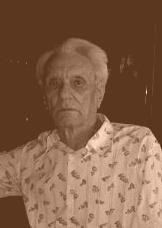


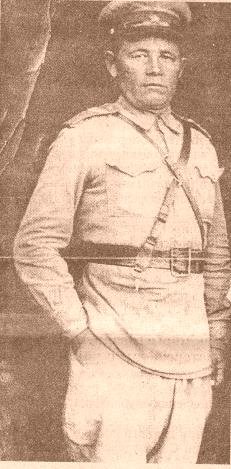
Gafarov Habian Ganievich
I want to tell about the heroism of my grandfather Gafarov Haban Ganievich. He was born in the village of Safakulevo of the Kurgan region in 1908 on the 8th of April. He was called up to the front in June 1941. Near Moscow the grandfather was wounded, the heel of his left foot and two fingers on his left hand were torn off. After recovering in the hospital he was given a vacation and came to his native village of Safakulevo where his wife and three children were waiting for him. Before being sent to the front he took courses in Nizhny Tagil on the development of new tanks. He had a chance to participate in the great tank battle near Kursk in the village of Prokhorovka. He recalled that after this battle they lay for a week as if shell-shocked, did not hear anything, there was a deafening noise in their ears. For his participation in the battle of Kursk he was awarded the Order of the Red Banner. But perhaps the most dramatic year for him was 1944. It was the 30th of October, 1944. The winter of 1944. The Baltic front. Battered and bloodless fascist units were pinned to the Baltic sea. In the area of Konigsberg a large number of enemy personnel and equipment were concentrated. There was a hasty evacuation of parts by sea. It was necessary, at all costs, to cut off the escape routes of the German units. The 18th Minsk Red Banner guard tank battalion, where my grandfather fought, was also part of the Soviet units that carried out this command order. On the 24th of October the pre-dawn darkness was split open by volleys of long-range guns and at 6 am a two-hour artillery preparation began. Nothing seemed to survive the barrage of artillery fire. The tank crew he commanded waited tensely for their time. It was clear that the fight was not going to be easy. And then they heard the command to attack. The T-34 heavy fighting vehicles roared forward. Through the peephole the ground could be seen to swell and stand on end from the explosions. Our tank made several aimed shots at the enemy. It was necessary to fight to go over twenty kilometers. The tank wedge drove into the enemy's defense line, trying to break through it. Only by four o'clock in the evening it was possible to do this, having completed the encirclement of a large group of the enemy. The German escape routes were cut off by sea. But this was not the end of their task. It was necessary to expand the breakthrough. The battalion was turned to the northwest. “Six days later,” my grandfather recalls, “I received an order from the battalion commander to attack a unit of enemy submachine gunners who surrounded our rifle company. It happened like this. After the battle our marines stopped to rest in a brick barn on the farm. Exhausted by the battle the soldiers fell down and fell asleep immediately. Before dawn the Germans managed to outflank the farm and attack the infantry. Flamethrowers were used here. Only a few soldiers were able to resist. The room was on fire. And here we are at the site of an unequal battle. It is difficult to describe the state of the crew when we saw the horror of the battle with our own eyes. We managed to push back the enemy, but it did not go unpunished for us. A direct hit of an anti-tank shell in the turret part killed the shooter and the radio operator. I managed to open the hatch and jump out of the car. And after... I regained consciousness in the hospital. The doctors had to work with me a lot to get me out of the clutches of physical and spiritual death, I lost my right eye, arm, and leg. My face was badly burned. This is how this terrible war ended for me.” My grandfather returned home in 1946 after a long treatment, and there he already had two death notices. By decree of the Presidium of the Supreme Soviet of the USSR on the 6th of November, 1947, Khabyan Ganeevich Gafarov was awarded the order of the Patriotic War of the 1st degree. But the award was found only in 1965 thanks to the Kaliningrad pathfinders.
Gafarov Habian Ganievich
I want to tell about the heroism of my grandfather Gafarov Haban Ganievich. He was born in the village of Safakulevo of the Kurgan region in 1908 on the 8th of April. He was called up to the front in June 1941. Near Moscow the grandfather was wounded, the heel of his left foot and two fingers on his left hand were torn off. After recovering in the hospital he was given a vacation and came to his native village of Safakulevo where his wife and three children were waiting for him. Before being sent to the front he took courses in Nizhny Tagil on the development of new tanks. He had a chance to participate in the great tank battle near Kursk in the village of Prokhorovka. He recalled that after this battle they lay for a week as if shell-shocked, did not hear anything, there was a deafening noise in their ears. For his participation in the battle of Kursk he was awarded the Order of the Red Banner. But perhaps the most dramatic year for him was 1944. It was the 30th of October, 1944. The winter of 1944. The Baltic front. Battered and bloodless fascist units were pinned to the Baltic sea. In the area of Konigsberg a large number of enemy personnel and equipment were concentrated. There was a hasty evacuation of parts by sea. It was necessary, at all costs, to cut off the escape routes of the German units. The 18th Minsk Red Banner guard tank battalion, where my grandfather fought, was also part of the Soviet units that carried out this command order. On the 24th of October the pre-dawn darkness was split open by volleys of long-range guns and at 6 am a two-hour artillery preparation began. Nothing seemed to survive the barrage of artillery fire. The tank crew he commanded waited tensely for their time. It was clear that the fight was not going to be easy. And then they heard the command to attack. The T-34 heavy fighting vehicles roared forward. Through the peephole the ground could be seen to swell and stand on end from the explosions. Our tank made several aimed shots at the enemy. It was necessary to fight to go over twenty kilometers. The tank wedge drove into the enemy's defense line, trying to break through it. Only by four o'clock in the evening it was possible to do this, having completed the encirclement of a large group of the enemy. The German escape routes were cut off by sea. But this was not the end of their task. It was necessary to expand the breakthrough. The battalion was turned to the northwest. “Six days later,” my grandfather recalls, “I received an order from the battalion commander to attack a unit of enemy submachine gunners who surrounded our rifle company. It happened like this. After the battle our marines stopped to rest in a brick barn on the farm. Exhausted by the battle the soldiers fell down and fell asleep immediately. Before dawn the Germans managed to outflank the farm and attack the infantry. Flamethrowers were used here. Only a few soldiers were able to resist. The room was on fire. And here we are at the site of an unequal battle. It is difficult to describe the state of the crew when we saw the horror of the battle with our own eyes. We managed to push back the enemy, but it did not go unpunished for us. A direct hit of an anti-tank shell in the turret part killed the shooter and the radio operator. I managed to open the hatch and jump out of the car. And after... I regained consciousness in the hospital. The doctors had to work with me a lot to get me out of the clutches of physical and spiritual death, I lost my right eye, arm, and leg. My face was badly burned. This is how this terrible war ended for me.” My grandfather returned home in 1946 after a long treatment, and there he already had two death notices. By decree of the Presidium of the Supreme Soviet of the USSR on the 6th of November, 1947, Khabyan Ganeevich Gafarov was awarded the order of the Patriotic War of the 1st degree. But the award was found only in 1965 thanks to the Kaliningrad pathfinders.
0 comment



2026 © Russian Military Historical Society Developed by Jetmix