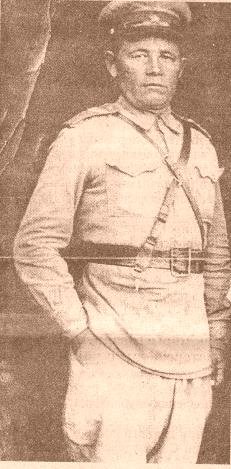


Vasily Ivanovich Gusev
Rank: Petty Officer. Gusev Vasily Ivanovich went to war on June 22, 1941 from the Khimki Military Commissariat, Moscow Region. On July 15, 1941, 31 operational military formation (Army) was formed in the Moscow Military District, in which he was enrolled. The task of the 31st Army was to create a defensive line along the Ostashkov - Selizharovo - Rzhev line. The army received the baptism of fire on October 2, 1941, when German troops launched an offensive in the direction of Rzhev. From October 19 to October 22, the army fought an enemy group that broke through to the Mednoye area, and on October 22, an order was received to go on the offensive together with the 29th and 30th armies - to liberate the city of Kalinin (now Tver). On December 5, the Kalinin offensive operation began with the forces of the Kalinin Front. Overcoming the stubborn resistance of the enemy, who repeatedly went over to counterattacks, by the end of December 15, the forces of the 29th and 31st Armies had captured both flanks of the enemy's Kalinin grouping, and the city of Kalinin was liberated on December 16. The 92nd separate tank brigade was formed in the period from February 21 to June 25, 1942. In the 300th tank battalion of the 92nd tank brigade, V.I. served from March 1942 as a senior fitter. A brief history of the brigade is as follows: 1. June 25, 1942 - Kalinin Front. Once formed, it was subordinated to the 31st Army. 2.July 26, 1942 - Western Front. As part of the 31st Army: From July 23, 1942, the army became part of the Western Front and participated in the Rzhev-Sychevsk offensive operation from July 30 to August 23. Rzhev-Sychevskaya strategic offensive operation (July 30 - October 1, 1942) - combat operations of the Kalinin and Western fronts with the aim of defeating the German 9th Army and Army Group Center, which was defending in the Rzhev-Vyazemsky ledge. On August 23, the 31st Army liberated the city of Zubtsov. 3. November 25, 1942 - withdrawn in the reserve of the Supreme Command Headquarters in Gorky for formation. 4. February 13, 1943 - Transcaucasian Front. Reassigned to the 56th Army. 5.March 2, 1943 - North Caucasian Front. Reassigned to the 46th Army. 6.March 16, 1943 - North Caucasian Front. Submitted to the 56th Army. 7.March 31, 1943 - North Caucasian Front. Subordinated to the 46th Army. 8.April 16, 1943 - North Caucasian Front. Included in the 56th Army. The troops of the front conducted a number of offensive operations, as a result of which the North Caucasian group of the enemy was pushed back to the Taman Peninsula, the bridgehead at Novorossiysk was expanded, the Novorossiysk defensive region was disbanded on April 12, 1943, and during the autumn offensive the enemy was completely pushed out of the North Caucasus. 9. June 2, 1943 - withdrawn to the reserve of the Supreme Command Headquarters in the Moscow Military District. Smolensk offensive operation. On August 7, the offensive of army troops began during Operation Suvorov. The offensive in the sector of the 31st Army resumed on 30 August. By the evening of the next day, the troops liberated 90 settlements. On September 26, Smolensk was taken. 10. October 1, 1943 - Kalinin Front. 11.October 15, 1943 - Second Baltic Front. Formed as a result of the renaming of the Baltic Front. Since November 1 - as part of the 22nd Guards Konigsberg Red Banner Army of the 2nd Baltic Front. From November 1 to November 21, 1943, she defended herself on the Lovat River in the Kholm, Velikiye Luki sector, participated in the Leningrad-Novgorod, Starorussko-Novorzhevsk, Rezhitsko-Dvinsk and Riga offensive operations. 12. January 1, 1944 - transferred to the reserve of the Supreme Command Headquarters in Narofominsk TVL. 272 Separate Motorized Special Purpose Battalion 1. September 1, 1944 - First Baltic Front. 2. October 1, 1944 - 5th Guards Tank Army as part of the First Baltic Front. 3.8 January 1945 - 5th Guards Tank Army as part of the 2nd Belorussian Front. 4. April 24, 1945 - 5th Guards Tank Army as part of the 3rd Belorussian Front. In January-April 1945, the troops of the 3rd Belorussian Front took part in the East Prussian strategic operation, during which on January 13-21 they carried out the Insterburg-Königsberg operation. In cooperation with the 2nd Belorussian Front, they broke through the deeply echeloned defense, advanced to a depth of 70-130 km, reached the approaches to Konigsberg (Kaliningrad) and blocked the enemy's East Prussian grouping, and then (March 13-29) eliminated it and withdrew to Frisches Huff Bay. From 6 to 9 April, the front troops carried out the Königsberg operation, as a result of which they captured the fortress and the city of Königsberg. On April 25, having completed the elimination of the Zemland grouping of enemy forces, they captured the port and city of Pillau (Baltiysk).May 1945 Gusev V.I. met in the city of Konigsberg. The 5th Guards Tank Army, which included his battalion, was assigned to the reserve of the Supreme Command headquarters. On August 5, 1945, the 5th Panzer Army became part of the 1st Far Eastern Front. On August 9, the troops of the Trans-Baikal, 1st and 2nd Far Eastern fronts, in cooperation with the Pacific Navy and the Amur River Flotilla, began military operations against Japanese troops on a front of more than 4 thousand kilometers. From August 9 to September 2, 1945, the front participated in the strategic Manchurian operation in the Harbin-Girin direction. The troops of the 1st Far Eastern Front, in cooperation with the Trans-Baikal, 2nd Far Eastern Fronts and the Pacific Fleet, broke through the fortified zone in mountain taiga conditions and defeated the troops of the Japanese 1st and 17th fronts of the Kwantung Army. We took several eastern regions of Manchuria and the Liaodong Peninsula. As part of the 5th Guards Tank Army of the 1st Far Eastern Front in Manchuria, Gusev V.I. met the end of World War II. On October 1, 1945, the front was disbanded. Gusev V.I. returned home to Moscow.
Vasily Ivanovich Gusev
Rank: Petty Officer. Gusev Vasily Ivanovich went to war on June 22, 1941 from the Khimki Military Commissariat, Moscow Region. On July 15, 1941, 31 operational military formation (Army) was formed in the Moscow Military District, in which he was enrolled. The task of the 31st Army was to create a defensive line along the Ostashkov - Selizharovo - Rzhev line. The army received the baptism of fire on October 2, 1941, when German troops launched an offensive in the direction of Rzhev. From October 19 to October 22, the army fought an enemy group that broke through to the Mednoye area, and on October 22, an order was received to go on the offensive together with the 29th and 30th armies - to liberate the city of Kalinin (now Tver). On December 5, the Kalinin offensive operation began with the forces of the Kalinin Front. Overcoming the stubborn resistance of the enemy, who repeatedly went over to counterattacks, by the end of December 15, the forces of the 29th and 31st Armies had captured both flanks of the enemy's Kalinin grouping, and the city of Kalinin was liberated on December 16. The 92nd separate tank brigade was formed in the period from February 21 to June 25, 1942. In the 300th tank battalion of the 92nd tank brigade, V.I. served from March 1942 as a senior fitter. A brief history of the brigade is as follows: 1. June 25, 1942 - Kalinin Front. Once formed, it was subordinated to the 31st Army. 2.July 26, 1942 - Western Front. As part of the 31st Army: From July 23, 1942, the army became part of the Western Front and participated in the Rzhev-Sychevsk offensive operation from July 30 to August 23. Rzhev-Sychevskaya strategic offensive operation (July 30 - October 1, 1942) - combat operations of the Kalinin and Western fronts with the aim of defeating the German 9th Army and Army Group Center, which was defending in the Rzhev-Vyazemsky ledge. On August 23, the 31st Army liberated the city of Zubtsov. 3. November 25, 1942 - withdrawn in the reserve of the Supreme Command Headquarters in Gorky for formation. 4. February 13, 1943 - Transcaucasian Front. Reassigned to the 56th Army. 5.March 2, 1943 - North Caucasian Front. Reassigned to the 46th Army. 6.March 16, 1943 - North Caucasian Front. Submitted to the 56th Army. 7.March 31, 1943 - North Caucasian Front. Subordinated to the 46th Army. 8.April 16, 1943 - North Caucasian Front. Included in the 56th Army. The troops of the front conducted a number of offensive operations, as a result of which the North Caucasian group of the enemy was pushed back to the Taman Peninsula, the bridgehead at Novorossiysk was expanded, the Novorossiysk defensive region was disbanded on April 12, 1943, and during the autumn offensive the enemy was completely pushed out of the North Caucasus. 9. June 2, 1943 - withdrawn to the reserve of the Supreme Command Headquarters in the Moscow Military District. Smolensk offensive operation. On August 7, the offensive of army troops began during Operation Suvorov. The offensive in the sector of the 31st Army resumed on 30 August. By the evening of the next day, the troops liberated 90 settlements. On September 26, Smolensk was taken. 10. October 1, 1943 - Kalinin Front. 11.October 15, 1943 - Second Baltic Front. Formed as a result of the renaming of the Baltic Front. Since November 1 - as part of the 22nd Guards Konigsberg Red Banner Army of the 2nd Baltic Front. From November 1 to November 21, 1943, she defended herself on the Lovat River in the Kholm, Velikiye Luki sector, participated in the Leningrad-Novgorod, Starorussko-Novorzhevsk, Rezhitsko-Dvinsk and Riga offensive operations. 12. January 1, 1944 - transferred to the reserve of the Supreme Command Headquarters in Narofominsk TVL. 272 Separate Motorized Special Purpose Battalion 1. September 1, 1944 - First Baltic Front. 2. October 1, 1944 - 5th Guards Tank Army as part of the First Baltic Front. 3.8 January 1945 - 5th Guards Tank Army as part of the 2nd Belorussian Front. 4. April 24, 1945 - 5th Guards Tank Army as part of the 3rd Belorussian Front. In January-April 1945, the troops of the 3rd Belorussian Front took part in the East Prussian strategic operation, during which on January 13-21 they carried out the Insterburg-Königsberg operation. In cooperation with the 2nd Belorussian Front, they broke through the deeply echeloned defense, advanced to a depth of 70-130 km, reached the approaches to Konigsberg (Kaliningrad) and blocked the enemy's East Prussian grouping, and then (March 13-29) eliminated it and withdrew to Frisches Huff Bay. From 6 to 9 April, the front troops carried out the Königsberg operation, as a result of which they captured the fortress and the city of Königsberg. On April 25, having completed the elimination of the Zemland grouping of enemy forces, they captured the port and city of Pillau (Baltiysk).May 1945 Gusev V.I. met in the city of Konigsberg. The 5th Guards Tank Army, which included his battalion, was assigned to the reserve of the Supreme Command headquarters. On August 5, 1945, the 5th Panzer Army became part of the 1st Far Eastern Front. On August 9, the troops of the Trans-Baikal, 1st and 2nd Far Eastern fronts, in cooperation with the Pacific Navy and the Amur River Flotilla, began military operations against Japanese troops on a front of more than 4 thousand kilometers. From August 9 to September 2, 1945, the front participated in the strategic Manchurian operation in the Harbin-Girin direction. The troops of the 1st Far Eastern Front, in cooperation with the Trans-Baikal, 2nd Far Eastern Fronts and the Pacific Fleet, broke through the fortified zone in mountain taiga conditions and defeated the troops of the Japanese 1st and 17th fronts of the Kwantung Army. We took several eastern regions of Manchuria and the Liaodong Peninsula. As part of the 5th Guards Tank Army of the 1st Far Eastern Front in Manchuria, Gusev V.I. met the end of World War II. On October 1, 1945, the front was disbanded. Gusev V.I. returned home to Moscow.
0 comment



2026 © Russian Military Historical Society Developed by Jetmix