


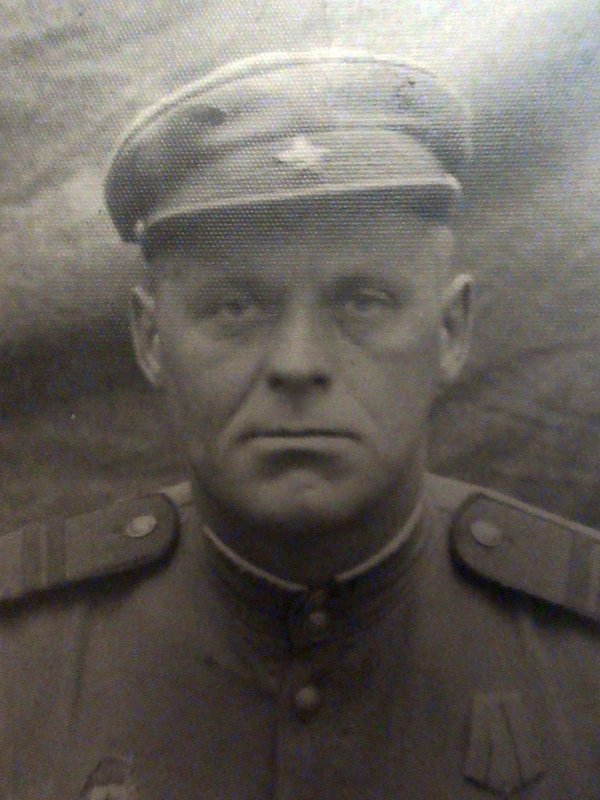
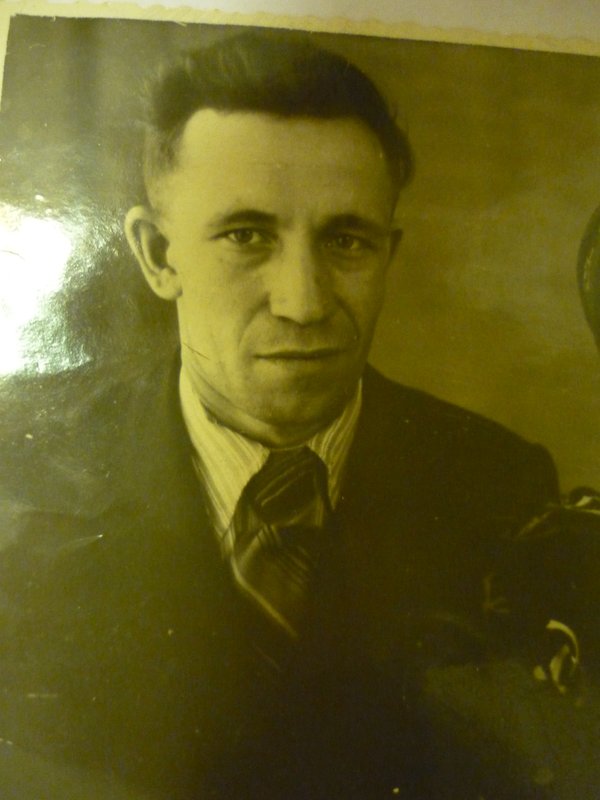

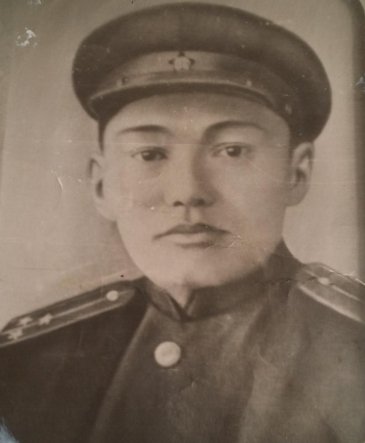


Isaev Ivan Mikhailovich
Rank: Military assistant. Type of troops: Military veterinary staff. Senior sergeant Ivan Mikhailovich Isaev has been at the front since June 1941. As part of the 33rd Separate Ski Brigade of the 127th Light Rifle Corps of the 19th Army of the Karelian Front, he participated in battles in the Kestenginsky, Murmansk and Medvezhegorsk areas. In battles with the German fascist invaders and White Finns, Isaev I.M. was wounded four times and received a severe concussion. For special courage, dedication and courage shown in the defense of the socialist Fatherland, senior sergeant I.M. Isaev on May 22, 1944 was awarded the Order of the Red Star.The dearest Order, May 7, 2013, Ranenburgskiy Vestnik. In March 1941, the Ranenburg district military registration and enlistment office summoned veterinary assistant Ivan Mikhailovich Isaev to the Red Army. The military commissar patted the guy on the shoulder and said: "Serve, Ivan, honestly!" 6 military awards and 5 wounds - this is the result of that pat on the shoulder and parting words before sending him to the front. In March 1941, the Ranenburg district military registration and enlistment office summoned veterinary assistant Ivan Mikhailovich Isaev to the Red Army. The military commissar patted the guy on the shoulder and said: "Serve, Ivan, honestly!" And a little earlier, in April, as historians testify, a meeting between Hitler and the commander of the mountain-rifle corps Dietl took place. The Fuehrer told the general: “Don't wait, but attack. You have to walk these ridiculous 100 kilometers from Petsamo to Murmansk. " Perhaps the Nazis would have covered these "ridiculous 100 kilometers" if it were not for the Ryazan guy and his fellow soldiers of the Soviet army. From the award list: “Senior Sergeant Isaev has been at the front since June 1941, took part in battles in the Kestenginsky, Murmansk and Medvezhegorsk directions. In the battles of 1941 near Murmansk, senior sergeant Isaev, commanding a squad, inflicted heavy losses on the enemy. Having been wounded and being evacuated from the battlefield to the medical battalion, senior sergeant Isaev, after being bandaged from the medical battalion, again went into battle. Continuing to destroy the German invaders, he took command of the platoon and led him into the attack, where he received a second wound. In the January battles of 1942 in the Medvezhegorsk direction, Comrade Isaev also showed courage and courage. Wounded, he refused to be evacuated to the hospital and continued to destroy the advancing White Finns. At the trench in which the squad of senior sergeant Isaev was defended, the soldiers counted more than forty White Finnish soldiers. In the operations carried out by the battalion, senior sergeant Isaev was given the task of evacuating the wounded soldiers and officers of the battalion from the battlefield. Comrade Isaev coped with the task brilliantly. As the appointed veterinary assistant of the battalion, Comrade Isaev works tirelessly with the personnel to save the horse. During the period of its work, the horse train has no traumatic injuries or diseases. I petition for the courage and courage shown in the battles with the German and White Finnish invaders to award senior sergeant Ivan Mikhailovich Isaev with the Order of the Red Star. The commander of the 3rd separate ski battalion, Major Obushny. I.M. Isaev would later be awarded other military awards, but all of them, in our memory, he wore only once, in 1965, on the twentieth anniversary of the Victory over Germany. We often asked him why he always only wears the Red Star. He replied that it is more convenient to wear the order: there are no straps. And on the new year 1970 he admitted that this award is the most expensive for him. By the way, in the same year I somehow missed the Lipetsk bus and, hoping to go home, went out onto the Chaplyginskoe highway. Raised his hand - the UAZ stopped, from which he heard: "Sit down." In the car, I got into a conversation with the chairman of the regional plan of Leonid Ivanovich Lysenko, who, recalling the war, told about the losses of our troops on Lysaya Gora. I have also shown awareness of these events. Leonid Ivanovich asked in surprise: “How do you know about these battles? Have you been there? " I replied, "No, my father was there." Leonid Ivanovich looked at me attentively and said: "Wait, wait, are you the son of Ivan Mikhailovich?" - "Yes". “Your father,” the front-line soldier continued, “knew all our 33 separate ski brigade. And we were platoon commanders in different companies, but in the same battalion. " ... In the memoirs of Hitler's generals, as well as in the "works" of the current "would-be historians" we read that the Russians won the Germans by frost, snow, mud, dust, etc. No, gentlemen: the Russian guys won you - they come from Ryazan, Khabarovsk, Novosibirsk, Moscow, from all other Soviet cities, villages and villages. On September 13 this year, Ivan Mikhailovich Isaev would have turned 91 years old. 42 years old, he did not live to see this date. 6 military awards and 5 wounds - this is the result of that pat on the shoulder and the words that the Ranenburg district military commissar said before being sent to the front: "Serve, Ivan, honestly!" Ivan Mikhailovich Isaev was from a large peasant family. In 1940 he graduated from the veterinary technical school. After the war, he worked as a physical education teacher. He was elected chairman of the Kirov collective farm in Novochemodanovo, raised virgin soil in the Kustanai region.He knew how to defend the Motherland and work for it. Thank you, father, grandfather and great-grandfather, for the Victory, for the fact that we live! Eternal memory to you! Isaev Evgeny Ivanovich, son of a war veteran, village Voskresenskoye. In early June 1944, our 33rd Ski Rifle Brigade was on wheels. As part of the 127th corps, we were transferred to Lodeinoe Pole, to the southernmost section of the Karelian front. On June 10, a powerful offensive of the Leningrad Front began on the Karelian Isthmus. Everyone understood: now it's our turn. And on June 21, the troops of the Karelian Front went on the offensive in South Karelia. The Finnish group "Olonets" was simultaneously attacked by the 32nd Army in the Medvezhyegorsk area and the 7th Army in the Lodeynoye Pole area. On the first day of the 7th Army's offensive, the guardsmen of the 4th and 99th divisions crossed the Svir River and seized the bridgehead. Strengthening the onslaught and expanding the bridgehead, on June 24, the troops overcame the Svir along the entire length. The enemy began to hastily retreat to Olonets, to the second line of defense. From newspapers and lightning leaflets, the entire front learned these days about the feat of sixteen guards on the Svir. Placing scarecrow "troops" on small rafts, they swam across a wide river, pushing the rafts in front of them and calling on themselves the fire of enemy fire weapons. The discovered firing points were suppressed by the artillerymen. And the daredevils, in spite of all deaths, reached the right bank and "caught" there before the reinforcements landed. In order to prevent the enemy from gaining a foothold in the second line of defense, two naval brigades landed in the Finnish rear with the help of the Ladoga flotilla, and our reserve corps replaced the tired and lost front lines. The enemy's second line of defense was broken through on the move, and the pursuit of the Olonets grouping units retreating to the border began. On June 25, we walked along the empty streets of wooden Olonets. On June 26, units of the 32nd Army and the Onega Flotilla liberated the city of Petrozavodsk, the capital of Karelia. On this occasion, Moscow saluted our front. The further we went into the depths of the forests and swamps, the closer the border, the more stubbornly the enemy resisted, the fiercer the battles were. Retreating, the Finns blew up bridges, mined roads and roadsides, and set up forest heaps on paths and clearings. Our advancing battalions were often subjected to sudden long-range artillery fire raids, were fired upon by sabotage groups from ambushes, and nevertheless moved forward. Artillery and tanks supported us. _x0008_ They lagged behind, but they continued to move along the hard roads, following the sappers. Our battalion fought a stubborn battle on July 6 near the village of Kasnyaselga, which covered our exit to the Salmi-Pitkyaranta highway. The Finns launched counterattacks several times. Having occupied a perimeter defense, our battalion repelled them. When the 2nd and 3rd battalions came to the aid of the vanguard, the enemy retreated, clearing the highway. The brigade was now advancing as the vanguard of the corps. The main goal is ahead - Pitkyaranta. Heavy fighting took place on July 9 on the outskirts of Pitkäranta. At Loimola, the enemy created a strong stronghold, used a very advantageous line for defense. It was impossible to take a strong point on the move. The brigade commander, Colonel Makarov M.S., sent the main forces around, through the swamp, and ordered the 3rd battalion of Major Obushny to advance head-on, along the highway, diverting attention and fire to itself until the main forces reached their starting lines, and then attack the stronghold point on a common signal, from both sides. The third battalion did not manage to reach the starting line secretly. On the marching columns the fire of enemy batteries fell. There was nothing to suppress these batteries. And the rifle chains moved in waves, then rushing forward, as soon as the bursts of shells stopped, then they lay down. Together with the arrows, my mortarmen moved forward and hastily took up a position. The first platoon of 82 mm mortars in my company - all the artillery support of the battalion. The other two platoons are brought up to fire ammunition, passing mines along a long chain. Near the lake, with the contact Vasya Noskov, they squeezed into a fresh funnel. This is the NP. From here on the phone I give a command to fire, I start to beat from three mortars at firing points, in trenches. Above the lake, above both heights, there is a continuous rumble of explosions, the crackle of machine-gun and machine-gun bursts, it smells of smoke and tar ... The fire fight has been going on for several hours. Time seemed to have stopped. And there is still no news from the left flank from the brigade headquarters. At first everything went fine there. Having passed a long distance by the swamp, the battalions approached the enemy's height, rounding the strong point. It seemed to give a short respite to the exhausted people, to clarify the tasks for the companies, and a general attack could begin. And at that moment the heights "spoke" with rifle and machine-gun fire. The enemy figured out our plan. And preempted. Twice the battalions rose for a decisive thrust. And twice fell on unsteady hummocks, in rusty swamp water, pressed by dense leaden rain. To retreat in such a position meant to suffer unnecessarily losses and not fulfill the combat mission of the day. There is only one way out - only forward. But how to raise the chains pressed by the aiming fire?And the brigade commander orders the commandant's platoon to unfold the banner and move forward. And he himself went with a platoon, snatching his Mauser from the holster. This was not often seen in the war, when the banner was carried forward in battle. He was protected and guarded as the very military honor. But when it burns with red cotton and flutters in front, when our "father" himself went forward under the banner, no one can lie face down. Standard-bearers fall one after another, the entire commandant's platoon perishes, but the banner is not allowed to fall. Companies rose in one impulse, all who could rise. And they moved uncontrollably into the enemy trenches. The Russian "hurray" drowned out the shooting. The Finns resisted fanatically. Some jumped out of the trenches to meet the attackers without uniforms, in undershirts. Several people rush to the banner, firing on the move from machine guns. The brigade commander unloads the Mauser over and over again. But it is also stitched by an automatic fire. "Bata" was not allowed to fall, was caught by strong soldier's arms and carried forward, to the height repulsed from the enemy. The enemy's resistance was broken, the line covering the approaches to Pitkyaranta was in our hands. And on a temporary bridge built by sappers, units of another unit are moving along the highway. The corps commander enters the second echelon. We opened the way for him to Pitkyarantu. Opened at a high price. The brigade lost more than a third in killed and wounded. The soldiers experienced the death of their beloved commander as a personal grief. It was decided to bury him in Petrozavodsk. On July 10, a platoon of scouts accompanied the brigade commander on his last journey. On the same day, units of our corps took the important center of the enemy's defense, the city of Pitkyarantu. The further offensive was stopped by order of the Headquarters of the Supreme High Command. The victory of our troops in South Karelia in the summer of 1944 was of great military-political significance: the Leningrad region and Karelia were completely cleared of the Finnish-fascist occupation, the Kirov railway was completely liberated; Finland was forced to break off relations with Germany and withdraw from the war. In September, echelons took our brigade back to the North, to the Arctic Circle, where new battles and new tests awaited us. I.K. Musienko, veteran of the Great Patriotic War.
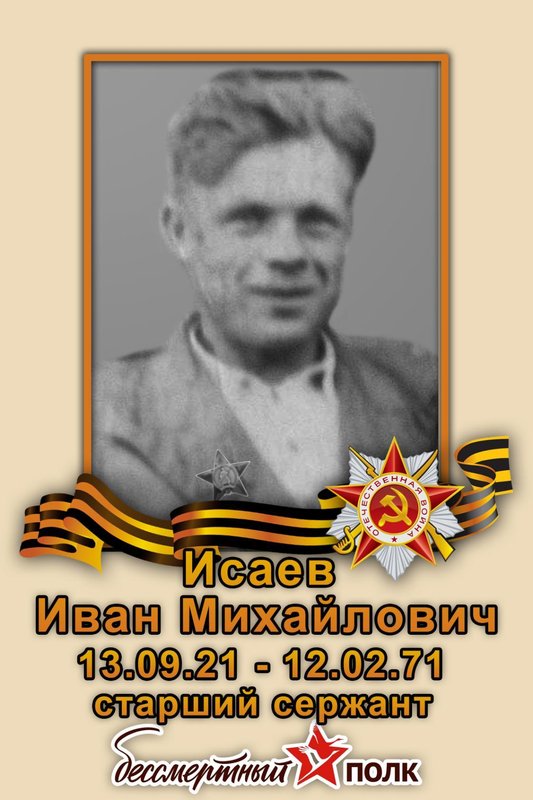
Isaev Ivan Mikhailovich
Rank: Military assistant. Type of troops: Military veterinary staff. Senior sergeant Ivan Mikhailovich Isaev has been at the front since June 1941. As part of the 33rd Separate Ski Brigade of the 127th Light Rifle Corps of the 19th Army of the Karelian Front, he participated in battles in the Kestenginsky, Murmansk and Medvezhegorsk areas. In battles with the German fascist invaders and White Finns, Isaev I.M. was wounded four times and received a severe concussion. For special courage, dedication and courage shown in the defense of the socialist Fatherland, senior sergeant I.M. Isaev on May 22, 1944 was awarded the Order of the Red Star.The dearest Order, May 7, 2013, Ranenburgskiy Vestnik. In March 1941, the Ranenburg district military registration and enlistment office summoned veterinary assistant Ivan Mikhailovich Isaev to the Red Army. The military commissar patted the guy on the shoulder and said: "Serve, Ivan, honestly!" 6 military awards and 5 wounds - this is the result of that pat on the shoulder and parting words before sending him to the front. In March 1941, the Ranenburg district military registration and enlistment office summoned veterinary assistant Ivan Mikhailovich Isaev to the Red Army. The military commissar patted the guy on the shoulder and said: "Serve, Ivan, honestly!" And a little earlier, in April, as historians testify, a meeting between Hitler and the commander of the mountain-rifle corps Dietl took place. The Fuehrer told the general: “Don't wait, but attack. You have to walk these ridiculous 100 kilometers from Petsamo to Murmansk. " Perhaps the Nazis would have covered these "ridiculous 100 kilometers" if it were not for the Ryazan guy and his fellow soldiers of the Soviet army. From the award list: “Senior Sergeant Isaev has been at the front since June 1941, took part in battles in the Kestenginsky, Murmansk and Medvezhegorsk directions. In the battles of 1941 near Murmansk, senior sergeant Isaev, commanding a squad, inflicted heavy losses on the enemy. Having been wounded and being evacuated from the battlefield to the medical battalion, senior sergeant Isaev, after being bandaged from the medical battalion, again went into battle. Continuing to destroy the German invaders, he took command of the platoon and led him into the attack, where he received a second wound. In the January battles of 1942 in the Medvezhegorsk direction, Comrade Isaev also showed courage and courage. Wounded, he refused to be evacuated to the hospital and continued to destroy the advancing White Finns. At the trench in which the squad of senior sergeant Isaev was defended, the soldiers counted more than forty White Finnish soldiers. In the operations carried out by the battalion, senior sergeant Isaev was given the task of evacuating the wounded soldiers and officers of the battalion from the battlefield. Comrade Isaev coped with the task brilliantly. As the appointed veterinary assistant of the battalion, Comrade Isaev works tirelessly with the personnel to save the horse. During the period of its work, the horse train has no traumatic injuries or diseases. I petition for the courage and courage shown in the battles with the German and White Finnish invaders to award senior sergeant Ivan Mikhailovich Isaev with the Order of the Red Star. The commander of the 3rd separate ski battalion, Major Obushny. I.M. Isaev would later be awarded other military awards, but all of them, in our memory, he wore only once, in 1965, on the twentieth anniversary of the Victory over Germany. We often asked him why he always only wears the Red Star. He replied that it is more convenient to wear the order: there are no straps. And on the new year 1970 he admitted that this award is the most expensive for him. By the way, in the same year I somehow missed the Lipetsk bus and, hoping to go home, went out onto the Chaplyginskoe highway. Raised his hand - the UAZ stopped, from which he heard: "Sit down." In the car, I got into a conversation with the chairman of the regional plan of Leonid Ivanovich Lysenko, who, recalling the war, told about the losses of our troops on Lysaya Gora. I have also shown awareness of these events. Leonid Ivanovich asked in surprise: “How do you know about these battles? Have you been there? " I replied, "No, my father was there." Leonid Ivanovich looked at me attentively and said: "Wait, wait, are you the son of Ivan Mikhailovich?" - "Yes". “Your father,” the front-line soldier continued, “knew all our 33 separate ski brigade. And we were platoon commanders in different companies, but in the same battalion. " ... In the memoirs of Hitler's generals, as well as in the "works" of the current "would-be historians" we read that the Russians won the Germans by frost, snow, mud, dust, etc. No, gentlemen: the Russian guys won you - they come from Ryazan, Khabarovsk, Novosibirsk, Moscow, from all other Soviet cities, villages and villages. On September 13 this year, Ivan Mikhailovich Isaev would have turned 91 years old. 42 years old, he did not live to see this date. 6 military awards and 5 wounds - this is the result of that pat on the shoulder and the words that the Ranenburg district military commissar said before being sent to the front: "Serve, Ivan, honestly!" Ivan Mikhailovich Isaev was from a large peasant family. In 1940 he graduated from the veterinary technical school. After the war, he worked as a physical education teacher. He was elected chairman of the Kirov collective farm in Novochemodanovo, raised virgin soil in the Kustanai region.He knew how to defend the Motherland and work for it. Thank you, father, grandfather and great-grandfather, for the Victory, for the fact that we live! Eternal memory to you! Isaev Evgeny Ivanovich, son of a war veteran, village Voskresenskoye. In early June 1944, our 33rd Ski Rifle Brigade was on wheels. As part of the 127th corps, we were transferred to Lodeinoe Pole, to the southernmost section of the Karelian front. On June 10, a powerful offensive of the Leningrad Front began on the Karelian Isthmus. Everyone understood: now it's our turn. And on June 21, the troops of the Karelian Front went on the offensive in South Karelia. The Finnish group "Olonets" was simultaneously attacked by the 32nd Army in the Medvezhyegorsk area and the 7th Army in the Lodeynoye Pole area. On the first day of the 7th Army's offensive, the guardsmen of the 4th and 99th divisions crossed the Svir River and seized the bridgehead. Strengthening the onslaught and expanding the bridgehead, on June 24, the troops overcame the Svir along the entire length. The enemy began to hastily retreat to Olonets, to the second line of defense. From newspapers and lightning leaflets, the entire front learned these days about the feat of sixteen guards on the Svir. Placing scarecrow "troops" on small rafts, they swam across a wide river, pushing the rafts in front of them and calling on themselves the fire of enemy fire weapons. The discovered firing points were suppressed by the artillerymen. And the daredevils, in spite of all deaths, reached the right bank and "caught" there before the reinforcements landed. In order to prevent the enemy from gaining a foothold in the second line of defense, two naval brigades landed in the Finnish rear with the help of the Ladoga flotilla, and our reserve corps replaced the tired and lost front lines. The enemy's second line of defense was broken through on the move, and the pursuit of the Olonets grouping units retreating to the border began. On June 25, we walked along the empty streets of wooden Olonets. On June 26, units of the 32nd Army and the Onega Flotilla liberated the city of Petrozavodsk, the capital of Karelia. On this occasion, Moscow saluted our front. The further we went into the depths of the forests and swamps, the closer the border, the more stubbornly the enemy resisted, the fiercer the battles were. Retreating, the Finns blew up bridges, mined roads and roadsides, and set up forest heaps on paths and clearings. Our advancing battalions were often subjected to sudden long-range artillery fire raids, were fired upon by sabotage groups from ambushes, and nevertheless moved forward. Artillery and tanks supported us. _x0008_ They lagged behind, but they continued to move along the hard roads, following the sappers. Our battalion fought a stubborn battle on July 6 near the village of Kasnyaselga, which covered our exit to the Salmi-Pitkyaranta highway. The Finns launched counterattacks several times. Having occupied a perimeter defense, our battalion repelled them. When the 2nd and 3rd battalions came to the aid of the vanguard, the enemy retreated, clearing the highway. The brigade was now advancing as the vanguard of the corps. The main goal is ahead - Pitkyaranta. Heavy fighting took place on July 9 on the outskirts of Pitkäranta. At Loimola, the enemy created a strong stronghold, used a very advantageous line for defense. It was impossible to take a strong point on the move. The brigade commander, Colonel Makarov M.S., sent the main forces around, through the swamp, and ordered the 3rd battalion of Major Obushny to advance head-on, along the highway, diverting attention and fire to itself until the main forces reached their starting lines, and then attack the stronghold point on a common signal, from both sides. The third battalion did not manage to reach the starting line secretly. On the marching columns the fire of enemy batteries fell. There was nothing to suppress these batteries. And the rifle chains moved in waves, then rushing forward, as soon as the bursts of shells stopped, then they lay down. Together with the arrows, my mortarmen moved forward and hastily took up a position. The first platoon of 82 mm mortars in my company - all the artillery support of the battalion. The other two platoons are brought up to fire ammunition, passing mines along a long chain. Near the lake, with the contact Vasya Noskov, they squeezed into a fresh funnel. This is the NP. From here on the phone I give a command to fire, I start to beat from three mortars at firing points, in trenches. Above the lake, above both heights, there is a continuous rumble of explosions, the crackle of machine-gun and machine-gun bursts, it smells of smoke and tar ... The fire fight has been going on for several hours. Time seemed to have stopped. And there is still no news from the left flank from the brigade headquarters. At first everything went fine there. Having passed a long distance by the swamp, the battalions approached the enemy's height, rounding the strong point. It seemed to give a short respite to the exhausted people, to clarify the tasks for the companies, and a general attack could begin. And at that moment the heights "spoke" with rifle and machine-gun fire. The enemy figured out our plan. And preempted. Twice the battalions rose for a decisive thrust. And twice fell on unsteady hummocks, in rusty swamp water, pressed by dense leaden rain. To retreat in such a position meant to suffer unnecessarily losses and not fulfill the combat mission of the day. There is only one way out - only forward. But how to raise the chains pressed by the aiming fire?And the brigade commander orders the commandant's platoon to unfold the banner and move forward. And he himself went with a platoon, snatching his Mauser from the holster. This was not often seen in the war, when the banner was carried forward in battle. He was protected and guarded as the very military honor. But when it burns with red cotton and flutters in front, when our "father" himself went forward under the banner, no one can lie face down. Standard-bearers fall one after another, the entire commandant's platoon perishes, but the banner is not allowed to fall. Companies rose in one impulse, all who could rise. And they moved uncontrollably into the enemy trenches. The Russian "hurray" drowned out the shooting. The Finns resisted fanatically. Some jumped out of the trenches to meet the attackers without uniforms, in undershirts. Several people rush to the banner, firing on the move from machine guns. The brigade commander unloads the Mauser over and over again. But it is also stitched by an automatic fire. "Bata" was not allowed to fall, was caught by strong soldier's arms and carried forward, to the height repulsed from the enemy. The enemy's resistance was broken, the line covering the approaches to Pitkyaranta was in our hands. And on a temporary bridge built by sappers, units of another unit are moving along the highway. The corps commander enters the second echelon. We opened the way for him to Pitkyarantu. Opened at a high price. The brigade lost more than a third in killed and wounded. The soldiers experienced the death of their beloved commander as a personal grief. It was decided to bury him in Petrozavodsk. On July 10, a platoon of scouts accompanied the brigade commander on his last journey. On the same day, units of our corps took the important center of the enemy's defense, the city of Pitkyarantu. The further offensive was stopped by order of the Headquarters of the Supreme High Command. The victory of our troops in South Karelia in the summer of 1944 was of great military-political significance: the Leningrad region and Karelia were completely cleared of the Finnish-fascist occupation, the Kirov railway was completely liberated; Finland was forced to break off relations with Germany and withdraw from the war. In September, echelons took our brigade back to the North, to the Arctic Circle, where new battles and new tests awaited us. I.K. Musienko, veteran of the Great Patriotic War.
0 comment



2026 © Russian Military Historical Society Developed by Jetmix