


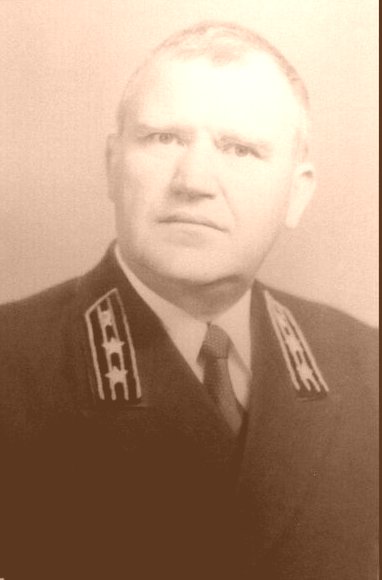
Balabai Ivan Filippovich
He was born in 1927. The memory is alive of the kilometers of war that were passed by the cadet of the training battalion of the 99th reserve rifle regiment of the 33rd Murom reserve rifle division, and then-the commander of the machine-gun crew - he was called up for military service at the age of 17, 140 days before the victory over Nazi Germany. He served in the training battalion of the 99th reserve rifle regiment of the 33rd Murom reserve rifle division. Ivan Filippovich marched the heavy roads of Manchuria, participated in the crossing of the Bolshoy Khingan ridge, and more than once looked death in the face. He has a combat award "For Combat Merit", was awarded the medal "For the victory over Japan". For the construction of the Ulan Bator-Beijing railway, he was awarded the medal "For Valorous Labor" in honor of the 100th anniversary of V.I.Lenin's birth. From the memoirs of Ivan Filippovich: "I welcomed Victory day in the guard shift for the protection of military facility at Mordovskovo station, Gorky region. It is not far from the ancient city of Murom. The capitulation of Germany was reported to the chief of the guard by telephone. In the evening, we handed over the protected object to the new guard unit. We returned to the barracks, handed over our weapons and ammunition, and joined the cheering colleagues and residents of the garrison. A month later, we were given new uniforms and sent by rail to the East. The final destination of transportation was Bayan-Tyumen station in the Mongolian People's Republic. We settled down in tents on the bank of the river Kerurgen. The 16th mechanized brigade of the 7th mechanized corps, which had arrived from defeated Germany, was stationed in the valley of this river. We joined as a replenishment of this combat unit, which was part of the Trans-Baikal front, commanded by Marshal R.Ya.Malinovsky. Here I was appointed commander of a machine-gun squad and received combat weapons: a Maxim machine gun, carbines, and ammunition. We were located in tents, went out to the field every day for tactical training, but did not dig trenches and did not shoot from small arms and tank weapons. Postal correspondence was forbidden to all personnel. We could neither receive nor send letters. Headquarters and tankers were forbidden to use radio communication, it was impossible to conduct reconnaissance of the probable enemy. All these restrictions were aimed at ensuring the secrecy of our troops in Mongolia in the run-up to the outbreak of war. From the Kerugen river, our military unit was relocated in vehicles to a waiting area in an empty, waterless hilly steppe, where training sessions were continued. One day in early August, at night after lights-out signal, we were roused by the "Alarm" signal and sent on foot with full combat equipment to the area of combat concentration. We walked all night, falling asleep, falling down, but getting up and continuing to walk. It was only at dawn that we arrived at the place designated by the command near the border with Manchuria. On the night of August 9, 1945, we were each given a 3-day dry ration of food and brought to the battle positions of the T-34 tanks, on which we were to act as a combat landing force. Before dawn, in the dark, the platoon commander lined us up at the tanks and informed us that the Soviet government had declared war on Japan, pointed at the tank on which my machine-gun squad was to take part in the battles, and warned us that we could leave the tank strictly at his command. Then he ordered "To the cars" and the squad with the Maxim machine gun was located on the tank's armor. We installed the machine gun at the very top of the tank, on the turret. At dawn, the tank column began to move. The Japanese did not put up any serious resistance, and the Japanese army cavalry unit that jumped out to meet us was quickly shot by our advance party. The beginning of our offensive was unexpected by the Japanese command. The measures taken by our command to ensure the secrecy of the concentration of our troops in Mongolia were justified. Our column of tanks kept moving. By the end of the day, we stopped at some distance from the Buddhist temple on the lonely slope of Datsan hill. That’s how the first day of the war ended. At nightfall, we, the paratroopers, stood guard over the tank, and the crew rested. We performed such security functions during the following nights as well. Later, on our way, we came across herds of cattle, sheep, and horses, but there were no people with them. We were surprised to see on some of the horses a burnt brand in the form of a swastika-a curved cross. Our rear lines with food and water were hopelessly behind. The battalion's Komsorg responded to our soldiers ' claims: "We must switch to pasture", that is, to get food on our own. In this regard, I remember the case when the tank commander gave the Mongolian Arat his cap, and he gave a live ram in return. At this time, the column began to move and the ram was dragged onto the tank and so it was transported alive until the column stopped the march. In the foothills of the Bolshoi Khingan, we ran out of fuel for tanks. For some reason, the tankers called it "gasoil". We stood there for two days until the planes delivered diesel fuel in barrels. It started raining and the rainy days began. Under these conditions, the tanks could hardly overcome the passes of the Bplshoi Khingan. One tank could not hold its own on the slope of a mountain ridge and rolled down into a small gorge, where it ran into its right side, but did not fall, kept its stern on the caterpillars. The crew got out and waited for help from the technical support company moving in the rear of the column. We continued along the pass as part of the column and reached the Eastern side of the mountain range. Before us stretched the Manchurian plain, with cultivated fields and small Chinese settlements. The inhabitants greeted us enthusiastically, shouting: "Shanga, Shanga!» - and gave a thumbs-up. We finished the campaign when we reached the railway, where the advance detachmet of our brigade was already located. On the night of September 3, the tankers received a radio message about the surrender of Japan. World war II was over.... But my service to my Motherland and state continued for almost 11 years. After serving in the Soviet Army, Ivan Filippovich Balabay worked as an investigator in the Ussuri Prosecutor's office. In 1964, Ivan Filippovich was promoted to Prosecutor of the Border region. Later, he headed the inter-district Ussurian Prosecutor's office, where he worked for almost 10 years. Ivan Filippovich now lives in the city of Ussuriysk, Primorsky Krai. He is the only veteran of the Great Patriotic War who served in the Prosecutor's office of Primorsky Krai after the war years.
Balabai Ivan Filippovich
He was born in 1927. The memory is alive of the kilometers of war that were passed by the cadet of the training battalion of the 99th reserve rifle regiment of the 33rd Murom reserve rifle division, and then-the commander of the machine-gun crew - he was called up for military service at the age of 17, 140 days before the victory over Nazi Germany. He served in the training battalion of the 99th reserve rifle regiment of the 33rd Murom reserve rifle division. Ivan Filippovich marched the heavy roads of Manchuria, participated in the crossing of the Bolshoy Khingan ridge, and more than once looked death in the face. He has a combat award "For Combat Merit", was awarded the medal "For the victory over Japan". For the construction of the Ulan Bator-Beijing railway, he was awarded the medal "For Valorous Labor" in honor of the 100th anniversary of V.I.Lenin's birth. From the memoirs of Ivan Filippovich: "I welcomed Victory day in the guard shift for the protection of military facility at Mordovskovo station, Gorky region. It is not far from the ancient city of Murom. The capitulation of Germany was reported to the chief of the guard by telephone. In the evening, we handed over the protected object to the new guard unit. We returned to the barracks, handed over our weapons and ammunition, and joined the cheering colleagues and residents of the garrison. A month later, we were given new uniforms and sent by rail to the East. The final destination of transportation was Bayan-Tyumen station in the Mongolian People's Republic. We settled down in tents on the bank of the river Kerurgen. The 16th mechanized brigade of the 7th mechanized corps, which had arrived from defeated Germany, was stationed in the valley of this river. We joined as a replenishment of this combat unit, which was part of the Trans-Baikal front, commanded by Marshal R.Ya.Malinovsky. Here I was appointed commander of a machine-gun squad and received combat weapons: a Maxim machine gun, carbines, and ammunition. We were located in tents, went out to the field every day for tactical training, but did not dig trenches and did not shoot from small arms and tank weapons. Postal correspondence was forbidden to all personnel. We could neither receive nor send letters. Headquarters and tankers were forbidden to use radio communication, it was impossible to conduct reconnaissance of the probable enemy. All these restrictions were aimed at ensuring the secrecy of our troops in Mongolia in the run-up to the outbreak of war. From the Kerugen river, our military unit was relocated in vehicles to a waiting area in an empty, waterless hilly steppe, where training sessions were continued. One day in early August, at night after lights-out signal, we were roused by the "Alarm" signal and sent on foot with full combat equipment to the area of combat concentration. We walked all night, falling asleep, falling down, but getting up and continuing to walk. It was only at dawn that we arrived at the place designated by the command near the border with Manchuria. On the night of August 9, 1945, we were each given a 3-day dry ration of food and brought to the battle positions of the T-34 tanks, on which we were to act as a combat landing force. Before dawn, in the dark, the platoon commander lined us up at the tanks and informed us that the Soviet government had declared war on Japan, pointed at the tank on which my machine-gun squad was to take part in the battles, and warned us that we could leave the tank strictly at his command. Then he ordered "To the cars" and the squad with the Maxim machine gun was located on the tank's armor. We installed the machine gun at the very top of the tank, on the turret. At dawn, the tank column began to move. The Japanese did not put up any serious resistance, and the Japanese army cavalry unit that jumped out to meet us was quickly shot by our advance party. The beginning of our offensive was unexpected by the Japanese command. The measures taken by our command to ensure the secrecy of the concentration of our troops in Mongolia were justified. Our column of tanks kept moving. By the end of the day, we stopped at some distance from the Buddhist temple on the lonely slope of Datsan hill. That’s how the first day of the war ended. At nightfall, we, the paratroopers, stood guard over the tank, and the crew rested. We performed such security functions during the following nights as well. Later, on our way, we came across herds of cattle, sheep, and horses, but there were no people with them. We were surprised to see on some of the horses a burnt brand in the form of a swastika-a curved cross. Our rear lines with food and water were hopelessly behind. The battalion's Komsorg responded to our soldiers ' claims: "We must switch to pasture", that is, to get food on our own. In this regard, I remember the case when the tank commander gave the Mongolian Arat his cap, and he gave a live ram in return. At this time, the column began to move and the ram was dragged onto the tank and so it was transported alive until the column stopped the march. In the foothills of the Bolshoi Khingan, we ran out of fuel for tanks. For some reason, the tankers called it "gasoil". We stood there for two days until the planes delivered diesel fuel in barrels. It started raining and the rainy days began. Under these conditions, the tanks could hardly overcome the passes of the Bplshoi Khingan. One tank could not hold its own on the slope of a mountain ridge and rolled down into a small gorge, where it ran into its right side, but did not fall, kept its stern on the caterpillars. The crew got out and waited for help from the technical support company moving in the rear of the column. We continued along the pass as part of the column and reached the Eastern side of the mountain range. Before us stretched the Manchurian plain, with cultivated fields and small Chinese settlements. The inhabitants greeted us enthusiastically, shouting: "Shanga, Shanga!» - and gave a thumbs-up. We finished the campaign when we reached the railway, where the advance detachmet of our brigade was already located. On the night of September 3, the tankers received a radio message about the surrender of Japan. World war II was over.... But my service to my Motherland and state continued for almost 11 years. After serving in the Soviet Army, Ivan Filippovich Balabay worked as an investigator in the Ussuri Prosecutor's office. In 1964, Ivan Filippovich was promoted to Prosecutor of the Border region. Later, he headed the inter-district Ussurian Prosecutor's office, where he worked for almost 10 years. Ivan Filippovich now lives in the city of Ussuriysk, Primorsky Krai. He is the only veteran of the Great Patriotic War who served in the Prosecutor's office of Primorsky Krai after the war years.
0 comment



2026 © Russian Military Historical Society Developed by Jetmix