

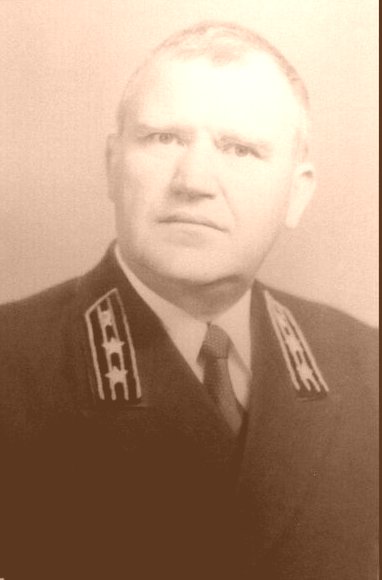


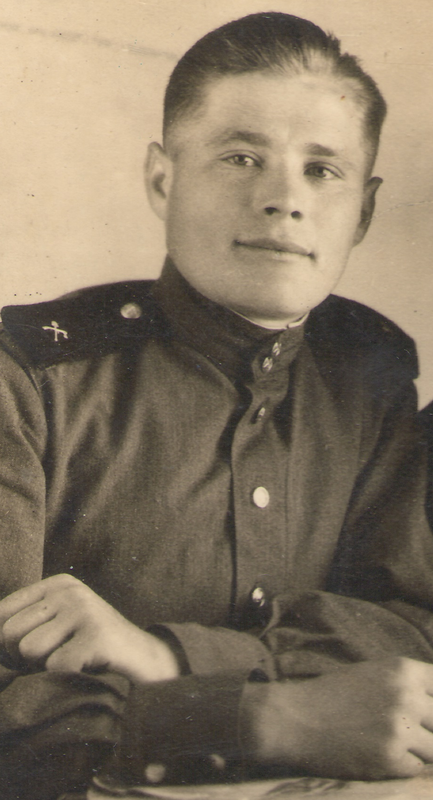
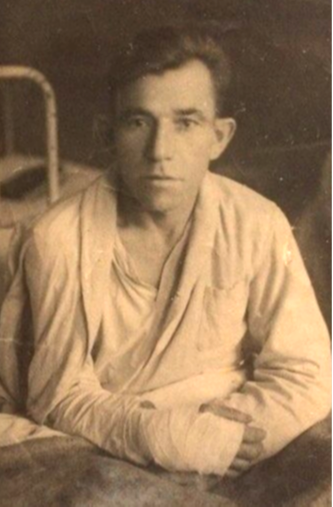
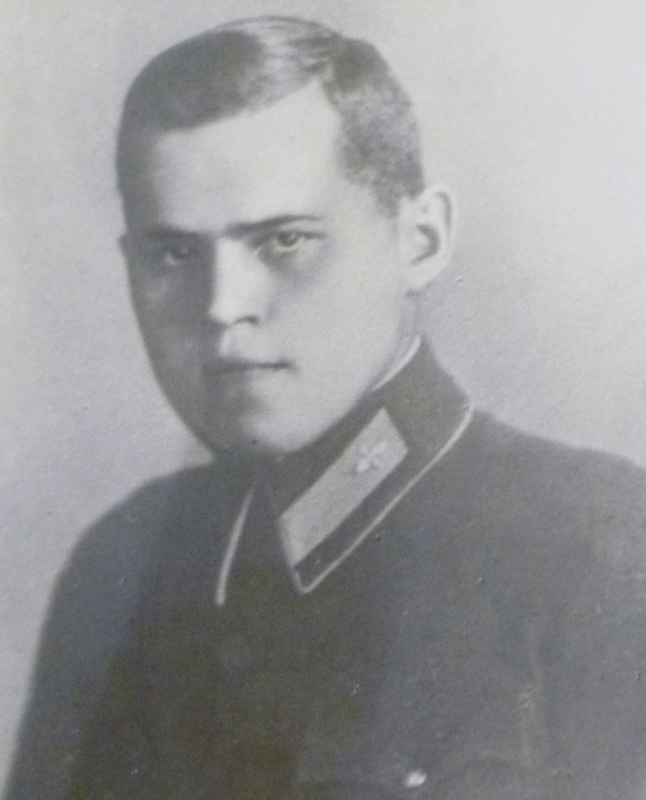

Bazarov Gregory Sergeevich
Bazarov Gregory Sergeevich was born in 1923. Grigory Sergeevich graduated from high school in June 1941 and was drafted into the Red Army on July 3rd of the same year and sent to the Penza Artillery School. In November 1941 Lieutenant Bazarov was sent as a platoon commander to serve in the town of Melekes in the Ulyanovsk region. In December of the same year he was sent to the Western Front as part of the 224th Artillery Regiment, which supported the 58th rifle division of the 50th Army with fire. The fighting took place near the village Zaitseva Gora in the Baryatinsky district of Kaluga region, where the German troops had built a powerful fortification until spring 1942. More than 100,000 Soviet soldiers died in the fighting in this area. In June 1942 G. S. Basarov was wounded in his left arm, but did not leave the unit. On 03.09.1942 he was sent to the Academy in Moscow to study, but there he was appointed battery commander of the newly formed military unit in Gorky. After his arrival in Gorky, Grigory Sergeevich was sent to the village of Vorsma, where military units were being formed. At the beginning of November 1942 the commander of a battery of 76 mm guns in the 51 separate mechanized brigade of the 6th mechanized corps (since January 1943 the guards) of the 2nd Guards Army of the Don Front, G. S. Basarov, was sent into the inferno of war near Stalingrad. 21.01.1943 during the defense against the onslaught of Manstein's tanks, which hurried to the rescue of the 6th Army of the Nazis under the command of Feld Marshal Paulus, senior Lieutenant Bazarov G.S., seriously wounded in battle and almost unconsciously taken from the battlefield due to blood loss. In the hospital the surgeons wanted to amputate the arm, but he did not agree. He did not take part in military operations due to a disability and his removal from military registration. In March 1943 he returned to his home village, where in July of the same year, because of his human qualities and conscientious work ethic, he was elected Deputy Chairman of the Chapaev collective farm and in October 1944 he was elected chairman of the village council. In 1946, Grigory Sergeevich entered the All-Union Correspondence Law Institute in Orenburg, and soon became an investigator in the prosecutor's office of the Saraktash district of the Orenburg region. In 1950, Grigory Sergeevich was appointed prosecutor of the Kvarkensky district, after which he was the prosecutor of the Sharlyk district, and then the prosecutor of the city of Buguruslan and the Buguruslan district of the Orenburg region. From May 1972 to 1987 he worked as a prosecutor in Orsk, Orenburg region, and after his retirement in 1987 he started working as a lawyer for the city of Orsk Executive Committee. Grigory Sergeevich always took part in public relations, was elected a deputy of the district and city councils. He received two orders of the Patriotic War 1st degree, medals "for military merits", "for the defense of Moscow", "for the victory over Germany" and others. In civilian life he was awarded the title "Honored Lawyer of the RSFSR", the badge "Voluntary Employee of the Public Prosecutor's Office". He raised three children and five grandchildren. It is a pity that he could not wait for the birth of his fourth great-grandchildren. Died on 07.10.1991.
Bazarov Gregory Sergeevich
Bazarov Gregory Sergeevich was born in 1923. Grigory Sergeevich graduated from high school in June 1941 and was drafted into the Red Army on July 3rd of the same year and sent to the Penza Artillery School. In November 1941 Lieutenant Bazarov was sent as a platoon commander to serve in the town of Melekes in the Ulyanovsk region. In December of the same year he was sent to the Western Front as part of the 224th Artillery Regiment, which supported the 58th rifle division of the 50th Army with fire. The fighting took place near the village Zaitseva Gora in the Baryatinsky district of Kaluga region, where the German troops had built a powerful fortification until spring 1942. More than 100,000 Soviet soldiers died in the fighting in this area. In June 1942 G. S. Basarov was wounded in his left arm, but did not leave the unit. On 03.09.1942 he was sent to the Academy in Moscow to study, but there he was appointed battery commander of the newly formed military unit in Gorky. After his arrival in Gorky, Grigory Sergeevich was sent to the village of Vorsma, where military units were being formed. At the beginning of November 1942 the commander of a battery of 76 mm guns in the 51 separate mechanized brigade of the 6th mechanized corps (since January 1943 the guards) of the 2nd Guards Army of the Don Front, G. S. Basarov, was sent into the inferno of war near Stalingrad. 21.01.1943 during the defense against the onslaught of Manstein's tanks, which hurried to the rescue of the 6th Army of the Nazis under the command of Feld Marshal Paulus, senior Lieutenant Bazarov G.S., seriously wounded in battle and almost unconsciously taken from the battlefield due to blood loss. In the hospital the surgeons wanted to amputate the arm, but he did not agree. He did not take part in military operations due to a disability and his removal from military registration. In March 1943 he returned to his home village, where in July of the same year, because of his human qualities and conscientious work ethic, he was elected Deputy Chairman of the Chapaev collective farm and in October 1944 he was elected chairman of the village council. In 1946, Grigory Sergeevich entered the All-Union Correspondence Law Institute in Orenburg, and soon became an investigator in the prosecutor's office of the Saraktash district of the Orenburg region. In 1950, Grigory Sergeevich was appointed prosecutor of the Kvarkensky district, after which he was the prosecutor of the Sharlyk district, and then the prosecutor of the city of Buguruslan and the Buguruslan district of the Orenburg region. From May 1972 to 1987 he worked as a prosecutor in Orsk, Orenburg region, and after his retirement in 1987 he started working as a lawyer for the city of Orsk Executive Committee. Grigory Sergeevich always took part in public relations, was elected a deputy of the district and city councils. He received two orders of the Patriotic War 1st degree, medals "for military merits", "for the defense of Moscow", "for the victory over Germany" and others. In civilian life he was awarded the title "Honored Lawyer of the RSFSR", the badge "Voluntary Employee of the Public Prosecutor's Office". He raised three children and five grandchildren. It is a pity that he could not wait for the birth of his fourth great-grandchildren. Died on 07.10.1991.
0 comment



2026 © Russian Military Historical Society Developed by Jetmix