


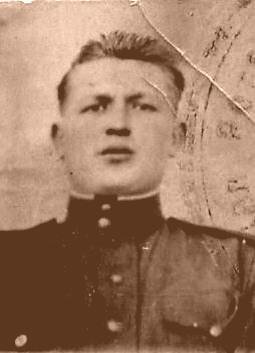


Kulagin Ivan Mikhailovich
My great-grandfather, Ivan Kulagin, was born in 1911. He was called to the front up from Novosibirsk region on the second day of the war. He began to fight in Smolensk as part of a special battalion of the 24th army, which is also called the "Siberian". Until August 30, 1941, they held the defense near the city of Yelnya, then drove back the Germans. Until the winter of 1942, they did not allow the movement of the Nazis on the roads, preparing for the offensive near Moscow. Ivan Mikhailovich's memories of the events of 1941-1942 were published later in a local newspaper: "We held the highway to Moscow. Everyone was in the same mood and with the same goal – to defeat the fascists as soon as possible and finish the war. We had to go only forward, only forward, because Moscow was behind us. And the fascists began their offensive. The earth was burning under us, everything was spinning. Few of our battalion survived. And then there was Moscow! I arrived there on may 1, 1942 and it was terrible to look at it. It was dark all around, all windows were dark, there was no soul in the streets, and during the day – strings of people walked, wagons drove. Even now, a lump rises in my throat when I remember the raids of the Nazi bombers. I don't want to see our capital like this again." In Moscow, my great-grandfather was sent to a mortar school, after graduation he was sent to the Volkhov front. He fought there until he was seriously wounded. In 1943, after the hospital, he returned as an invalid to Novomikhailovka, Novosibirsk region, where he lived all his life. For military services, he was awarded ten government awards, including the order of the Patriotic war of the II degree and the order of the red Star. In 1985, in honor of the 40th anniversary of the Victory, he was awarded the order of the Patriotic war of the I degree. He was married before the war. He saw my great-grandmother Maria just once and immediately sent matchmakers. Ivan and Marya – that's how they were called in the village. The first daughter was born before the war, the second child, the son-when the great-grandfather was at the front for a month. They had five children and nine grandchildren. At the front, he lost an eye, carried shrapnel, and one of his hands didn't work. At first he worked as a caretaker, then developed a wounded hand and worked until retirement as a carpenter. My great-grandfather, Ivan Mikhailovich Kulagin, died on April 16, 1995, at the age of almost 84. My mother remembers her grandfather as a very kind and positive person who loved to mess with his grandchildren. He sang front-line songs with them and most often – "Katyusha".
Kulagin Ivan Mikhailovich
My great-grandfather, Ivan Kulagin, was born in 1911. He was called to the front up from Novosibirsk region on the second day of the war. He began to fight in Smolensk as part of a special battalion of the 24th army, which is also called the "Siberian". Until August 30, 1941, they held the defense near the city of Yelnya, then drove back the Germans. Until the winter of 1942, they did not allow the movement of the Nazis on the roads, preparing for the offensive near Moscow. Ivan Mikhailovich's memories of the events of 1941-1942 were published later in a local newspaper: "We held the highway to Moscow. Everyone was in the same mood and with the same goal – to defeat the fascists as soon as possible and finish the war. We had to go only forward, only forward, because Moscow was behind us. And the fascists began their offensive. The earth was burning under us, everything was spinning. Few of our battalion survived. And then there was Moscow! I arrived there on may 1, 1942 and it was terrible to look at it. It was dark all around, all windows were dark, there was no soul in the streets, and during the day – strings of people walked, wagons drove. Even now, a lump rises in my throat when I remember the raids of the Nazi bombers. I don't want to see our capital like this again." In Moscow, my great-grandfather was sent to a mortar school, after graduation he was sent to the Volkhov front. He fought there until he was seriously wounded. In 1943, after the hospital, he returned as an invalid to Novomikhailovka, Novosibirsk region, where he lived all his life. For military services, he was awarded ten government awards, including the order of the Patriotic war of the II degree and the order of the red Star. In 1985, in honor of the 40th anniversary of the Victory, he was awarded the order of the Patriotic war of the I degree. He was married before the war. He saw my great-grandmother Maria just once and immediately sent matchmakers. Ivan and Marya – that's how they were called in the village. The first daughter was born before the war, the second child, the son-when the great-grandfather was at the front for a month. They had five children and nine grandchildren. At the front, he lost an eye, carried shrapnel, and one of his hands didn't work. At first he worked as a caretaker, then developed a wounded hand and worked until retirement as a carpenter. My great-grandfather, Ivan Mikhailovich Kulagin, died on April 16, 1995, at the age of almost 84. My mother remembers her grandfather as a very kind and positive person who loved to mess with his grandchildren. He sang front-line songs with them and most often – "Katyusha".
0 comment



2026 © Russian Military Historical Society Developed by Jetmix