

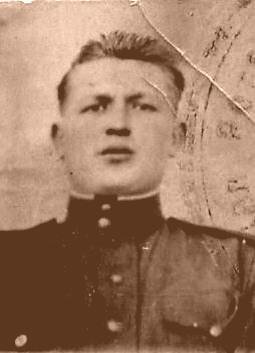


Kiselev Konstantin Fedorovich
Konstantin Fyodorovich Kiselev (08.06.1915-03.08.2006), major General of the engineering forces, military engineer. Born in 1915 in a large peasant family, in the village of Streletskaya Sloboda, Pokrovskaya volost, Tambov province. My father was engaged in agriculture, and had 2 classes of education in a rural school. The Soviet government opened the possibility for all children of Fyodor Lukyanovich Kiselyov to finish high school and get a higher education. After the revolution, the brothers and sisters went to different cities of the big country: Kazan, Moscow, Cheboksary, Chelyabinsk. Konstantin ended up in Chelyabinsk and finished seven-years school in 1930. Then he took part in the construction of the Chelyabinsk tractor plant. In 1932, he returned to Tambov, where he studied in a construction technical school, qualifying as a construction technician. He built a machine and tractor station in Ardatov, Gorky region, and a power plant in Chelyabinsk. In November 1937, he was drafted into the Red army, and this event changed the entire fate of Konstantin Fedorovich. His profession found its application in the military service, where he made an outstanding career. Since September 1938, he studied at the military engineering Academy of the red army named after V. V. Kuibyshev, whose teachers were the best engineers of our country and are known all over the world – G. G. Karlsen, V. M. Keldysh, D. M. Karbyshev and others. On the eve of the war, Lieutenant Kiselev was sent to undergo industrial practice in the 71st Department of the chief of construction (UNS) in Grodno, to build defensive lines in the 68th fortified area, in the area of the 3rd army. At the same time, Lieutenant-General of the engineering troops D. M. Karbyshev was also here with an inspection. At dawn on June 22, Kiselyov was awakened by frequent and strong explosions from German airstrikes. Grodno was glowing. The evacuation of the Academy cadets was hasty, but it took a long time to get to Moscow. Only in early July of 1941, Konstantin arrived in the capital. Soon, the personnel Department of the Main military engineering Department of the red army (MMED RA) sent him to the 6th Department of the Department of military engineering training of MMED RA as a camouflage engineer. The camouflage engineer at the front was faced with the task of creating false fortifications, airfields, warehouses, crossings and hiding from enemy aircraft, reconnaissance of real objects. To prevent attempts to transfer fascist troops from the middle Don in order to unblock the Stalingrad ring, operation Small Saturn was developed. Several armies were involved, including the 6th army of the Voronezh front. The offensive was scheduled to begin on December 16, 1942. Changeable weather, the nature of the river flow, the terrain- everything had to be taken into account in creating an ice crossing. As a head of the group, Kiselev was sent to the night reconnaissance in order to measure the width and depth of the river, the thickness of the ice, the speed of the current, and find convenient exits for tanks and infantry to the opposite bank of Don. When the scouts on the ice of the river noticed the German "Heinkel", the machine-gun fire from the attack aircraft, passed next to Kiselyov, miraculously not hitting him. On 16 December at 9 hours 30 minutes, our troops started an attack. The 172nd rifle division crossed Don through the ice crossing created by Kiselev. The Nazi troops discovered the crossing point and opened fire with mortars and artillery. At that moment, an instant decision was required to restore or choose new paths to pass through the ice. Konstantin Fyodorovich, not paying attention to the whistling fragments, with self-control and calmness completed the task. For his feat, K. F. Kiselyov was awarded the medal "for bravery". In the summer of 1943, on the Voronezh front, where Konstantin Fyodorovich Kiselyov continued to fight, there was a task to defeat the Belgorod-Kharkiv enemy group. The plan for this operation was codenamed "Commander Rumyantsev". To hide the real location of the strike from the Germans, the commander of the Voronezh front ordered the large-scale camouflage actions to create the false locations for allegedly significant tank, artillery and rifle formations. Captain Kiselev, senior engineer of the technical Department of engineering staff, was responsible for engineering and camouflage activities. Under his leadership, more than two hundred collapsible models of artillery guns were built from improvised materials (poles, brushwood). Two hundred and fifty ready-made models of tanks were brought by rail. Stuffed people were collected from brushwood and wire. It was also necessary to create the appearance of daily unloading-unloading of equipment, weapons and ammunition at Lokinskaya railway station. As a result, the enemy had the impression that a Soviet strike was preparing in that area in the direction of Sumy. From August 2 to August 5, German bombers flew 145 times to these false targets, dropping about 800 bombs with a total weight of 120 tons. It was one of these difficult days, when the explosions plowed the ground, leaving no buildings and structures, and when captain Kiselyov performed his feat. At the next RAID of enemy aircraft, in order to disguise "objects", the sappers under the leadership of Kiselyov created a smoke screen. This served the several purposes: first, the enemy gave the impression of the importance of the goal, second, the bombers could not hit the target accurately, and third, the lighting of bonfires by sappers was supposed to show that the bombs allegedly fell on the target. The latter was the most difficult test, since it was necessary to light fires in the pitch-black hell of bombs bursting around. At one point, when there was no one to light it, Kiselyov tried to break through to the point in a car with a driver. The explosion destroyed the car and killed the driver, but the captain completed the task. On the day of the most severe bombing, on August 5, 1943, the enemy hastily moved two divisions to the wrong direction. And the troops of the Voronezh front in another place went on the offensive in the direction of Kharkiv. The plan of disinformation of the enemy was executed brilliantly. The strike forces of the Soviet units during the preparation of the operation were not subjected to an air attack. For his feat, captain Kiselyov was awarded the order of the red Star. At the end of 1943, already in the rank of Major, Konstantin Fedorovich was retired to continue his studies at the Academy, which had just returned from evacuation. In Moscow, he met Victory… In 1985, in honor of the 40th anniversary of the Victory, he was awarded the order of the Patriotic war of the I degree. Konstantin Fyodorovich Kiselyov died on August 3, 2015, at the age of 91.
Kiselev Konstantin Fedorovich
Konstantin Fyodorovich Kiselev (08.06.1915-03.08.2006), major General of the engineering forces, military engineer. Born in 1915 in a large peasant family, in the village of Streletskaya Sloboda, Pokrovskaya volost, Tambov province. My father was engaged in agriculture, and had 2 classes of education in a rural school. The Soviet government opened the possibility for all children of Fyodor Lukyanovich Kiselyov to finish high school and get a higher education. After the revolution, the brothers and sisters went to different cities of the big country: Kazan, Moscow, Cheboksary, Chelyabinsk. Konstantin ended up in Chelyabinsk and finished seven-years school in 1930. Then he took part in the construction of the Chelyabinsk tractor plant. In 1932, he returned to Tambov, where he studied in a construction technical school, qualifying as a construction technician. He built a machine and tractor station in Ardatov, Gorky region, and a power plant in Chelyabinsk. In November 1937, he was drafted into the Red army, and this event changed the entire fate of Konstantin Fedorovich. His profession found its application in the military service, where he made an outstanding career. Since September 1938, he studied at the military engineering Academy of the red army named after V. V. Kuibyshev, whose teachers were the best engineers of our country and are known all over the world – G. G. Karlsen, V. M. Keldysh, D. M. Karbyshev and others. On the eve of the war, Lieutenant Kiselev was sent to undergo industrial practice in the 71st Department of the chief of construction (UNS) in Grodno, to build defensive lines in the 68th fortified area, in the area of the 3rd army. At the same time, Lieutenant-General of the engineering troops D. M. Karbyshev was also here with an inspection. At dawn on June 22, Kiselyov was awakened by frequent and strong explosions from German airstrikes. Grodno was glowing. The evacuation of the Academy cadets was hasty, but it took a long time to get to Moscow. Only in early July of 1941, Konstantin arrived in the capital. Soon, the personnel Department of the Main military engineering Department of the red army (MMED RA) sent him to the 6th Department of the Department of military engineering training of MMED RA as a camouflage engineer. The camouflage engineer at the front was faced with the task of creating false fortifications, airfields, warehouses, crossings and hiding from enemy aircraft, reconnaissance of real objects. To prevent attempts to transfer fascist troops from the middle Don in order to unblock the Stalingrad ring, operation Small Saturn was developed. Several armies were involved, including the 6th army of the Voronezh front. The offensive was scheduled to begin on December 16, 1942. Changeable weather, the nature of the river flow, the terrain- everything had to be taken into account in creating an ice crossing. As a head of the group, Kiselev was sent to the night reconnaissance in order to measure the width and depth of the river, the thickness of the ice, the speed of the current, and find convenient exits for tanks and infantry to the opposite bank of Don. When the scouts on the ice of the river noticed the German "Heinkel", the machine-gun fire from the attack aircraft, passed next to Kiselyov, miraculously not hitting him. On 16 December at 9 hours 30 minutes, our troops started an attack. The 172nd rifle division crossed Don through the ice crossing created by Kiselev. The Nazi troops discovered the crossing point and opened fire with mortars and artillery. At that moment, an instant decision was required to restore or choose new paths to pass through the ice. Konstantin Fyodorovich, not paying attention to the whistling fragments, with self-control and calmness completed the task. For his feat, K. F. Kiselyov was awarded the medal "for bravery". In the summer of 1943, on the Voronezh front, where Konstantin Fyodorovich Kiselyov continued to fight, there was a task to defeat the Belgorod-Kharkiv enemy group. The plan for this operation was codenamed "Commander Rumyantsev". To hide the real location of the strike from the Germans, the commander of the Voronezh front ordered the large-scale camouflage actions to create the false locations for allegedly significant tank, artillery and rifle formations. Captain Kiselev, senior engineer of the technical Department of engineering staff, was responsible for engineering and camouflage activities. Under his leadership, more than two hundred collapsible models of artillery guns were built from improvised materials (poles, brushwood). Two hundred and fifty ready-made models of tanks were brought by rail. Stuffed people were collected from brushwood and wire. It was also necessary to create the appearance of daily unloading-unloading of equipment, weapons and ammunition at Lokinskaya railway station. As a result, the enemy had the impression that a Soviet strike was preparing in that area in the direction of Sumy. From August 2 to August 5, German bombers flew 145 times to these false targets, dropping about 800 bombs with a total weight of 120 tons. It was one of these difficult days, when the explosions plowed the ground, leaving no buildings and structures, and when captain Kiselyov performed his feat. At the next RAID of enemy aircraft, in order to disguise "objects", the sappers under the leadership of Kiselyov created a smoke screen. This served the several purposes: first, the enemy gave the impression of the importance of the goal, second, the bombers could not hit the target accurately, and third, the lighting of bonfires by sappers was supposed to show that the bombs allegedly fell on the target. The latter was the most difficult test, since it was necessary to light fires in the pitch-black hell of bombs bursting around. At one point, when there was no one to light it, Kiselyov tried to break through to the point in a car with a driver. The explosion destroyed the car and killed the driver, but the captain completed the task. On the day of the most severe bombing, on August 5, 1943, the enemy hastily moved two divisions to the wrong direction. And the troops of the Voronezh front in another place went on the offensive in the direction of Kharkiv. The plan of disinformation of the enemy was executed brilliantly. The strike forces of the Soviet units during the preparation of the operation were not subjected to an air attack. For his feat, captain Kiselyov was awarded the order of the red Star. At the end of 1943, already in the rank of Major, Konstantin Fedorovich was retired to continue his studies at the Academy, which had just returned from evacuation. In Moscow, he met Victory… In 1985, in honor of the 40th anniversary of the Victory, he was awarded the order of the Patriotic war of the I degree. Konstantin Fyodorovich Kiselyov died on August 3, 2015, at the age of 91.
0 comment




2026 © Russian Military Historical Society Developed by Jetmix