


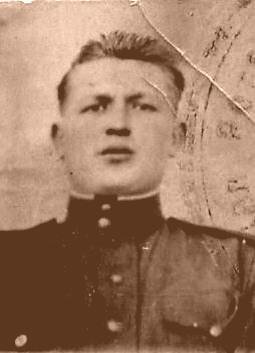


Coshko Ismail Tuovich
Coshko Ismail Tuovich (1924-1992). To the front of Ismail Tuovich was called by Teuchezhsky Local Military Commitee of Teuchezhsky district of Adygei Autonomous region in Krasnodar region. On February 1, 1943, he was promoted to Junior Sergeant of the workers and peasants Red Army (RA). Participated in the great Patriotic war from February 1943 to 1949. Went through the whole war. In 1944, he was severely concussed. After the war, he was still in the Soviet army until 1949. Participated in the battles as a part of the 902nd artillery regiment of the 353rd rifle division. This division was formed in Novorossiysk in August 1941. During the fighting in the north of Rostov-on-don, the devision suffered the serious losses. To fill them, the division received 2500 untrained fighters with 4 roths of Caucasians who did not speak Russian. In the autumn of 1942, the 353rd rifle division took part in the Tuapse defensive operation. On September 25, when the Germans began their offensive, the division was part of the 56th army, defending the area from Cherkasovsky to the city of Old Believers. In early 1944, the 353rd rifle division participated in Nikopol-Kryvorozhskoy Operation and as the result the devision, together with the other units of the 46th army, liberated Kryvyi Rih on February 22. Subsequently, the division took part in Bereznegovato-Snigirevsk (March 6 — March 18, 1944), Odessa (March 26, 1944 — April 14, 1944) and Iasi-Kishinev(August 20 — 29, 1944) operations. It liberated the Romanian Constanta and the Bulgarian Shumen. In September 1944, it was one of the first entered Sofia, then until the end of the war stayed in Bulgaria, not taking part in hostilities. In 1946 the division was transformed into the southern group of forces (SGF). During the great Patriotic war, he was a topographical scout, discovering the important topographical information: maps and diagrams of the location of German troops. He was one of the first, who went out to investigate the location of the German invaders. He participated in the operations of the liberation of the Motherland, from Krasnodar to Berlin. He was awarded the Order of Glory of the 2nd and 3rd degree. For the liberation of Krivoy Rog and heroism in combat, was awarded the Order of Glory of the 1st degree, but instead of the Order he asked to go to the vacation at home, and in 1944 he, as an exceptional case, was allowed to go home to parents and that may be saved his life. From archival documents of the red Army and Navy during the great Patriotic war of 1941-1945 it became known that "when breaking through the enemy defenses near the village of Rascaeti in Moldavian SSR the comrade Coshko detected 15 enemy targets. Among them: 4 PTO guns, a 1.75 mm battery, 2 mortar batteries, 5 OT, which were suppressed and destroyed by our artillery fire. On 23.08.1944, Junior Sergeant Coshko as part of the infantry battle formations, participated in the destruction of the enemy group near the Plakhteevka. At the same time, he destroyed 8 Germans and 6 Romanians by his weapon. Comrade Coshko is the division's Komsomol member and the editor of the combat leaflet, he actively participates in the life of the division, and is an excellent student of combat and political training. For the courage and bravery, Koshko deserves to be awarded the order of Glory of the III degree". In 1944, my grandfather was seriously injured and was hospitalized. While being treated after being wounded, he wrote the poems " Hans igyogu "("Hans's Road") and "Salam shosehy "("Greetings to you"), which were published in the newspaper "socialist Adygea".
Coshko Ismail Tuovich
Coshko Ismail Tuovich (1924-1992). To the front of Ismail Tuovich was called by Teuchezhsky Local Military Commitee of Teuchezhsky district of Adygei Autonomous region in Krasnodar region. On February 1, 1943, he was promoted to Junior Sergeant of the workers and peasants Red Army (RA). Participated in the great Patriotic war from February 1943 to 1949. Went through the whole war. In 1944, he was severely concussed. After the war, he was still in the Soviet army until 1949. Participated in the battles as a part of the 902nd artillery regiment of the 353rd rifle division. This division was formed in Novorossiysk in August 1941. During the fighting in the north of Rostov-on-don, the devision suffered the serious losses. To fill them, the division received 2500 untrained fighters with 4 roths of Caucasians who did not speak Russian. In the autumn of 1942, the 353rd rifle division took part in the Tuapse defensive operation. On September 25, when the Germans began their offensive, the division was part of the 56th army, defending the area from Cherkasovsky to the city of Old Believers. In early 1944, the 353rd rifle division participated in Nikopol-Kryvorozhskoy Operation and as the result the devision, together with the other units of the 46th army, liberated Kryvyi Rih on February 22. Subsequently, the division took part in Bereznegovato-Snigirevsk (March 6 — March 18, 1944), Odessa (March 26, 1944 — April 14, 1944) and Iasi-Kishinev(August 20 — 29, 1944) operations. It liberated the Romanian Constanta and the Bulgarian Shumen. In September 1944, it was one of the first entered Sofia, then until the end of the war stayed in Bulgaria, not taking part in hostilities. In 1946 the division was transformed into the southern group of forces (SGF). During the great Patriotic war, he was a topographical scout, discovering the important topographical information: maps and diagrams of the location of German troops. He was one of the first, who went out to investigate the location of the German invaders. He participated in the operations of the liberation of the Motherland, from Krasnodar to Berlin. He was awarded the Order of Glory of the 2nd and 3rd degree. For the liberation of Krivoy Rog and heroism in combat, was awarded the Order of Glory of the 1st degree, but instead of the Order he asked to go to the vacation at home, and in 1944 he, as an exceptional case, was allowed to go home to parents and that may be saved his life. From archival documents of the red Army and Navy during the great Patriotic war of 1941-1945 it became known that "when breaking through the enemy defenses near the village of Rascaeti in Moldavian SSR the comrade Coshko detected 15 enemy targets. Among them: 4 PTO guns, a 1.75 mm battery, 2 mortar batteries, 5 OT, which were suppressed and destroyed by our artillery fire. On 23.08.1944, Junior Sergeant Coshko as part of the infantry battle formations, participated in the destruction of the enemy group near the Plakhteevka. At the same time, he destroyed 8 Germans and 6 Romanians by his weapon. Comrade Coshko is the division's Komsomol member and the editor of the combat leaflet, he actively participates in the life of the division, and is an excellent student of combat and political training. For the courage and bravery, Koshko deserves to be awarded the order of Glory of the III degree". In 1944, my grandfather was seriously injured and was hospitalized. While being treated after being wounded, he wrote the poems " Hans igyogu "("Hans's Road") and "Salam shosehy "("Greetings to you"), which were published in the newspaper "socialist Adygea".
0 comment



2026 © Russian Military Historical Society Developed by Jetmix