
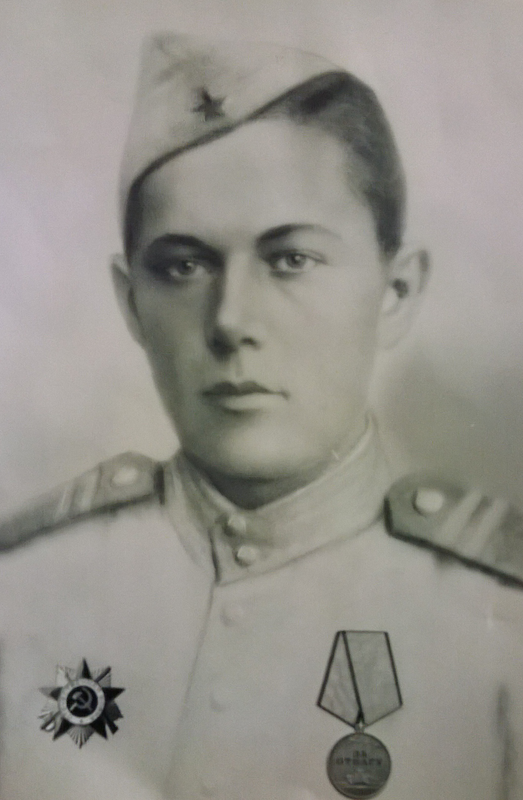
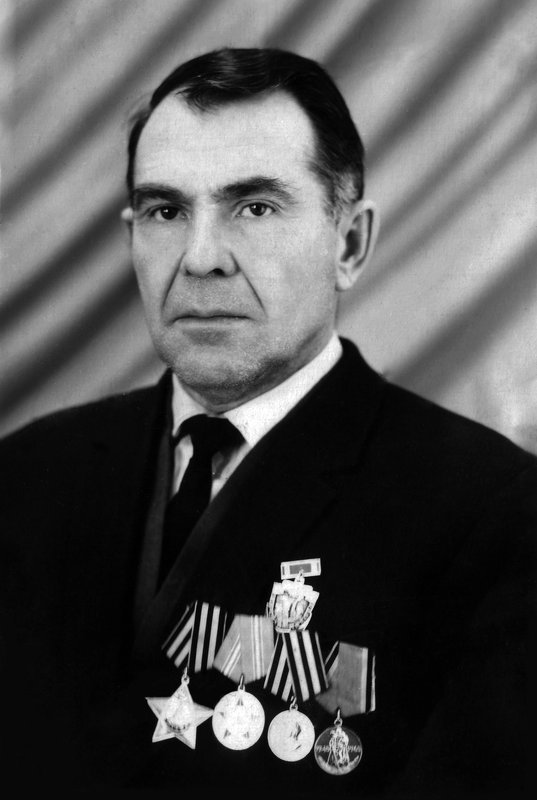
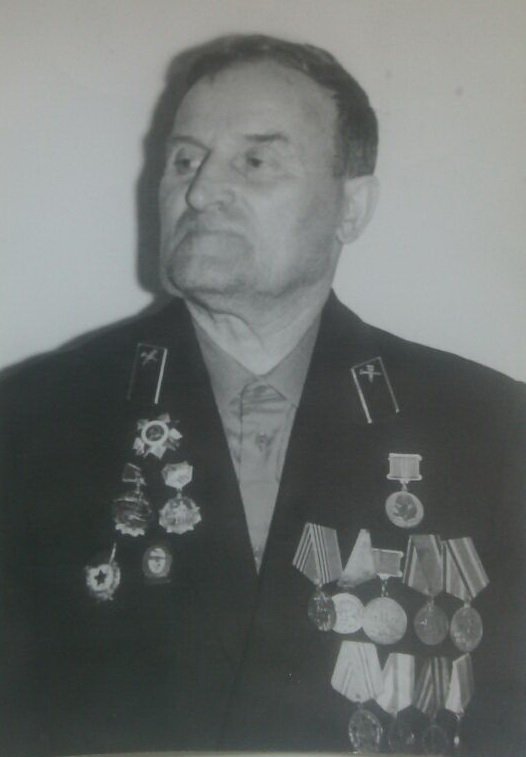
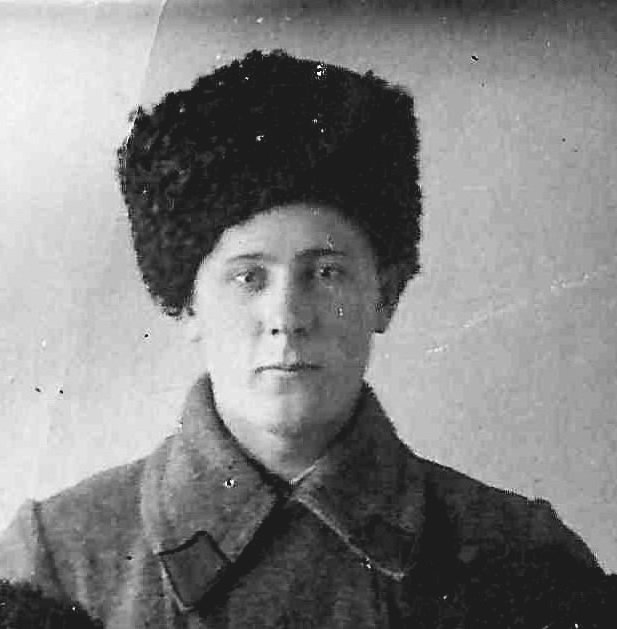
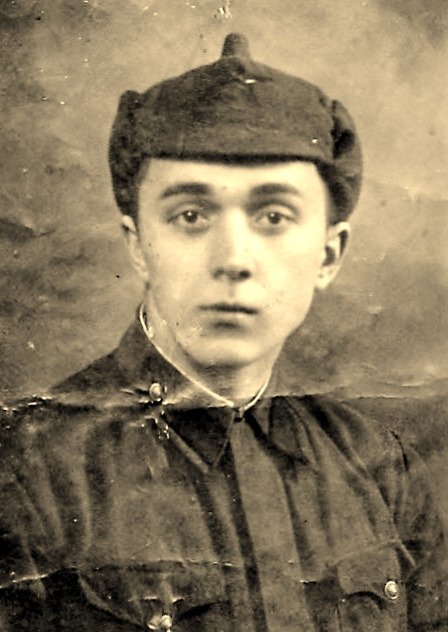


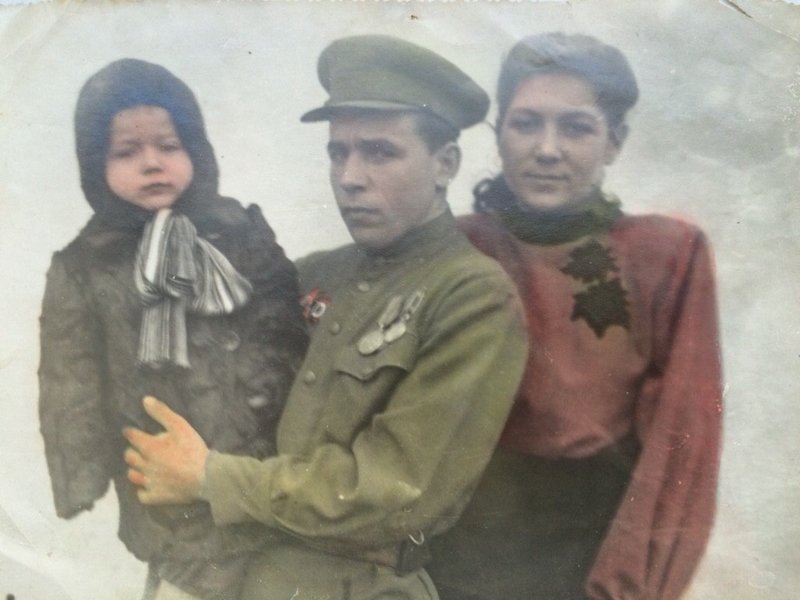
Gnezdilov Ilya Ivanovich
Rank: Lieutenant. Branch of troops: Land forces, air forces (except naval aviation), coast service, NKVD troops, border guard Unit: 10th guards Krivoy Rog Red Banner airborne division of the Order of Suvorov. Commander of the machine-gun platoon of the 19th guards airborne regiment of the 10th guards Krivoy Rog airborne division of the Order of Suvorov 2nd degree Lieutenant Ilya Ivanovich Gnezdilov went through the war from 1942 to 1945. Participated in all major operations of the division. Two light wounds, one serious injury. He was awarded the 6th guards rifle corps of the 3rd Ukrainian front - the medal "for Bravery", the order of the Red Star, the order of the Patriotic War II degree". Medal "for Bravery" (30.06.1944) - when crossing the Dniester river and expanding the bridgehead on rivers right bank, showed perseverance, courage and bravery. On May 1, 1944, the enemy launched 4 fierce counterattacks, trying to push our units into the river. The soldiers boldly entered the battle and opened a hurricane fire on the enemy's counterattacking infantry. Machine gun unit from the squad of comrade Gnezdilov was put out of action. Gnezdilov himself lay down for the machine gun and continued to repel the enemy's counterattacks. The line was held. The enemy, leaving many corpses on the battlefield, retreated to the old line. Comrade Gnezdilov killed 7 nazi in this battle. Being slightly wounded, he did not leave the battlefield. For steadfastness, courage and bravery, he was awarded the order of the Red Star (he was submitted for the Red Star order, but was awarded with the medal for Bravery, according to decree signed by the commander of the 19th VDSP guards, Colonel Kravchenko). Order of the "Red Star" (18.09.1944) – for the fact that during the crossing of the Prut river on 24.08.1944 Gnezdilov showed exceptional courage and bravery in the battle. He crossed river Prut to its right bank where his platoon destroyed 2 units of nazi machine gunners, captured 9 enemy soldiers and personally killed 8 nazi invaders in hand-to-hand combat. For courage, fortitude and bravery in battle, he is worthy the order of the Red Star (signed by the commander of the 19th VDSP guards, Lieutenant Colonel Mukhin). For successful combat operations in the Iasi-Kishinev battle, the division was awarded the Order of Suvorov 2nd degree, and became known as the 10th guards Krivoy Rog Red Bannerv of the Order of Suvorov 2nd degree airborne division. Order of the Patriotic War II degree (10.02.1945) - during the battles against nazi-fascist invaders, on the territory of Hungary, comrade Gnezdilov showed courage and fearlessness. Thanks to the skilful command of the platoon, he enabled the unit to occupy 4 localities on the outskirts of the city of Pech. During the period of fighting in the area of the village Nadbaiom, comrade Gnezdilov within his platoon reflected the superior forces of the enemy, holding the line occupied by the platoon. For fighting on the territory of Hungary, comrade Gnezdilov destroyed 4 enemy firing points and up to 2 platoons of enemy infantry. His actions ensured the success for the battalion. Worthy of being awarded the order of the Patriotic War II degree (signed by the commander of the 19th VDSP guards, Lieutenant Colonel Mukhin) on January 6, 1945). By decree of the Presidium of the Supreme Soviet of the USSR for exemplary performance of command tasks in the battles with the German invaders when crossing the Danube and breaking through the enemy's defenses and showing valor and courage to award the order of Kutuzov 3rd degree: 19 guard airborne rifle regiment and 24 guard airborne rifle regiment. 10 guards Kryvoy Rog Red Banner of the Order of Suvorov II degree airborne division formed in December 1942 in accordance with the order of the NKO of 8.12.1942. The division was formed by the 3rd and 4th maneuverable airborne brigades and sailors of the Pacific fleet. The division was formed in the cities of Dmitrov, Yakhroma, Katuar and Orudevo in the Moscow region. The division included: the 19th guards (Lieutenant Colonel Grinev), the 24th guards (Lieutenant Colonel Dvornikov), the 30th guards (Lieutenant Colonel Pshenichny) airborne rifle and the 5th guards artillery (Lieutenant Colonel Gorobets) regiments. Until February 5, 1943, the division was building up units and combat training, then, by order of its superiors, it was loaded onto road transport and departed along the route Dmitrov-Kalinin-Volodarskoe, where on the 15th became part of the 68th army of the North-Western front. Soon the division headquarters received a new order and the regiments in difficult weather conditions made a march of 350 kilometers, crossing the Lovat river three times. During the march on February 27 in the area of Grikhnevo, a member of the Military Council of the 68th army, Major General Novikov, presented the division commander, General Ivanov, with the guards Red Banner. Having arrived at the Lovat river, the units of the compound, being in the reserve of the army commander, began to build the Lovat defensive line. Simultaneously, the training of battalions, regimental headquarters and divisions is conducted. On April 16, 1943, the division moved to the Ramushevo area and, having arrived at the site, moved to active defense on the Mikhalkino – height 21.5 – Pleshakovo front. From May 10, 1943, the division was part of the 12th guards rifle corps of the 34th army. While on the defensive, the division units improved their defensive positions, harassed the enemy with sniper and artillery fire, conducted reconnaissance and exercises, and rested. On July 22, 1943, the division's regiments have given away the line of defense to the rifle units that replaced them, and went to field camps, where they prepared for offensive battles to the south of Staraya Russa. On August 17, units of the division concentrate in the initial area, and on the 18th, the troops of the North-Western front begin their offensive. The 10th guards VDD is in the second echelon with the task, if necessary, to build on the success of the 1st guards VDD and the 26th SD. At 16:30, the advanced 19th guards VDD regiment is introduced into the battle for the village of Derevkovo, which, after repelling several enemy counterattacks, fulfills the battle task. However, it was not possible to hold the village and the division's units withdraw, taking up positions near the Eastern road. The 24th VD regiment is advancing on Chirikovo, the 30th regiment is in the reserve of the division commander. On August 19, the division conducts inconclusive battles for Derevkovo and Chirikovo, then regroups and during August 20-21 rests and is replenished with personnel and equipment. On August 22, the division, having repeated the attack on the above-mentioned settlements, again meets fierce and skillful enemy resistance, as a result of which it takes up defense at the reached line in the area of Derevkovo and Chirikovo. On August 26, the division's regiments surrendered the occupied line and began to concentrate on the Parfino station. By September 6, 1943, the complete division arrives by railway transport near Kharkiv, where it became the part of the 82nd rifle corps of the 37th army. Until September 17, the units are completed with personnel, artillery, weapons, ammunition and equipment, then they march and on the 29th they are concentrated in the area of Prosyanikovka and Brachkovka. Preparations for the crossing of the Dnieper river started. These days, the division headquarters received the orders to cross the Dnieper by night of October 1 at the Perevalochnaya area Verkhnedneprovsky district, capture Mishurin Horn, Dneprovokamenka and take a strong defense to protect the left flank of the army. The first was the 30th guards VDP, which, using surprise effect captured at dawn the Northern and then southern outskirts of Mishurin Horn. From October 1 to October 14, 1943, units of the division fought hard and bloody battles to hold, expand and deepen the Dnieper bridgehead. On October 16, the division goes on the offensive on Krivoy Rog, liberates Erastovka, M. Alferovo, Cherny Yar and many other localities, destroying the enemy on their way and capturing trophies. After the liberation of Krivoy Rog, the division takes up defense at the reached borders, where it equips positions and conducts combat training. On February 26, 1944, the division was awarded the honorary name of Krivoy Rog for its successful battles for Krivoy Rog. On February 27, 1944, the division crossed the Ingulets river in the Ingulsky-Radionovka area, and on March 7, after leaving the second echelon of the 37th army, it went on the offensive. On March 13-14, units of the division pursue the enemy in the direction of Soldatsky, Kazanka station, Novy Bug. Since March 16, division starts offensive on Voznesensk. On March 18, developing the offensive, the division's regiments liberate the district center of Elanets. On the 23rd, during persistent fighting, they liberate Voznesensk and reach the eastern bank of the Southern Bug river. Having crossed the water barrier in the Southern Khutors area, the division continues to advance rapidly, liberating a large number of settlements, including Moldavka, Kotovsky, Oskarovka, and Bogunskoye. Since April 4, 1944, taking part in the Odessa operation, the division liberates the city of Razdelnaya, fights in the area of Yanovka, Petrovka and Shirokiy farms. For exemplary performance of command tasks in the battles with the German invaders during the liberation of the city and the station Razdelnaya, the division is awarded the order of the Red Banner. Continuing the offensive, the division reached the eastern bank of the Dniester river near Karagashch on April 11 and crossed it the next day. From 12 to 18 April, the division's regiments are fighting hard to hold and expand the captured bridgehead in the area to the west of Kopank and to the east of Kirkayeshti. During the period from April 18 to 26, the division is on vacation in the area of Nearby Farms near Tiraspol, where it is replenished with personnel and military equipment, puts itself in order, and is engaged in combat training. On April 27, the division again crosses the Dniester river in the area of Varnitsa, North of Bendery. From April 27 to May 5, 1944, division was engaged in fierce battles to hold the new bridgehead. On May 8, the units are again withdrawn from the battle and placed in the area of Nearby Farms, where they are preparing for the upcoming battles. On June 2, the division as part of the 6th guards SK is concentrated in the area of Karagash - Slobodzeya Moldavskaya, where it is engaged in combat training until August 15. Since August 20, 1944, units of the division, being in the first echelon of the 37th army, take part in the Iasi-Kishinev offensive operation. The regiments of the formation advance on the left flank of the army and successively liberate from nazi fascists settlement of Bessarabka, Comrat, Leovo. Here a large group of enemy troops was surrounded, destroyed, and captured. August 28 - September 6, units of the division cleanse the floodplains of the river Prut and coastal forests from the remnants of Hitler's formations, emprison about 4 thousand enemy soldiers and officers. On 10 September the division marched on and crossed the Danube in the area of Iskacha entering the Romanian territory. On September 28, 1944, the division was awarded the order of Suvorov II degree for successful combat operations in the Iasi-Kishinev operation. In the area of Serdement, the division enters the Bulgarian territory and, after marching along the route Dobrich-Pereslav-Sliven, by September 29, concentrates in the area of the village of Golubnitsa, where it stayed until 30.10.1944. Since November 4, 1944, the division has been making a combined march: personnel in railway echelons, artillery on motor-drawn, all vehicles - on their own, and on November 9, concentrates in the capital of Yugoslavia – Belgrade. On November 18, the division arrives in Sambor, where it became integral part of the 6th guards division. SK joins the 57th army. On November 23, the division's regiments in the Botino area cross the Danube for the second time, reach the Dushevitsa-Knyazhevo line by November 25, break through the enemy's defenses and pursue nazi for 4 days. On November 29, the division stormed the town of Pech. On December 2, having broken the stubborn resistance of the enemy, parts of the division captured the town of Koposhvar. On December 5, the division goes to Nadbayom, where it goes to a strong defense at the Shaponyai-Chekota-Nadbayom line. Here the division in the period from December 14, 1944 to January 6, 1945 is persistent and fierce defensive battles. On January 6, 1945, the 19th and 24th guards airborne regiments were awarded the order of Kutuzov III class, for exemplary performance of command tasks in battles with the enemy while crossing the Danube river and breaking through enemy defenses. On January 6, the division surrenders the line of defense to units of the 73rd SD and takes up new positions, which it defends until March 25. Having repulsed numerous fierce attacks of the enemy, the division goes on the offensive on March 29 and, breaking through the enemy's defenses, starts to hunt nazi near the border of Austria. On April 4, the division's regiments cross the Hungarian-Yugoslav border near Kryzhevtsy. On April 7, 1945, the division enters the territory of Austria and fights in mountainous and wooded areas. On 8 April, the division goes to the district Feringa and on 19th takes the line of defense at Rittshein-Haber-Raabou, which holds up to 8 of May 1945. On May 9, 1945, parts of the division occupied the city of Graz, where the glorious battle path of the order-bearing unit ends. In June-July 1945, the division arrives in the area of Alba Iulia, and then in the Romanian city of Tulcea. The march of the unit took place on the territory of Austria, Hungary, Yugoslavia and Romania. On November 19, 1945, division was renamed to the 126th guards Krivoy Rog Red Banner of the Order of Suvorov II degree rifle division, which was disbanded on November 30, 1946. Commander: Major General V. P. Ivanov (8.12.1942 - 23.12.1943), Major General M. G. Mikeladze (24.12.1943 - 5.4.1944, wounded at Bakalovo and lost an arm), Colonel, Major General A. N. Petrushin (5.4.1944 - 19.11.1945), Military Commissar, zampolit: Colonel A. I. Vorontsov (8.12.1942 - ), Colonel E. P. Mozzhukhin, Chief of staff: Major Orlov (8.12.1942 - ), Lieutenant Colonel M. L. Dyachenko, Colonel P. N. Ignatiev.
Gnezdilov Ilya Ivanovich
Rank: Lieutenant. Branch of troops: Land forces, air forces (except naval aviation), coast service, NKVD troops, border guard Unit: 10th guards Krivoy Rog Red Banner airborne division of the Order of Suvorov. Commander of the machine-gun platoon of the 19th guards airborne regiment of the 10th guards Krivoy Rog airborne division of the Order of Suvorov 2nd degree Lieutenant Ilya Ivanovich Gnezdilov went through the war from 1942 to 1945. Participated in all major operations of the division. Two light wounds, one serious injury. He was awarded the 6th guards rifle corps of the 3rd Ukrainian front - the medal "for Bravery", the order of the Red Star, the order of the Patriotic War II degree". Medal "for Bravery" (30.06.1944) - when crossing the Dniester river and expanding the bridgehead on rivers right bank, showed perseverance, courage and bravery. On May 1, 1944, the enemy launched 4 fierce counterattacks, trying to push our units into the river. The soldiers boldly entered the battle and opened a hurricane fire on the enemy's counterattacking infantry. Machine gun unit from the squad of comrade Gnezdilov was put out of action. Gnezdilov himself lay down for the machine gun and continued to repel the enemy's counterattacks. The line was held. The enemy, leaving many corpses on the battlefield, retreated to the old line. Comrade Gnezdilov killed 7 nazi in this battle. Being slightly wounded, he did not leave the battlefield. For steadfastness, courage and bravery, he was awarded the order of the Red Star (he was submitted for the Red Star order, but was awarded with the medal for Bravery, according to decree signed by the commander of the 19th VDSP guards, Colonel Kravchenko). Order of the "Red Star" (18.09.1944) – for the fact that during the crossing of the Prut river on 24.08.1944 Gnezdilov showed exceptional courage and bravery in the battle. He crossed river Prut to its right bank where his platoon destroyed 2 units of nazi machine gunners, captured 9 enemy soldiers and personally killed 8 nazi invaders in hand-to-hand combat. For courage, fortitude and bravery in battle, he is worthy the order of the Red Star (signed by the commander of the 19th VDSP guards, Lieutenant Colonel Mukhin). For successful combat operations in the Iasi-Kishinev battle, the division was awarded the Order of Suvorov 2nd degree, and became known as the 10th guards Krivoy Rog Red Bannerv of the Order of Suvorov 2nd degree airborne division. Order of the Patriotic War II degree (10.02.1945) - during the battles against nazi-fascist invaders, on the territory of Hungary, comrade Gnezdilov showed courage and fearlessness. Thanks to the skilful command of the platoon, he enabled the unit to occupy 4 localities on the outskirts of the city of Pech. During the period of fighting in the area of the village Nadbaiom, comrade Gnezdilov within his platoon reflected the superior forces of the enemy, holding the line occupied by the platoon. For fighting on the territory of Hungary, comrade Gnezdilov destroyed 4 enemy firing points and up to 2 platoons of enemy infantry. His actions ensured the success for the battalion. Worthy of being awarded the order of the Patriotic War II degree (signed by the commander of the 19th VDSP guards, Lieutenant Colonel Mukhin) on January 6, 1945). By decree of the Presidium of the Supreme Soviet of the USSR for exemplary performance of command tasks in the battles with the German invaders when crossing the Danube and breaking through the enemy's defenses and showing valor and courage to award the order of Kutuzov 3rd degree: 19 guard airborne rifle regiment and 24 guard airborne rifle regiment. 10 guards Kryvoy Rog Red Banner of the Order of Suvorov II degree airborne division formed in December 1942 in accordance with the order of the NKO of 8.12.1942. The division was formed by the 3rd and 4th maneuverable airborne brigades and sailors of the Pacific fleet. The division was formed in the cities of Dmitrov, Yakhroma, Katuar and Orudevo in the Moscow region. The division included: the 19th guards (Lieutenant Colonel Grinev), the 24th guards (Lieutenant Colonel Dvornikov), the 30th guards (Lieutenant Colonel Pshenichny) airborne rifle and the 5th guards artillery (Lieutenant Colonel Gorobets) regiments. Until February 5, 1943, the division was building up units and combat training, then, by order of its superiors, it was loaded onto road transport and departed along the route Dmitrov-Kalinin-Volodarskoe, where on the 15th became part of the 68th army of the North-Western front. Soon the division headquarters received a new order and the regiments in difficult weather conditions made a march of 350 kilometers, crossing the Lovat river three times. During the march on February 27 in the area of Grikhnevo, a member of the Military Council of the 68th army, Major General Novikov, presented the division commander, General Ivanov, with the guards Red Banner. Having arrived at the Lovat river, the units of the compound, being in the reserve of the army commander, began to build the Lovat defensive line. Simultaneously, the training of battalions, regimental headquarters and divisions is conducted. On April 16, 1943, the division moved to the Ramushevo area and, having arrived at the site, moved to active defense on the Mikhalkino – height 21.5 – Pleshakovo front. From May 10, 1943, the division was part of the 12th guards rifle corps of the 34th army. While on the defensive, the division units improved their defensive positions, harassed the enemy with sniper and artillery fire, conducted reconnaissance and exercises, and rested. On July 22, 1943, the division's regiments have given away the line of defense to the rifle units that replaced them, and went to field camps, where they prepared for offensive battles to the south of Staraya Russa. On August 17, units of the division concentrate in the initial area, and on the 18th, the troops of the North-Western front begin their offensive. The 10th guards VDD is in the second echelon with the task, if necessary, to build on the success of the 1st guards VDD and the 26th SD. At 16:30, the advanced 19th guards VDD regiment is introduced into the battle for the village of Derevkovo, which, after repelling several enemy counterattacks, fulfills the battle task. However, it was not possible to hold the village and the division's units withdraw, taking up positions near the Eastern road. The 24th VD regiment is advancing on Chirikovo, the 30th regiment is in the reserve of the division commander. On August 19, the division conducts inconclusive battles for Derevkovo and Chirikovo, then regroups and during August 20-21 rests and is replenished with personnel and equipment. On August 22, the division, having repeated the attack on the above-mentioned settlements, again meets fierce and skillful enemy resistance, as a result of which it takes up defense at the reached line in the area of Derevkovo and Chirikovo. On August 26, the division's regiments surrendered the occupied line and began to concentrate on the Parfino station. By September 6, 1943, the complete division arrives by railway transport near Kharkiv, where it became the part of the 82nd rifle corps of the 37th army. Until September 17, the units are completed with personnel, artillery, weapons, ammunition and equipment, then they march and on the 29th they are concentrated in the area of Prosyanikovka and Brachkovka. Preparations for the crossing of the Dnieper river started. These days, the division headquarters received the orders to cross the Dnieper by night of October 1 at the Perevalochnaya area Verkhnedneprovsky district, capture Mishurin Horn, Dneprovokamenka and take a strong defense to protect the left flank of the army. The first was the 30th guards VDP, which, using surprise effect captured at dawn the Northern and then southern outskirts of Mishurin Horn. From October 1 to October 14, 1943, units of the division fought hard and bloody battles to hold, expand and deepen the Dnieper bridgehead. On October 16, the division goes on the offensive on Krivoy Rog, liberates Erastovka, M. Alferovo, Cherny Yar and many other localities, destroying the enemy on their way and capturing trophies. After the liberation of Krivoy Rog, the division takes up defense at the reached borders, where it equips positions and conducts combat training. On February 26, 1944, the division was awarded the honorary name of Krivoy Rog for its successful battles for Krivoy Rog. On February 27, 1944, the division crossed the Ingulets river in the Ingulsky-Radionovka area, and on March 7, after leaving the second echelon of the 37th army, it went on the offensive. On March 13-14, units of the division pursue the enemy in the direction of Soldatsky, Kazanka station, Novy Bug. Since March 16, division starts offensive on Voznesensk. On March 18, developing the offensive, the division's regiments liberate the district center of Elanets. On the 23rd, during persistent fighting, they liberate Voznesensk and reach the eastern bank of the Southern Bug river. Having crossed the water barrier in the Southern Khutors area, the division continues to advance rapidly, liberating a large number of settlements, including Moldavka, Kotovsky, Oskarovka, and Bogunskoye. Since April 4, 1944, taking part in the Odessa operation, the division liberates the city of Razdelnaya, fights in the area of Yanovka, Petrovka and Shirokiy farms. For exemplary performance of command tasks in the battles with the German invaders during the liberation of the city and the station Razdelnaya, the division is awarded the order of the Red Banner. Continuing the offensive, the division reached the eastern bank of the Dniester river near Karagashch on April 11 and crossed it the next day. From 12 to 18 April, the division's regiments are fighting hard to hold and expand the captured bridgehead in the area to the west of Kopank and to the east of Kirkayeshti. During the period from April 18 to 26, the division is on vacation in the area of Nearby Farms near Tiraspol, where it is replenished with personnel and military equipment, puts itself in order, and is engaged in combat training. On April 27, the division again crosses the Dniester river in the area of Varnitsa, North of Bendery. From April 27 to May 5, 1944, division was engaged in fierce battles to hold the new bridgehead. On May 8, the units are again withdrawn from the battle and placed in the area of Nearby Farms, where they are preparing for the upcoming battles. On June 2, the division as part of the 6th guards SK is concentrated in the area of Karagash - Slobodzeya Moldavskaya, where it is engaged in combat training until August 15. Since August 20, 1944, units of the division, being in the first echelon of the 37th army, take part in the Iasi-Kishinev offensive operation. The regiments of the formation advance on the left flank of the army and successively liberate from nazi fascists settlement of Bessarabka, Comrat, Leovo. Here a large group of enemy troops was surrounded, destroyed, and captured. August 28 - September 6, units of the division cleanse the floodplains of the river Prut and coastal forests from the remnants of Hitler's formations, emprison about 4 thousand enemy soldiers and officers. On 10 September the division marched on and crossed the Danube in the area of Iskacha entering the Romanian territory. On September 28, 1944, the division was awarded the order of Suvorov II degree for successful combat operations in the Iasi-Kishinev operation. In the area of Serdement, the division enters the Bulgarian territory and, after marching along the route Dobrich-Pereslav-Sliven, by September 29, concentrates in the area of the village of Golubnitsa, where it stayed until 30.10.1944. Since November 4, 1944, the division has been making a combined march: personnel in railway echelons, artillery on motor-drawn, all vehicles - on their own, and on November 9, concentrates in the capital of Yugoslavia – Belgrade. On November 18, the division arrives in Sambor, where it became integral part of the 6th guards division. SK joins the 57th army. On November 23, the division's regiments in the Botino area cross the Danube for the second time, reach the Dushevitsa-Knyazhevo line by November 25, break through the enemy's defenses and pursue nazi for 4 days. On November 29, the division stormed the town of Pech. On December 2, having broken the stubborn resistance of the enemy, parts of the division captured the town of Koposhvar. On December 5, the division goes to Nadbayom, where it goes to a strong defense at the Shaponyai-Chekota-Nadbayom line. Here the division in the period from December 14, 1944 to January 6, 1945 is persistent and fierce defensive battles. On January 6, 1945, the 19th and 24th guards airborne regiments were awarded the order of Kutuzov III class, for exemplary performance of command tasks in battles with the enemy while crossing the Danube river and breaking through enemy defenses. On January 6, the division surrenders the line of defense to units of the 73rd SD and takes up new positions, which it defends until March 25. Having repulsed numerous fierce attacks of the enemy, the division goes on the offensive on March 29 and, breaking through the enemy's defenses, starts to hunt nazi near the border of Austria. On April 4, the division's regiments cross the Hungarian-Yugoslav border near Kryzhevtsy. On April 7, 1945, the division enters the territory of Austria and fights in mountainous and wooded areas. On 8 April, the division goes to the district Feringa and on 19th takes the line of defense at Rittshein-Haber-Raabou, which holds up to 8 of May 1945. On May 9, 1945, parts of the division occupied the city of Graz, where the glorious battle path of the order-bearing unit ends. In June-July 1945, the division arrives in the area of Alba Iulia, and then in the Romanian city of Tulcea. The march of the unit took place on the territory of Austria, Hungary, Yugoslavia and Romania. On November 19, 1945, division was renamed to the 126th guards Krivoy Rog Red Banner of the Order of Suvorov II degree rifle division, which was disbanded on November 30, 1946. Commander: Major General V. P. Ivanov (8.12.1942 - 23.12.1943), Major General M. G. Mikeladze (24.12.1943 - 5.4.1944, wounded at Bakalovo and lost an arm), Colonel, Major General A. N. Petrushin (5.4.1944 - 19.11.1945), Military Commissar, zampolit: Colonel A. I. Vorontsov (8.12.1942 - ), Colonel E. P. Mozzhukhin, Chief of staff: Major Orlov (8.12.1942 - ), Lieutenant Colonel M. L. Dyachenko, Colonel P. N. Ignatiev.
0 comment



2026 © Russian Military Historical Society Developed by Jetmix