


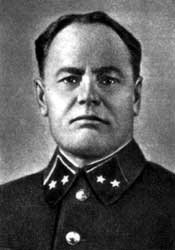

Boris Alekseyevich Gusev
Rank: Captain. Type of troops: Armored and mechanized troops. Division: 205th Motorized Division. Lieutenant Colonel Gusev Boris Alekseevich was born in 1916 in the village Korsakovo, Vadsky district, Nizhny Novgorod province in the family of a blacksmith. After graduating from school in 1933, he studied at the Sormovskiy Mechanical Engineering College, the Railway Technical School in Petrozavodsk. Since September 1935 he has been working as an assistant driver, then as a foreman at the depot of station Masel of the Karelian Autonomous Soviet Socialist Republic. In September 1937 he was enlisted as a cadet in the school of military pilots in the Kharkov military district. A year later, for health reasons, he was transferred to the Ulyanovsk Armored School, which he graduated from in December 1939. After graduating from the school until May 1941, he served as a platoon commander, then as a training platoon commander of the 69th autobatalion 75th Rifle division 1 SK 8A LenVO, participated in the Soviet - Finnish war ... In May 1941, he was appointed senior adjutant (i.e., chief of staff) of the tank battalion 127 tp 205 motorized division 14 MekhK 4 A ZapOVO. On June 22, 1941, the division had only 56 T-26 tanks, 5 T-37/38 tanks and 25 BA-10 and BA-20 armored vehicles. In this regiment, Boris Alekseevich participated in heavy battles of the initial period of the war at the forefront of the main attack of the fascist group "Center". During the Bialystok-Minsk border battle, the Soviet 4 A was hit by the 2nd tank group (commanded by Colonel General Heinz Guderian). The regiment was stationed in the village of Bronna - Gora, located sowing. Varshavskoe highway near Brest. It was raised on alert in the first minutes of 5:00 am on June 22, 1941. Bringing to combat readiness took place under enemy air pressure in places of permanent deployment. By the end of June 22, 205 motorized division took up defenses along the river. Mukhavets from Pruzhany to the Dam; foot divisions of the division and a corps sapper battalion were preparing the defense of the Bereza region. But already at 8 o'clock in the morning on June 23, the regiment takes part in a counterattack of the second echelon of 14 MekhK. In the middle of the day, the motorized rifle and tank regiments of 205 md, operating in the zone of the 28th rifle corps in the Shipovichi, Mazichi, Kobrin sector, were withdrawn from the battle and sent to the 30th tank division to Pruzhany. Already at 19:30, the enemy's forward detachments reached the Yaselda River, where they were detained by separate units of 205 md and the 67th engineer battalion of the 14th mechanized corps. By the end of June 23, 205 Mechanized division was divided into several detachments, the largest of which, led by the division commander, Colonel F. F. Kudyurov (about four thousand people), on the night of June 24, withdrew from the Mukhavets canal to the Yaselda River. At 8 o'clock in the morning on June 24, small motorized units of 205 Mechanized division entered into battle with the enemy in the Ivantsevichi area. The 120th howitzer regiment of the RGK, consisting of 24 guns, approached them from Kossovo. These units with difficulty restraining the enemy retreated to Domanovo. At 9 o'clock on June 24, the commander issues a new order N05, according to which the remnants of 205 Mechanized division on the Shchara River were replaced by a fresh 55th rifle division. By the end of June 24, the main forces of 205 md (up to four thousand people), led by the division commander, Colonel F. F. Kudyurov, continued to occupy the line of the Yaselda River near the town of Selets. On the morning of June 25, who had no connection with the higher command, the commander of 205 Mechanized division, given that the front had already rolled back far to the east, at 9 o'clock in the afternoon decided to leave the line of the Yaselda River and retreat to Slonim to join the main army forces. By noon, the head regiment of the division approached the highway 3 kilometers south of Ruzhany, where it found motorized enemy columns moving towards Baranovichi. The Slonim direction of withdrawal had to be abandoned and the units were turned to Kossovo. At seven o'clock in the evening, the joint actions of Soviet troops in the area (up to six thousand people with several tanks), a German motorized battalion with five tanks was driven out of the town of Kossovo. On June 26, a significant part of the 14th Mechanized Corps, as before, operated in the operational rear of the 2nd German Panzer Group. In the morning the remnants of the division set out from the Kossovo area in the direction of Masilovichi - Khirovitsa. The units were constantly replenished with fighters and volunteers who had fought back from their units. Soon, Soviet troops were discovered by the enemy and were subjected to airstrikes and heavy attacks by German infantry. Suffering heavy losses, they broke into the forest 10-12 kilometers south-west of the Byten state farm. Here the mass of Soviet troops was divided into several independent detachments: about 800 people made up the detachment of Colonel Ostashenko, 600 people led by Pimenov, 600 people led by Colonel Berkov, 400 people led by Major Dmitriev from the headquarters of the 28th corps. Later, these detachments with weapons went to the areas of Pinsk, Luninets in the area of operations of the 75th rifle division and were sent by rail to assembly points for reorganization.From the assembly point, Boris Alekseevich in July 1941 was sent to the 2nd Kharkov Tank School as a senior adjutant of the battalion. Together with the school he was evacuated to Chirchik, where in July 1943 he became a tactics teacher. Since March 1944 he has been a student of the Higher Officers' School of the Soviet Army's BTiMV. After graduation in 1945, he was appointed a tactics teacher at the 1st and 2nd Kharkov Tank School.
Boris Alekseyevich Gusev
Rank: Captain. Type of troops: Armored and mechanized troops. Division: 205th Motorized Division. Lieutenant Colonel Gusev Boris Alekseevich was born in 1916 in the village Korsakovo, Vadsky district, Nizhny Novgorod province in the family of a blacksmith. After graduating from school in 1933, he studied at the Sormovskiy Mechanical Engineering College, the Railway Technical School in Petrozavodsk. Since September 1935 he has been working as an assistant driver, then as a foreman at the depot of station Masel of the Karelian Autonomous Soviet Socialist Republic. In September 1937 he was enlisted as a cadet in the school of military pilots in the Kharkov military district. A year later, for health reasons, he was transferred to the Ulyanovsk Armored School, which he graduated from in December 1939. After graduating from the school until May 1941, he served as a platoon commander, then as a training platoon commander of the 69th autobatalion 75th Rifle division 1 SK 8A LenVO, participated in the Soviet - Finnish war ... In May 1941, he was appointed senior adjutant (i.e., chief of staff) of the tank battalion 127 tp 205 motorized division 14 MekhK 4 A ZapOVO. On June 22, 1941, the division had only 56 T-26 tanks, 5 T-37/38 tanks and 25 BA-10 and BA-20 armored vehicles. In this regiment, Boris Alekseevich participated in heavy battles of the initial period of the war at the forefront of the main attack of the fascist group "Center". During the Bialystok-Minsk border battle, the Soviet 4 A was hit by the 2nd tank group (commanded by Colonel General Heinz Guderian). The regiment was stationed in the village of Bronna - Gora, located sowing. Varshavskoe highway near Brest. It was raised on alert in the first minutes of 5:00 am on June 22, 1941. Bringing to combat readiness took place under enemy air pressure in places of permanent deployment. By the end of June 22, 205 motorized division took up defenses along the river. Mukhavets from Pruzhany to the Dam; foot divisions of the division and a corps sapper battalion were preparing the defense of the Bereza region. But already at 8 o'clock in the morning on June 23, the regiment takes part in a counterattack of the second echelon of 14 MekhK. In the middle of the day, the motorized rifle and tank regiments of 205 md, operating in the zone of the 28th rifle corps in the Shipovichi, Mazichi, Kobrin sector, were withdrawn from the battle and sent to the 30th tank division to Pruzhany. Already at 19:30, the enemy's forward detachments reached the Yaselda River, where they were detained by separate units of 205 md and the 67th engineer battalion of the 14th mechanized corps. By the end of June 23, 205 Mechanized division was divided into several detachments, the largest of which, led by the division commander, Colonel F. F. Kudyurov (about four thousand people), on the night of June 24, withdrew from the Mukhavets canal to the Yaselda River. At 8 o'clock in the morning on June 24, small motorized units of 205 Mechanized division entered into battle with the enemy in the Ivantsevichi area. The 120th howitzer regiment of the RGK, consisting of 24 guns, approached them from Kossovo. These units with difficulty restraining the enemy retreated to Domanovo. At 9 o'clock on June 24, the commander issues a new order N05, according to which the remnants of 205 Mechanized division on the Shchara River were replaced by a fresh 55th rifle division. By the end of June 24, the main forces of 205 md (up to four thousand people), led by the division commander, Colonel F. F. Kudyurov, continued to occupy the line of the Yaselda River near the town of Selets. On the morning of June 25, who had no connection with the higher command, the commander of 205 Mechanized division, given that the front had already rolled back far to the east, at 9 o'clock in the afternoon decided to leave the line of the Yaselda River and retreat to Slonim to join the main army forces. By noon, the head regiment of the division approached the highway 3 kilometers south of Ruzhany, where it found motorized enemy columns moving towards Baranovichi. The Slonim direction of withdrawal had to be abandoned and the units were turned to Kossovo. At seven o'clock in the evening, the joint actions of Soviet troops in the area (up to six thousand people with several tanks), a German motorized battalion with five tanks was driven out of the town of Kossovo. On June 26, a significant part of the 14th Mechanized Corps, as before, operated in the operational rear of the 2nd German Panzer Group. In the morning the remnants of the division set out from the Kossovo area in the direction of Masilovichi - Khirovitsa. The units were constantly replenished with fighters and volunteers who had fought back from their units. Soon, Soviet troops were discovered by the enemy and were subjected to airstrikes and heavy attacks by German infantry. Suffering heavy losses, they broke into the forest 10-12 kilometers south-west of the Byten state farm. Here the mass of Soviet troops was divided into several independent detachments: about 800 people made up the detachment of Colonel Ostashenko, 600 people led by Pimenov, 600 people led by Colonel Berkov, 400 people led by Major Dmitriev from the headquarters of the 28th corps. Later, these detachments with weapons went to the areas of Pinsk, Luninets in the area of operations of the 75th rifle division and were sent by rail to assembly points for reorganization.From the assembly point, Boris Alekseevich in July 1941 was sent to the 2nd Kharkov Tank School as a senior adjutant of the battalion. Together with the school he was evacuated to Chirchik, where in July 1943 he became a tactics teacher. Since March 1944 he has been a student of the Higher Officers' School of the Soviet Army's BTiMV. After graduation in 1945, he was appointed a tactics teacher at the 1st and 2nd Kharkov Tank School.
0 comment



2026 © Russian Military Historical Society Developed by Jetmix