


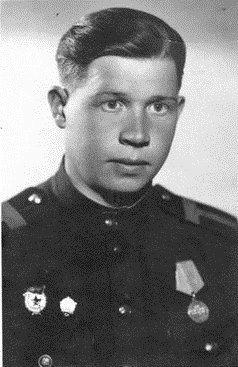


Andrey Fyedorovich Smirnov
Andrey Fyedorovich Smirnov
Division: 350th Rifle Zhytomyr-Sandomierz Red Banner Division of the order of Bogdan Khmelnitsky. My grandfather was born in the village of Koi-Gory Kalikinsky village council of Seredsky (Furmanovsky) district of Ivanovo region on October 30, 1898 in a family of farmers. He participated in three wars. From the first days of the Great Patriotic War, he was called to the front. He was wounded, shell-shocked, frostbitten, but reached Berlin and came back home on September 10, 1945. Awarded the medal "For military merit" (in October 1942, as part of the 1178th Rifle Regiment, in a difficult situation, delivered a package to the division headquarters in the city of Bolokhov, Oryol region). There is a medal "For bravery" (for the hit and burned tank near the city of Zhytomyr in February 1944). Another medal "For bravery" (for the downed armored personnel carrier near the town of Sandomierz on the Vistula river in August 1944). His wife and eight children waited for him throughout the war, and another daughter was born after the war. After returning from the front, my grandfather worked as a senior accountant-financier at the “Krasny dulyapinets” factory, then as a beekeeper at the “Boyets” collective farm. Next, I present an article from a student newspaper dedicated to my grandfather Andrey, which was written by his great-granddaughter Anna Chernikova, a 4th-year student of the faculty of the Russian state University of Romano-Germanic Philology, on the 70th anniversary of the victory over Nazi Germany: My great-grandfather Andrey Smirnov participated in the First world war (1914-1918), in the Civil war (1917-1920), and then in the great Patriotic war (1941-1945). He served in the infantry, went through the whole war, reached Berlin. When he went to the front in 1941, my grandmother was four years old. At that time, the family had seven children, and his wife Elizabeth Feodorovna was expecting her eighth child. The eldest daughter Kaleria wrote a letter to K. E. Voroshilov with a request to let her father go home in the winter to see her son. It so happened that he knocked out a tank and for bravery and conscientious service, he was released for 10 days on leave. My grandmother remembers this bright moment very well. He had written in advance of his arrival, and every day they went out into the field and looked with bated breath towards the station. That day they noticed their father from afar and ran to meet him. This event was a great happiness for them. There are a lot of interesting stories. Here, for example, is one of them. Andrey Fyodorovich was a religious man and always carried an icon of St. Nicholas In his breast pocket, once it saved his life. A fragment from the shell hit the icon that protected the heart. A real miracle! In General, injuries occurred: the shoulder was hit by an enemy bullet, and after injuring the left hand, I had to become a clerk for a while (he had a very beautiful handwriting). Whenever possible, Andrey Fyodorovich tried to write a letter home, and the family calmed down a little when they learned that their father was alive. The great Patriotic war is not an easy period in the life of the Russian people. Women and children had to work on an equal basis with men, without days off, malnourished, with the last of their strength... Everyone was waiting for the end of the war. A horn at the factory announced that the war was over. Three long urges. The happy news spread very quickly, since every day the children waited for their father to return from Berlin. Later, he said that the Germans were very afraid of Russian soldiers and begged for mercy. But my great-grandfather never killed prisoners or touched women or children. He returned through Poland and six months later he was already home. After the war he worked as an accountant at a textile factory and a lesson for the soul was beekeeping. My grandmother remembers that people came from all over the region to buy honey, which was always made to the best of their ability. Here is a short story about a responsible worker, breadwinner and father of nine children, about my great-grandfather, my hero.
Andrey Fyedorovich Smirnov
Andrey Fyedorovich Smirnov
Division: 350th Rifle Zhytomyr-Sandomierz Red Banner Division of the order of Bogdan Khmelnitsky. My grandfather was born in the village of Koi-Gory Kalikinsky village council of Seredsky (Furmanovsky) district of Ivanovo region on October 30, 1898 in a family of farmers. He participated in three wars. From the first days of the Great Patriotic War, he was called to the front. He was wounded, shell-shocked, frostbitten, but reached Berlin and came back home on September 10, 1945. Awarded the medal "For military merit" (in October 1942, as part of the 1178th Rifle Regiment, in a difficult situation, delivered a package to the division headquarters in the city of Bolokhov, Oryol region). There is a medal "For bravery" (for the hit and burned tank near the city of Zhytomyr in February 1944). Another medal "For bravery" (for the downed armored personnel carrier near the town of Sandomierz on the Vistula river in August 1944). His wife and eight children waited for him throughout the war, and another daughter was born after the war. After returning from the front, my grandfather worked as a senior accountant-financier at the “Krasny dulyapinets” factory, then as a beekeeper at the “Boyets” collective farm. Next, I present an article from a student newspaper dedicated to my grandfather Andrey, which was written by his great-granddaughter Anna Chernikova, a 4th-year student of the faculty of the Russian state University of Romano-Germanic Philology, on the 70th anniversary of the victory over Nazi Germany: My great-grandfather Andrey Smirnov participated in the First world war (1914-1918), in the Civil war (1917-1920), and then in the great Patriotic war (1941-1945). He served in the infantry, went through the whole war, reached Berlin. When he went to the front in 1941, my grandmother was four years old. At that time, the family had seven children, and his wife Elizabeth Feodorovna was expecting her eighth child. The eldest daughter Kaleria wrote a letter to K. E. Voroshilov with a request to let her father go home in the winter to see her son. It so happened that he knocked out a tank and for bravery and conscientious service, he was released for 10 days on leave. My grandmother remembers this bright moment very well. He had written in advance of his arrival, and every day they went out into the field and looked with bated breath towards the station. That day they noticed their father from afar and ran to meet him. This event was a great happiness for them. There are a lot of interesting stories. Here, for example, is one of them. Andrey Fyodorovich was a religious man and always carried an icon of St. Nicholas In his breast pocket, once it saved his life. A fragment from the shell hit the icon that protected the heart. A real miracle! In General, injuries occurred: the shoulder was hit by an enemy bullet, and after injuring the left hand, I had to become a clerk for a while (he had a very beautiful handwriting). Whenever possible, Andrey Fyodorovich tried to write a letter home, and the family calmed down a little when they learned that their father was alive. The great Patriotic war is not an easy period in the life of the Russian people. Women and children had to work on an equal basis with men, without days off, malnourished, with the last of their strength... Everyone was waiting for the end of the war. A horn at the factory announced that the war was over. Three long urges. The happy news spread very quickly, since every day the children waited for their father to return from Berlin. Later, he said that the Germans were very afraid of Russian soldiers and begged for mercy. But my great-grandfather never killed prisoners or touched women or children. He returned through Poland and six months later he was already home. After the war he worked as an accountant at a textile factory and a lesson for the soul was beekeeping. My grandmother remembers that people came from all over the region to buy honey, which was always made to the best of their ability. Here is a short story about a responsible worker, breadwinner and father of nine children, about my great-grandfather, my hero.
0 comment



2026 © Russian Military Historical Society Developed by Jetmix