


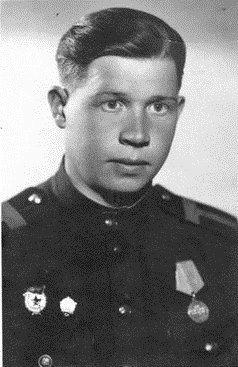
Stafeev Longin Pavlovich
Stafeev Longin Pavlovich
Title: Starshina. Military branch: Aviation. My grandfather Stafeev Longin Pavlovich came from the village of Podnavoloc (Olonets province) (now the Kondopoga district of the Republic of Karelia). He was drafted into the Red Army in 1939 and sent to the District school of Junior aviation specialists of South Caucausus military district (Baku), where he received the specialty of an aircraft mechanic. After graduation, grandfather Longin was sent to the 50th Fighter Aviation Regiment for further service. The regiment was located 45 km from Baku at the railway station Nasosnaya, where he served until 1942 as an aviation motorist. The regiment was tasked with the air defense of Baku and the pumping station that provided (and still provides) the city of Baku with fresh water. The army lacked aviation specialists, so several soldiers of the regiment, including Longin Pavlovich, were sent to the District school of aircraft mechanics of South Caucausus Military District (75 km from Tbilisi). The program in the classroom was intensie – 12 class hours and 1 hour of self-training. After graduating from high school and majoring in aviation mechanics, Stafeev was sent to the newly formed fighter aviation regiment (near Tbilisi), which was then sent to the active army. From August of 1942 until the end of the war, grandfather Longin was in the active army on the fronts of the Great Patriotic War as a part of the 975th, and then renamed the 117th Guards Red Banner Stanislavsky Fighter Air Regiment. The regiment of Longin Pavlovich, being a part of the Reserve of the Supreme High command, passed a glorious military path during the war. He participated in the battles on the Transcaucasian, North Caucasian, Southern, the 1st and the 3rd Ukrainian Fronts. He participated in the defense of Caucasus as a part of the Black sea group of our troops, in the liberation of the cities of Krasnodar, Rostov, Taganrog, Mariupol, Odessa, Lviv, Iasi, Kishinev, and then took part in fraternal assistance to the peoples of Bulgaria, Romania, Yugoslavia, and Hungary (in this country, my grandfather met the Victory Day) in the liberation from fascism. Grandfather met the Victory day in Hungary with the rank of Guard Sergeant. He has got the following awards: Order of the Red Star, medal "For military merit", medal "For defense of Caucasus", medal "For the liberation of Bulgaria" for participation in the at GrePatriotic war 1944-1945, the medal "For liberation of Belgrade", the medal "For the victory over Germany" and jubilee medals. In August of 1945, Stafeev Longin Pavlovich, as a part of his regiment, left Hungary for Armenia, in Yerevan, and then, in 1946, the 117th Guards IAP relocated to Leninakan. During the fighting, the planes of the grandfather's air regiment destroyed a lot of enemy personnel and equipment. According to his memoirs, only one pilot, Major Gennady Shadrin, shot down 14 enemy aircraft, for which he was soon awarded the title Hero of the Soviet Union. As an aviation mechanic, Stafeev Longin Pavlovich served the I-16 fighter, which made up to 6 flights a day, arriving from a mission hit, the plane barely reached the airfield and it happened this way often. Aircraft mechanics had no time to sleep: armed with a portable battery lamp, they sent the plane to the tents (blackout) to bring it into combat readiness during the night. The war song is certainly the property of every nation. It is in this songwriting that a huge potential is concentrated, which suggests that a military song can become a pivot in the spiritual unification of the nation and morally help soldiers in war. According to my grandfather's stories, his air regiment had exactly the same instrumental ensemble that was described in the feature film about the Great Patriotic war "Only “old men” go into battle". No wonder this movie was the most favorite of grandpa Longin! Even in peacetime no family holiday was held without grandfather playing the guitar, balalaika or mandolin. I remember this time well, though I was already 7 years old when my grandfather died. Longin Pavlovich Stafeev has not been with us for many years, but his memory is still alive. Our family has preserved photos, military awards, commendations for the excellent military actions of grandfather Longin in the Great Patriotic war, and his Red Army document (book).
Stafeev Longin Pavlovich
Stafeev Longin Pavlovich
Title: Starshina. Military branch: Aviation. My grandfather Stafeev Longin Pavlovich came from the village of Podnavoloc (Olonets province) (now the Kondopoga district of the Republic of Karelia). He was drafted into the Red Army in 1939 and sent to the District school of Junior aviation specialists of South Caucausus military district (Baku), where he received the specialty of an aircraft mechanic. After graduation, grandfather Longin was sent to the 50th Fighter Aviation Regiment for further service. The regiment was located 45 km from Baku at the railway station Nasosnaya, where he served until 1942 as an aviation motorist. The regiment was tasked with the air defense of Baku and the pumping station that provided (and still provides) the city of Baku with fresh water. The army lacked aviation specialists, so several soldiers of the regiment, including Longin Pavlovich, were sent to the District school of aircraft mechanics of South Caucausus Military District (75 km from Tbilisi). The program in the classroom was intensie – 12 class hours and 1 hour of self-training. After graduating from high school and majoring in aviation mechanics, Stafeev was sent to the newly formed fighter aviation regiment (near Tbilisi), which was then sent to the active army. From August of 1942 until the end of the war, grandfather Longin was in the active army on the fronts of the Great Patriotic War as a part of the 975th, and then renamed the 117th Guards Red Banner Stanislavsky Fighter Air Regiment. The regiment of Longin Pavlovich, being a part of the Reserve of the Supreme High command, passed a glorious military path during the war. He participated in the battles on the Transcaucasian, North Caucasian, Southern, the 1st and the 3rd Ukrainian Fronts. He participated in the defense of Caucasus as a part of the Black sea group of our troops, in the liberation of the cities of Krasnodar, Rostov, Taganrog, Mariupol, Odessa, Lviv, Iasi, Kishinev, and then took part in fraternal assistance to the peoples of Bulgaria, Romania, Yugoslavia, and Hungary (in this country, my grandfather met the Victory Day) in the liberation from fascism. Grandfather met the Victory day in Hungary with the rank of Guard Sergeant. He has got the following awards: Order of the Red Star, medal "For military merit", medal "For defense of Caucasus", medal "For the liberation of Bulgaria" for participation in the at GrePatriotic war 1944-1945, the medal "For liberation of Belgrade", the medal "For the victory over Germany" and jubilee medals. In August of 1945, Stafeev Longin Pavlovich, as a part of his regiment, left Hungary for Armenia, in Yerevan, and then, in 1946, the 117th Guards IAP relocated to Leninakan. During the fighting, the planes of the grandfather's air regiment destroyed a lot of enemy personnel and equipment. According to his memoirs, only one pilot, Major Gennady Shadrin, shot down 14 enemy aircraft, for which he was soon awarded the title Hero of the Soviet Union. As an aviation mechanic, Stafeev Longin Pavlovich served the I-16 fighter, which made up to 6 flights a day, arriving from a mission hit, the plane barely reached the airfield and it happened this way often. Aircraft mechanics had no time to sleep: armed with a portable battery lamp, they sent the plane to the tents (blackout) to bring it into combat readiness during the night. The war song is certainly the property of every nation. It is in this songwriting that a huge potential is concentrated, which suggests that a military song can become a pivot in the spiritual unification of the nation and morally help soldiers in war. According to my grandfather's stories, his air regiment had exactly the same instrumental ensemble that was described in the feature film about the Great Patriotic war "Only “old men” go into battle". No wonder this movie was the most favorite of grandpa Longin! Even in peacetime no family holiday was held without grandfather playing the guitar, balalaika or mandolin. I remember this time well, though I was already 7 years old when my grandfather died. Longin Pavlovich Stafeev has not been with us for many years, but his memory is still alive. Our family has preserved photos, military awards, commendations for the excellent military actions of grandfather Longin in the Great Patriotic war, and his Red Army document (book).
0 comment




2026 © Russian Military Historical Society Developed by Jetmix