


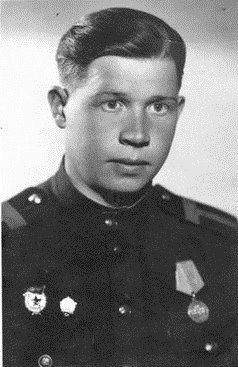


Sannikov Peter Alexandrovich
Sannikov Peter Alexandrovich
Title: Senior Lieutenant. Branch of the army: Artillery Division: 29th Red Banner Artillery Division breakthrough. My great-grandfather Sannikov Pyotr Alexandrovich went through the whole war, was a real combat officer. He began on the North-Western front and finished in the Kuril Islands, where he took part in the far Eastern campaign against the Japanese Kwantung Army. He lived a difficult and eventful life that affected the fate of our Motherland and the entire nation. I consider him a hero, victory Day on may 9 is our family holiday. The events described below are taken from an autobiography written by my great-grandfather personally. Pyotr Alexandrovich was born in 1918 in the village of Savali in Malmyzhsky district of Kirov region in a large family with 5 children. This year marks the 100th anniversary of his birth. My father and mother were middle-class peasants, engaged in agriculture before the Revolution and after it. They joined the collective farm in 1929 and died in 1941. My great-grandfather graduated from the 7th grade of lower secondary school in Malmyzh in 1934, then studied at the Malmyzh school Lespromuch as a tractor driver. From 1936 to 1938, he worked as a tractor driver in the Malmyzhskaya MTS. In September 1938, he was drafted into the armed forces of the USSR. From October of 1938 to February of 1940, he was a division school cadet in the 3rd Separate Anti-aircraft Artillery Division of the NKVD troops. From February of 1940 to July of 1942, commander of the instrument section in the 29th Separate Anti-aircraft Artillery Division of the North-Western front. In July 1942, he was promoted to the position of platoon commander. From July 1942 to February 1947, commander of a fire platoon in the 29th Separate Anti-aircraft Artillery Division of the RGKA of the North-Western front, the 2nd Baltic front and the DKV. From February to April 1947, he was a battery commander in the 2nd Separate Anti-aircraft Artillery Division of the DKV. He participated in military operations from the first day of the Great Patriotic War until the end of the war in the Far East. He had no injuries and was not a prisoner of war. For fighting against Nazi Germany, Pyotr Alexandrovich was awarded the order of the red Star in 1943, the medal for Victory over Germany in 1945, and the medal for Victory over Japan in September 1945. In the far East in 1946, my great-grandfather met his future wife and my great-grandmother Maria Kosteychuk. They married on September 14, 1946, and the first of their three daughters was born in 1947. After being discharged from the army in 1947, Pyotr Alexandrovich worked in the Malmyzhsky city Council as a house Manager. From January 1, 1948 to September 1, 1950, he was the head of the Remstroykontory. Then he was appointed Manager of the Malmyzhsky communtrust of the Ministry of Public Utilities. While working in this position, he built a hydroelectric power station on the Shoshma river in the city, which solved the problem of energy supply to the city and nearby settlements. The post-war years were very difficult for the family, instead of a salary, the great-grandfather brought government bonds often. The farm and vegetable garden helped out. War years in the field and hard work after the war undermined the health of my great-grandfather. He died of tuberculosis in 1969 at the age of 50 and was buried in the town of Malmyzh. Dedication of daughter Svetlana to her father on his 100th birthday: Passed away at fifty-Defender of the Motherland. Fate took him away from life, and he was a great Talent! He finished the evening school with honors, built the “Savalka” power station, defended the Dam by jumping into the icy water, and killed the villagers in dugouts. He learned to play balalika himself, learned to weave bast shoes, he learned to weave, on the life of a peasant did not dare to grumble - he wanted to know everything, to pass life with dignity... And how he sang ! ... He played chess also, was a Poet, and wrote poetry ... In electricity, he wanted to become an engineer, but death managed to take his life! In the consciousness of died-to live wanted to! I left my talents to all my children... A bright comet flew through the sky and the trace of fire has not disappeared till this day !!
Sannikov Peter Alexandrovich
Sannikov Peter Alexandrovich
Title: Senior Lieutenant. Branch of the army: Artillery Division: 29th Red Banner Artillery Division breakthrough. My great-grandfather Sannikov Pyotr Alexandrovich went through the whole war, was a real combat officer. He began on the North-Western front and finished in the Kuril Islands, where he took part in the far Eastern campaign against the Japanese Kwantung Army. He lived a difficult and eventful life that affected the fate of our Motherland and the entire nation. I consider him a hero, victory Day on may 9 is our family holiday. The events described below are taken from an autobiography written by my great-grandfather personally. Pyotr Alexandrovich was born in 1918 in the village of Savali in Malmyzhsky district of Kirov region in a large family with 5 children. This year marks the 100th anniversary of his birth. My father and mother were middle-class peasants, engaged in agriculture before the Revolution and after it. They joined the collective farm in 1929 and died in 1941. My great-grandfather graduated from the 7th grade of lower secondary school in Malmyzh in 1934, then studied at the Malmyzh school Lespromuch as a tractor driver. From 1936 to 1938, he worked as a tractor driver in the Malmyzhskaya MTS. In September 1938, he was drafted into the armed forces of the USSR. From October of 1938 to February of 1940, he was a division school cadet in the 3rd Separate Anti-aircraft Artillery Division of the NKVD troops. From February of 1940 to July of 1942, commander of the instrument section in the 29th Separate Anti-aircraft Artillery Division of the North-Western front. In July 1942, he was promoted to the position of platoon commander. From July 1942 to February 1947, commander of a fire platoon in the 29th Separate Anti-aircraft Artillery Division of the RGKA of the North-Western front, the 2nd Baltic front and the DKV. From February to April 1947, he was a battery commander in the 2nd Separate Anti-aircraft Artillery Division of the DKV. He participated in military operations from the first day of the Great Patriotic War until the end of the war in the Far East. He had no injuries and was not a prisoner of war. For fighting against Nazi Germany, Pyotr Alexandrovich was awarded the order of the red Star in 1943, the medal for Victory over Germany in 1945, and the medal for Victory over Japan in September 1945. In the far East in 1946, my great-grandfather met his future wife and my great-grandmother Maria Kosteychuk. They married on September 14, 1946, and the first of their three daughters was born in 1947. After being discharged from the army in 1947, Pyotr Alexandrovich worked in the Malmyzhsky city Council as a house Manager. From January 1, 1948 to September 1, 1950, he was the head of the Remstroykontory. Then he was appointed Manager of the Malmyzhsky communtrust of the Ministry of Public Utilities. While working in this position, he built a hydroelectric power station on the Shoshma river in the city, which solved the problem of energy supply to the city and nearby settlements. The post-war years were very difficult for the family, instead of a salary, the great-grandfather brought government bonds often. The farm and vegetable garden helped out. War years in the field and hard work after the war undermined the health of my great-grandfather. He died of tuberculosis in 1969 at the age of 50 and was buried in the town of Malmyzh. Dedication of daughter Svetlana to her father on his 100th birthday: Passed away at fifty-Defender of the Motherland. Fate took him away from life, and he was a great Talent! He finished the evening school with honors, built the “Savalka” power station, defended the Dam by jumping into the icy water, and killed the villagers in dugouts. He learned to play balalika himself, learned to weave bast shoes, he learned to weave, on the life of a peasant did not dare to grumble - he wanted to know everything, to pass life with dignity... And how he sang ! ... He played chess also, was a Poet, and wrote poetry ... In electricity, he wanted to become an engineer, but death managed to take his life! In the consciousness of died-to live wanted to! I left my talents to all my children... A bright comet flew through the sky and the trace of fire has not disappeared till this day !!
0 comment



2026 © Russian Military Historical Society Developed by Jetmix