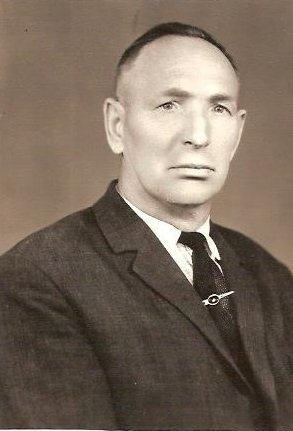
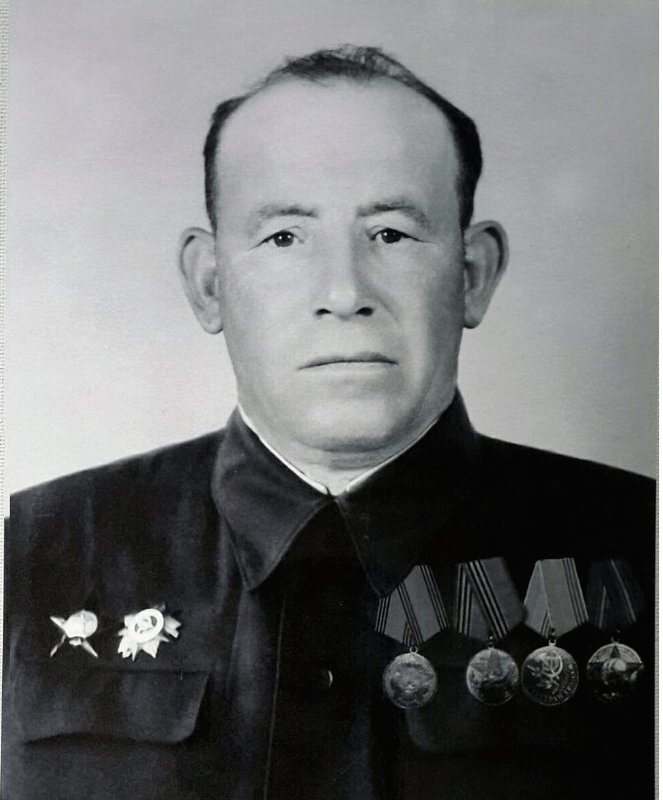
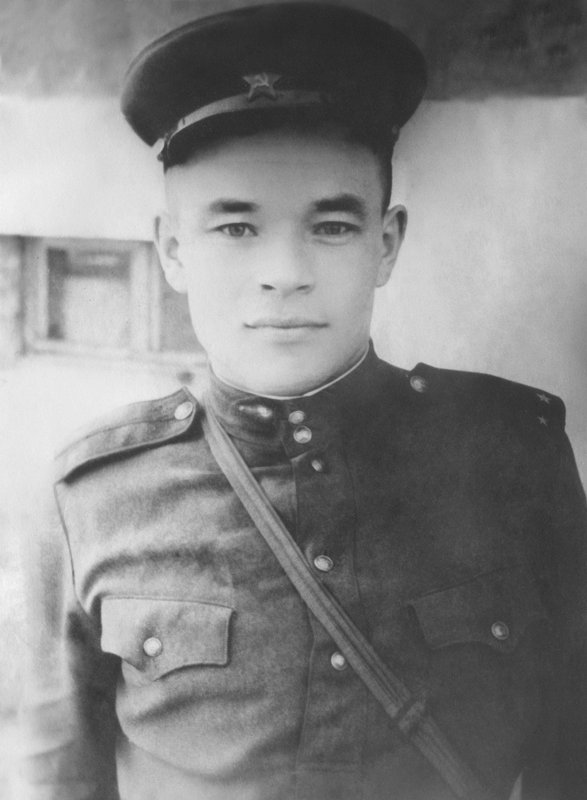
Maxim Syrovatkin
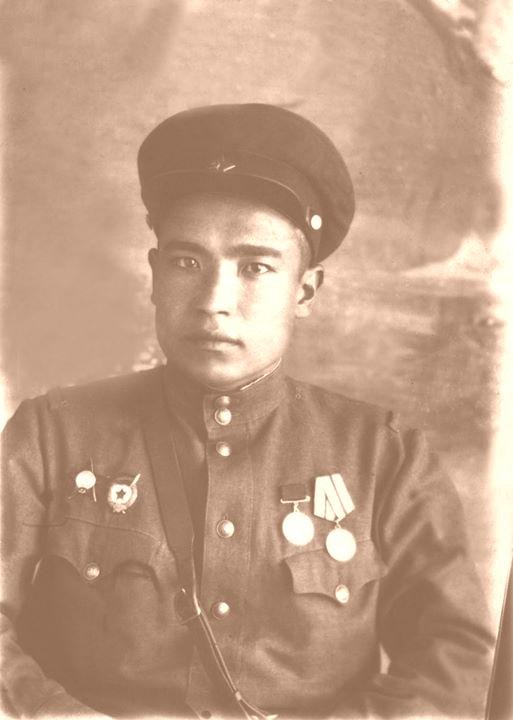
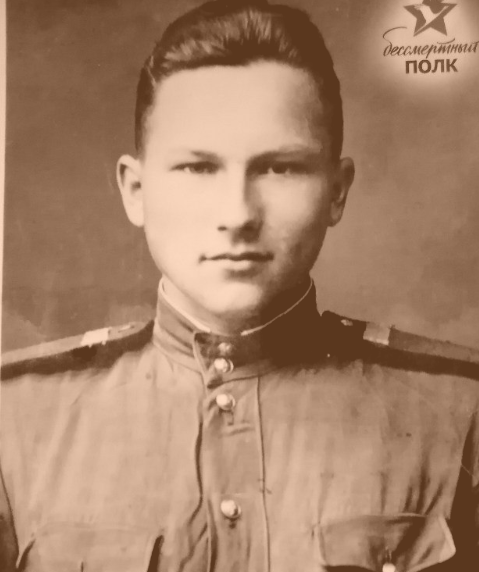
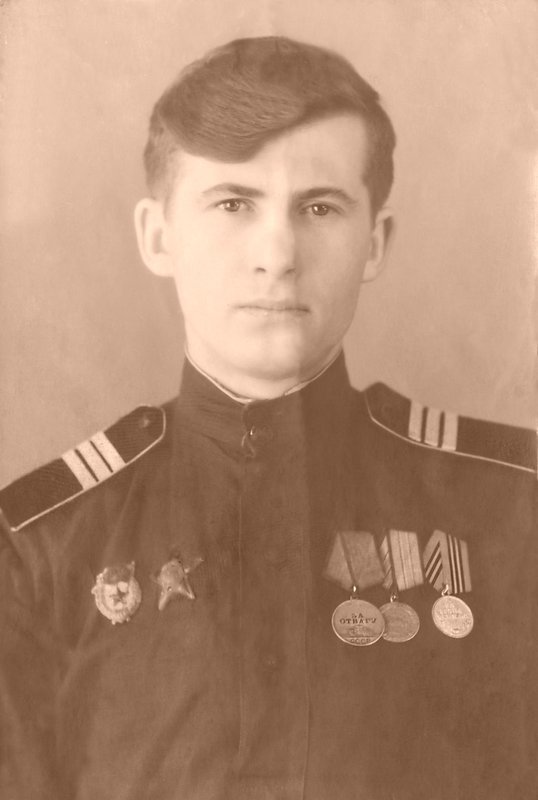
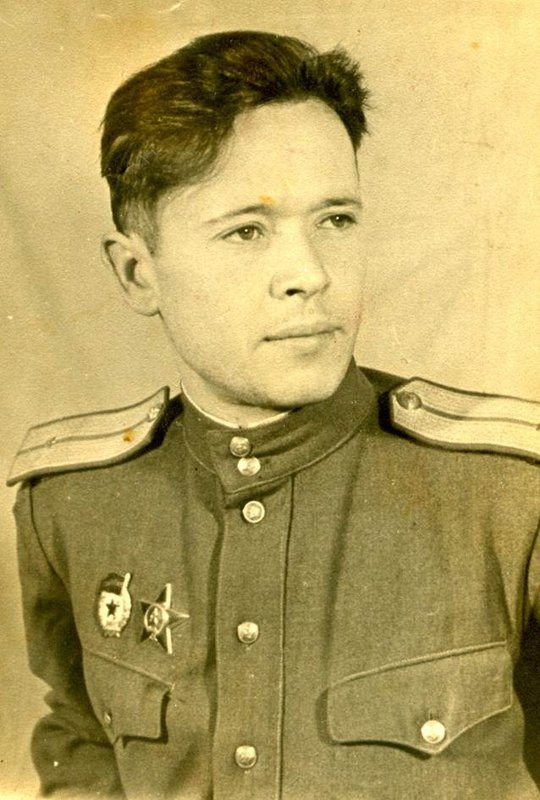
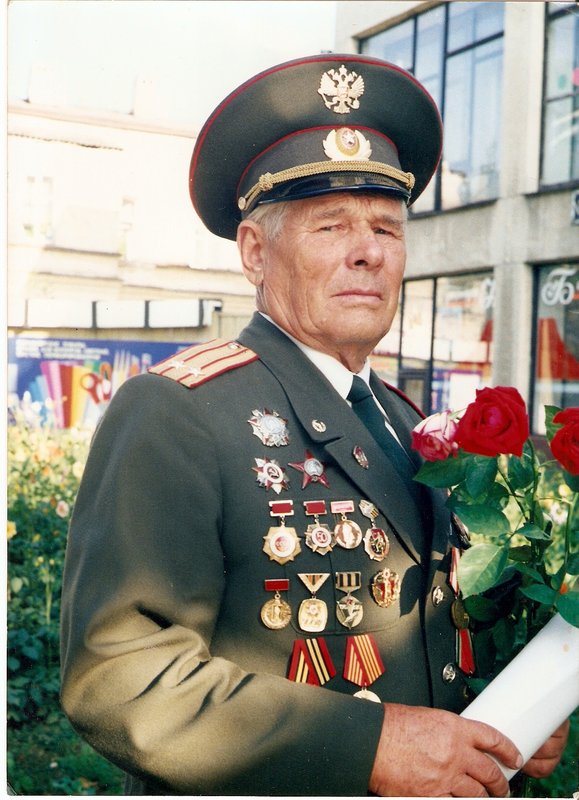
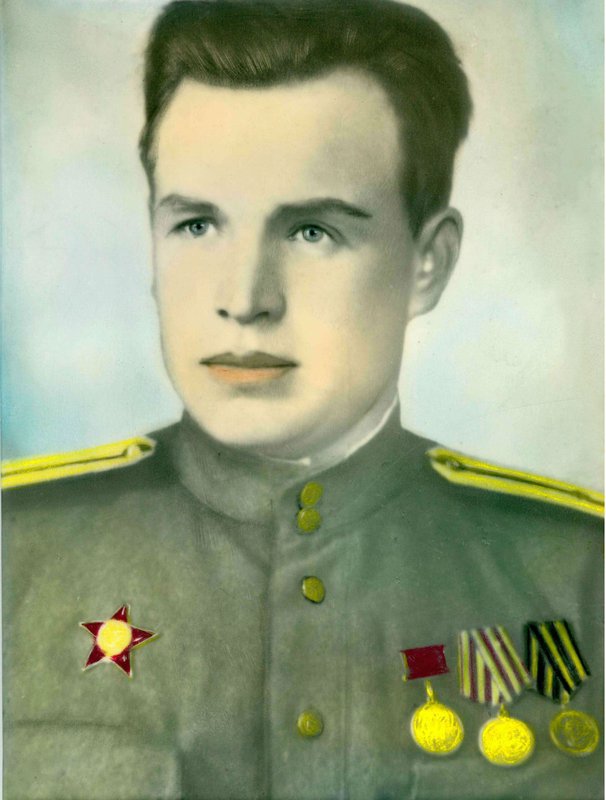
M. Syrovatkin was born on April 21, 1923 in the village of Bychok, Petropavlovskiy District, Voronezh Region.
Military rank: Guards Corporal.
Position: calculator of the 8th Battery, 3rd Detachment, 38th Guards Kalinkovichskaya Double Red Banner Orders of Suvorov and Kutuzov Artillery Brigade.
In the Red Army from May 18, 1942. He was called up by the Mechetinsky District Military Commiserate of the Zernogradskiy District of the Rostov Region.
Participation in the Great Patriotic War from September 27, 1942.
Awards: Order of the Red Star (April 18, 1945), Order of the Patriotic War 2nd degree, Medals: For the Defense of the Caucasus, For the Liberation the Crimea, For the Capture of Berlin, For Bravery, For the Victory over Germany.
“In May 1942, I was drafted into the Red Army and was sent to the Artillery Officer School in Ordzhonikidze (Vladikavkaz). After 4 months of training, due to the approach of the front, the school was disbanded and the cadets were assigned to military units.
I was assigned to the 61st Artillery Regiment, which was in the Commander-in-Chief's reserve. The Commander, Colonel G. Dol, assigned me to a platoon of 152 mm guns, and soon transferred to the platoon management of calculations and adjustments, where there were more competent soldiers. I had a technical school and four months of artillery school behind. 61 regiment took part in the battles by the village of Voznesenskaya near Mozdok.
With the German advance on Vladikavkaz, our regiment was transferred there. Fierce battles were fought for the villages of Khorsky, S. Dzuarikau and Elkhotovo (Elkhotovo Gate). That was a kind of meat grinder. We defended, the Germans pressed, they needed a breakthrough to the Caspian sea, and its oil. But we had hold out. Help came from the North. In connection with the defeat of the Germans at Stalingrad, our troops launched an offensive towards Transcaucasia. The Germans began to withdraw to the Taman Peninsula. Thanks to the coordinated work of fire control of the 61st Artillery Regiment, the shells fell exactly on targets at the retreating German troops. On January 11, 1943, Mozdok and Nalchik were liberated, and Stavropol was liberated by the morning of January 21.
I participated in the liberation of Pyatigorsk and Krasnodar. My first award, the most expensive, for the defense of the Caucasus. The 61st Artillery Regiment also had a lot of merit in the liberation of this cities.
Then our 61st Artillery Regiment was transferred to the Crimea in the area of Perekop and Sivash. In early March, it rained. Muddy roads hindered the movement of troops. We were practically standing still. Only tractors could move, but with difficulty. On April 8, we received an order for the offensive. We were issued with four sets of ammunition, food for 18 days, and five refills of gas.
On April 11, 1944, we broke through the defenses at Perekop and Sivash and captured the city of Dzhankoy, and on April 13, our banners were flying over Simferopol, Yevpatoria and Feodosia. The 61st artillery regiment contributed a lot for these victories.
After the Crimea, our regiment was sent to Belarus and fought as a part of the 1st Belorussian Front. Belarus was occupied by German for three years. We saw devastated cities, burned down houses in villages, not a single school, not a single family that would not have suffered from the Nazis. The task of the 1st Belorussian Front was to liberate Baranovichi, Pinsk, and Brest. At dawn on July 8, fighting broke out for the city of Baranovichi and by lunchtime, it was liberated. I participated in the liberation of Pinsk, and Borovichi.
By the order of the Commander-in-Chief, the 61st Artillery Regiment was merged with the 62nd Artillery Regiment into the 38th Artillery Brigade in October 1944, and it was transferred to the Baltic States and participated in the liberation of Riga. Heavy battles were fought for the station Vainode.
War is war. They awarded those who distinguished themselves, buried the dead, and sent the wounded to the medical unit. We received replacements in return, and were taught them how to fire. I close my eyes and see my comrades standing in front of me. I remember their faces, even some of them by name. Soldiers who died in battle are alive as long as we remember them. The closest comrades-in-arms remained in my memory forever. Ivan Kolmykov from Azov, was trained in Ordzhonikidze, received baptism of fire near the station of Arkhonskaya, Ivan Zhukov - the gun commander. Near Riga, he engaged 13 German tanks and destroyed four of them. Peter Kubanskiy, the chauffeur, delivered ammunition in any weather under any conditions. They are dead, they are dead!
In December 1944, our 38th Artillery Brigade was already fighting in Poland. We came to the Oder River near Neu-Glitzen. Our troops started crossing and our artillery brigade covered it. The crossing was difficult, we made several attempts and suffered heavy losses. Many of our soldiers and commanders displayed heroism. The Oder River is more than 100 meters wide and up to 7 meters deep. In some places, the crossing was difficult. The town of Neu-Glitzen was located on the German side of the Oder River. From April 16 to April 19, the German defense consisting of three echelons was breached and the road to Berlin was opened.
On April 18, 1945, I was awarded the Order of the Red Star for fighting in the town of Neu-Glitzen. Being the only calculator in the battery, despite the lack of a reference network and solid contour points when changing the battle lines of the battery, I managed to link the firing position and observation point in a timely and accurate manner. In addition, while simultaneously performing the role of a scout, I discovered on April 18 one enemy artillery battery, which was later suppressed. Our 38th Artillery Brigade together with other troops of the 1st Belorussian Front reached Berlin.
I remember for the rest of my life the moment when the capitulation of Nazi Germany was announced on the radio at night. There was so much joy and tears. We congratulated each other, because we were still alive and the war was over. Combat crews of the 38th Artillery Brigade were stationed 6 km from Potsdam in the barracks of the former German air force. Everyday life, study, guard duty, and technical training and maintenance of equipment began.
I participated in the opening ceremony of the Soldier-liberator Monument on May 8, 1946 in Treptow Park in Berlin. Its location was chosen by the Soviet command. The remains of soldiers who were previously buried in various city cemeteries, about 7,000 soldiers, were moved here, and granite from Hitler's Reich Chancellery was used in the construction of the memorial. During the formation of troops at this event, I was in the honor guard in my 38th Artillery brigade, next to us were our aviation and infantry divisions, as well as American, British and French soldiers.
Marshal G. Zhukov was present at the opening of the monument, P. Rybalko made a speech, and then there was a parade of allied troops.
Participated in the protection of Victory Day in Berlin in 1946.
The most memorable moment of the Victory Day was the airship in the sky, from which a huge canvas with portraits of Lenin, Stalin, Engels, Marx hung.
I also visited the Reichstag Building. I was impressed by the building itself, the figure of Wilhelm sitting on a horse, but most of all I remember the walls covered with chalk, charcoal and bayonets with names and surnames, numbers of military units who fought their way to Berlin, took the Reichstag and finished off the fascist evil spirits .
My service in Germany continued until February 1947, and then I was discharged.”