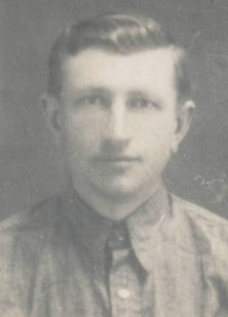
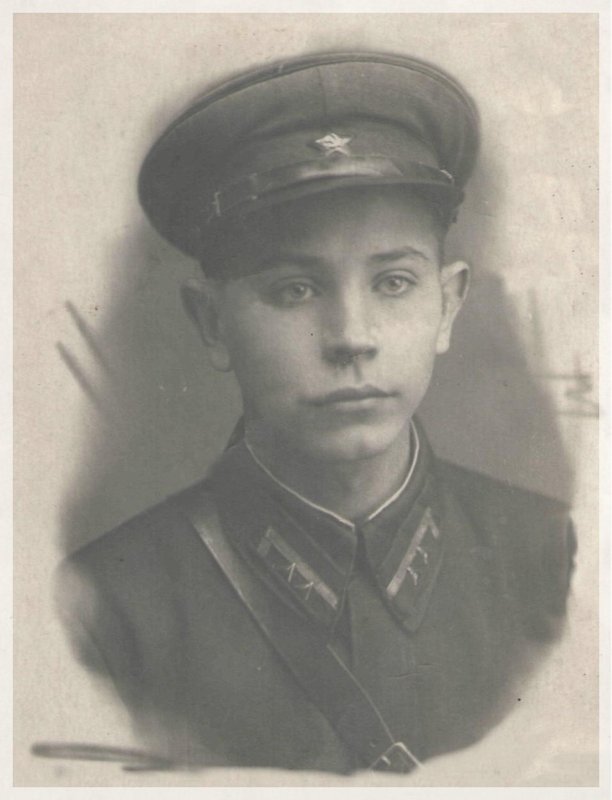
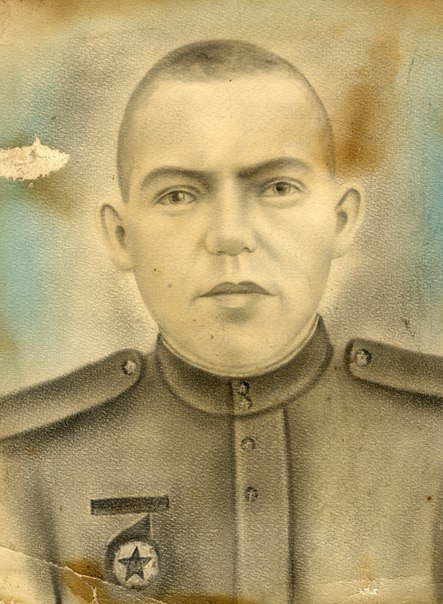
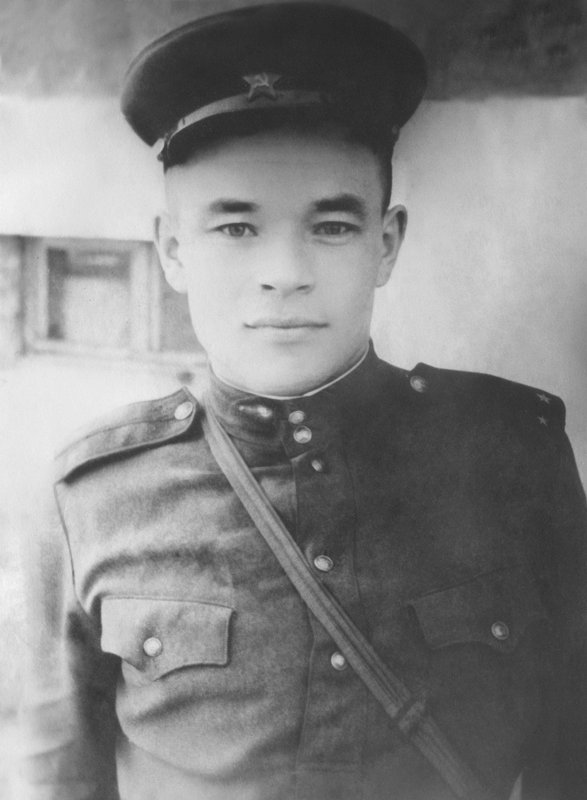
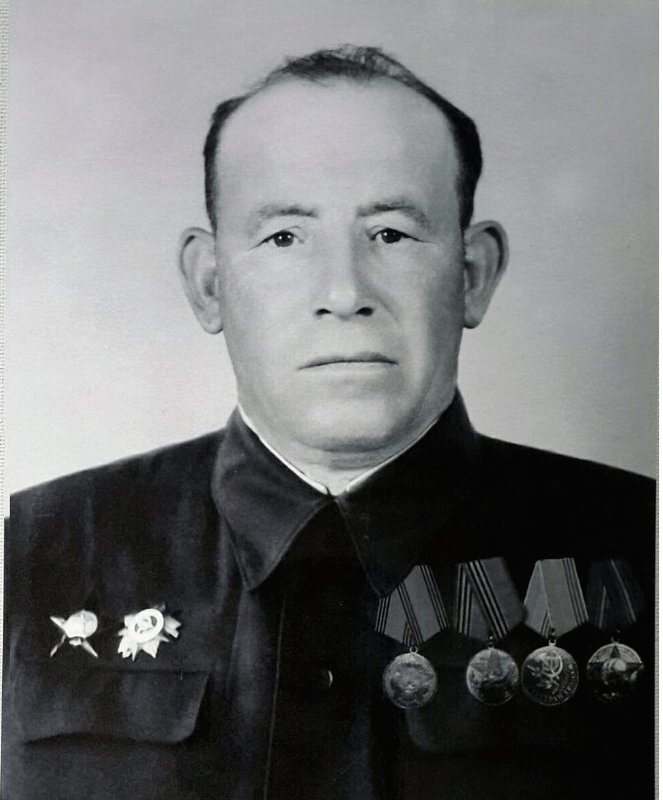
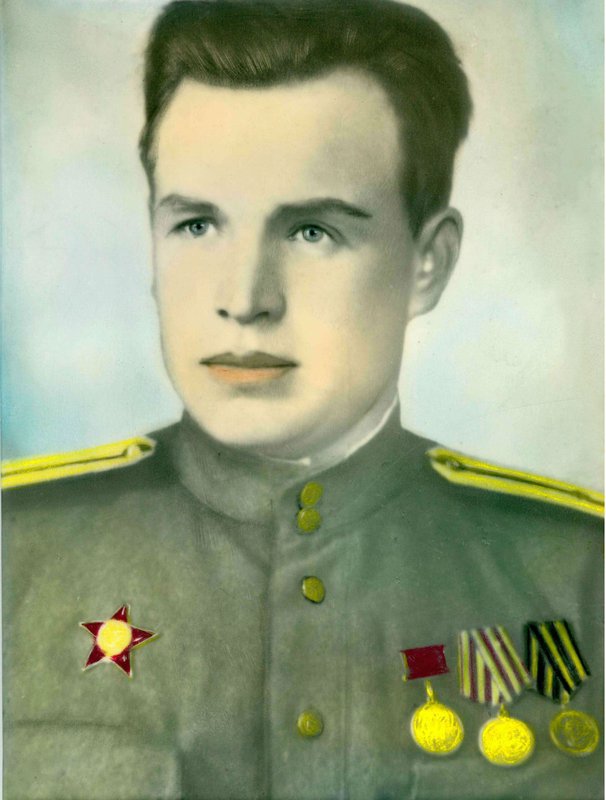
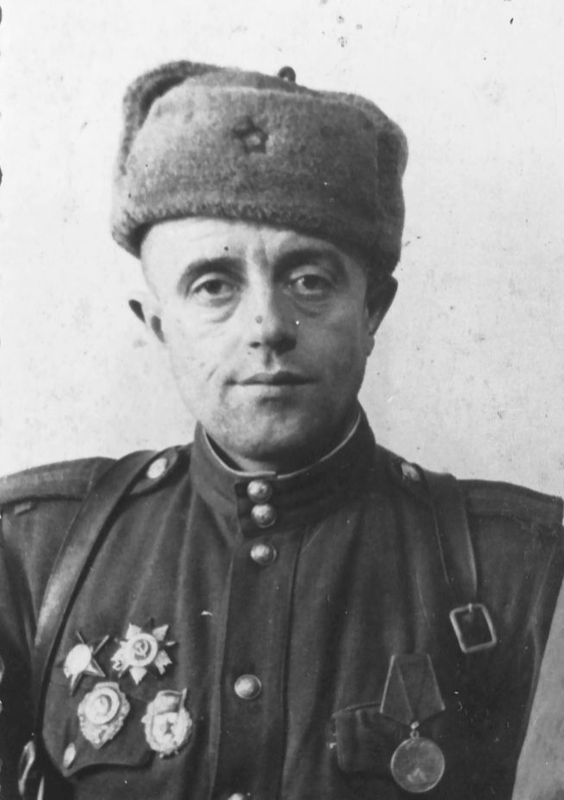
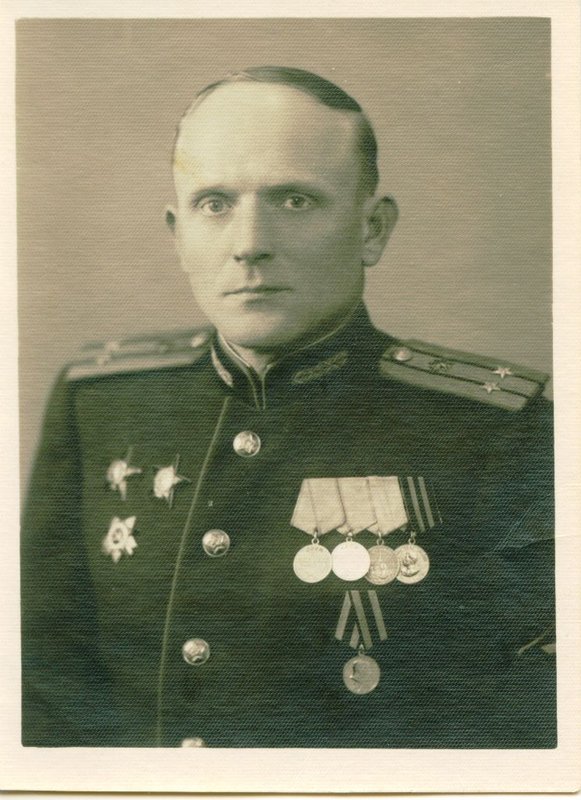
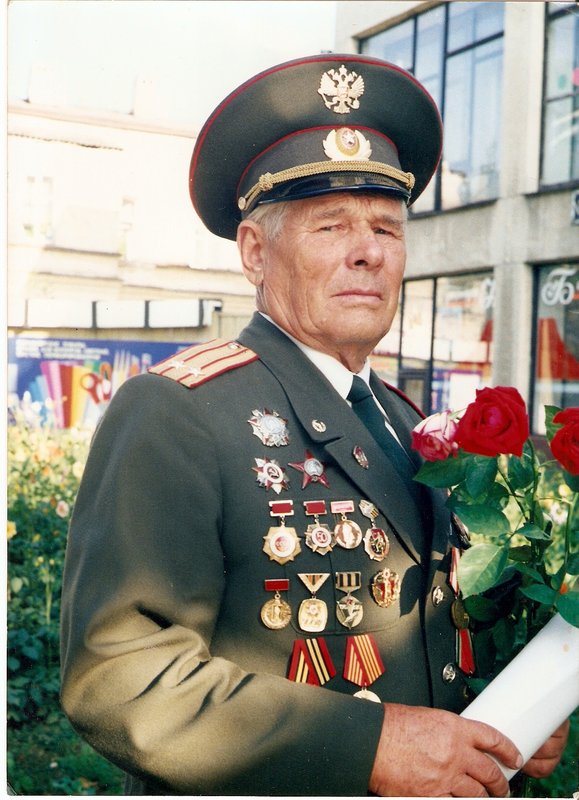
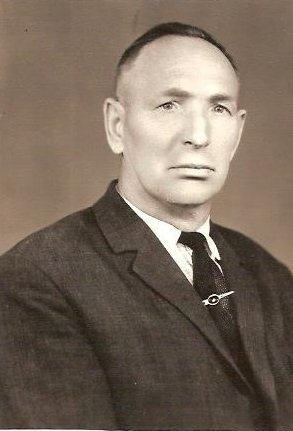
Tarasov Konstantin Nikolaevich
Branch of troops: Ground Forces, Air Force (except for naval Aviation), Coastal Service, troops of the NKVD, Border Troops_x000D_
_x000D_
From 1939 he served in the NKVD Cavalry Regiment(border Guards), which was located in the Babushkinsky district of the Moscow region. At the beginning of the Great Patriotic War (July 1941), he was sent to an Recconaissance School, which was located in a railway echelon plying the Moscow-Novosibirsk route. Cadets were housed in Separate heating houses, in others, war horses and fodder. During the day, the train moved along the route, and the cadets slept, and the horses rested. With the onset of darkness, the train halted and combat training began, which lasted all night. The echelon continued to move. So the study lasted for several months. _x000D_
In February 1942 Tarasov was on the front line as the commander of an army reconnaissance group as part of the Western Front. With his reconnaissance group, he repeatedly went on reconnaissance across the front line to the location of enemy troops for the "prisoner tongues" This was the name of the captured Nazis, who were transported for interrogation to obtain important information about enemy units and their plans. For courage and bravery he was awarded: the Order of the Red Star, medals "For Courage", "For Military Merit" and others. _x000D_
In the area of Lake Ilmen, near Staraya Russa, during the combat to destroy the fascist command post and capture an important "prisoner tongues", he was seriously wounded. The recon comrades did not leave him in enemy territory and carried him across the no-man's land. _x000D_
At the crossing of the neutral zone, the alarmed Hitlerites were firing the retreating group of recons from machine guns, so the whole body of Konstantin Tarasov until the last days of his life was stuffed with shrapnel. The thigh of his left leg, shattered by a machine-gun burst, was replaced by a 30-centimeter tube. A bleeding trophic ulcer formed on the shin burned by a fragment of a thermite shell he bandaged all his life. _x000D_
Then it was a hospital in the ambulance train. As hopeless for recovery, he was given to an old nurse who, having received a summons about the death of her last son, they got off at her station. She (unfortunately, did not remember the name) atook care of him. On one of the warm sunny day, the recovering warrior was able to crawl out into the street, the elderly woman-savior said goodbye to him:“Now you get over by yourself...”.Then she went into the hut, lay down and fell asleep in eternal sleep ... He buried her in the yard. .. I made myself a carriage (I couldn’t walk on my feet yet) and trudged home to my village, so his war ended ... _x000D_
After the war, Konstantin Tarasov worked in a School as a biology teacher in his village. He married, had three children, two sons became soldiers. Then he and his family moved to Uzbekistan, to the Tashkent region, the city of Chirchik. Lived there and worked at a local School. Despite the lack of special education, he taught very successfully, interestingly, was very much loved by his students. He died in 1991 and was buried in Chirchik.
Tarasov Konstantin Nikolaevich
Branch of troops: Ground Forces, Air Force (except for naval Aviation), Coastal Service, troops of the NKVD, Border Troops_x000D_
_x000D_
From 1939 he served in the NKVD Cavalry Regiment(border Guards), which was located in the Babushkinsky district of the Moscow region. At the beginning of the Great Patriotic War (July 1941), he was sent to an Recconaissance School, which was located in a railway echelon plying the Moscow-Novosibirsk route. Cadets were housed in Separate heating houses, in others, war horses and fodder. During the day, the train moved along the route, and the cadets slept, and the horses rested. With the onset of darkness, the train halted and combat training began, which lasted all night. The echelon continued to move. So the study lasted for several months. _x000D_
In February 1942 Tarasov was on the front line as the commander of an army reconnaissance group as part of the Western Front. With his reconnaissance group, he repeatedly went on reconnaissance across the front line to the location of enemy troops for the "prisoner tongues" This was the name of the captured Nazis, who were transported for interrogation to obtain important information about enemy units and their plans. For courage and bravery he was awarded: the Order of the Red Star, medals "For Courage", "For Military Merit" and others. _x000D_
In the area of Lake Ilmen, near Staraya Russa, during the combat to destroy the fascist command post and capture an important "prisoner tongues", he was seriously wounded. The recon comrades did not leave him in enemy territory and carried him across the no-man's land. _x000D_
At the crossing of the neutral zone, the alarmed Hitlerites were firing the retreating group of recons from machine guns, so the whole body of Konstantin Tarasov until the last days of his life was stuffed with shrapnel. The thigh of his left leg, shattered by a machine-gun burst, was replaced by a 30-centimeter tube. A bleeding trophic ulcer formed on the shin burned by a fragment of a thermite shell he bandaged all his life. _x000D_
Then it was a hospital in the ambulance train. As hopeless for recovery, he was given to an old nurse who, having received a summons about the death of her last son, they got off at her station. She (unfortunately, did not remember the name) atook care of him. On one of the warm sunny day, the recovering warrior was able to crawl out into the street, the elderly woman-savior said goodbye to him:“Now you get over by yourself...”.Then she went into the hut, lay down and fell asleep in eternal sleep ... He buried her in the yard. .. I made myself a carriage (I couldn’t walk on my feet yet) and trudged home to my village, so his war ended ... _x000D_
After the war, Konstantin Tarasov worked in a School as a biology teacher in his village. He married, had three children, two sons became soldiers. Then he and his family moved to Uzbekistan, to the Tashkent region, the city of Chirchik. Lived there and worked at a local School. Despite the lack of special education, he taught very successfully, interestingly, was very much loved by his students. He died in 1991 and was buried in Chirchik.
0 comment



2026 © Russian Military Historical Society Developed by Jetmix