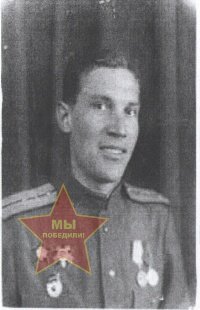
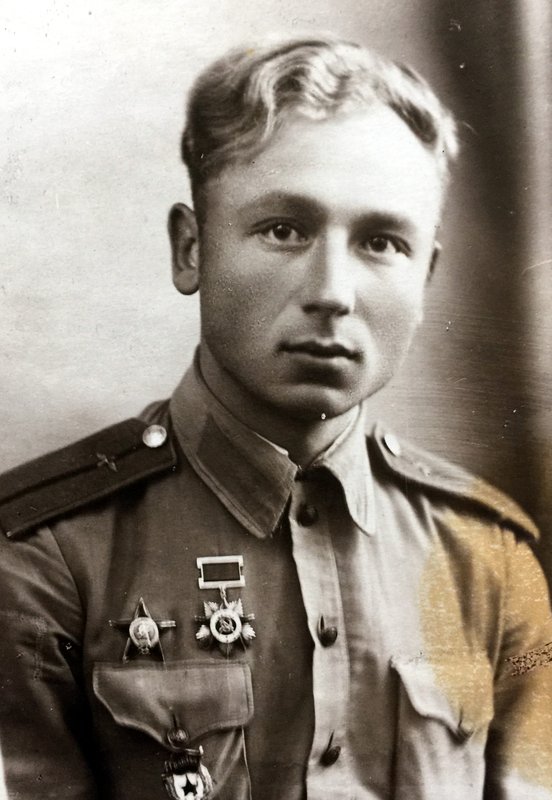
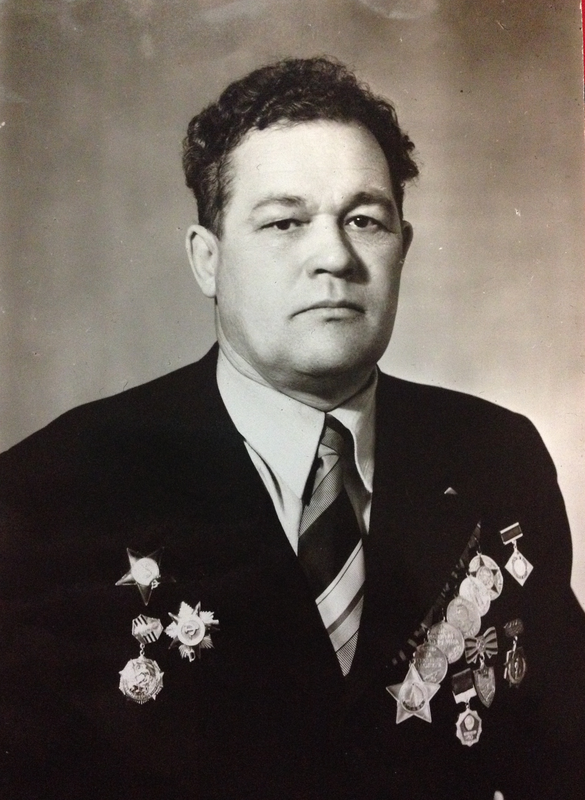
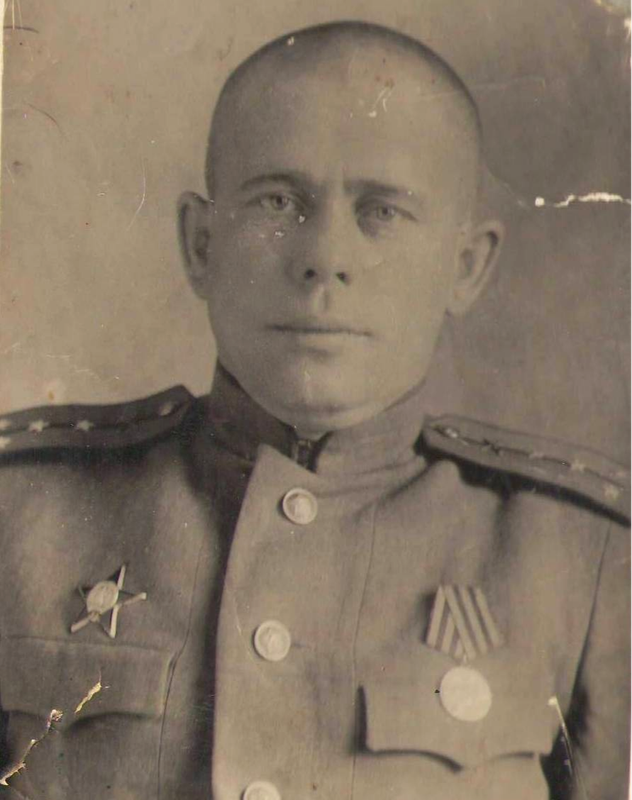
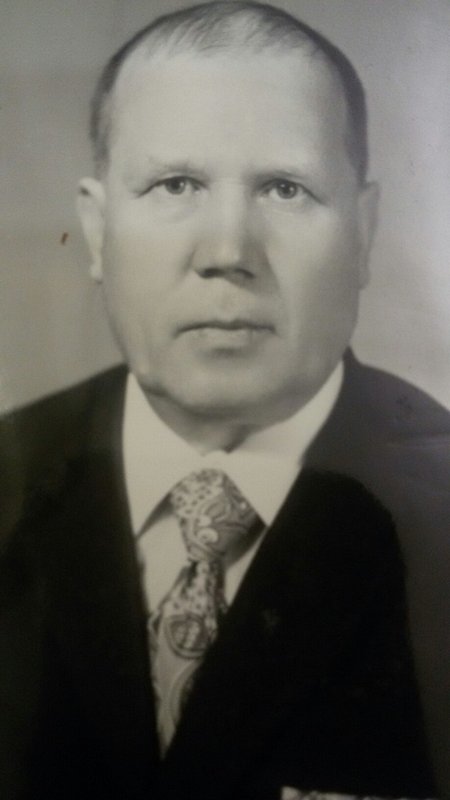
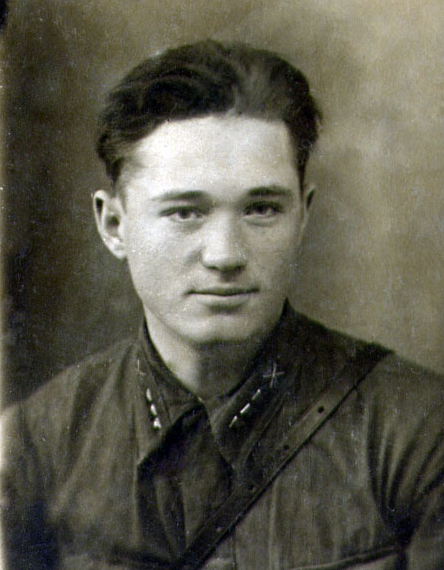
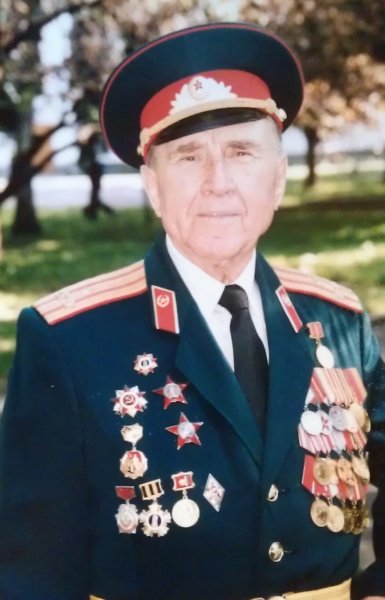
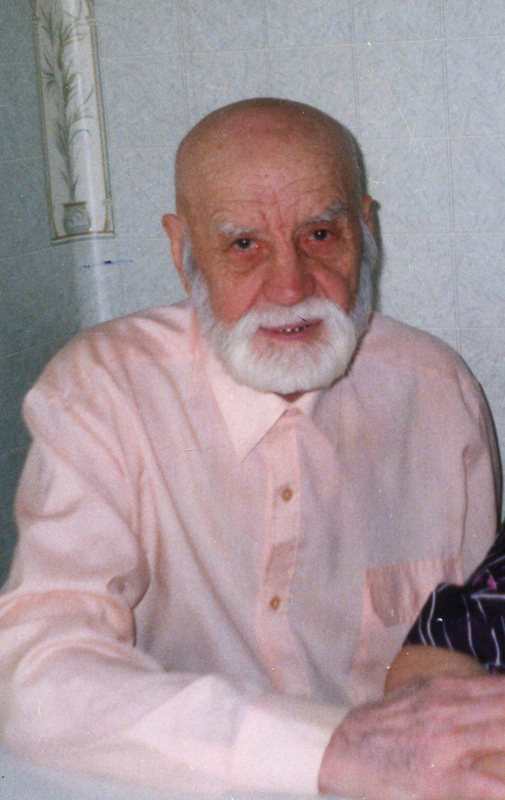
Petrishchev Vasily Dmitrievich
Branch of troops: Artillery _x000D_
Unit: 96th Infantry Division (2nd formation) _x000D_
_x000D_
In June 1938, for the first time in the rules of conscription into the Army, I was drafted into the ranks of the Soviet Army for personnel service and ended up in the border troops, in the Bakhtinsky Red Banner Border Cavalry detachment. It is about 200 km from the Ayaguz railway station in the Almaty region - to the Chinese border, where I had to serve for three years. The end of my service life, we began to get ready home, but at that time the Patriotic War began and I was sent to Kharkov to the Kharkov Cavalry Frontier School. But soon a German began to approach Kharkov,all of us at the school began to evacuate to the rear. We got to some station, it seems "Balanda" (but not exactly), where two or three days later the freight cars were brought and we were taken to Tashkent. Of course, we didn't know it right away. _x000D_
Then we realized that we were driving along our own highway and with my Aktobe comrade at one station gave my mother a telegram home, but she received it a month after my passage. When we arrived in Aktyubinsk, there was a severe frost, I lifted the flaps of my overcoat and without rest ran to our hut, went into the hut and did not sit down, only said where our train was. They were in time, i.e. Mom and sisters came, it was deep night, we saw each other ... _x000D_
In Tashkent, after graduating from college, I was awarded the title of Junior. Lieutenant and sent to the border town of Jarkent, now Panfilov. There was a border detachment and I ended up at the Baskunchi border outpost as an assistant to the head of the outpost. At the end of April 1942, the chief of staff of the detachment came to our outpost and sent me to the border at night at 10 o'clock. This was the time of increased border protection. After spending the night by the river, I fell ill, a subcutaneous abscess appeared in my throat. I lay for several days at the outpost, I did not feel better, then they took me to Jarkent to the medical unit, and from there to the city hospital, where they made an autopsy of this abscess. _x000D_
Here, in this hospital, I met a young nurse in a blue gas kerchief. On July 20, 1942, this young nurse called me at the Zastava and arrived in a car with a movie-making machine and became my wife, Anna Panteleevna, your mother and grandmother. We lived with her at the Baskunchi outpost for four months and on November 23, 1942, we left for Dzharkent, from where I went to the front. Our Commander of the Alma-Ata district decided to form a Division from border guards, he was allowed, but he was not allowed to go to the front. I arrived in Sverdlovsk for the formation, and from there I arrived at the Rogolevo farm, where I received a platoon of soldiers and conducted courses on training Junior Leiutenants. On April 2, 1943, they left this farm, on April 27 they arrived in Kursk and reached the village of Krasnaya Polyana, here they stopped in the steppe and on May 13, 1943 cadets were graduated. I was left in a reserve Regiment and defensive work was carried out near the town of Fatezh (Kursk Region). _x000D_
On June 10, 1943, I was awarded the rank of Lieutenant, and on June 16, I was appointed to the position of Battalion Adjutant. Due to illness, I ended up in the hospital with his hands, recovered, ended up in the personnel department of the 48th Army, from where he was sent to the barrage detachment by the platoon Commander of the border outpost. _x000D_
On November 23, 1943, they arrived in Rechitsa (Belarus). On the day of the 26th anniversary of the Red Army, February 23, 1944. I was given the rank of Senior Lieutenant. On June 26, 1944, they entered the city of Zhlobin (Belarus). On July 2, 1944, they entered the city of Bobruisk (Belarus). On August 3, 1944, they entered the city of Belsk (Poland). On November 9, 1944, I left the barrage detachment, there was no need for their existence, and on November 27, 1944, I ended up in 96th Infantry Division. _x000D_
On January 25, 1945, I was wounded in the right elbow joint near the town of Wormditt (East Prussia). After recovery, I went to the front, and on April 6, 1945, I was again seriously wounded in the right leg and side by shell fragments, when removed, the total cut of the body was 78 centimeters. _x000D_
Until now (until the end of life), there are two small metal fragments in the right lung and one or two in the leg. It was on the spit beyond the city of Danzig (Poland, now Gdansk), in the second shock army of 2nd Belarusian Front. With this wound I ended up in a hospital in the city of Dzerzhinsk, not far from the city of Gorky. For military combats I was awarded the Medal "For Military Merit", the Orders "Red Star" and "Patriotic War II Art." (Later dad was also awarded the medal "For Victory over Germany.) Victory Day found me in a hospital in Dzezhrinsk. I still did not get up from my bed, I could not. And I celebrated this holiday lying on my bed. Discharged from the hospital on July 17 1945, arrived in Moscow, and from there I was sent to the Nekouz district military enlistment office of the Yaroslavl region for further service._x000D_
In brief: from 24.11.1942 to 20.02.1944 - the Western 2nd Belorussian Front as Commander of a Rifle platoon; 02/20/1944 to 10/15/1944 - 2nd Belorussian Front in the position of Senior Adjutant; from 10/15/1944 to 04/09/1945 - 2nd Belorussian Front as Commander of a Rifle platoon, Commander of a Rifle company. From 04/09/1945 - on recovery after a severe injury; 02/17/1946 — demobilized.
Petrishchev Vasily Dmitrievich
Branch of troops: Artillery _x000D_
Unit: 96th Infantry Division (2nd formation) _x000D_
_x000D_
In June 1938, for the first time in the rules of conscription into the Army, I was drafted into the ranks of the Soviet Army for personnel service and ended up in the border troops, in the Bakhtinsky Red Banner Border Cavalry detachment. It is about 200 km from the Ayaguz railway station in the Almaty region - to the Chinese border, where I had to serve for three years. The end of my service life, we began to get ready home, but at that time the Patriotic War began and I was sent to Kharkov to the Kharkov Cavalry Frontier School. But soon a German began to approach Kharkov,all of us at the school began to evacuate to the rear. We got to some station, it seems "Balanda" (but not exactly), where two or three days later the freight cars were brought and we were taken to Tashkent. Of course, we didn't know it right away. _x000D_
Then we realized that we were driving along our own highway and with my Aktobe comrade at one station gave my mother a telegram home, but she received it a month after my passage. When we arrived in Aktyubinsk, there was a severe frost, I lifted the flaps of my overcoat and without rest ran to our hut, went into the hut and did not sit down, only said where our train was. They were in time, i.e. Mom and sisters came, it was deep night, we saw each other ... _x000D_
In Tashkent, after graduating from college, I was awarded the title of Junior. Lieutenant and sent to the border town of Jarkent, now Panfilov. There was a border detachment and I ended up at the Baskunchi border outpost as an assistant to the head of the outpost. At the end of April 1942, the chief of staff of the detachment came to our outpost and sent me to the border at night at 10 o'clock. This was the time of increased border protection. After spending the night by the river, I fell ill, a subcutaneous abscess appeared in my throat. I lay for several days at the outpost, I did not feel better, then they took me to Jarkent to the medical unit, and from there to the city hospital, where they made an autopsy of this abscess. _x000D_
Here, in this hospital, I met a young nurse in a blue gas kerchief. On July 20, 1942, this young nurse called me at the Zastava and arrived in a car with a movie-making machine and became my wife, Anna Panteleevna, your mother and grandmother. We lived with her at the Baskunchi outpost for four months and on November 23, 1942, we left for Dzharkent, from where I went to the front. Our Commander of the Alma-Ata district decided to form a Division from border guards, he was allowed, but he was not allowed to go to the front. I arrived in Sverdlovsk for the formation, and from there I arrived at the Rogolevo farm, where I received a platoon of soldiers and conducted courses on training Junior Leiutenants. On April 2, 1943, they left this farm, on April 27 they arrived in Kursk and reached the village of Krasnaya Polyana, here they stopped in the steppe and on May 13, 1943 cadets were graduated. I was left in a reserve Regiment and defensive work was carried out near the town of Fatezh (Kursk Region). _x000D_
On June 10, 1943, I was awarded the rank of Lieutenant, and on June 16, I was appointed to the position of Battalion Adjutant. Due to illness, I ended up in the hospital with his hands, recovered, ended up in the personnel department of the 48th Army, from where he was sent to the barrage detachment by the platoon Commander of the border outpost. _x000D_
On November 23, 1943, they arrived in Rechitsa (Belarus). On the day of the 26th anniversary of the Red Army, February 23, 1944. I was given the rank of Senior Lieutenant. On June 26, 1944, they entered the city of Zhlobin (Belarus). On July 2, 1944, they entered the city of Bobruisk (Belarus). On August 3, 1944, they entered the city of Belsk (Poland). On November 9, 1944, I left the barrage detachment, there was no need for their existence, and on November 27, 1944, I ended up in 96th Infantry Division. _x000D_
On January 25, 1945, I was wounded in the right elbow joint near the town of Wormditt (East Prussia). After recovery, I went to the front, and on April 6, 1945, I was again seriously wounded in the right leg and side by shell fragments, when removed, the total cut of the body was 78 centimeters. _x000D_
Until now (until the end of life), there are two small metal fragments in the right lung and one or two in the leg. It was on the spit beyond the city of Danzig (Poland, now Gdansk), in the second shock army of 2nd Belarusian Front. With this wound I ended up in a hospital in the city of Dzerzhinsk, not far from the city of Gorky. For military combats I was awarded the Medal "For Military Merit", the Orders "Red Star" and "Patriotic War II Art." (Later dad was also awarded the medal "For Victory over Germany.) Victory Day found me in a hospital in Dzezhrinsk. I still did not get up from my bed, I could not. And I celebrated this holiday lying on my bed. Discharged from the hospital on July 17 1945, arrived in Moscow, and from there I was sent to the Nekouz district military enlistment office of the Yaroslavl region for further service._x000D_
In brief: from 24.11.1942 to 20.02.1944 - the Western 2nd Belorussian Front as Commander of a Rifle platoon; 02/20/1944 to 10/15/1944 - 2nd Belorussian Front in the position of Senior Adjutant; from 10/15/1944 to 04/09/1945 - 2nd Belorussian Front as Commander of a Rifle platoon, Commander of a Rifle company. From 04/09/1945 - on recovery after a severe injury; 02/17/1946 — demobilized.
0 comment




2026 © Russian Military Historical Society Developed by Jetmix