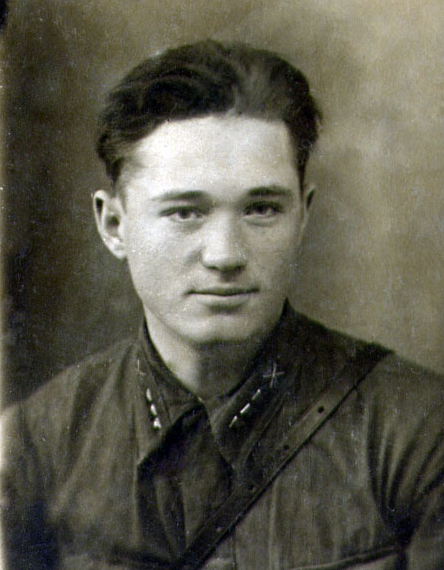
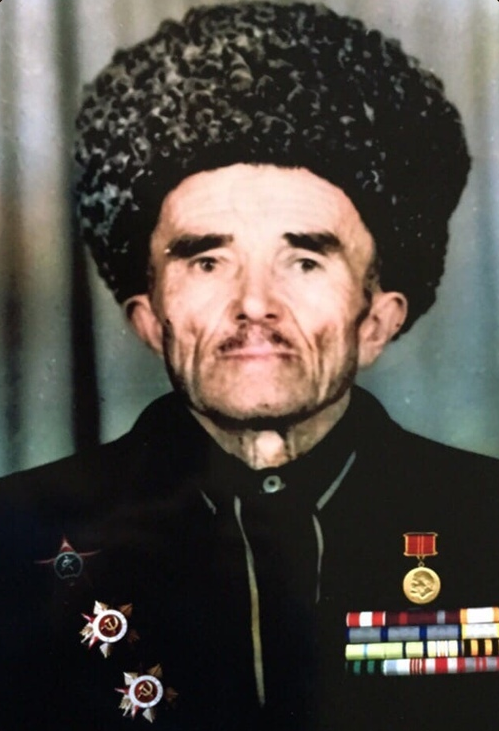
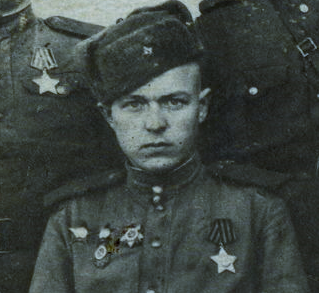
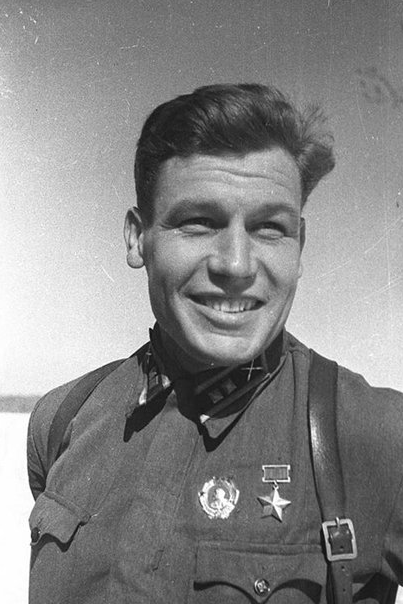
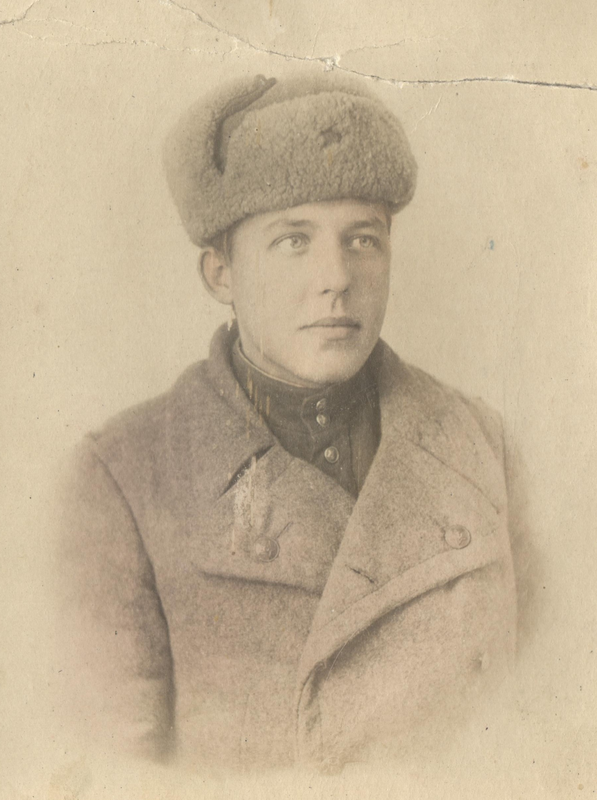
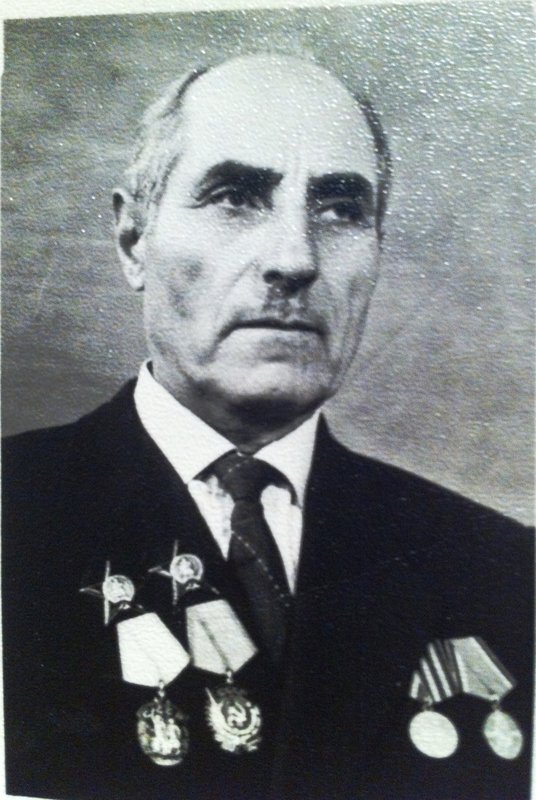
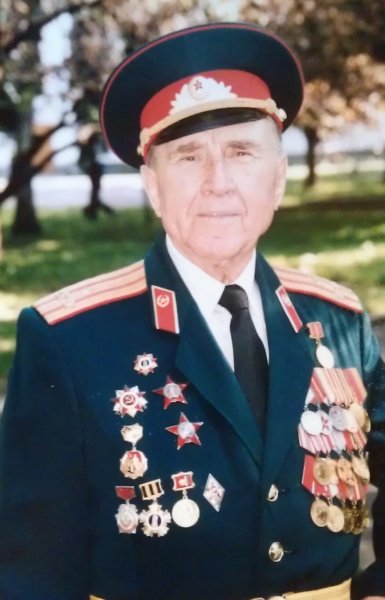
Sibirtsev Zinovy Ageevich
Rank: Colonel _x000D_
Division: 365th Red Banner Infantry Division. _x000D_
In the spring of 1939, a Major came to the Nikitskaya school and began to agitate the children to enter military schools. And eight tenth graders disappeared, dropping out of school. A month later, the “missing” were found in the Kharkov, where they studied at various military schools. The director of the school, together with the teachers, had to travel 180 km to Kharkov in order to take final exams from the "fugitives" and issue secondary education certificates. _x000D_
On May 15, 1941 Zinovy graduated from the course of the Kharkov Military Infantry School. The First Deputy People's Commissar for Defense of the SSR, Semyon Mikhailovich Budyonny, came to graduation and handed the young Lieutenant Z.A. Sibirtsev a diploma with honors. As one of the best, he was sent to the Kiev Special Military District (at that time the most prestigious), where he was appointed Commander of the anti-aircraft machine gun platoon of 475th Infantry Regiment of the 53rd Infantry Division. But a peaceful service did not last long, the war began quite soon. Their Rifle Regiment, as part of the Southwestern Front, went into action against the German invaders. It was the third day of the war, and my grandfather was the Deputy Commander of a machine-gun company. _x000D_
The attack of the armed enemy was strong, the division had leave its positions and retreat. The 475th Rifle Regiment was left for cover. The forces were not equal: out of ammunition, having lost weapons and personnel, the remnants of the regiment were surrounded in the Rzhishchensky forests near Kiev. _x000D_
Once in the rear of the Germans, they began to leave the encirclement. Exhausted by cold and hunger, they had been on their way to the Soviet troops for more than 200 days. Only 400 soldiers and the commanders of their regiment and joined soldiers of other military units managed to get out of the encirclement. Having united with its division, the hastily reformed Regiment again entered the hostilities to defeat the enemy. German troops were advancing to Moscow. The situation on the Western Front was challenging, defensive battles were fought in all directions. An important area of the heroic combat for Moscow on the left flank of the Mozhaisk line of defense was the Maloyaroslavets sector of the front. Stubborn battles were fought on Maloyaroslavets land. Divisions from the Far East and other fronts were hastily deployed here again. The 43rd army of Major General Golubev K.D. fought In the Podolsk sector, and the 53rd Rifle Division was in its composition. Its Commander was Colonel A.F. Naumov. The division firmly held the defenses in the Kamenskoye, Tarutino, Kresty, Stremilovo zone, did not retreat a single step until the Soviet troops launched a counteroffensive near Moscow. _x000D_
On January 7, 1942, in a combat near the village of Ilyinka, Kaluga Region, Zinovy Ageevich was wounded and ended up in a hospital. After recovery, he was again sent to the front. But he fought in the 40th Separate Red Banner Rifle Brigade, which became famous in the battles near Moscow, for which he was awarded the Order of the Red Banner. He was promoted to the military rank of “Captain” and became chief of staff of 1st Separate Infantry Battalion. The young Commander fought bravely, distinguished himself by competent conduct of the combat, therefore he was in good standing with the command of the Brigade. Directly from the front line in the battles for the Dorogobuzh, my grandfather was recalled from the front and sent to the Solnechnogorsk for the Higher courses of Command Personnel called "Shot" named after Marshal of the Soviet Union B.M. Shaposhnikov. _x000D_
In June, at the "Shot" course, there was a selection of excellent students for further study at the Frunze Military Academy. The Head of the courses, Lieutenant-General Smirnov, and Marshal G.K. Zhukov, who arrived, talked personally with each candidate. After a short conversation, Z.A. Sibirtsev was given the order: “Tomorrow you leave for the city of Moscow to the Academy.” _x000D_
So Captain Z.A. Sibirtsev in July 1943 became a student of the Frunze Military Academy. The study at the Academy was very intense, but the young officers-listeners, and among them were experienced front-line soldiers, order-bearers, tirelessly mastered the knowledge of military science. _x000D_
The long-awaited Victory Day was celebrated in Moscow, within the walls of the Academy. Then there was the world famous Victory Parade on June 24, 1945. My grandfather took part in this parade as part of the column of the oldest academy in the country, which was given the honor to lead the Moscow garrison in this parade. On October 10, 1947, students graduated from the Frunze Military Academy. Upon completion of his studies, Captain Z.A. Sibirtsev was sent to the Far East, where he served in military units for more than 10 years. For a year he served in the operational department of the headquarters of 5th army of the Primorsky Military District, then until July 1954 he was an officer of the operational headquarters of 25th army of the Primorsky Military District. _x000D_
From July 1954 to May 1957 he served as Head of the Air Defense Department of the 3rd Panzer Division of 25th Army of the Far Eastern Military District,then, until April 1959, he was the Head of the Air defense department of the 46th Panzer Division of 25th Army of the Far East Military District. _x000D_
On March 8, 1958 he was awarded the rank of Colonel. In April 1959 he was transferred to the command of the troops of the North Caucasian Military District, until October 1961 he was the Head of 2nd section of the Stavropol Military Commissariat of the North Caucasus Military District. _x000D_
In October 1961, Colonel Z.A. Sibirtsev was sent to the post of military Comissar of the Karachay-Cherkess Autonomous Region of the Stavropol Territory. He served in the responsible work of the Military Comissar for 13 years. On October 25, 1974, he would have been transferred to the reserve, but in civilian life he worked as a member of the regional party committee, was in the thick of the social and political life of the country and the republic. In March 2004 Z. A. Sibirtsev was invited to Sochi to a plenary meeting of the public forum of the peoples of the Caucasus and southern Russia, where repeated meetings and conversations with Russian President V. V. Putin took place. _x000D_
In May 2005, Zinovy Ageevich was invited to Moscow to celebrate the 60th anniversary of the Victory as a guest of honor and as a participant in the Victory parade. He was present at all the ceremonial events held by Russian President Vladimir Putin in honor of the Great Victory. _x000D_
For military work Zinovy Ageevich has more than 30 state awards: two Orders of the Red Star, the Order of the Patriotic War of 1st degree, medals "For Military Merit", "For Defense of Moscow", "For Victory over Germany" "Georgy Zhukov", "For Impeccable Military Service", "For Services to the Fatherland" II degree, jubilee and others.
Sibirtsev Zinovy Ageevich
Rank: Colonel _x000D_
Division: 365th Red Banner Infantry Division. _x000D_
In the spring of 1939, a Major came to the Nikitskaya school and began to agitate the children to enter military schools. And eight tenth graders disappeared, dropping out of school. A month later, the “missing” were found in the Kharkov, where they studied at various military schools. The director of the school, together with the teachers, had to travel 180 km to Kharkov in order to take final exams from the "fugitives" and issue secondary education certificates. _x000D_
On May 15, 1941 Zinovy graduated from the course of the Kharkov Military Infantry School. The First Deputy People's Commissar for Defense of the SSR, Semyon Mikhailovich Budyonny, came to graduation and handed the young Lieutenant Z.A. Sibirtsev a diploma with honors. As one of the best, he was sent to the Kiev Special Military District (at that time the most prestigious), where he was appointed Commander of the anti-aircraft machine gun platoon of 475th Infantry Regiment of the 53rd Infantry Division. But a peaceful service did not last long, the war began quite soon. Their Rifle Regiment, as part of the Southwestern Front, went into action against the German invaders. It was the third day of the war, and my grandfather was the Deputy Commander of a machine-gun company. _x000D_
The attack of the armed enemy was strong, the division had leave its positions and retreat. The 475th Rifle Regiment was left for cover. The forces were not equal: out of ammunition, having lost weapons and personnel, the remnants of the regiment were surrounded in the Rzhishchensky forests near Kiev. _x000D_
Once in the rear of the Germans, they began to leave the encirclement. Exhausted by cold and hunger, they had been on their way to the Soviet troops for more than 200 days. Only 400 soldiers and the commanders of their regiment and joined soldiers of other military units managed to get out of the encirclement. Having united with its division, the hastily reformed Regiment again entered the hostilities to defeat the enemy. German troops were advancing to Moscow. The situation on the Western Front was challenging, defensive battles were fought in all directions. An important area of the heroic combat for Moscow on the left flank of the Mozhaisk line of defense was the Maloyaroslavets sector of the front. Stubborn battles were fought on Maloyaroslavets land. Divisions from the Far East and other fronts were hastily deployed here again. The 43rd army of Major General Golubev K.D. fought In the Podolsk sector, and the 53rd Rifle Division was in its composition. Its Commander was Colonel A.F. Naumov. The division firmly held the defenses in the Kamenskoye, Tarutino, Kresty, Stremilovo zone, did not retreat a single step until the Soviet troops launched a counteroffensive near Moscow. _x000D_
On January 7, 1942, in a combat near the village of Ilyinka, Kaluga Region, Zinovy Ageevich was wounded and ended up in a hospital. After recovery, he was again sent to the front. But he fought in the 40th Separate Red Banner Rifle Brigade, which became famous in the battles near Moscow, for which he was awarded the Order of the Red Banner. He was promoted to the military rank of “Captain” and became chief of staff of 1st Separate Infantry Battalion. The young Commander fought bravely, distinguished himself by competent conduct of the combat, therefore he was in good standing with the command of the Brigade. Directly from the front line in the battles for the Dorogobuzh, my grandfather was recalled from the front and sent to the Solnechnogorsk for the Higher courses of Command Personnel called "Shot" named after Marshal of the Soviet Union B.M. Shaposhnikov. _x000D_
In June, at the "Shot" course, there was a selection of excellent students for further study at the Frunze Military Academy. The Head of the courses, Lieutenant-General Smirnov, and Marshal G.K. Zhukov, who arrived, talked personally with each candidate. After a short conversation, Z.A. Sibirtsev was given the order: “Tomorrow you leave for the city of Moscow to the Academy.” _x000D_
So Captain Z.A. Sibirtsev in July 1943 became a student of the Frunze Military Academy. The study at the Academy was very intense, but the young officers-listeners, and among them were experienced front-line soldiers, order-bearers, tirelessly mastered the knowledge of military science. _x000D_
The long-awaited Victory Day was celebrated in Moscow, within the walls of the Academy. Then there was the world famous Victory Parade on June 24, 1945. My grandfather took part in this parade as part of the column of the oldest academy in the country, which was given the honor to lead the Moscow garrison in this parade. On October 10, 1947, students graduated from the Frunze Military Academy. Upon completion of his studies, Captain Z.A. Sibirtsev was sent to the Far East, where he served in military units for more than 10 years. For a year he served in the operational department of the headquarters of 5th army of the Primorsky Military District, then until July 1954 he was an officer of the operational headquarters of 25th army of the Primorsky Military District. _x000D_
From July 1954 to May 1957 he served as Head of the Air Defense Department of the 3rd Panzer Division of 25th Army of the Far Eastern Military District,then, until April 1959, he was the Head of the Air defense department of the 46th Panzer Division of 25th Army of the Far East Military District. _x000D_
On March 8, 1958 he was awarded the rank of Colonel. In April 1959 he was transferred to the command of the troops of the North Caucasian Military District, until October 1961 he was the Head of 2nd section of the Stavropol Military Commissariat of the North Caucasus Military District. _x000D_
In October 1961, Colonel Z.A. Sibirtsev was sent to the post of military Comissar of the Karachay-Cherkess Autonomous Region of the Stavropol Territory. He served in the responsible work of the Military Comissar for 13 years. On October 25, 1974, he would have been transferred to the reserve, but in civilian life he worked as a member of the regional party committee, was in the thick of the social and political life of the country and the republic. In March 2004 Z. A. Sibirtsev was invited to Sochi to a plenary meeting of the public forum of the peoples of the Caucasus and southern Russia, where repeated meetings and conversations with Russian President V. V. Putin took place. _x000D_
In May 2005, Zinovy Ageevich was invited to Moscow to celebrate the 60th anniversary of the Victory as a guest of honor and as a participant in the Victory parade. He was present at all the ceremonial events held by Russian President Vladimir Putin in honor of the Great Victory. _x000D_
For military work Zinovy Ageevich has more than 30 state awards: two Orders of the Red Star, the Order of the Patriotic War of 1st degree, medals "For Military Merit", "For Defense of Moscow", "For Victory over Germany" "Georgy Zhukov", "For Impeccable Military Service", "For Services to the Fatherland" II degree, jubilee and others.
0 comment




2026 © Russian Military Historical Society Developed by Jetmix