Back to
album
album
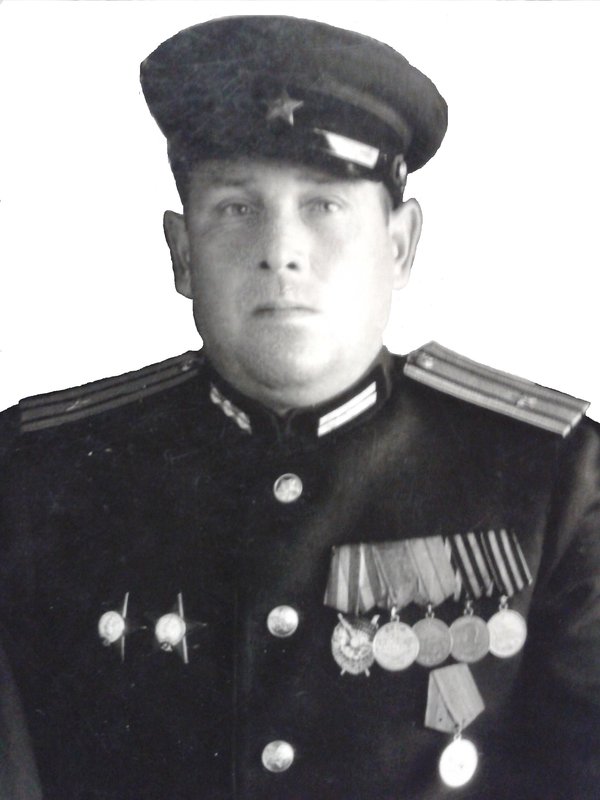
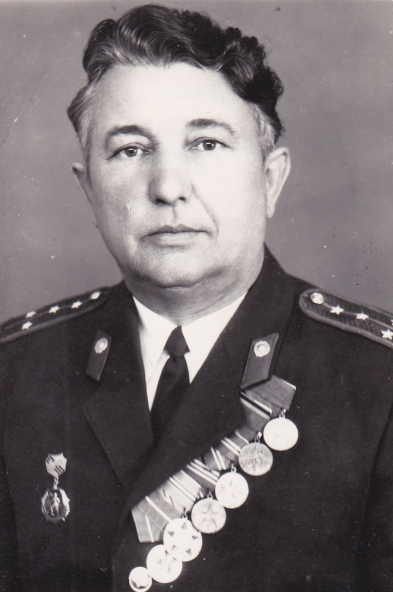
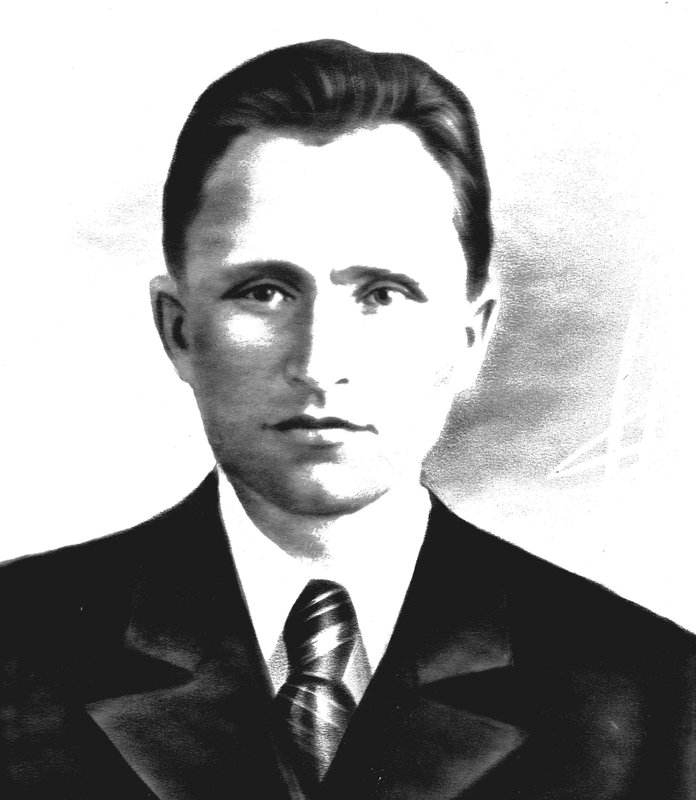
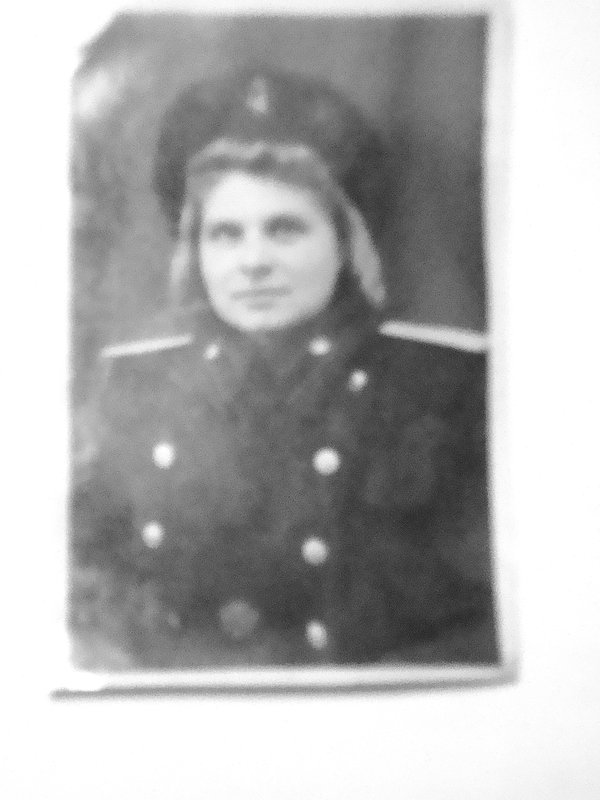
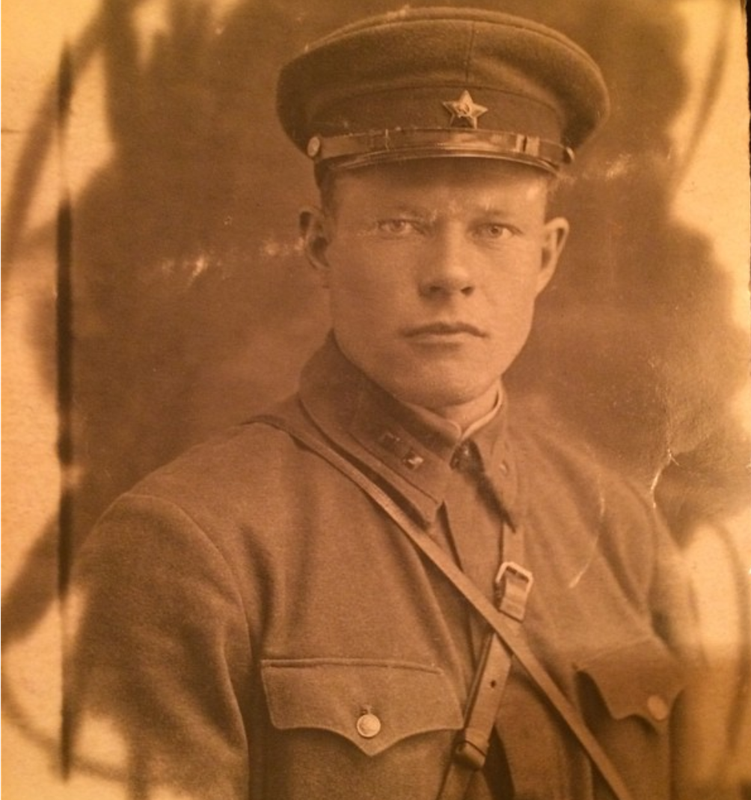
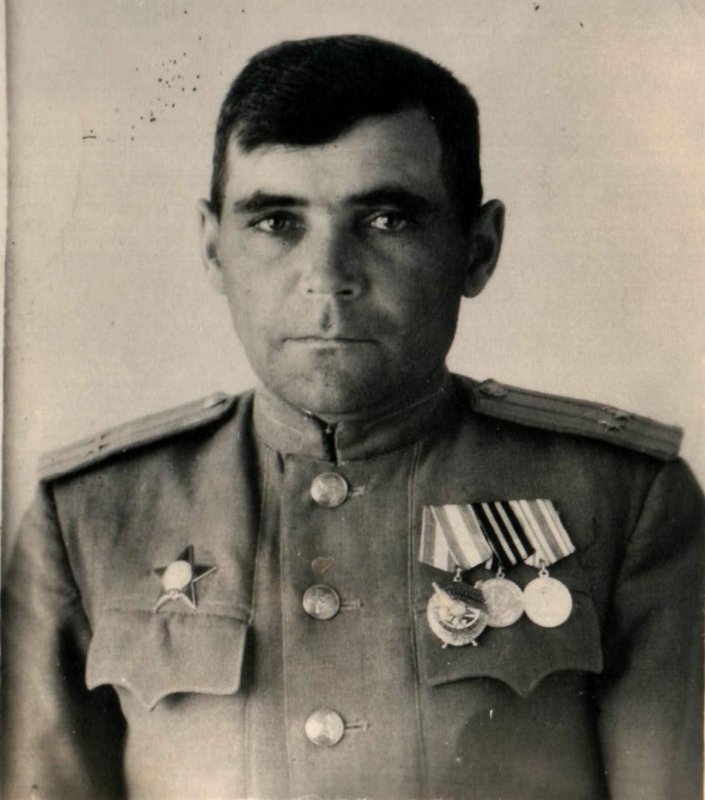
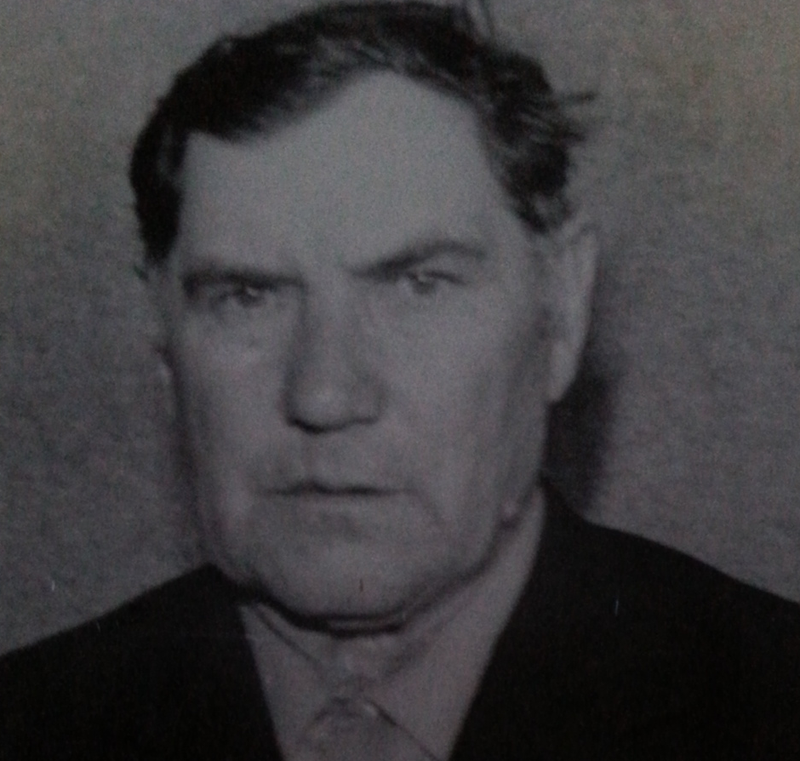
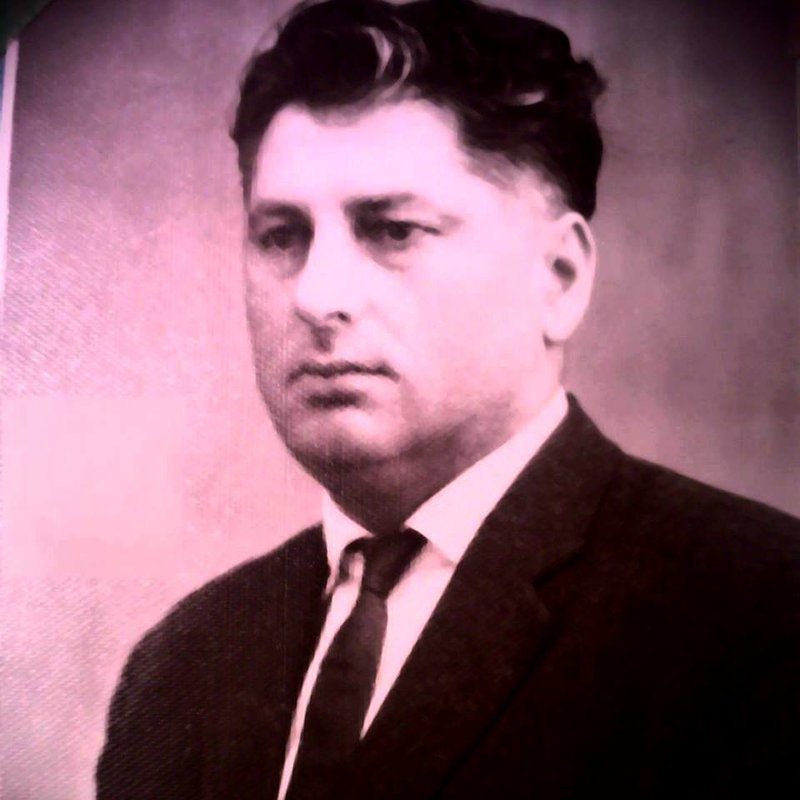
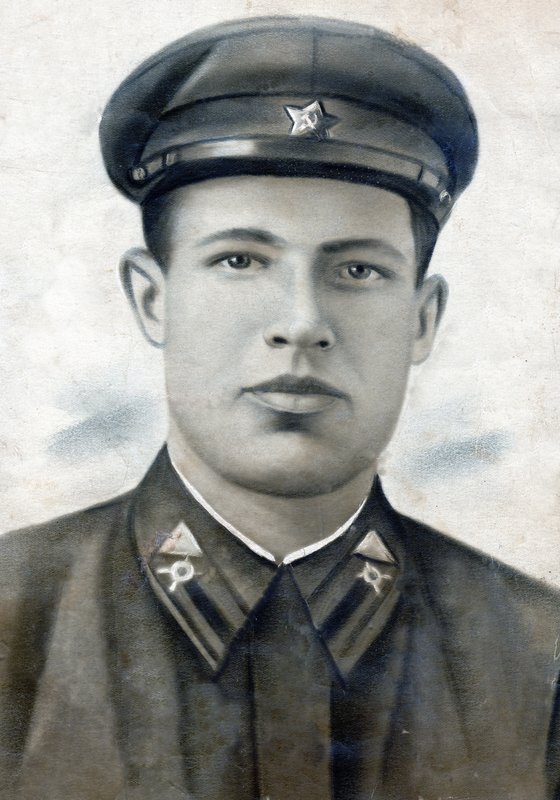
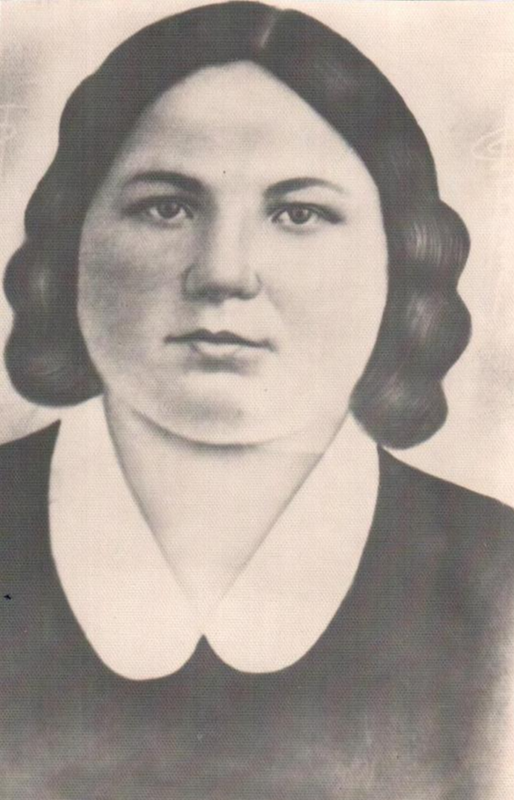
Kalachev Fyodor Ivanovich
Title: Lieutenant. Troops: Ground Forces, Air Force (except marine aviation), Coast Guard, NKVD, Border Guard. Division: 8th Guards Rifle Division of the Order of Lenin Red Banner of the Order of Suvorov, I.V. Panfilov Division. Kalachev Fyodor Ivanovich, Lieutenant of the Guards. 8 gv.dd. 27.02.1917-4.05.1993. Date of birth 27.02.1917. Place of birth: Gorky region, Voznesensky district, Torzhok village. Place of recruitment: Voznesensky RVC, Gorky region, Voznesensky district Date of entry into the service __.__.1938. Lieutenant Kalachev F.I. of the Guard was married to Praskovya Kondratievna Kalacheva, born in 1922, also a veteran of the Great Patriotic War, had three children: Vladimir (25.08.1946), Vera (1.05.1949), Nina (17.04.1955-28.10.2015). Kalachev Fyodor Ivanovich, Lieutenant of the Guards, in the 7th Infantry Corps of the 8th Guards Infantry Division was a platoon commander of a 76mm battery of a separate Guards anti-tank fighter division. 8th Guards Rifle Division of the Order of Lenin Red Banner of the Order of Suvorov Division named after Major General I.V. Panfilov, Hero of the Soviet Union - formation (unit, rifle division) of the Red Banner of the Soviet Army, now part of the Armed Forces of Kyrgyzstan. It was formed in June-August 1941 as a 316th rifle division of Soviet citizens of Kazakh SSR and Kirghiz SSR. The 8th Guards Rifle Division consisted of the following units: Gunners of the 19th Guards Rifle Regiment. 1943 The 19th Guards Rifle Regiment, 23rd Guards Rifle Regiment, 30th Guards Rifle Regiment, 27th Guards Artillery Regiment, 5th Guards Separate Anti-Tank Fighter Division, 13th Guards Air Defense Artillery Battery (up to 20.5.1943), 19th Guards Mortar Division (up to 20.10). 1942), 15th Guards Reconnaissance Company, 2nd Guards Engineer Battalion, 41st (1st) Guards Independent Communications Battalion, 476th (6th) Health Battalion, 10th Guards Independent Chemical Defense Company, 478th (3rd) Motor Transport Company, 606th (4th) Field Bakery, 564th (7th) Division Veterinary Sickbay, 81043rd (993rd) Field Post Station, 826th Field Cash Office of the State Bank, 8th Guards Rifle Division were part of it: The 52nd Army of the North-Western Front (as the 316th rifle division, August-October 1941), The 16th Army of the Western Front (November-December 1941), the reserve of the WGC Rate (January 1942), 2nd gv. sk, the corps was directly subordinated to the commander of the Kalinin Front (February-June 1942), 2nd gv. ska, 3rd Shock Army of the Kalinin Front (from July 1942 to February 1943), 2nd gv. ska, again directly subordinate to the Kalinin Front (March 1943), 2nd gv. ska, 22nd Army of the Kalinin Front (April 1943), 22nd Army of the North-Western Front (May-October 1943), VGK reserve (November-December 1943), 22nd Army of the 2nd Baltic Front (January 1944), 97th su, 22nd army of the 2nd Baltic Front (February-March 1944), 44th su, 22nd army of the 2nd Baltic Front (April 1944), 7th gv. ska, 10th Guards Army of the 2nd Baltic Front (May 1944-March 1945), 7th Gv. ska, 10th Guards Army of the Leningrad Front (April-May 1945), Famous in the battles near Moscow, stopping the offensive of the advanced German Army Group "Center". (Commander Fyodor von Bock) to Moscow in October and November 1941. Known for its feat of 28 Panfilov heroes from the 4th Rifle Company, 2nd Rifle Battalion, 1075th Rifle Regiment, November 16, 1941 near the Dubosekovo Passage. On November 18, 1941, for its courage and heroism, it was given the honorary title of Guards, and on November 23, 1941, it was given the name of the Division Commander I. V. Panfilov, who died in battle on November 18. August 18, 1941 the division was sent near Novgorod at the disposal of the planned to form the 52nd Reserve Army. By September 8, after forcing the Ust-Volma River, the division had arrived at Kresttsy, where it took up positions in the second tier of the army and equipped the defense strip for almost a month. On October 5, 1941, the Division was submerged into the echelons and moved to Moscow, where it became part of the 5th Army (October 11, 1941) and then of the 16th Army. From October 7 till October 12, 1941 it was unloaded in Volokolamsk. It occupied the defense strip with length of 41 km from Lvovo settlement to the state farm Bolychevo on Volokolamsk direction. In the strip of division developed its offensive 35th Infantry Division, 2nd, 5th and 11th tank divisions of the enemy. The offensive began on October 15, 1941 and the division entered into fierce battles. October 18, 1941 the left flank of the division was bypassed and German troops took Ostashevo. On October 27, 1941 German troops broke through the defense of the neighboring 690th rifle regiment, and 316th rifle division was forced to leave Volokolamsk and take the defense east and southeast of the city at the turn of Maleyevka - Chentsy - Bolshoye Nikolskoye - Teterino. On November 16, 1941, the German troops struck again, in the center of the division's defense and at the junction of the 316th Infantry Division and General Dovator's group, and in the center of the defense the division was fighting near Volokolamsk Highway together with tankers of the 1st Guards Tank Brigade. It was on this day that the events near the Dubosekovo Passage started the legend about 28 Panfilov heroes. During the battles of 16-20 November on the Volokolamsk direction 316th Infantry Division stopped the offensive of two tank and one infantry division of the Wehrmacht. On November 17, 1941 the division was awarded the Order of the Red Banner, and on November 18, 1941 it was transformed into the 8th Guards Rifle Division. On November 23, for the successful actions during these battles, the division was given the honorary name "Panfilovsky". As a result of the battles on November 16-20, the 316th (8th Guards) Rifle Division together with other units and formations of the 16th Army (the cavalry group of the Dovator and the 1st Guards Tank Brigade) delayed the offensive of the 46th Motorized Corps (General of Tank Troops von Fitinghoff), 5th and 11th Tank Division) and 5th Army Corps (General Ruoff, 2nd Tank Division, 35th and 106th Infantry Division)[1]. And after crossing the troops of the 16 th Army over the Istra reservoir and the Istra River, when they were blown up the reservoir, the territory 50 km south of the reservoir were flooded, which also delayed the advance of German troops. Only after three days of fighting on November 26-28 German units managed to bring down the Soviet units from the Istra border[2]. However, the offensive of the 2nd and 11th Tank Division from the city of Klin, bypassing the Istra reservoir through Solnechnogorsk to Moscow was developing rapidly. To eliminate this critical situation, the Soviet command redeployed forces from the temporarily quiet areas. In particular, on November 26, the 8th Guards Rifle Division was also redeployed to the Leningradskoye Highway near the village of Kryukovo (now part of the Zelenograd Administrative District of Moscow)[3]. On November 30, the Red Army launched an attack along the entire defense line of the 16th Army. The sides fought especially hard for the villages of Krukovo and Peshki, in particular, Krukovo passed from hand to hand eight times; the village was turned by the Wehrmacht into a stronghold with tanks and tanks ambushes. On December 7, 1941 Krukovo village was liberated from German troops (5th Tank and 35th Infantry) by the 8th Guards Rifle Division named after I. V. Panfilov and the 1st Guards Tank Brigade[4]. After the battles to defend Moscow, the route of 8 GVD and division under the command of Fyodor Ivanovich lay in the Tver region: Redtsy, Braklovitsy, near Lake Radey, Smolensk region: Lomy, Glazovo, Novgorod region. In January-April 1942, the 8th Guards Rifle Division, together with other units of the RKKA conducted battles with the SS division "Dead Head" and participated in the Demyan operation ("Demyanskiy kotel"). The battles were for Dolgunovo, Chikunovo, Snegiryovo, Maloye Bezbochye, New Village, Kolomenets, Gorokhovka, Hotinets. Then the way of our soldiers went through Ukraine: Zarechnoe, Solnechnoe, Kotelva, Malye Budyshcha, Oposhnya. In 1943 the battles were fought for Landari, Zemlyanka, Kleshchintsy, Pershotravnevoe, Pripyat (Ukraine). In October 1943 our troops liberated cities and villages of Russia: Zholobovo, Gorevitsy, Tokolovo, Podberozye, Kozhukhovo. Then the path of Fyodor Ivanovich and his fellow soldiers was through Byelorussia: Sennoy point, Pechevka, Nasva; Russia: Stepanovshchina, Manokovo, Volchikha, Krasniy Hill, Gnetalovo, Gubkino, Opochka, then again in Byelorussia-Padiki, Kolomyia, Molodiatin, then there were fights for the city of Todiriest in Romania. In May 1944, 8 gv.sd liberated Balandino, Afanoskovo. For the battles of 3.07.- 6.07.1944, Lieutenant Kalachev F.I. was presented to the Order of the Red Star and awarded (Order № 61/n of 18.07.1944). The award list said that thanks to the competent leadership of T. Kalachev, the platoon under his leadership destroyed the enemy's equipment in the offensive battles of the division: 6 machine guns and 1 anti-tank gun. Platoon of Kalachev also defeated 2 enemy DOTs. And, skillfully maneuvering the fire of his guns, always provided significant support to infantry units. Fyodor Ivanovich Kalachev's unit fought in Latvia, liberated Zurzi, Instalsna. By order of the Armed Forces of the 10 Guards Army 2 Baltic Front of 19.07.1944 "for fighting near the village of Mezhevepri, in which the enemy forces of 2 companies, 2 artillery batteries and an armored train attacked the positions of 30 rifle regiment. Lieutenant Kalachev of the Guard put his guns in front of the riflemen and opened sharp, crushing fire. In the battle of 7.08.1944, when forcing the Kul River, Lieutenant Kalachev's platoon, having crossed the river, put the guns to the direct line of sight and opened fire on the enemy. The enemy with the strength of 1 company and support of a self-propelled gun went into counterattack. Platoon repulsed it and, capturing a self-propelled gun, immediately turned it around, opened fire at the Germans. On the battlefield there remained 5 machine guns, 6 automatic rifles, 70 rifles and 40 corpses of soldiers and officers. The bridgehead was fixed. It was worthy of the government award "Krasnoe Znamya" for the battlefield. By order №104/n from 4.09.1944 Kalachev F.I. was awarded the Order "Red Banner". In October 1944 fights were fought for towns and villages: Rocinas, Vitini, Auce, Kokluiza, Evarzi, Kursisi, Dampayi. On October 15, 1944, Lieutenant Kalachev "during the battle in the area of Upitees under the strong artillery fire of the enemy rolled out the guns to the direct line and at point-blank range broke 4 machine-gun points, anti-tank gun and suppressed the fire of the mortar battery. Then, when transporting the guns, in the grove near the village of Kalvas, he noticed a cluster of the enemy and hit with a direct fire. As a result of the strike, he destroyed up to 30 enemy soldiers and officers, which allowed our troops to move forward freely. On October 25, 1944 in the course of the battle in Seglin river he hit a self-propelled gun of Germans and with the return fire did not allow the enemy to take him out of the battlefield. 6.11.1944 near Pumpuris, the battery fire repulsed the enemy counterattack, destroying 3 machine-gun points and an anti-tank gun of the enemy, which ensured the advance of the shooting battalion" For this feat, the command presented the Guards of Lieutenant Kalachev F.I. to the Order of Patriotic War II degree (Order № 115/n of 21.11.1944) and awarded him. Fyodor Ivanovich Kalachev finished his military career on July 7, 1945, liberating Dong (Estonia). As a veteran of the Great Patriotic War, by the 40th anniversary of the Victory, Lieutenant Kalachev was awarded the Order of Patriotic War of the II Degree by the order of the Minister of Defense of the USSR on 6.04.1985. Kalachev F.I. died on May 4, 1993 and was buried in the Golovinka cemetery of Krasnodar region.
Kalachev Fyodor Ivanovich
Title: Lieutenant. Troops: Ground Forces, Air Force (except marine aviation), Coast Guard, NKVD, Border Guard. Division: 8th Guards Rifle Division of the Order of Lenin Red Banner of the Order of Suvorov, I.V. Panfilov Division. Kalachev Fyodor Ivanovich, Lieutenant of the Guards. 8 gv.dd. 27.02.1917-4.05.1993. Date of birth 27.02.1917. Place of birth: Gorky region, Voznesensky district, Torzhok village. Place of recruitment: Voznesensky RVC, Gorky region, Voznesensky district Date of entry into the service __.__.1938. Lieutenant Kalachev F.I. of the Guard was married to Praskovya Kondratievna Kalacheva, born in 1922, also a veteran of the Great Patriotic War, had three children: Vladimir (25.08.1946), Vera (1.05.1949), Nina (17.04.1955-28.10.2015). Kalachev Fyodor Ivanovich, Lieutenant of the Guards, in the 7th Infantry Corps of the 8th Guards Infantry Division was a platoon commander of a 76mm battery of a separate Guards anti-tank fighter division. 8th Guards Rifle Division of the Order of Lenin Red Banner of the Order of Suvorov Division named after Major General I.V. Panfilov, Hero of the Soviet Union - formation (unit, rifle division) of the Red Banner of the Soviet Army, now part of the Armed Forces of Kyrgyzstan. It was formed in June-August 1941 as a 316th rifle division of Soviet citizens of Kazakh SSR and Kirghiz SSR. The 8th Guards Rifle Division consisted of the following units: Gunners of the 19th Guards Rifle Regiment. 1943 The 19th Guards Rifle Regiment, 23rd Guards Rifle Regiment, 30th Guards Rifle Regiment, 27th Guards Artillery Regiment, 5th Guards Separate Anti-Tank Fighter Division, 13th Guards Air Defense Artillery Battery (up to 20.5.1943), 19th Guards Mortar Division (up to 20.10). 1942), 15th Guards Reconnaissance Company, 2nd Guards Engineer Battalion, 41st (1st) Guards Independent Communications Battalion, 476th (6th) Health Battalion, 10th Guards Independent Chemical Defense Company, 478th (3rd) Motor Transport Company, 606th (4th) Field Bakery, 564th (7th) Division Veterinary Sickbay, 81043rd (993rd) Field Post Station, 826th Field Cash Office of the State Bank, 8th Guards Rifle Division were part of it: The 52nd Army of the North-Western Front (as the 316th rifle division, August-October 1941), The 16th Army of the Western Front (November-December 1941), the reserve of the WGC Rate (January 1942), 2nd gv. sk, the corps was directly subordinated to the commander of the Kalinin Front (February-June 1942), 2nd gv. ska, 3rd Shock Army of the Kalinin Front (from July 1942 to February 1943), 2nd gv. ska, again directly subordinate to the Kalinin Front (March 1943), 2nd gv. ska, 22nd Army of the Kalinin Front (April 1943), 22nd Army of the North-Western Front (May-October 1943), VGK reserve (November-December 1943), 22nd Army of the 2nd Baltic Front (January 1944), 97th su, 22nd army of the 2nd Baltic Front (February-March 1944), 44th su, 22nd army of the 2nd Baltic Front (April 1944), 7th gv. ska, 10th Guards Army of the 2nd Baltic Front (May 1944-March 1945), 7th Gv. ska, 10th Guards Army of the Leningrad Front (April-May 1945), Famous in the battles near Moscow, stopping the offensive of the advanced German Army Group "Center". (Commander Fyodor von Bock) to Moscow in October and November 1941. Known for its feat of 28 Panfilov heroes from the 4th Rifle Company, 2nd Rifle Battalion, 1075th Rifle Regiment, November 16, 1941 near the Dubosekovo Passage. On November 18, 1941, for its courage and heroism, it was given the honorary title of Guards, and on November 23, 1941, it was given the name of the Division Commander I. V. Panfilov, who died in battle on November 18. August 18, 1941 the division was sent near Novgorod at the disposal of the planned to form the 52nd Reserve Army. By September 8, after forcing the Ust-Volma River, the division had arrived at Kresttsy, where it took up positions in the second tier of the army and equipped the defense strip for almost a month. On October 5, 1941, the Division was submerged into the echelons and moved to Moscow, where it became part of the 5th Army (October 11, 1941) and then of the 16th Army. From October 7 till October 12, 1941 it was unloaded in Volokolamsk. It occupied the defense strip with length of 41 km from Lvovo settlement to the state farm Bolychevo on Volokolamsk direction. In the strip of division developed its offensive 35th Infantry Division, 2nd, 5th and 11th tank divisions of the enemy. The offensive began on October 15, 1941 and the division entered into fierce battles. October 18, 1941 the left flank of the division was bypassed and German troops took Ostashevo. On October 27, 1941 German troops broke through the defense of the neighboring 690th rifle regiment, and 316th rifle division was forced to leave Volokolamsk and take the defense east and southeast of the city at the turn of Maleyevka - Chentsy - Bolshoye Nikolskoye - Teterino. On November 16, 1941, the German troops struck again, in the center of the division's defense and at the junction of the 316th Infantry Division and General Dovator's group, and in the center of the defense the division was fighting near Volokolamsk Highway together with tankers of the 1st Guards Tank Brigade. It was on this day that the events near the Dubosekovo Passage started the legend about 28 Panfilov heroes. During the battles of 16-20 November on the Volokolamsk direction 316th Infantry Division stopped the offensive of two tank and one infantry division of the Wehrmacht. On November 17, 1941 the division was awarded the Order of the Red Banner, and on November 18, 1941 it was transformed into the 8th Guards Rifle Division. On November 23, for the successful actions during these battles, the division was given the honorary name "Panfilovsky". As a result of the battles on November 16-20, the 316th (8th Guards) Rifle Division together with other units and formations of the 16th Army (the cavalry group of the Dovator and the 1st Guards Tank Brigade) delayed the offensive of the 46th Motorized Corps (General of Tank Troops von Fitinghoff), 5th and 11th Tank Division) and 5th Army Corps (General Ruoff, 2nd Tank Division, 35th and 106th Infantry Division)[1]. And after crossing the troops of the 16 th Army over the Istra reservoir and the Istra River, when they were blown up the reservoir, the territory 50 km south of the reservoir were flooded, which also delayed the advance of German troops. Only after three days of fighting on November 26-28 German units managed to bring down the Soviet units from the Istra border[2]. However, the offensive of the 2nd and 11th Tank Division from the city of Klin, bypassing the Istra reservoir through Solnechnogorsk to Moscow was developing rapidly. To eliminate this critical situation, the Soviet command redeployed forces from the temporarily quiet areas. In particular, on November 26, the 8th Guards Rifle Division was also redeployed to the Leningradskoye Highway near the village of Kryukovo (now part of the Zelenograd Administrative District of Moscow)[3]. On November 30, the Red Army launched an attack along the entire defense line of the 16th Army. The sides fought especially hard for the villages of Krukovo and Peshki, in particular, Krukovo passed from hand to hand eight times; the village was turned by the Wehrmacht into a stronghold with tanks and tanks ambushes. On December 7, 1941 Krukovo village was liberated from German troops (5th Tank and 35th Infantry) by the 8th Guards Rifle Division named after I. V. Panfilov and the 1st Guards Tank Brigade[4]. After the battles to defend Moscow, the route of 8 GVD and division under the command of Fyodor Ivanovich lay in the Tver region: Redtsy, Braklovitsy, near Lake Radey, Smolensk region: Lomy, Glazovo, Novgorod region. In January-April 1942, the 8th Guards Rifle Division, together with other units of the RKKA conducted battles with the SS division "Dead Head" and participated in the Demyan operation ("Demyanskiy kotel"). The battles were for Dolgunovo, Chikunovo, Snegiryovo, Maloye Bezbochye, New Village, Kolomenets, Gorokhovka, Hotinets. Then the way of our soldiers went through Ukraine: Zarechnoe, Solnechnoe, Kotelva, Malye Budyshcha, Oposhnya. In 1943 the battles were fought for Landari, Zemlyanka, Kleshchintsy, Pershotravnevoe, Pripyat (Ukraine). In October 1943 our troops liberated cities and villages of Russia: Zholobovo, Gorevitsy, Tokolovo, Podberozye, Kozhukhovo. Then the path of Fyodor Ivanovich and his fellow soldiers was through Byelorussia: Sennoy point, Pechevka, Nasva; Russia: Stepanovshchina, Manokovo, Volchikha, Krasniy Hill, Gnetalovo, Gubkino, Opochka, then again in Byelorussia-Padiki, Kolomyia, Molodiatin, then there were fights for the city of Todiriest in Romania. In May 1944, 8 gv.sd liberated Balandino, Afanoskovo. For the battles of 3.07.- 6.07.1944, Lieutenant Kalachev F.I. was presented to the Order of the Red Star and awarded (Order № 61/n of 18.07.1944). The award list said that thanks to the competent leadership of T. Kalachev, the platoon under his leadership destroyed the enemy's equipment in the offensive battles of the division: 6 machine guns and 1 anti-tank gun. Platoon of Kalachev also defeated 2 enemy DOTs. And, skillfully maneuvering the fire of his guns, always provided significant support to infantry units. Fyodor Ivanovich Kalachev's unit fought in Latvia, liberated Zurzi, Instalsna. By order of the Armed Forces of the 10 Guards Army 2 Baltic Front of 19.07.1944 "for fighting near the village of Mezhevepri, in which the enemy forces of 2 companies, 2 artillery batteries and an armored train attacked the positions of 30 rifle regiment. Lieutenant Kalachev of the Guard put his guns in front of the riflemen and opened sharp, crushing fire. In the battle of 7.08.1944, when forcing the Kul River, Lieutenant Kalachev's platoon, having crossed the river, put the guns to the direct line of sight and opened fire on the enemy. The enemy with the strength of 1 company and support of a self-propelled gun went into counterattack. Platoon repulsed it and, capturing a self-propelled gun, immediately turned it around, opened fire at the Germans. On the battlefield there remained 5 machine guns, 6 automatic rifles, 70 rifles and 40 corpses of soldiers and officers. The bridgehead was fixed. It was worthy of the government award "Krasnoe Znamya" for the battlefield. By order №104/n from 4.09.1944 Kalachev F.I. was awarded the Order "Red Banner". In October 1944 fights were fought for towns and villages: Rocinas, Vitini, Auce, Kokluiza, Evarzi, Kursisi, Dampayi. On October 15, 1944, Lieutenant Kalachev "during the battle in the area of Upitees under the strong artillery fire of the enemy rolled out the guns to the direct line and at point-blank range broke 4 machine-gun points, anti-tank gun and suppressed the fire of the mortar battery. Then, when transporting the guns, in the grove near the village of Kalvas, he noticed a cluster of the enemy and hit with a direct fire. As a result of the strike, he destroyed up to 30 enemy soldiers and officers, which allowed our troops to move forward freely. On October 25, 1944 in the course of the battle in Seglin river he hit a self-propelled gun of Germans and with the return fire did not allow the enemy to take him out of the battlefield. 6.11.1944 near Pumpuris, the battery fire repulsed the enemy counterattack, destroying 3 machine-gun points and an anti-tank gun of the enemy, which ensured the advance of the shooting battalion" For this feat, the command presented the Guards of Lieutenant Kalachev F.I. to the Order of Patriotic War II degree (Order № 115/n of 21.11.1944) and awarded him. Fyodor Ivanovich Kalachev finished his military career on July 7, 1945, liberating Dong (Estonia). As a veteran of the Great Patriotic War, by the 40th anniversary of the Victory, Lieutenant Kalachev was awarded the Order of Patriotic War of the II Degree by the order of the Minister of Defense of the USSR on 6.04.1985. Kalachev F.I. died on May 4, 1993 and was buried in the Golovinka cemetery of Krasnodar region.
0 comment




2026 © Russian Military Historical Society Developed by Jetmix