Back to
album
album
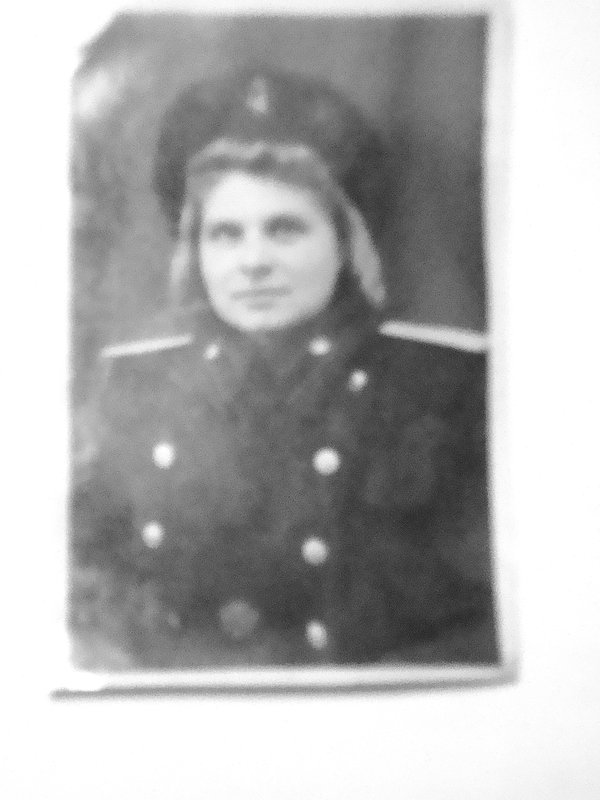
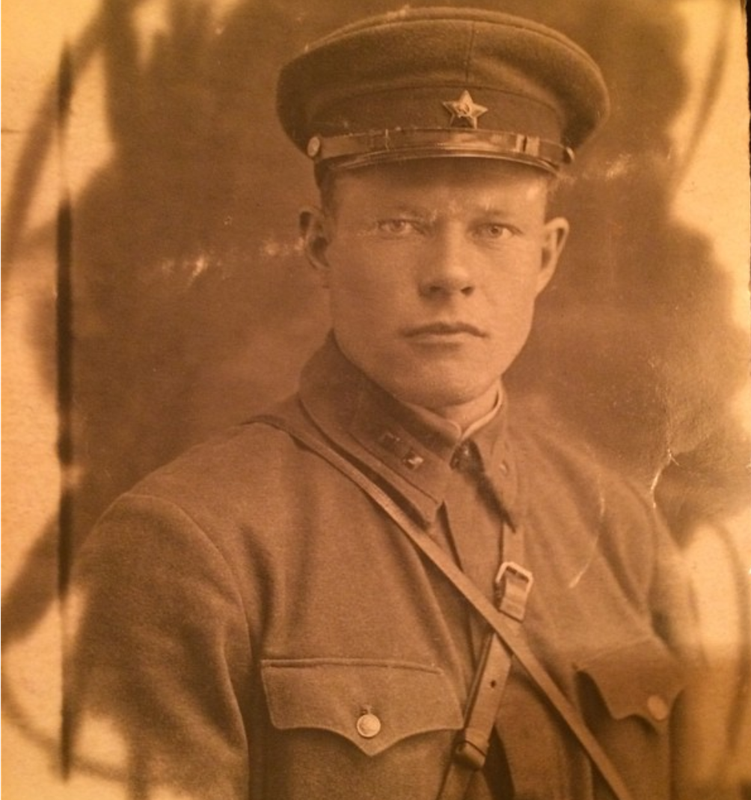
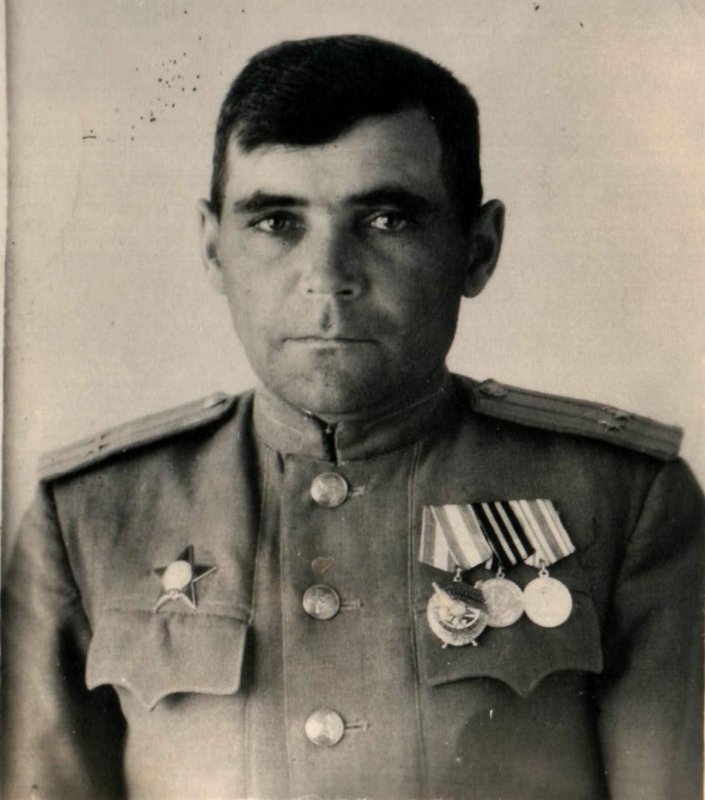
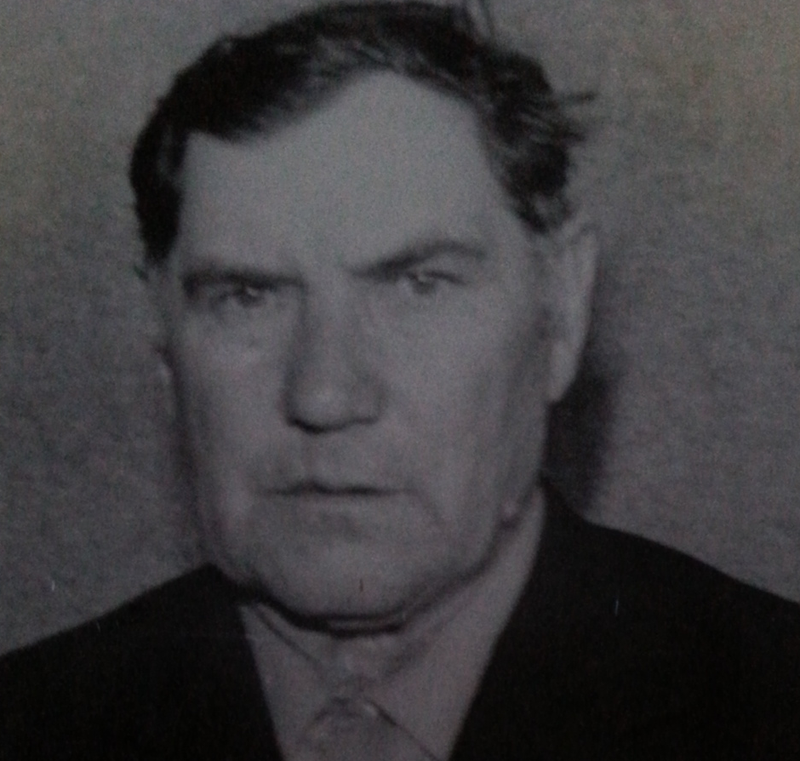
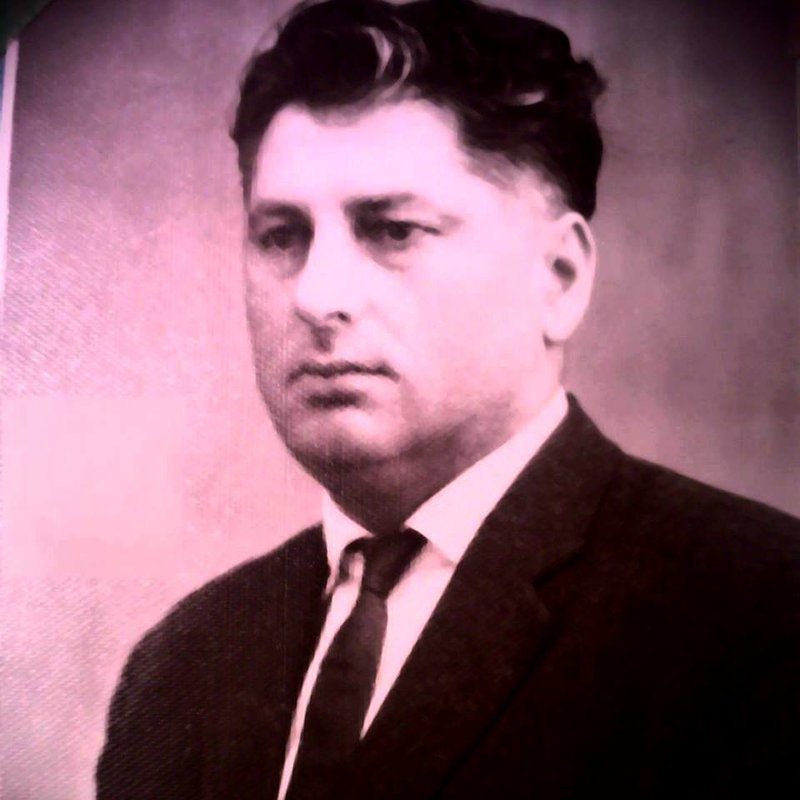
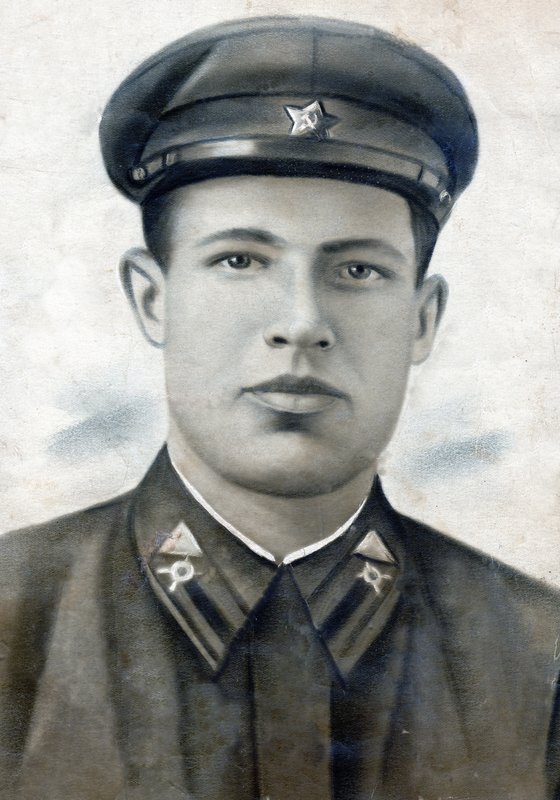
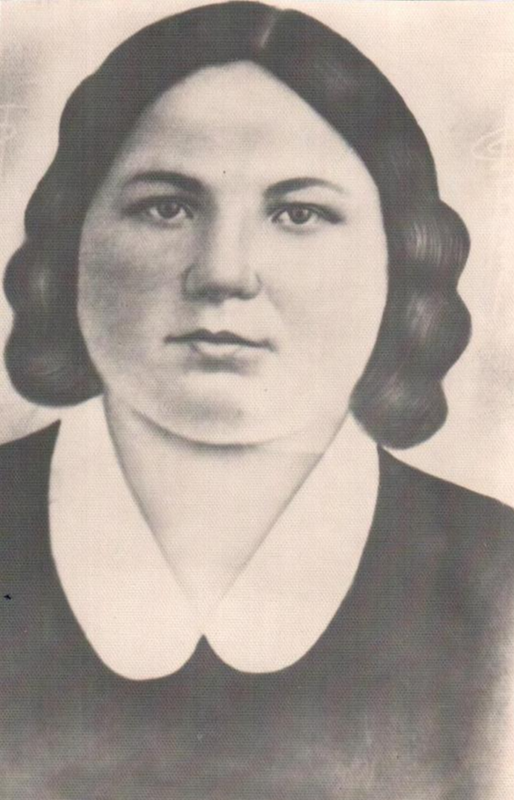
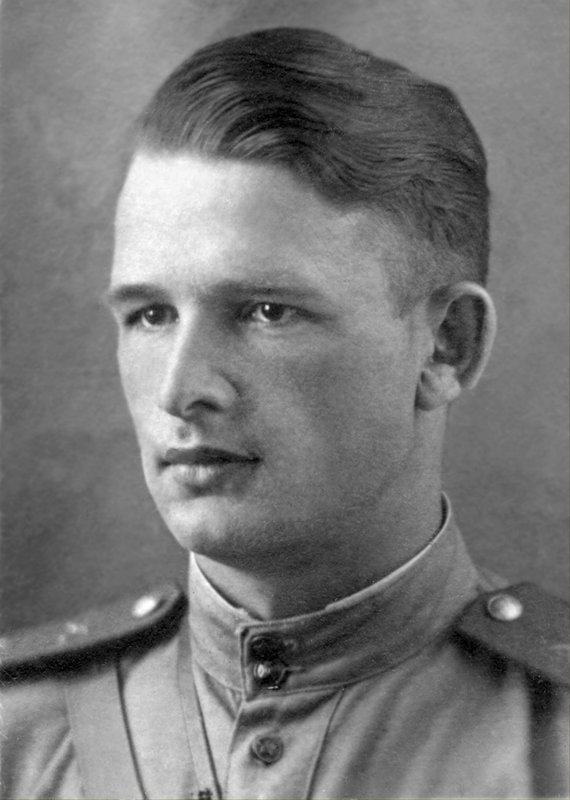
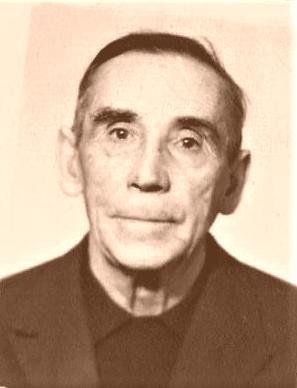
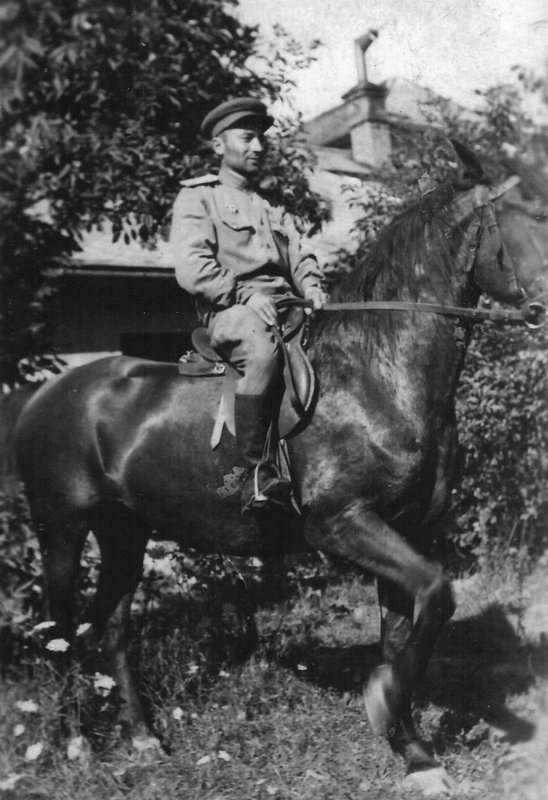
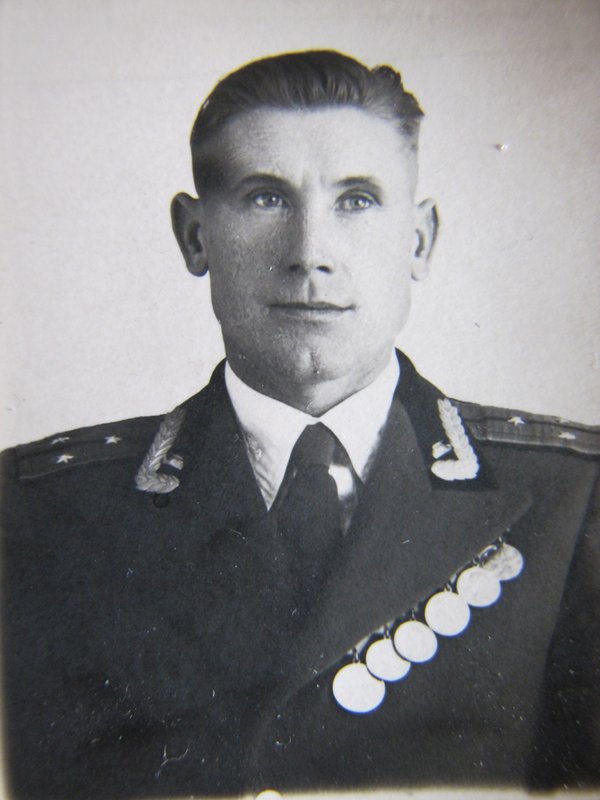
Stepan Stepanovich Kozub
Rank: Staff sergeant. Type of military forces: Ground forces, the Air Force (except sea aircraft), coast guard, troops of People's Commissariat for Internal Affairs, frontier troops. Division: the 33rd shooting Belarusian Holmsko-Berlinsky Decorated with the Order of the Red Banner division of the Order of Suvorov. Stepan Stepanovich Kozub, born in 1916, 4 grades of education, was a miner-coalminer. He was recruited in ranks of the Red Army from the city of Stepnyaka, Enbeksheldersky district on December 05, 1939, sending the 106th team, sent to the 409th shooting regiment of the city of Saransk. The 409th shooting regiment as a part of the 137th rifle division was created under the Decree of Presidium of the Supreme Council of the USSR of August 9, 1939. Places of formation — the city of Cheboksary, then the city of Saransk. At the beginning of October, 1939 the parts of the division started planned fighting study. On February 23, 1940 the staff of the division took Oath of allegiance to the Homeland. In the period of an appeal and till 21.07.1941 it is possible to tell about his service, from information which is kindly provided by the Memorial museum Saransk that "during fights with White Finns a part of fighters and commanders were directed to the Karelian Isthmus" and the father was among them. One of commanders (unfortunately, I can't find this article) of the Red Army during fights with Finns kept a diary where he noted such a fact that a newly arrived replenishment from ordinary and younger officers, after unloading in a row, without discrimination, of people of 10-15 went into the order of one of commanders, received a rifle and 30 cartridges then such groups (crews) went to front lines at once. Therefore most likely, it is almost impossible to precisely learn what crew he got into at the time of the Finnish company. The most part of his service he served in 164 Shooting regiment 33 of Rifle division 2 of the Baltic front where he arrived after distribution on 21.07.1941 from information from SPP (transit point) of the Northwest front, in the corporal's rank, military specialty - the shooter. As a part of the 164th shooting regiment 33 of Rifle division 2 of the Baltic front he did his military service from July, 1941 to April, 1944, up till being wounded. The retreat of the crew took place on the northeast, up to September 17-27, 1941 164 joint ventures as a part of 33 SD stopped the opponent at villages Sukhaya Vetosh (Novgorod region) and village Kamenik (nowadays the uts of Orsha). This place is between St. Petersburg (Leningrad) and Moscow, near the cities of Bologoye and Vyshny Volochyok, and the Lake Seliger. Since December, 1941 164 began insignificant approach. On January 01, 1942 by order of the People's commissar Stalin 33 SD became a part of 3 Shock Army. The number of a division was of 10228 people. On January 13, 1942 164 SP as a part of 33 SD continued approach to the west freeing the village behind the village. Advance of parts of the Red Army was complicated by deep snow, the impassable wood and lack of roads, in connection with that, rear services didn't manage to be relocated and in due time to deliver ammunition and other supplies. On January 13 164SP came to the highway 1 km. to the west of the village of Kirilkovo (Novgorod Region) and found out that Germans at hasty retreat burned 60% of the village, having driven local community to certain houses. On January 18, 1942 33 SD received the order at 23:00 on the task to seize the town of Holm in the Region of Holm (Toropetsko-Holmsky offensive operation from 09.01 to 29.01.1942). As a part of a division there were 9924 people. Since January 19 the opponent, trying to stop approach of 33 SD, made bombing of military units from planes by groups of 15-20 planes. However it didn't help, and parts of the Red Army completely surrounded Holm group of the opponent on January 22, 1942. In ten days of fights the division with variable success seized the outskirts of the city, however having suffered considerable losses, in three SP as of January 31 there were 842 people, it stopped the approach for replenishment of staff. Since February 10, 1942 33 SD was a part of Holmsky group of troops which was ordered by the major general of artillery Strelbitsky. On February 13 33 SD received the order again to begin approach for the town of Holm. At 11:00 after a small art.preparation and destruction of a number of weapon emplacements of the opponent the division took the offensive and, overcoming the persistent resistance of the enemy who during occupation turned houses into weapon emplacements (PILLBOXES), day after day, building after building, house after house, block after block moved ahead to the downtown. Quite often in street fights for certain houses, trenches, PILLBOXES the fights passed into hand-to-hand fights when it was necessary to use hand-grenades and a bayonet to kick out the opponent out of the taken objects. The extract from the magazine of battles of 33 SD for 10.04.1942 - "Holmsky garrison of the opponent desperately defends Holm, showing strong fire resistance an art. and mortar fire, the aircraft continues to bomb our fighting orders of the division. 164 SP and 79 LB, executing the battle-order of division No. 032 from 9.4.42 at 8:30 10.4 with six tanks took the offensive on seizing the north - east parts of Holm. Resolute approach of infantry, courageous action of tankmen and strong art. mortar fire pulled out from the opponent's hands strong defense of north - east parts of the city and also put to flight brutal gang of fascists on eastern bank of the Lovat River in norht - east part of the city of the opponent furious fire resistance. To 13.30,164 SP seized 8,7,12 squares. The opponent incurred a large number of the killed and wounded, having left in the battlefield a lot of weapon and ammunition". At 6 hours 00 min. on May 1, 1942 33 SD went to approach with the purpose to take control of east coast of the Lovat River and the town of Holm. Within May 1-4, 1942 164 SP conducted heavy fighting in east part of the town of Holm around Church under an art. firings and under air raids of the German bombers. In the night of May 5, 1942 164 SP handed over positions 73 SP and was relocated to the Region of Bobyakhino, with the purpose to replace 953 SP. In the afternoon, command of 164 SP, having conducted reconnaissance (investigation) of location of 953 SP, and by the end of day with fight made replacement of 953 SP, having subordinated 59 LB. These days the Germans broke through a ring of encircling and restored the communication with their group which was in the town of Holm. Due to the break of the encircling that lasted 105 days from 21.01.1942 to 05.05.1942, A. Hitler approved an award to the serviceman of Wehrmacht defending in the toen of Holm – a shoulder flash "Holm". At the end of March, 1943 33 SD was on former lines of defense. Experience of offensive operations of 1942-1943, showed that Germans, as a rule, on the way of retreat turn all cities and villages into strong knots of resistance. One of such strongly strengthened knots of resistance was also the town of Holm which the opponent strengthened for more than a year. Command of a division, making use of this experience, made decisions on creation of assault groups of 60-70 fighters which included shooters, submachine gunners, machine gunners, sappers, operators, gunners, tankmen, chemists, for the purpose of studying defensive knots of the opponent, each on his site, approach to it and destruction of the strengthened point. As ZhBD for March 30, 1943 testifies. "The fighters-chemists entering into assault groups have special training on application of smokescreen during storm of the city. Training of assault groups is held only with use of smokescreens". During the period since April, 1943 33 SD training of staff in offensive operation was provided, considering fighting experience in other armies. Feat and award: An extract from ZhBD "on August 01, 1943 the commander of a division decided to conduct on the site of defense of 73 SP and 164 SP reconnaissance for the purpose of studying the direction of approach of a division to the west and the southwest. On the site of 164SP during 01.08 and the first half of day 02.08 false reconnaissances in the direction of Medovo-Holm were conducted. Along with 20-00 at the front of Les-otm. 73.8 the smokescreens were placed. The opponent on the area where the smokescreens were placed fired from artillery and a heavy machine gun from the plane "F.V.-189". Reading ZhBD you understand that almost every day intelligence agents carried out sorties on the territory occupied by Germans to learn about the location of the opponent, its arms and quantity, including capture of the "tongue" well, etc. It so happened that intelligence agents didn't bring necessary data therefore command of a division made the decision to conduct reconnaissance (investigation) of the location of the opponent, its artilleries, etc. with establishment of a "false" smokescreen. Why "false"? Because the opponent thinks what behind the smoke screen occurs, well, let us assume, wrapping of military units for the rapid attack. Therefore in that place where nothing occurred, the Germans bombed decently by artillery, having spent ammunition, having lifted in air the plane "Foke Vulf 189", having spent its ammunition, and command of our division, perhaps, received necessary data. The smokescreen described above was established by the commander office of chemical protection by the staff sergeant Kozub Stepan Stepanovich. "For the fact that he on 1.08.1943 perfectly performed fighting task of command, at the front 2 km near to the south of village Medovo, for the purpose to cover of a bolshak of Holm-Lokn, under strong gun-fire of the opponent, managed to provide placement of a smokescreen. Repeatedly he was involved in fights against the German aggressors, showed courage and bravery. He perfectly carries out protection service , makes thrifty use of storage of chemical property. He has a number of gratitudes, order No. 0226 of 21.11.1943 on the 164th shooting regiment 33 of rifle division of the 2nd Baltic front, on behalf of Presidium of the Supreme Council of USSR, the staff sergeant Kozub Stepan Stepanovich was awarded the medal "For Services in Battle". In the middle of September, 1943 33 SD was in full strength sent to the second echelon of defense, for rest, replenishment of forces, check ups, performance of work in the back and other. On September 30, 1943 the division received the order to make a march to the Region of Baranosovo. 164 SP accommodated in at the villages of Podberezye, Cityno, Remzhino, and held the front at the villages of Vyskotka, Avinovo and Poludino. On October 05, 1943, by order of the commander of a division, division groups were created for prosecution of the opponent in case of his retreat from the strengthened point of the town of Holm on the front of a division. From this point large-scale approaches of 33SD began on the opponent and his replacement with the territory occupied by him. Since January, 1944 33SD began rapid approach exempting from German aggressor one settlement after another and on February 24, 1944 the city of Loknya was taken (The Old Russian and New Rzhev operation on prosecution of the opponent from 18.02 till 04.03.1944). From February 24 to February 26 164SP with fights moved ahead from the town of Lokn – Starie Lipi – Pogost Mikhaylovskoye - Mishkovo - Lug, having overcome barriers of Germans of 45-60 of people in Starie Lipi and Pogost Mikhaylovskoye by 20:00 occupied the settlement Lug where they were fixed for further prosecution of the opponent. In fight for Starie Lipi, overcoming fire barriers of the opponent, one of the best commanders of the Division died the death of the brave– the commander of 164SP lieutenant colonel Kushnirenko (he was posthumously awarded the Order of Kutuzov 3 degree). During these days the crews of the division freed 82 settlements. An extract from ZhBD on 28.02.1944. "For successful break of strongly fortified defense of the opponent around OSIPOVO SELO-ROZHNOVO, for courageous and resolute actions of crews, which resulted in crews inflicted big losses to the opponent, having cut bolshak HOLM-LOKNYA, which forced the opponent to pull back all Holmsky group in the western direction. For that 33 Rifle division received the name HOLMSKOY (order of the National Commissioner of defense of USSR No. 040 of 20.02.1944) for". "From 02 to 29.02.1944. crews of the division with fights marched 112 km., besides made marches of 357 km, freed 177 settlements from the opponent". At the beginning of March the division approached the city of Novorzhev. As a part of 44 CK within several days, as a result of heavy fighting seized the city of Novorzhev (Pskov region). By April, 1944 the approach of 33 RD slowed down a little, sometimes for several days of fights regiments moved ahead only 100-500 m under strong fire of the opponent. During the period from April to May, 1944 164 RD as a part of 33 RD held the defence to the east of the river Piet on the west bank of Velikaya River, it was deployed at the settlement of Pechani (now there is one house), Aluferovo, Utkino, Chashki, with the purpose to clear from aggressors the state farm the Novii Put (nowadays the village of Vasilyevskoye (Vasilyevo)). Unfortunately, in ZhBD there are no sheets from 18 till April 27, 1944. During this period, 23.04.1944 S.S. Kozub was seriously injured. Having got "a numerous nonperforating missile wound of soft tissues of the right and left hip, a tagential wound of soft tissues of the right and left forearm, concerning what he was on treatment in 35 SME (medical battalion) since 23.04.1944, the EDS 62 since 24.04.1944, HPPG 2192 since 24.04.1944. Since 17.06.1944 he was on treatment in EG (evachospital) 3463 station Ust-Kishert, the Perm region", till 14.12.1944 when, by the medical commission, he was considered suitable for service with troops. Then he was sent to Molotovsky transit point to the Address the town of Perm, Komsomolsky Avenue where he arrived on 17.12.1944 and left on 19.12.1944 in military unit 24986 – 44 spare RBU, team 6129 for the subsequent service. After war Stepan Stepanovich Kozub came back home in small mining town of Stepnyak, the Akmola region, the Kazakh SSR. He had a family - the spouse Kozub (Nekts) Elena Ignatyevna, raised five sons - Valery (1947), Boris (1951), Vladimir (1952), Nikolay (1954), Victor (1966). For a long time he worked as the accountant of the mine in the small settlement of Jana-Tube, Enbekshildersky district of the Akmola region. His sister Vasilenko (Kozub) Vera Stepanovna, says "He felt sorry for many people in the mine, especially for women who worked there. They fell short of pay, came to ask him for money a bit earlier, but he couldn't give them the money a bit earlier. They didn't understand that. And he gave them his own, and they returned them later. At a funeral there were many people including these women. They said that he literally saved them from hunger!". Stepan Stepanovich Kozub died on July 22, 1969 at the age of 53. So the soldier's life of 164th shooting regiments 33 Holmska shooting division who was involved in battles for the town of Holm, came to an end. On September 10, 2016 it was 100 years from the date of his birth. But memory about him and about the VICTORY of the SOVIET PEOPLE remains in our hearts. With respect for Victor Stepanovich Kozub.
Stepan Stepanovich Kozub
Rank: Staff sergeant. Type of military forces: Ground forces, the Air Force (except sea aircraft), coast guard, troops of People's Commissariat for Internal Affairs, frontier troops. Division: the 33rd shooting Belarusian Holmsko-Berlinsky Decorated with the Order of the Red Banner division of the Order of Suvorov. Stepan Stepanovich Kozub, born in 1916, 4 grades of education, was a miner-coalminer. He was recruited in ranks of the Red Army from the city of Stepnyaka, Enbeksheldersky district on December 05, 1939, sending the 106th team, sent to the 409th shooting regiment of the city of Saransk. The 409th shooting regiment as a part of the 137th rifle division was created under the Decree of Presidium of the Supreme Council of the USSR of August 9, 1939. Places of formation — the city of Cheboksary, then the city of Saransk. At the beginning of October, 1939 the parts of the division started planned fighting study. On February 23, 1940 the staff of the division took Oath of allegiance to the Homeland. In the period of an appeal and till 21.07.1941 it is possible to tell about his service, from information which is kindly provided by the Memorial museum Saransk that "during fights with White Finns a part of fighters and commanders were directed to the Karelian Isthmus" and the father was among them. One of commanders (unfortunately, I can't find this article) of the Red Army during fights with Finns kept a diary where he noted such a fact that a newly arrived replenishment from ordinary and younger officers, after unloading in a row, without discrimination, of people of 10-15 went into the order of one of commanders, received a rifle and 30 cartridges then such groups (crews) went to front lines at once. Therefore most likely, it is almost impossible to precisely learn what crew he got into at the time of the Finnish company. The most part of his service he served in 164 Shooting regiment 33 of Rifle division 2 of the Baltic front where he arrived after distribution on 21.07.1941 from information from SPP (transit point) of the Northwest front, in the corporal's rank, military specialty - the shooter. As a part of the 164th shooting regiment 33 of Rifle division 2 of the Baltic front he did his military service from July, 1941 to April, 1944, up till being wounded. The retreat of the crew took place on the northeast, up to September 17-27, 1941 164 joint ventures as a part of 33 SD stopped the opponent at villages Sukhaya Vetosh (Novgorod region) and village Kamenik (nowadays the uts of Orsha). This place is between St. Petersburg (Leningrad) and Moscow, near the cities of Bologoye and Vyshny Volochyok, and the Lake Seliger. Since December, 1941 164 began insignificant approach. On January 01, 1942 by order of the People's commissar Stalin 33 SD became a part of 3 Shock Army. The number of a division was of 10228 people. On January 13, 1942 164 SP as a part of 33 SD continued approach to the west freeing the village behind the village. Advance of parts of the Red Army was complicated by deep snow, the impassable wood and lack of roads, in connection with that, rear services didn't manage to be relocated and in due time to deliver ammunition and other supplies. On January 13 164SP came to the highway 1 km. to the west of the village of Kirilkovo (Novgorod Region) and found out that Germans at hasty retreat burned 60% of the village, having driven local community to certain houses. On January 18, 1942 33 SD received the order at 23:00 on the task to seize the town of Holm in the Region of Holm (Toropetsko-Holmsky offensive operation from 09.01 to 29.01.1942). As a part of a division there were 9924 people. Since January 19 the opponent, trying to stop approach of 33 SD, made bombing of military units from planes by groups of 15-20 planes. However it didn't help, and parts of the Red Army completely surrounded Holm group of the opponent on January 22, 1942. In ten days of fights the division with variable success seized the outskirts of the city, however having suffered considerable losses, in three SP as of January 31 there were 842 people, it stopped the approach for replenishment of staff. Since February 10, 1942 33 SD was a part of Holmsky group of troops which was ordered by the major general of artillery Strelbitsky. On February 13 33 SD received the order again to begin approach for the town of Holm. At 11:00 after a small art.preparation and destruction of a number of weapon emplacements of the opponent the division took the offensive and, overcoming the persistent resistance of the enemy who during occupation turned houses into weapon emplacements (PILLBOXES), day after day, building after building, house after house, block after block moved ahead to the downtown. Quite often in street fights for certain houses, trenches, PILLBOXES the fights passed into hand-to-hand fights when it was necessary to use hand-grenades and a bayonet to kick out the opponent out of the taken objects. The extract from the magazine of battles of 33 SD for 10.04.1942 - "Holmsky garrison of the opponent desperately defends Holm, showing strong fire resistance an art. and mortar fire, the aircraft continues to bomb our fighting orders of the division. 164 SP and 79 LB, executing the battle-order of division No. 032 from 9.4.42 at 8:30 10.4 with six tanks took the offensive on seizing the north - east parts of Holm. Resolute approach of infantry, courageous action of tankmen and strong art. mortar fire pulled out from the opponent's hands strong defense of north - east parts of the city and also put to flight brutal gang of fascists on eastern bank of the Lovat River in norht - east part of the city of the opponent furious fire resistance. To 13.30,164 SP seized 8,7,12 squares. The opponent incurred a large number of the killed and wounded, having left in the battlefield a lot of weapon and ammunition". At 6 hours 00 min. on May 1, 1942 33 SD went to approach with the purpose to take control of east coast of the Lovat River and the town of Holm. Within May 1-4, 1942 164 SP conducted heavy fighting in east part of the town of Holm around Church under an art. firings and under air raids of the German bombers. In the night of May 5, 1942 164 SP handed over positions 73 SP and was relocated to the Region of Bobyakhino, with the purpose to replace 953 SP. In the afternoon, command of 164 SP, having conducted reconnaissance (investigation) of location of 953 SP, and by the end of day with fight made replacement of 953 SP, having subordinated 59 LB. These days the Germans broke through a ring of encircling and restored the communication with their group which was in the town of Holm. Due to the break of the encircling that lasted 105 days from 21.01.1942 to 05.05.1942, A. Hitler approved an award to the serviceman of Wehrmacht defending in the toen of Holm – a shoulder flash "Holm". At the end of March, 1943 33 SD was on former lines of defense. Experience of offensive operations of 1942-1943, showed that Germans, as a rule, on the way of retreat turn all cities and villages into strong knots of resistance. One of such strongly strengthened knots of resistance was also the town of Holm which the opponent strengthened for more than a year. Command of a division, making use of this experience, made decisions on creation of assault groups of 60-70 fighters which included shooters, submachine gunners, machine gunners, sappers, operators, gunners, tankmen, chemists, for the purpose of studying defensive knots of the opponent, each on his site, approach to it and destruction of the strengthened point. As ZhBD for March 30, 1943 testifies. "The fighters-chemists entering into assault groups have special training on application of smokescreen during storm of the city. Training of assault groups is held only with use of smokescreens". During the period since April, 1943 33 SD training of staff in offensive operation was provided, considering fighting experience in other armies. Feat and award: An extract from ZhBD "on August 01, 1943 the commander of a division decided to conduct on the site of defense of 73 SP and 164 SP reconnaissance for the purpose of studying the direction of approach of a division to the west and the southwest. On the site of 164SP during 01.08 and the first half of day 02.08 false reconnaissances in the direction of Medovo-Holm were conducted. Along with 20-00 at the front of Les-otm. 73.8 the smokescreens were placed. The opponent on the area where the smokescreens were placed fired from artillery and a heavy machine gun from the plane "F.V.-189". Reading ZhBD you understand that almost every day intelligence agents carried out sorties on the territory occupied by Germans to learn about the location of the opponent, its arms and quantity, including capture of the "tongue" well, etc. It so happened that intelligence agents didn't bring necessary data therefore command of a division made the decision to conduct reconnaissance (investigation) of the location of the opponent, its artilleries, etc. with establishment of a "false" smokescreen. Why "false"? Because the opponent thinks what behind the smoke screen occurs, well, let us assume, wrapping of military units for the rapid attack. Therefore in that place where nothing occurred, the Germans bombed decently by artillery, having spent ammunition, having lifted in air the plane "Foke Vulf 189", having spent its ammunition, and command of our division, perhaps, received necessary data. The smokescreen described above was established by the commander office of chemical protection by the staff sergeant Kozub Stepan Stepanovich. "For the fact that he on 1.08.1943 perfectly performed fighting task of command, at the front 2 km near to the south of village Medovo, for the purpose to cover of a bolshak of Holm-Lokn, under strong gun-fire of the opponent, managed to provide placement of a smokescreen. Repeatedly he was involved in fights against the German aggressors, showed courage and bravery. He perfectly carries out protection service , makes thrifty use of storage of chemical property. He has a number of gratitudes, order No. 0226 of 21.11.1943 on the 164th shooting regiment 33 of rifle division of the 2nd Baltic front, on behalf of Presidium of the Supreme Council of USSR, the staff sergeant Kozub Stepan Stepanovich was awarded the medal "For Services in Battle". In the middle of September, 1943 33 SD was in full strength sent to the second echelon of defense, for rest, replenishment of forces, check ups, performance of work in the back and other. On September 30, 1943 the division received the order to make a march to the Region of Baranosovo. 164 SP accommodated in at the villages of Podberezye, Cityno, Remzhino, and held the front at the villages of Vyskotka, Avinovo and Poludino. On October 05, 1943, by order of the commander of a division, division groups were created for prosecution of the opponent in case of his retreat from the strengthened point of the town of Holm on the front of a division. From this point large-scale approaches of 33SD began on the opponent and his replacement with the territory occupied by him. Since January, 1944 33SD began rapid approach exempting from German aggressor one settlement after another and on February 24, 1944 the city of Loknya was taken (The Old Russian and New Rzhev operation on prosecution of the opponent from 18.02 till 04.03.1944). From February 24 to February 26 164SP with fights moved ahead from the town of Lokn – Starie Lipi – Pogost Mikhaylovskoye - Mishkovo - Lug, having overcome barriers of Germans of 45-60 of people in Starie Lipi and Pogost Mikhaylovskoye by 20:00 occupied the settlement Lug where they were fixed for further prosecution of the opponent. In fight for Starie Lipi, overcoming fire barriers of the opponent, one of the best commanders of the Division died the death of the brave– the commander of 164SP lieutenant colonel Kushnirenko (he was posthumously awarded the Order of Kutuzov 3 degree). During these days the crews of the division freed 82 settlements. An extract from ZhBD on 28.02.1944. "For successful break of strongly fortified defense of the opponent around OSIPOVO SELO-ROZHNOVO, for courageous and resolute actions of crews, which resulted in crews inflicted big losses to the opponent, having cut bolshak HOLM-LOKNYA, which forced the opponent to pull back all Holmsky group in the western direction. For that 33 Rifle division received the name HOLMSKOY (order of the National Commissioner of defense of USSR No. 040 of 20.02.1944) for". "From 02 to 29.02.1944. crews of the division with fights marched 112 km., besides made marches of 357 km, freed 177 settlements from the opponent". At the beginning of March the division approached the city of Novorzhev. As a part of 44 CK within several days, as a result of heavy fighting seized the city of Novorzhev (Pskov region). By April, 1944 the approach of 33 RD slowed down a little, sometimes for several days of fights regiments moved ahead only 100-500 m under strong fire of the opponent. During the period from April to May, 1944 164 RD as a part of 33 RD held the defence to the east of the river Piet on the west bank of Velikaya River, it was deployed at the settlement of Pechani (now there is one house), Aluferovo, Utkino, Chashki, with the purpose to clear from aggressors the state farm the Novii Put (nowadays the village of Vasilyevskoye (Vasilyevo)). Unfortunately, in ZhBD there are no sheets from 18 till April 27, 1944. During this period, 23.04.1944 S.S. Kozub was seriously injured. Having got "a numerous nonperforating missile wound of soft tissues of the right and left hip, a tagential wound of soft tissues of the right and left forearm, concerning what he was on treatment in 35 SME (medical battalion) since 23.04.1944, the EDS 62 since 24.04.1944, HPPG 2192 since 24.04.1944. Since 17.06.1944 he was on treatment in EG (evachospital) 3463 station Ust-Kishert, the Perm region", till 14.12.1944 when, by the medical commission, he was considered suitable for service with troops. Then he was sent to Molotovsky transit point to the Address the town of Perm, Komsomolsky Avenue where he arrived on 17.12.1944 and left on 19.12.1944 in military unit 24986 – 44 spare RBU, team 6129 for the subsequent service. After war Stepan Stepanovich Kozub came back home in small mining town of Stepnyak, the Akmola region, the Kazakh SSR. He had a family - the spouse Kozub (Nekts) Elena Ignatyevna, raised five sons - Valery (1947), Boris (1951), Vladimir (1952), Nikolay (1954), Victor (1966). For a long time he worked as the accountant of the mine in the small settlement of Jana-Tube, Enbekshildersky district of the Akmola region. His sister Vasilenko (Kozub) Vera Stepanovna, says "He felt sorry for many people in the mine, especially for women who worked there. They fell short of pay, came to ask him for money a bit earlier, but he couldn't give them the money a bit earlier. They didn't understand that. And he gave them his own, and they returned them later. At a funeral there were many people including these women. They said that he literally saved them from hunger!". Stepan Stepanovich Kozub died on July 22, 1969 at the age of 53. So the soldier's life of 164th shooting regiments 33 Holmska shooting division who was involved in battles for the town of Holm, came to an end. On September 10, 2016 it was 100 years from the date of his birth. But memory about him and about the VICTORY of the SOVIET PEOPLE remains in our hearts. With respect for Victor Stepanovich Kozub.
0 comment




2026 © Russian Military Historical Society Developed by Jetmix