


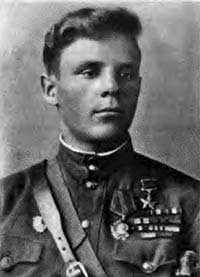




Lonkunov Roman Vasilievich
Lonkunov Roman Vasilyevich was born on September 3, 1923 in the village of Tas-Yuryakh, Sadynsky district (now Mirninsky district). In 1931 he entered the primary school Tas-Yuryakh. In 1935 he graduated from elementary school and entered the Tuoi-Haya school. After graduating from school in 1940, he left for Yakutsk to study. After the outbreak of the war, he was not drafted. And in October 1941, when he was already 18 years old, he went to war. He studied to be a machine gunner until 1942, took military action in the area of the city of Kalinin. His echelon was fired upon by German bombers and too few people remained from his detachment. They had to connect with other troops. After that, his train was sent to Stalingrad, but they again came under fire from German bombers in the Michurin area, near the Gryaz station. From their detachment again very few people remained and they were sent to Tula. Joining up with the main forces of the Voronezh garrison, they began real hostilities in Voronezh, and all summer they had to walk on foot. Then he took part in the operation in the Kursk Bulge area. As Lonkunov himself said, the real war was there, they had to go against German tanks such as "Tiger" and others. He had to fight for 3 days and 3 nights, and on the 4th day he was wounded under mortar fire. After that, he was sent to Krasnoyarsk, becoming disabled of the 3rd group. Then he went to the Northern Front and took part in the liberation of Norway and the northern part of the USSR, they passed the famous Mannerheim Line, built by the Finns to defend against the USSR and liberated Petrozavodsk. In 1944 he was wounded a second time during the liberation of the port of Pechenga. In 1945 he took part in the liberation of occupied Poland. After that, his units gave the order that on May 1 they should go to the assault on Berlin. During the assault, he was again wounded and lost his memory. On May 15, he woke up in a German hospital and was told that he had barely made it out. After returning from the war, my grandfather lived a decent life, received the title of hero, and a school in the village of Tas-Yuryakh was named in his honor.
Lonkunov Roman Vasilievich
Lonkunov Roman Vasilyevich was born on September 3, 1923 in the village of Tas-Yuryakh, Sadynsky district (now Mirninsky district). In 1931 he entered the primary school Tas-Yuryakh. In 1935 he graduated from elementary school and entered the Tuoi-Haya school. After graduating from school in 1940, he left for Yakutsk to study. After the outbreak of the war, he was not drafted. And in October 1941, when he was already 18 years old, he went to war. He studied to be a machine gunner until 1942, took military action in the area of the city of Kalinin. His echelon was fired upon by German bombers and too few people remained from his detachment. They had to connect with other troops. After that, his train was sent to Stalingrad, but they again came under fire from German bombers in the Michurin area, near the Gryaz station. From their detachment again very few people remained and they were sent to Tula. Joining up with the main forces of the Voronezh garrison, they began real hostilities in Voronezh, and all summer they had to walk on foot. Then he took part in the operation in the Kursk Bulge area. As Lonkunov himself said, the real war was there, they had to go against German tanks such as "Tiger" and others. He had to fight for 3 days and 3 nights, and on the 4th day he was wounded under mortar fire. After that, he was sent to Krasnoyarsk, becoming disabled of the 3rd group. Then he went to the Northern Front and took part in the liberation of Norway and the northern part of the USSR, they passed the famous Mannerheim Line, built by the Finns to defend against the USSR and liberated Petrozavodsk. In 1944 he was wounded a second time during the liberation of the port of Pechenga. In 1945 he took part in the liberation of occupied Poland. After that, his units gave the order that on May 1 they should go to the assault on Berlin. During the assault, he was again wounded and lost his memory. On May 15, he woke up in a German hospital and was told that he had barely made it out. After returning from the war, my grandfather lived a decent life, received the title of hero, and a school in the village of Tas-Yuryakh was named in his honor.
0 comment



2026 © Russian Military Historical Society Developed by Jetmix