

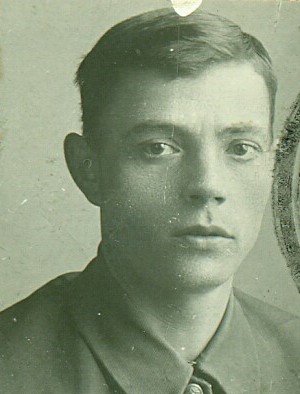
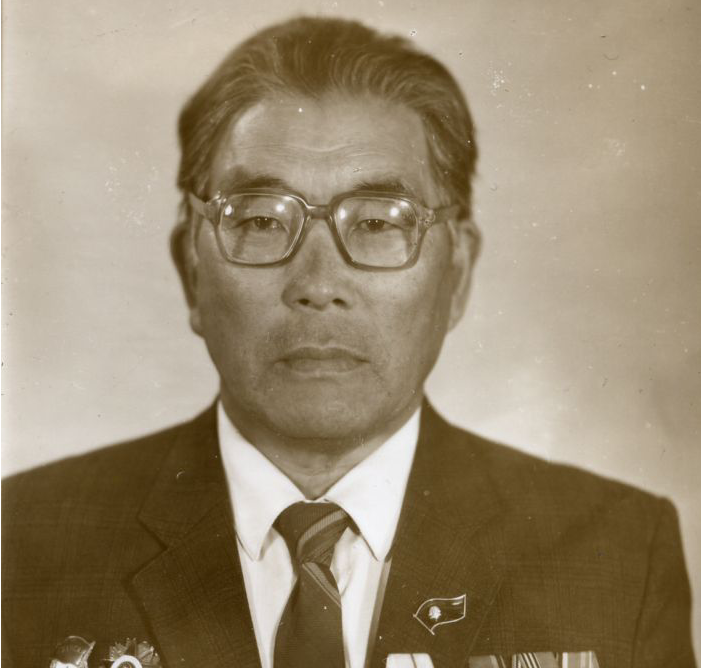

Luev Mikhail Kuzmich
CITY: Pustaya Buda village, Yershichsky district, Smolensk region. DATE OF BIRTH: 15.10.1919. DATE OF DEATH: 01.01.2001 HISTORY: Rank: Sergeant First Class. Corps: Artillery. I was called up to the army in November 1939. When the war started, I had 9 months of conscription left. I served all the time in the 193rd Anti-Aircraft Artillery Regiment. I am proud that I had to defend Moscow as a part of the 193rd Anti-Aircraft Artillery Regiment (later renamed to the Putilov-Kirov Guards Order of Lenin Regiment), whose history begins in 1917. Since July 1941 under the command of Colonel M. G. Kiknadze, the regiment moved to the Kuntsev firing positions, covering the main, and central-western direction to Moscow. Naturally, we tried to prepare well for the meeting with the fascist vultures. On July 21, 1941, at 10 p.m, the observation posts reported that 200 enemy aircraft were flying to Moscow at different altitudes, at intervals, with a wide front. On the far approaches, they were met by the aircraft of the 6th Fighter Aviation Corps, and the vultures were forced to disperse in groups. The artillery met the fascist planes with a wall of heavy fire. The sky was illuminated by floodlights. All night there was an intense battle. The gun barrels were hot. In the morning we saw mountains of shell casings. Only a few single planes broke through to Moscow. The Germans realized that Moscow was under reliable air defense protection, so the next day they gathered the best aces and they sent 300 aircrafts more at night from 22 to 23 July. Previously, during the day, reconnaissance planes appeared at high altitude to see the results of the previous raid. The anti-aircraft gunners again met the vultures with a wall of heavy fire. To suppress the points of anti-aircraft calculations, the Germans threw lighting bombs to illuminate the area, poured incendiary and high-explosive bombs. Everything seemed to be on fire. Lighters were sometimes thrown in whole boxes. Several land mines exploded around the battery, but fortunately they did not cause much damage. The planes never reached Moscow, but when they hit the searchlights, they dropped their deadly cargo anywhere and returned back. The Germans realized that they would soon be unable to overcome the defense of Moscow, and switched to the tactics of exhausting our forces. Single planes and dozens of them, sometimes hundreds, flew to Moscow every day, using different tactics, but they failed to break the defense of Moscow. Moscow lived its own life. At first, during the raids on Moscow, alarms were often announced, but then, when our commanders saw that the reflection of aircraft was effective, they stopped alarms in the city. I was the commander of the rangefinder squad. We used our range finder (a stereoscopic device) to determine the altitude of German aircraft, the range of flight, the angle of flight, and gave data to the AAFCE. The accuracy and continuity of our data greatly depended on the effectiveness of anti-aircraft fire. Then there was the 237th Anti-Aircraft Artillery Regiment of the 1st Guards Anti-Aircraft Artillery Division. I was in the rank of Sergeant First Class. After the war, I was sent to a training division to train young soldiers, where I served until I was demobilized on July 7, 1946. I have awards. During my service as a member of the regiment's troops, I participated in almost all parades on red square. I worked all my life, the last 35 years - at the plant, 26 years worked as a smelter. I worked until 1985. In the army I met my beloved, who was my faithful friend during the war, and in August 1945 she became my wife. I have a son, a grandson, a granddaughter, a great-grandson.
Luev Mikhail Kuzmich
CITY: Pustaya Buda village, Yershichsky district, Smolensk region. DATE OF BIRTH: 15.10.1919. DATE OF DEATH: 01.01.2001 HISTORY: Rank: Sergeant First Class. Corps: Artillery. I was called up to the army in November 1939. When the war started, I had 9 months of conscription left. I served all the time in the 193rd Anti-Aircraft Artillery Regiment. I am proud that I had to defend Moscow as a part of the 193rd Anti-Aircraft Artillery Regiment (later renamed to the Putilov-Kirov Guards Order of Lenin Regiment), whose history begins in 1917. Since July 1941 under the command of Colonel M. G. Kiknadze, the regiment moved to the Kuntsev firing positions, covering the main, and central-western direction to Moscow. Naturally, we tried to prepare well for the meeting with the fascist vultures. On July 21, 1941, at 10 p.m, the observation posts reported that 200 enemy aircraft were flying to Moscow at different altitudes, at intervals, with a wide front. On the far approaches, they were met by the aircraft of the 6th Fighter Aviation Corps, and the vultures were forced to disperse in groups. The artillery met the fascist planes with a wall of heavy fire. The sky was illuminated by floodlights. All night there was an intense battle. The gun barrels were hot. In the morning we saw mountains of shell casings. Only a few single planes broke through to Moscow. The Germans realized that Moscow was under reliable air defense protection, so the next day they gathered the best aces and they sent 300 aircrafts more at night from 22 to 23 July. Previously, during the day, reconnaissance planes appeared at high altitude to see the results of the previous raid. The anti-aircraft gunners again met the vultures with a wall of heavy fire. To suppress the points of anti-aircraft calculations, the Germans threw lighting bombs to illuminate the area, poured incendiary and high-explosive bombs. Everything seemed to be on fire. Lighters were sometimes thrown in whole boxes. Several land mines exploded around the battery, but fortunately they did not cause much damage. The planes never reached Moscow, but when they hit the searchlights, they dropped their deadly cargo anywhere and returned back. The Germans realized that they would soon be unable to overcome the defense of Moscow, and switched to the tactics of exhausting our forces. Single planes and dozens of them, sometimes hundreds, flew to Moscow every day, using different tactics, but they failed to break the defense of Moscow. Moscow lived its own life. At first, during the raids on Moscow, alarms were often announced, but then, when our commanders saw that the reflection of aircraft was effective, they stopped alarms in the city. I was the commander of the rangefinder squad. We used our range finder (a stereoscopic device) to determine the altitude of German aircraft, the range of flight, the angle of flight, and gave data to the AAFCE. The accuracy and continuity of our data greatly depended on the effectiveness of anti-aircraft fire. Then there was the 237th Anti-Aircraft Artillery Regiment of the 1st Guards Anti-Aircraft Artillery Division. I was in the rank of Sergeant First Class. After the war, I was sent to a training division to train young soldiers, where I served until I was demobilized on July 7, 1946. I have awards. During my service as a member of the regiment's troops, I participated in almost all parades on red square. I worked all my life, the last 35 years - at the plant, 26 years worked as a smelter. I worked until 1985. In the army I met my beloved, who was my faithful friend during the war, and in August 1945 she became my wife. I have a son, a grandson, a granddaughter, a great-grandson.
0 comment




2026 © Russian Military Historical Society Developed by Jetmix