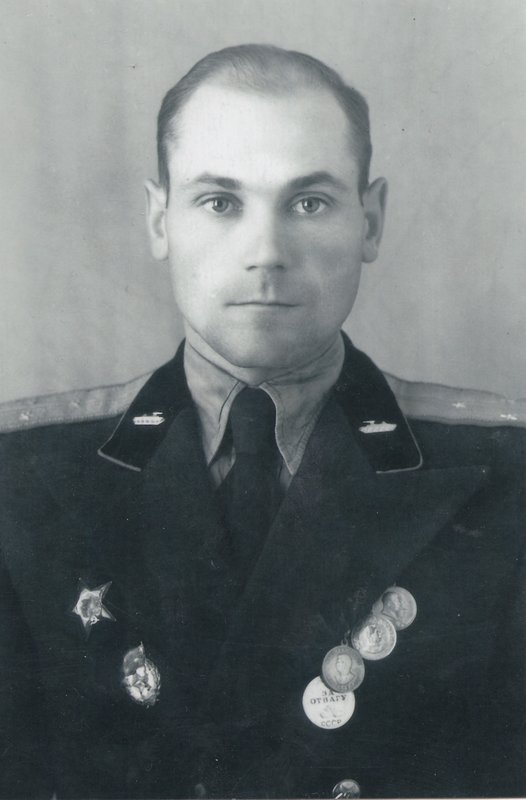
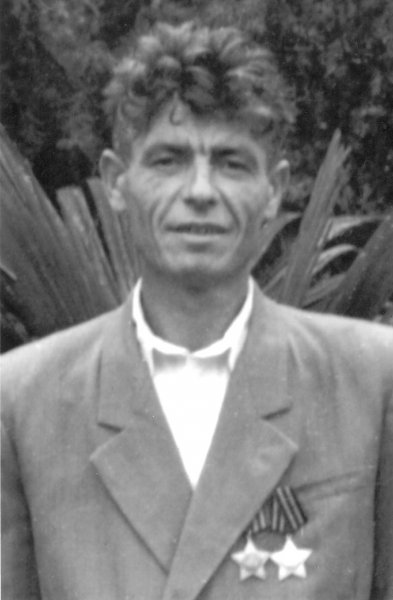
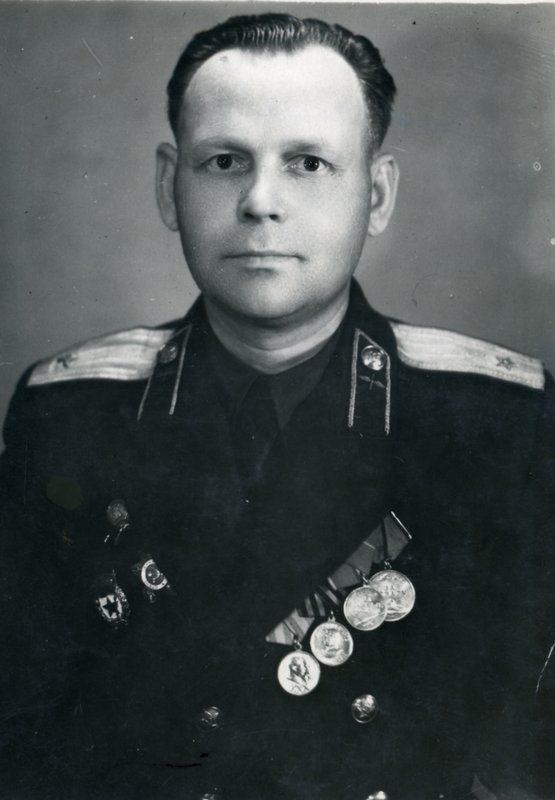
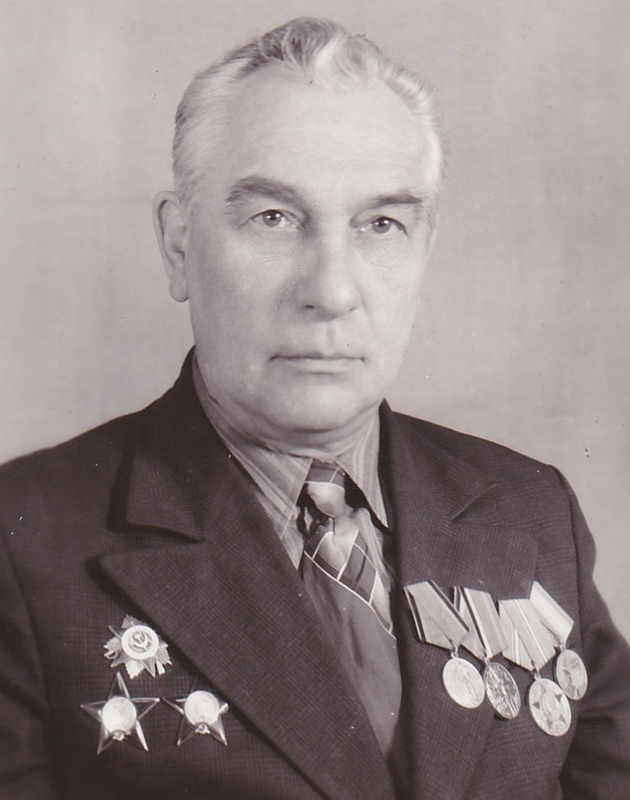
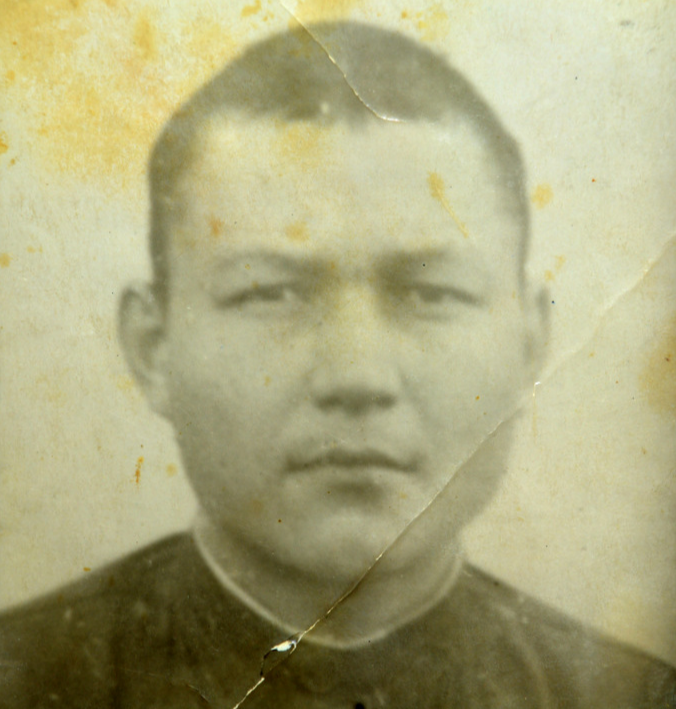
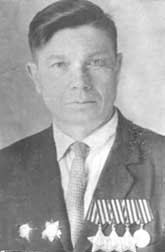


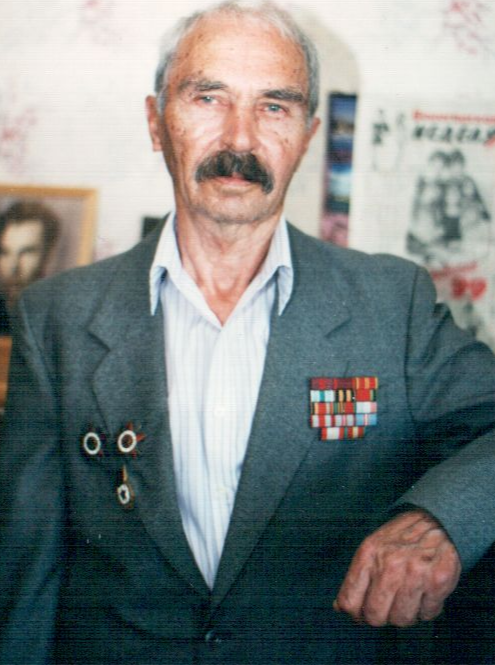
Alexey Sergeevich Gorbenko
Gorbenko Aleksey Sergeevich was drafted into the Army on September 17, 1940 in the 82nd auto battalion at the Kola station near Murmansk, thus, on the front of the Patriotic War from June 22, 1941. He served as a driver, delivered ammunition to the front edge of the 14th division, the 14th Army in the Murmansk direction. In December 1942 he was sent to study in the 10th separate reserve tank battalion. After graduation in May 1943, he was sent to the Karelian front in the Kandalaksha direction in the 88th separate tank regiment as a mechanic driver of a T-34 tank. Rank – Sergeant. Alexei Sergeevich recalled: "In September 1944, before our offensive, regimental reconnaissance was sent to the rear of the enemy, and with it 5-6 men of tank drivers were to be sent to map the route of the passage of tanks during the offensive of our Army at liquidation of the Karelian front. We "walked" in the enemy's rear for 8 days and we, the tankers, mapped the probable routes for the passage of tanks.We "walked" along the rear of the enemy for 8 days and we, the tankers, mapped the probable routes for the passage of tanks. When returning from the rear of the enemy, in the neutral zone, our reconnaissance met with enemy reconnaissance and an unequal fleeting battle ensued. Enemy intelligence outnumbered our group by 2-3 times.. Then our commander on the radio called his "fire on himself", what began here ... Shells, our shells, mowed down everyone in a row and thinned scouts, ours and the enemy, got out in different directions .. And beyond the hill we, who survived, but completed the assigned task, were met by comrades in arms and a brass band.In the fall of 1944, the task was set to eliminate the enemy throughout Karelian front. Heavy battles unfolded, the Finns fiercely resisted. On the Alakurti-Vaidalakht direction there was a very rocky terrain, poor maneuverability of T-34 tanks, but our tank regiment was moving forward with battles. During the next attack I was wounded, and after providing first aid, I was sent to the hospital in Kandalaksha. In the hospital, they did not operate on me and said that the fragments would be removed after the war if you stay alive, and now, after cosmetic treatment, go to the front (these fragments are still in my body - two in the right lung and one under the cervical vertebra). My treatment was not over yet, and our tank regiment was loading on the railway at the Kandalaksha station. The task was completed in our direction, the enemy was defeated, and Finland ended the war. I asked the head of the hospital to be discharged so that I could return to my native tank regiment again. I was discharged from the hospital ahead of schedule, and I am in my regiment ... They will take us by rail, no one knows where, to which front ... but they took us across all of Motherland, Russia, ... They brought our tank regiment to Western Ukraine at Sandomierz a foothold on the Western Vistula on the 1st Ukrainian Front, commanded by our fellow countryman I.S.Konev. Our tank regiment under its own power drove to this bridgehead. We drove at night, a very dense forest and all along, and this is about 15-17 km, there were camouflaged gun crews of various calibers from long-range guns to direct-fire gun batteries, as well as mortars and Katyushas. In general, as there were tree trunks, there were so many different tools. Our hearts were filled with pride for our Motherland! As I said, we arrived at the Sandomierz bridgehead of the 1st Ukrainian Front at the end of December 1944, and on January 11, 1945, an order was given to advance along the entire front. But first of all, at 3 hours 40 minutes on 11.01.45, artillery preparation began along the entire front and it lasted 40 minutes, after which it gradually shifted firing deep into enemy territory. And our regiment, during the artillery preparation, moved to the leading edge and concentrated on the starting position. This was the first time I saw such a powerful artillery preparation, and it was not individual shots that fired, but a continuous hum with continuous tracks from Katyusha shells. Our tank regiment was tasked with making a passage in the enemy's defense, the so-called corridor, along which the III Panzer Army of Commander Rybalko would go. What is "to make a passage" - it means with your body to blow up all anti-tank mines and land mines that remained after the artillery barrage. And we have fulfilled our task. In my thirty-four, I blew up two anti-tank mines, but I blew myself up. A mine tore out the landing hatch under the gunner, radio operator Ivan Buryak, and tore off both of his legs and tore the right track. And right there, into the formed corridor, the Third Panzer Army rushed. It was necessary to see how hundreds and hundreds of tanks and self-propelled guns for 3-4 hours walked forward along the formed corridor, which was made by our tank regiment. For this operation I was awarded the Order of the Patriotic War of the II degree. I met the end of the war in Klausberg in Germany. In addition to the orders of "Patriotic War I degree", "Patriotic War II degree" he was awarded medals - "For Victory over Germany", - "For the Defense of the Soviet Arctic", - jubilee medals and - "Letter of thanks" by Marshal of the Soviet Union Comrade I. Konev . "February 1998.
Alexey Sergeevich Gorbenko
Gorbenko Aleksey Sergeevich was drafted into the Army on September 17, 1940 in the 82nd auto battalion at the Kola station near Murmansk, thus, on the front of the Patriotic War from June 22, 1941. He served as a driver, delivered ammunition to the front edge of the 14th division, the 14th Army in the Murmansk direction. In December 1942 he was sent to study in the 10th separate reserve tank battalion. After graduation in May 1943, he was sent to the Karelian front in the Kandalaksha direction in the 88th separate tank regiment as a mechanic driver of a T-34 tank. Rank – Sergeant. Alexei Sergeevich recalled: "In September 1944, before our offensive, regimental reconnaissance was sent to the rear of the enemy, and with it 5-6 men of tank drivers were to be sent to map the route of the passage of tanks during the offensive of our Army at liquidation of the Karelian front. We "walked" in the enemy's rear for 8 days and we, the tankers, mapped the probable routes for the passage of tanks.We "walked" along the rear of the enemy for 8 days and we, the tankers, mapped the probable routes for the passage of tanks. When returning from the rear of the enemy, in the neutral zone, our reconnaissance met with enemy reconnaissance and an unequal fleeting battle ensued. Enemy intelligence outnumbered our group by 2-3 times.. Then our commander on the radio called his "fire on himself", what began here ... Shells, our shells, mowed down everyone in a row and thinned scouts, ours and the enemy, got out in different directions .. And beyond the hill we, who survived, but completed the assigned task, were met by comrades in arms and a brass band.In the fall of 1944, the task was set to eliminate the enemy throughout Karelian front. Heavy battles unfolded, the Finns fiercely resisted. On the Alakurti-Vaidalakht direction there was a very rocky terrain, poor maneuverability of T-34 tanks, but our tank regiment was moving forward with battles. During the next attack I was wounded, and after providing first aid, I was sent to the hospital in Kandalaksha. In the hospital, they did not operate on me and said that the fragments would be removed after the war if you stay alive, and now, after cosmetic treatment, go to the front (these fragments are still in my body - two in the right lung and one under the cervical vertebra). My treatment was not over yet, and our tank regiment was loading on the railway at the Kandalaksha station. The task was completed in our direction, the enemy was defeated, and Finland ended the war. I asked the head of the hospital to be discharged so that I could return to my native tank regiment again. I was discharged from the hospital ahead of schedule, and I am in my regiment ... They will take us by rail, no one knows where, to which front ... but they took us across all of Motherland, Russia, ... They brought our tank regiment to Western Ukraine at Sandomierz a foothold on the Western Vistula on the 1st Ukrainian Front, commanded by our fellow countryman I.S.Konev. Our tank regiment under its own power drove to this bridgehead. We drove at night, a very dense forest and all along, and this is about 15-17 km, there were camouflaged gun crews of various calibers from long-range guns to direct-fire gun batteries, as well as mortars and Katyushas. In general, as there were tree trunks, there were so many different tools. Our hearts were filled with pride for our Motherland! As I said, we arrived at the Sandomierz bridgehead of the 1st Ukrainian Front at the end of December 1944, and on January 11, 1945, an order was given to advance along the entire front. But first of all, at 3 hours 40 minutes on 11.01.45, artillery preparation began along the entire front and it lasted 40 minutes, after which it gradually shifted firing deep into enemy territory. And our regiment, during the artillery preparation, moved to the leading edge and concentrated on the starting position. This was the first time I saw such a powerful artillery preparation, and it was not individual shots that fired, but a continuous hum with continuous tracks from Katyusha shells. Our tank regiment was tasked with making a passage in the enemy's defense, the so-called corridor, along which the III Panzer Army of Commander Rybalko would go. What is "to make a passage" - it means with your body to blow up all anti-tank mines and land mines that remained after the artillery barrage. And we have fulfilled our task. In my thirty-four, I blew up two anti-tank mines, but I blew myself up. A mine tore out the landing hatch under the gunner, radio operator Ivan Buryak, and tore off both of his legs and tore the right track. And right there, into the formed corridor, the Third Panzer Army rushed. It was necessary to see how hundreds and hundreds of tanks and self-propelled guns for 3-4 hours walked forward along the formed corridor, which was made by our tank regiment. For this operation I was awarded the Order of the Patriotic War of the II degree. I met the end of the war in Klausberg in Germany. In addition to the orders of "Patriotic War I degree", "Patriotic War II degree" he was awarded medals - "For Victory over Germany", - "For the Defense of the Soviet Arctic", - jubilee medals and - "Letter of thanks" by Marshal of the Soviet Union Comrade I. Konev . "February 1998.
0 comment




2026 © Russian Military Historical Society Developed by Jetmix