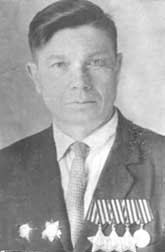


Gorodetsky Iosif Moiseevich
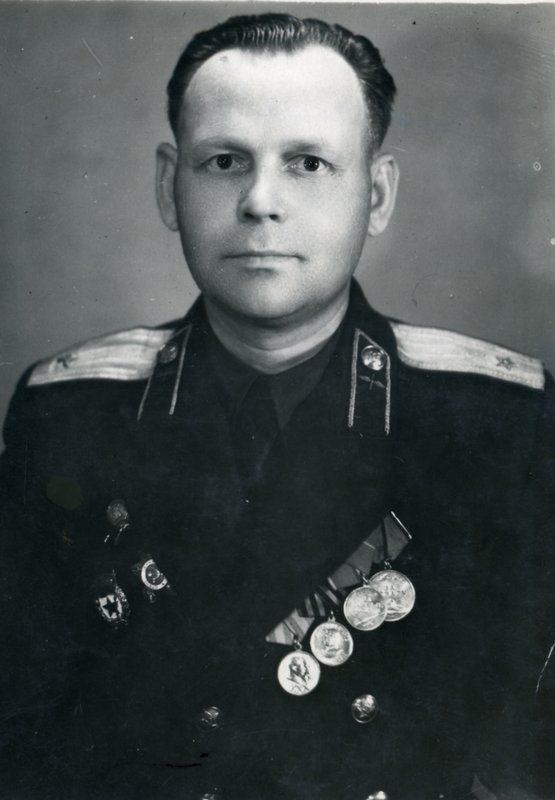
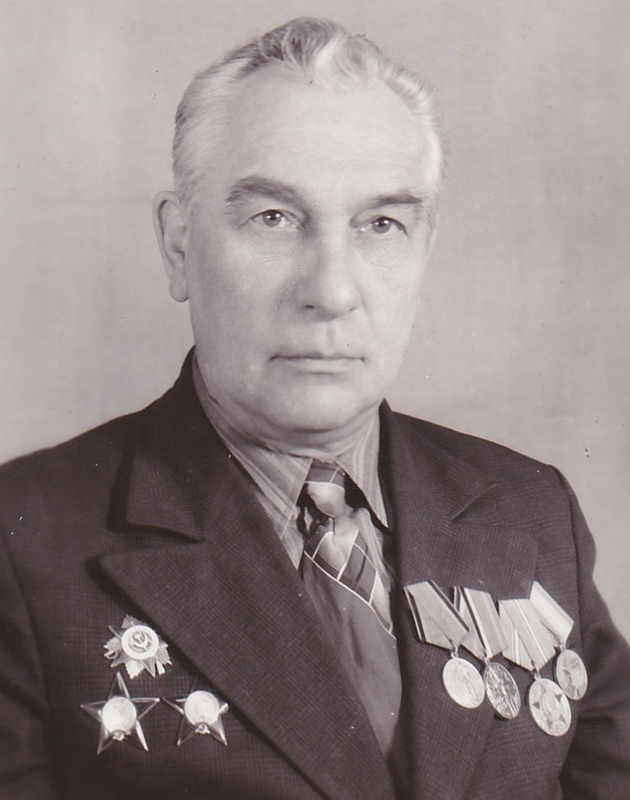
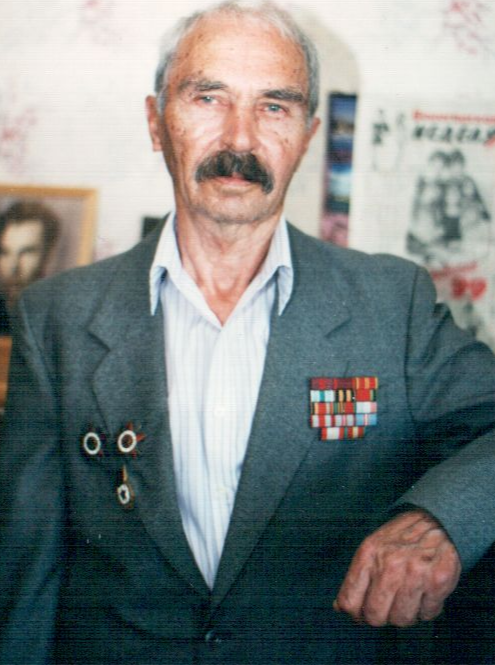
Rank: Lieutenant Military Branch: Ground forces, Air force (except naval aviation), coast service, NKVD troops, border guards. I present material about my father, a veteran of the great Patriotic War, Gorodetsky Joseph Moiseevich.The notes in parentheses are mine.Joseph Moiseevich Gorodetsky, cinematographer, journalist, playwright, during the great Patriotic war, served in the 31st army with the military rank of Lieutenant of the guard. He was twice wounded, but did not fight for long: after being seriously wounded on March 29, 1942, he became disabled in the second world war. Therefore, there are few military awards. In 1946 he was awarded the medal "for valiant labor in the great Patriotic War of 1941-1945", in 1965 – the order of the Red Star, in 1974 – the Badge of the veteran of the 31st army, in 1976-the honorary badge "Veteran of the 247th Roslavl rifle division". Member of the Union of cinematographers of the USSR and the Ukrainian SSR (Ukraine). I. M. Gorodetsky was born on July 5, 1911 in Fastov near Kiev, and died on August 24, 1994 in Kiev. He spent his childhood, youth, and adolescence in Kiev. In Penza, my father worked as the head of the newsreel correspondent station of the Kuibyshev newsreel Studio (i.e., as a cameraman) from 1959 to 1970 prior to his retirement. He returned to his native city of Kiev from Penza in 1977, where he lived until his death at the age of 83. In Kiev, dad was honored by veterans of the Great Patriotic war, members of the Union of cinematographers of Ukraine, neighbors and children. The urn with the dad's ashes was brought from Kiev to Penza, and we buried it in the Novozapadny cemetery. Dad studied in Kiev at a regular school, skipped classes, repeatedly stayed in the second year and by the age of 15 he finished only 4 classes. He joined the labor exchange for teenagers and entered the school-factory No. 3 in Kiev for plumbing. In the fall of 1930 - a 4th-year student of the labor faculty at the evening industrial Institute (studied and worked as a locksmith at the Krasny Plowman factory). On December 31, 1931, he was enrolled as a student of the faculty of cinematography at the Institute of cinematography. He graduated from the Kiev Institute of cinematography, as it is written in the diploma "course of study in February 1936 as a newsreel operator", and received a higher education when he was 25. Both my father's Institute diploma and the certificate of graduation from the factory school have been preserved. All his life, his father worked in cinematography as a cinematographer of scientific, popular science films and newsreels.Dad was drawn to writing since he was a teenager, tried to write. He was constantly engaged in self-education, studied not only the Russian language, literature, but also read a lot and knew about history, art, etc. He has published three one-act plays for Amateur performances and therefore there is a small article about him in the book of the Penza writer-local historian O. Savin "Penza literary". His two passions are cinema and literature, i.e. writing. Even at the front, in hospitals, my father conceived the plots of future novels, novels, even wrote something, but it did not survive. My father was an excellent publicist, my father's journalism was very good, and his articles were always published in the Newspapers. The theme was always the same-Cinema! His typewritten manuscript "Untwisted tape", autobiographical, about his work as a cinematographer and "operator of the corps", has been preserved. Very well written, interesting. But my father did not publish these works.Here is the full text of the article "25 years with a movie camera" from the newspaper "Penzenskaya Pravda", July 1961. "On the credits of the film magazine" Volga region " Penza viewers often meet the name of the operator Gorodetsky-a film correspondent in our region.Yesterday, the staff of the Kuibyshev Studio of chronicle and documentary films celebrated the fiftieth anniversary of cinematographer Joseph Moiseevich Gorodetsky and the 25th anniversary of his work in cinema.A quarter of a century ago, Former locksmith I. Gorodetsky was awarded a diploma of graduation from the Kiev State film Institute. Since then, his restless but exciting work in documentary films has begun. With a movie camera, I. Gorodetsky traveled almost the entire Soviet Union. He took pictures in the mines of Donbass, the blast furnaces of Magnitogorsk, in the Sands of the Karakum mountains, on lake Baikal and in the steppes of Bashkiria, shot under water and in the air. Iosif Moiseevich is the author of hundreds of stories for newsreels and the operator of twelve chronicle-documentaries.The burning desire to respond to the most important events in the life of our country and convey them in expressive newsreel frames to the people led the cameraman Gorodetsky to the fields, factories and mines, where the labor heroism of the Soviet people was born. His footage of the beetroot-five-thousand Maria Demchenko, tractor driver Pasha Angelina and driver Peter Krivonos, with Chelyuskintsy and papanintsy entered the film chronicle of the construction of socialism in our country."I will add that my father shot the famous Donetsk miner Stakhanov in the 30s, and a photo of them together has been preserved.Wikipedia lists my father's filmography - 20 films (from 1935 to 1967), and says that "from 1932 to 1941-operator of the Ukrkinohroniki studios in Kharkiv and Kiev". From this Studio in November 1936 he was drafted into the Army, in the Red Army (Workers 'and peasants' Red Army). The service took place in Zhitomir (Ukraine) He served in a military unit in a communications battalion for 13 months. He was discharged from the army in December 1937 with the rank of communications platoon commander. And since January 9, 1938, my father again works at Ukrkinochronika as a technical control operator, an assistant operator.In June 1939, he was transferred to the Donetsk newsreel correspondent station in Stalino (now Donetsk) as a cameraman. There he met his future wife-our mother.In the spring of 1941 my father was sent to work in a Novosibirsk Studio that serves a huge area of Siberia – the Krasnoyarsk territory, the Altai territory, the Novosibirsk and Omsk regions. Only two cameramen and an assistant worked there, so my father was sent to strengthen the film Studio. Leaving his young wife, with whom he lived for only one year, in Stalino, "I went to the Krasnoyarsk territory for a month and a half. I shot a number of stories that I was not happy with and returned to Novosibirsk...a few days later the war began. As a reserve commander, I was conscripted into the Army" (From the autobiographical story about the work of the cameraman " Gorodetsky I. Untwisted tape"). On July 7, 1941, he was assigned to the 247th rifle division. "On the ninth of July, I was already on a train carrying thousands of commanders and privates to the West. I managed to shoot several stories about the work of the rear for the needs of the front, including a story about the preparation of sandruzhinnits(member of a medical detachment). Everyone who went to the front thought about the battles and those who stayed at home. I imagined how my comrades in the Ukrainian Studio were shooting military operations, and lamented the fate that never left me to shoot military operations. The train stopped for a short time and raced to the front, followed by residents of cities and villages, shouting after us the words: "Smash the enemy!» More than two hundred cameramen filmed the war, and I was at war. Many creative workers of the Soviet cinematography fought and not all returned to the Studio pavilions." ("Untwisted feed").From November 1, 1941-father in the 119th rifle division of the 421st rifle regiment. He was awarded the military rank of "Lieutenant".At the front, I. M. Gorodetsky kept a diary, although this was forbidden. It is preserved, but it is very difficult to read the faded lines. Here are excerpts from it. "As commander of wireless platoon, I was taken to the political Department of the division, as an expert on the movie, it is placed at the disposal of the divisional chief club political instructor Royfe". It is noteworthy that not only members of the Communist party served in the political Department, but also non-party members like my father."8.9.41. When you drive in a car on country roads, I remember the roads of Donbass, when I went to the shooting. Themes and episodes are created. But everything on paper doesn't fit. Work consumes thoughts. I want to accumulate material, but such material that would serve for short stories and a big novel. The whole body, brain, and thoughts turned to stone. There is no homesickness, for I have not had my own corner for 6 years, and therefore there is no attachment. I don't even miss my wife. Our separation is inevitable. Time is such that it is impossible to live as they lived before. And I feel that I have no cowardice and no fear of death. For only the brave, who, I would say, have the courage that comes not from character, but from consciousness, can win. Of course, no one wants to die. But you can't be afraid of death.9.9.41. Is it Possible to compare the actions of the fascists with the middle ages? No! A soldier raped a pregnant woman who had several hours left before giving birth. How can you forgive the youngsters? The officer raped a 12-year-old girl and killed her. Are these people?! Here's a German soldier, 22 years old. He learned in the 8th grade that there is a USSR. Is this a person who doesn't know where the country that occupies 1/6 of the earth is located? The officers in the dugouts were comfortable. They "decorated" their lairs with furniture and curtains stolen from their homes. However, right there in the dugout there lived an orderly, in a dirty wet hole. Now these "heroes" are captured, and the rest have escaped.20.9.41. The Wind has subsided, and we are going again. And again we give a session. The Germans are all raging. Children are thrown into bonfires and killed. The Newspapers report that our troops entered Tageran (the name is fictitious).11.10.41. We are 9 km from Rzhev in the morning. Just arrived to Rzhev saw the mass of troops who were sent to Rzhev (text illegible.). Bombs exploded over Rzhev. Dive bombers did what they wanted. You don't recognize the city. Fleeing from the bombs, we stopped on one of the streets and hid in the doorways. Explosions, whistling bombs. For about ten minutes the pandemonium continued. Then drive. The bridge is intact. There are corpses and wounded people on the roads. Bombed all the way. Stopped. Finally we stopped on the outskirts of a village 25 km from Rzhev. We spent the night, and in the morning went to the forest 800 m from the village. All-day go carts to (text illegible.), the population of Rzhev and surrounding area. Bombing, the village caught fire." On January 13, 1942, my father was shot in the right shoulder: a shrapnel wound. The entry in the front of the diary: "January 13, 1942 I started making a note. I had just finished when I received the order to March. I led the companies. Gave direction and lay down next to Kovalev, Barkov and Kombat 2. The enemy began to throw mines. They tore around us. Then something hit me in the shoulder. I screamed. The thought "I'm hurt" flashed through my mind. There was no great pain, but the shoulder was covered with blood. I went to the rear. But I couldn't find my way. It is good that the orderly brought me to BMP No. 3, and there, having given the gun to G. (text illegible.), I took a cart 2 km to the PPM(anti personal mine) tent. I got a dressing. The shard went right through my shoulder and stuck out. From the tent, I walked 8 km, and then drove a few km to the PPM. From there, the car was taken to the sanbat(medical battalion). They gave me an injection and took out the shard." First, dad was treated in a medical unit, then on February 3, 42, he was transferred to a hospital in Moscow, then to Vladimir. From the front diary: "21.3.42. Here I am in the reserve of the K/n (command) composition of the Zap. FR. (Western front). During this time, I left Moscow ... 20/3 went to K ...20/3 arrived in K. I registered and found myself in the 1st platoon of the 1st company…By order of the NKO(People’s Commissariat of Defence) in Pravda for 18/3, our 119 division was renamed the 17th guards. This made me very happy.""25.3.42 Let's go. We drove through Moscow via Varshavskoe highway and arrived in Podolsk in the evening. Today we are going to the unit. The path is littered with wire barriers, pillboxes, it is abundantly littered with enemy tanks, which stick out like dead towers from the snow."And on March 29, 1942, my father was wounded in the stomach. At the time of this injury, he was a senior adjutant of the guards rifle regiment battalion. Only 16 days passed between the discharge from the hospital on March 13 and the second injury! This injury made him disabled for life, but the main thing is that he survived!In May, my father was transferred to a hospital in Achinsk, Krasnoyarsk territory, where he stayed until September 42. After being discharged from the hospital, I came to Novosibirsk, immediately went to the Novosibirsk film Studio, where I learned about the death of my colleagues at the front. He writes in his diary that here in Siberia, you don't feel that there is a war going on, there are a lot of well-dressed civilians. And dad calls them "rear rats" with disdain. From the hospital, he was sent to Stalinabad (now Dushanbe, the capital of Tajikistan). Shortly before his arrival in Stalinabad, his wife arrived from Krasnoyarsk, who accompanied her wounded brother Boris here after the Krasnoyarsk hospital. Finally, our (then-future) parents met, parting in 1941.After a serious injury, my father is sent here for treatment, but, of course, not to a sanatorium or resort. In Stalinabad, my father gets a job as a military instructor at a secondary school, then in March 1943. he was appointed a lecturer in the Department of military disciplines at the Tajik medical Institute, and from March 18, 1944, was dismissed from his post for health reasons. In the spring of 1944, my father was called to Kiev and from may he worked as a cameraman for the newsreel Studio of Ukrkinohroniki in Chernivtsi (Western Ukraine, now Chernivtsi). I went to the shooting with a gun – Bandera men were operating in the woods. From April 1945 to may 1948, he worked as a cinematographer in Voroshilovgrad (now Luhansk). Then there was work at various film studios: Frunze, Ashgabat, Sverdlovsk, Kuibyshev, in different cities of our vast country. The last place of work was Penza, which my father loved, and he was well known and respected. Although many years have passed, there are still people who remember him.I can write and talk a lot about my father, and I'm proud of him. He was a hard worker in every sense of the word. Never idle. In Penza after retirement, and even before, he gave lectures on cinema from the society "Knowledge", wrote articles, autobiographical materials. Erudition, vivid presentation of both oral and written material, and an extraordinary memory distinguished dad. After moving to Kiev, he also did public work for the Union of cinematographers, and continued to work on his notes. He was a tall, handsome, athletic man. Despite his serious injury, he was very mobile, carrying a heavy tripod and a movie camera himself, although he had an assistant. Even at the age of 50-55, he could do a handstand, setting an example for us children.He rarely spoke about the war, and told little. In 1975, we celebrated the 30th anniversary of Victory at home and watched a concert on TV. Mark Bernes sang "Cranes". Dad sat in the back. I happened to look back and saw him crying softly. After many years at the wedding of the granddaughter,father among the fun was asked to sing the same song...Frequent travel, change of residence did not prevent his father from collecting and preserving his archive - documents, photos of people with whom his creative life brought together, relatives, acquaintances, letters from the front, telegrams of the war and post-war years on music paper, on invoices (there was a shortage of paper in that time), newspaper clippings,
otes, letters. Now this archive is with me, his daughter.
Gorodetsky Iosif Moiseevich
Rank: Lieutenant Military Branch: Ground forces, Air force (except naval aviation), coast service, NKVD troops, border guards. I present material about my father, a veteran of the great Patriotic War, Gorodetsky Joseph Moiseevich.The notes in parentheses are mine.Joseph Moiseevich Gorodetsky, cinematographer, journalist, playwright, during the great Patriotic war, served in the 31st army with the military rank of Lieutenant of the guard. He was twice wounded, but did not fight for long: after being seriously wounded on March 29, 1942, he became disabled in the second world war. Therefore, there are few military awards. In 1946 he was awarded the medal "for valiant labor in the great Patriotic War of 1941-1945", in 1965 – the order of the Red Star, in 1974 – the Badge of the veteran of the 31st army, in 1976-the honorary badge "Veteran of the 247th Roslavl rifle division". Member of the Union of cinematographers of the USSR and the Ukrainian SSR (Ukraine). I. M. Gorodetsky was born on July 5, 1911 in Fastov near Kiev, and died on August 24, 1994 in Kiev. He spent his childhood, youth, and adolescence in Kiev. In Penza, my father worked as the head of the newsreel correspondent station of the Kuibyshev newsreel Studio (i.e., as a cameraman) from 1959 to 1970 prior to his retirement. He returned to his native city of Kiev from Penza in 1977, where he lived until his death at the age of 83. In Kiev, dad was honored by veterans of the Great Patriotic war, members of the Union of cinematographers of Ukraine, neighbors and children. The urn with the dad's ashes was brought from Kiev to Penza, and we buried it in the Novozapadny cemetery. Dad studied in Kiev at a regular school, skipped classes, repeatedly stayed in the second year and by the age of 15 he finished only 4 classes. He joined the labor exchange for teenagers and entered the school-factory No. 3 in Kiev for plumbing. In the fall of 1930 - a 4th-year student of the labor faculty at the evening industrial Institute (studied and worked as a locksmith at the Krasny Plowman factory). On December 31, 1931, he was enrolled as a student of the faculty of cinematography at the Institute of cinematography. He graduated from the Kiev Institute of cinematography, as it is written in the diploma "course of study in February 1936 as a newsreel operator", and received a higher education when he was 25. Both my father's Institute diploma and the certificate of graduation from the factory school have been preserved. All his life, his father worked in cinematography as a cinematographer of scientific, popular science films and newsreels.Dad was drawn to writing since he was a teenager, tried to write. He was constantly engaged in self-education, studied not only the Russian language, literature, but also read a lot and knew about history, art, etc. He has published three one-act plays for Amateur performances and therefore there is a small article about him in the book of the Penza writer-local historian O. Savin "Penza literary". His two passions are cinema and literature, i.e. writing. Even at the front, in hospitals, my father conceived the plots of future novels, novels, even wrote something, but it did not survive. My father was an excellent publicist, my father's journalism was very good, and his articles were always published in the Newspapers. The theme was always the same-Cinema! His typewritten manuscript "Untwisted tape", autobiographical, about his work as a cinematographer and "operator of the corps", has been preserved. Very well written, interesting. But my father did not publish these works.Here is the full text of the article "25 years with a movie camera" from the newspaper "Penzenskaya Pravda", July 1961. "On the credits of the film magazine" Volga region " Penza viewers often meet the name of the operator Gorodetsky-a film correspondent in our region.Yesterday, the staff of the Kuibyshev Studio of chronicle and documentary films celebrated the fiftieth anniversary of cinematographer Joseph Moiseevich Gorodetsky and the 25th anniversary of his work in cinema.A quarter of a century ago, Former locksmith I. Gorodetsky was awarded a diploma of graduation from the Kiev State film Institute. Since then, his restless but exciting work in documentary films has begun. With a movie camera, I. Gorodetsky traveled almost the entire Soviet Union. He took pictures in the mines of Donbass, the blast furnaces of Magnitogorsk, in the Sands of the Karakum mountains, on lake Baikal and in the steppes of Bashkiria, shot under water and in the air. Iosif Moiseevich is the author of hundreds of stories for newsreels and the operator of twelve chronicle-documentaries.The burning desire to respond to the most important events in the life of our country and convey them in expressive newsreel frames to the people led the cameraman Gorodetsky to the fields, factories and mines, where the labor heroism of the Soviet people was born. His footage of the beetroot-five-thousand Maria Demchenko, tractor driver Pasha Angelina and driver Peter Krivonos, with Chelyuskintsy and papanintsy entered the film chronicle of the construction of socialism in our country."I will add that my father shot the famous Donetsk miner Stakhanov in the 30s, and a photo of them together has been preserved.Wikipedia lists my father's filmography - 20 films (from 1935 to 1967), and says that "from 1932 to 1941-operator of the Ukrkinohroniki studios in Kharkiv and Kiev". From this Studio in November 1936 he was drafted into the Army, in the Red Army (Workers 'and peasants' Red Army). The service took place in Zhitomir (Ukraine) He served in a military unit in a communications battalion for 13 months. He was discharged from the army in December 1937 with the rank of communications platoon commander. And since January 9, 1938, my father again works at Ukrkinochronika as a technical control operator, an assistant operator.In June 1939, he was transferred to the Donetsk newsreel correspondent station in Stalino (now Donetsk) as a cameraman. There he met his future wife-our mother.In the spring of 1941 my father was sent to work in a Novosibirsk Studio that serves a huge area of Siberia – the Krasnoyarsk territory, the Altai territory, the Novosibirsk and Omsk regions. Only two cameramen and an assistant worked there, so my father was sent to strengthen the film Studio. Leaving his young wife, with whom he lived for only one year, in Stalino, "I went to the Krasnoyarsk territory for a month and a half. I shot a number of stories that I was not happy with and returned to Novosibirsk...a few days later the war began. As a reserve commander, I was conscripted into the Army" (From the autobiographical story about the work of the cameraman " Gorodetsky I. Untwisted tape"). On July 7, 1941, he was assigned to the 247th rifle division. "On the ninth of July, I was already on a train carrying thousands of commanders and privates to the West. I managed to shoot several stories about the work of the rear for the needs of the front, including a story about the preparation of sandruzhinnits(member of a medical detachment). Everyone who went to the front thought about the battles and those who stayed at home. I imagined how my comrades in the Ukrainian Studio were shooting military operations, and lamented the fate that never left me to shoot military operations. The train stopped for a short time and raced to the front, followed by residents of cities and villages, shouting after us the words: "Smash the enemy!» More than two hundred cameramen filmed the war, and I was at war. Many creative workers of the Soviet cinematography fought and not all returned to the Studio pavilions." ("Untwisted feed").From November 1, 1941-father in the 119th rifle division of the 421st rifle regiment. He was awarded the military rank of "Lieutenant".At the front, I. M. Gorodetsky kept a diary, although this was forbidden. It is preserved, but it is very difficult to read the faded lines. Here are excerpts from it. "As commander of wireless platoon, I was taken to the political Department of the division, as an expert on the movie, it is placed at the disposal of the divisional chief club political instructor Royfe". It is noteworthy that not only members of the Communist party served in the political Department, but also non-party members like my father."8.9.41. When you drive in a car on country roads, I remember the roads of Donbass, when I went to the shooting. Themes and episodes are created. But everything on paper doesn't fit. Work consumes thoughts. I want to accumulate material, but such material that would serve for short stories and a big novel. The whole body, brain, and thoughts turned to stone. There is no homesickness, for I have not had my own corner for 6 years, and therefore there is no attachment. I don't even miss my wife. Our separation is inevitable. Time is such that it is impossible to live as they lived before. And I feel that I have no cowardice and no fear of death. For only the brave, who, I would say, have the courage that comes not from character, but from consciousness, can win. Of course, no one wants to die. But you can't be afraid of death.9.9.41. Is it Possible to compare the actions of the fascists with the middle ages? No! A soldier raped a pregnant woman who had several hours left before giving birth. How can you forgive the youngsters? The officer raped a 12-year-old girl and killed her. Are these people?! Here's a German soldier, 22 years old. He learned in the 8th grade that there is a USSR. Is this a person who doesn't know where the country that occupies 1/6 of the earth is located? The officers in the dugouts were comfortable. They "decorated" their lairs with furniture and curtains stolen from their homes. However, right there in the dugout there lived an orderly, in a dirty wet hole. Now these "heroes" are captured, and the rest have escaped.20.9.41. The Wind has subsided, and we are going again. And again we give a session. The Germans are all raging. Children are thrown into bonfires and killed. The Newspapers report that our troops entered Tageran (the name is fictitious).11.10.41. We are 9 km from Rzhev in the morning. Just arrived to Rzhev saw the mass of troops who were sent to Rzhev (text illegible.). Bombs exploded over Rzhev. Dive bombers did what they wanted. You don't recognize the city. Fleeing from the bombs, we stopped on one of the streets and hid in the doorways. Explosions, whistling bombs. For about ten minutes the pandemonium continued. Then drive. The bridge is intact. There are corpses and wounded people on the roads. Bombed all the way. Stopped. Finally we stopped on the outskirts of a village 25 km from Rzhev. We spent the night, and in the morning went to the forest 800 m from the village. All-day go carts to (text illegible.), the population of Rzhev and surrounding area. Bombing, the village caught fire." On January 13, 1942, my father was shot in the right shoulder: a shrapnel wound. The entry in the front of the diary: "January 13, 1942 I started making a note. I had just finished when I received the order to March. I led the companies. Gave direction and lay down next to Kovalev, Barkov and Kombat 2. The enemy began to throw mines. They tore around us. Then something hit me in the shoulder. I screamed. The thought "I'm hurt" flashed through my mind. There was no great pain, but the shoulder was covered with blood. I went to the rear. But I couldn't find my way. It is good that the orderly brought me to BMP No. 3, and there, having given the gun to G. (text illegible.), I took a cart 2 km to the PPM(anti personal mine) tent. I got a dressing. The shard went right through my shoulder and stuck out. From the tent, I walked 8 km, and then drove a few km to the PPM. From there, the car was taken to the sanbat(medical battalion). They gave me an injection and took out the shard." First, dad was treated in a medical unit, then on February 3, 42, he was transferred to a hospital in Moscow, then to Vladimir. From the front diary: "21.3.42. Here I am in the reserve of the K/n (command) composition of the Zap. FR. (Western front). During this time, I left Moscow ... 20/3 went to K ...20/3 arrived in K. I registered and found myself in the 1st platoon of the 1st company…By order of the NKO(People’s Commissariat of Defence) in Pravda for 18/3, our 119 division was renamed the 17th guards. This made me very happy.""25.3.42 Let's go. We drove through Moscow via Varshavskoe highway and arrived in Podolsk in the evening. Today we are going to the unit. The path is littered with wire barriers, pillboxes, it is abundantly littered with enemy tanks, which stick out like dead towers from the snow."And on March 29, 1942, my father was wounded in the stomach. At the time of this injury, he was a senior adjutant of the guards rifle regiment battalion. Only 16 days passed between the discharge from the hospital on March 13 and the second injury! This injury made him disabled for life, but the main thing is that he survived!In May, my father was transferred to a hospital in Achinsk, Krasnoyarsk territory, where he stayed until September 42. After being discharged from the hospital, I came to Novosibirsk, immediately went to the Novosibirsk film Studio, where I learned about the death of my colleagues at the front. He writes in his diary that here in Siberia, you don't feel that there is a war going on, there are a lot of well-dressed civilians. And dad calls them "rear rats" with disdain. From the hospital, he was sent to Stalinabad (now Dushanbe, the capital of Tajikistan). Shortly before his arrival in Stalinabad, his wife arrived from Krasnoyarsk, who accompanied her wounded brother Boris here after the Krasnoyarsk hospital. Finally, our (then-future) parents met, parting in 1941.After a serious injury, my father is sent here for treatment, but, of course, not to a sanatorium or resort. In Stalinabad, my father gets a job as a military instructor at a secondary school, then in March 1943. he was appointed a lecturer in the Department of military disciplines at the Tajik medical Institute, and from March 18, 1944, was dismissed from his post for health reasons. In the spring of 1944, my father was called to Kiev and from may he worked as a cameraman for the newsreel Studio of Ukrkinohroniki in Chernivtsi (Western Ukraine, now Chernivtsi). I went to the shooting with a gun – Bandera men were operating in the woods. From April 1945 to may 1948, he worked as a cinematographer in Voroshilovgrad (now Luhansk). Then there was work at various film studios: Frunze, Ashgabat, Sverdlovsk, Kuibyshev, in different cities of our vast country. The last place of work was Penza, which my father loved, and he was well known and respected. Although many years have passed, there are still people who remember him.I can write and talk a lot about my father, and I'm proud of him. He was a hard worker in every sense of the word. Never idle. In Penza after retirement, and even before, he gave lectures on cinema from the society "Knowledge", wrote articles, autobiographical materials. Erudition, vivid presentation of both oral and written material, and an extraordinary memory distinguished dad. After moving to Kiev, he also did public work for the Union of cinematographers, and continued to work on his notes. He was a tall, handsome, athletic man. Despite his serious injury, he was very mobile, carrying a heavy tripod and a movie camera himself, although he had an assistant. Even at the age of 50-55, he could do a handstand, setting an example for us children.He rarely spoke about the war, and told little. In 1975, we celebrated the 30th anniversary of Victory at home and watched a concert on TV. Mark Bernes sang "Cranes". Dad sat in the back. I happened to look back and saw him crying softly. After many years at the wedding of the granddaughter,father among the fun was asked to sing the same song...Frequent travel, change of residence did not prevent his father from collecting and preserving his archive - documents, photos of people with whom his creative life brought together, relatives, acquaintances, letters from the front, telegrams of the war and post-war years on music paper, on invoices (there was a shortage of paper in that time), newspaper clippings,
otes, letters. Now this archive is with me, his daughter.
0 comment




2026 © Russian Military Historical Society Developed by Jetmix