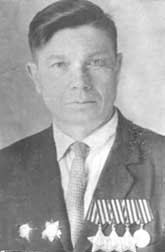


Gosteva Nadezhda Kuzminichna
My great-grandmother was from an ordinary working-class family. Her father, Kuzma Alexandrovich Gostev, was a pimokat(maker of felt boots), and her mother, Maria Iosifovna, was engaged in the household and also rolled pimas. Great-great-grandfather learned a little to read and write, but great-great-grandmother remained illiterate. There were 14 children in the family, but 9 died while still young - five, two guys and three girls remained. My great-grandmother was average. The family of my great-grandmother left for the city of Biysk at the very end of the 20s. Dekulakization began in the Urals, and it was hungry. Great-grandfather was arrested, spent a week in prison, and when he was released, he did not wait for a second arrest, gathered his family and left for the city of Biysk. The elder brother of the great-grandmother, Gregory, together with his wife barely managed to jump out the window when they came to dispossess their family. They left for Omsk, and the great-grandfather's family settled in Biysk. Nobody was going to send my great-grandmother to school. And so she would have lived her whole life as an illiterate, like her older sister, if she had not enrolled herself in school. She was almost 10 years old at that time. Our family has preserved the report card of the student of the 4th "B" class of Guest Nadya, 13 years old, the daughter of a disabled person, a pioneer shock-drummer, who performs tasks satisfactorily. In 1938, the family of my great-grandmother moved to the city of Omsk and her whole further life was connected with this city. Great-grandmother continued her studies at school number 20 of the Stalin district of Omsk. My great-grandmother, Gosteva Nadezhda Kuzminichna, received a certificate of maturity on June 14, 1941. This document is treasured by our family. And in July she was drafted into the army. At music lessons we once sang Vadim Yegorov's song "Clouds". The teacher told us that the epigraph to this song is “Dedicated to graduates of 1941”. So my great-grandmother was a 1941 graduate. It is for her, like many boys and girls, 7 days after the prom, not only her childhood, but also her youth ended. I often think - what did my great-grandmother dream about on graduation day? Most likely she wanted to become a doctor, because I graduated from nursing courses at the same time as the 10th grade, I wanted to study further, to get married, but the Great Patriotic War left its mark on the fate of many residents of the city of Omsk, including the fate of my great-grandmother. The story of how my great-grandmother got to the Western Front, I know from childhood, it is passed down here from generation to generation. After all, thanks to chance, perhaps we were all born and our branch of the family tree continues. The whole point was that when the summons arrived, the great-grandmother was on duty at the hospital, because of this, her attendance was moved for a day on the summons. Her father brought her a summons to work with the words that although he was sick, people like him would be much more use at the front than those young and inexperienced like her. And so it happened that the mobilized group that my great-grandmother was supposed to get into went to the west, and because of her watch in the hospital, she was sent from Omsk with the next group to the east. We drove for a month in a "calf" carriage. More than anything, my great-grandmother was afraid of catching lice, so at every stop she ran with a kettle for hot water, washed her hair and combed it with a fine comb. The great-grandmother often remembered how they were all afraid to cross Lake Baikal. Arranged a watch with the girls - no one believed the foreman who accompanied them that the lake was very large and they would not sleep it. When the train arrived at its destination, all the girls were ordered to cut their hair “to the collar”. Great-grandmother recalled that a bunch of cut hair was moving from lice, and the hairdresser put her braid separately. The team in which my great-grandmother was recruited turned out to be a bath and laundry. The team leader refused to accept my great-grandmother, because he needed strong, robust women, and she was very tall, very thin, and even with glasses. The management, having learned that my great-grandmother had a 10th grade education, sent her to courses in X-ray technicians. She served as an X-ray technician until April 15, 1943, and then she was demobilized until further notice, without the right to leave the place, now not service, but work. She spoke little about these years. It was physically difficult. Shifts 12-18 hours. Many were wounded. One day the doctor called her to look at a man whose heart was on the right side. And the future singer of the Bolshoi Theater Alexander Pavlovich Ognivtsev worked as an electrician in the hospital. But most often the great-grandmother remembered Dr. Kosuha. It so happened that a nurse stole food ration cards from my great-grandmother. And before receiving the next was another week. For three days, my great-grandmother lived only on the water, and then Dr. Kosuha noticed that something was wrong with her and invited her to his office for tea and put a saucer with breadcrumbs on the table. Great-grandmother said that she ate one biscuit, then the second, and the third was ashamed to take. She remembered these two biscuits all her life.When everything was revealed, Dr. Kosuha scolded his great-grandmother for not telling him the truth. My great-grandmother was allowed to return to the city of Omsk only in September 1945. In 1949 she graduated from the Omsk Pedagogical Institute and was recruited to the Tyukalinsk school as a teacher of physics and mathematics. My grandmother's family moved to Kormilovka in 1061. Great-grandmother, Gosteva Nadezhda Kuzminichna, was hired at the Kormilovskaya 8-year school, where she worked for 15 years. In 1976 she was awarded the Veteran of Labor medal and retired.
Gosteva Nadezhda Kuzminichna
My great-grandmother was from an ordinary working-class family. Her father, Kuzma Alexandrovich Gostev, was a pimokat(maker of felt boots), and her mother, Maria Iosifovna, was engaged in the household and also rolled pimas. Great-great-grandfather learned a little to read and write, but great-great-grandmother remained illiterate. There were 14 children in the family, but 9 died while still young - five, two guys and three girls remained. My great-grandmother was average. The family of my great-grandmother left for the city of Biysk at the very end of the 20s. Dekulakization began in the Urals, and it was hungry. Great-grandfather was arrested, spent a week in prison, and when he was released, he did not wait for a second arrest, gathered his family and left for the city of Biysk. The elder brother of the great-grandmother, Gregory, together with his wife barely managed to jump out the window when they came to dispossess their family. They left for Omsk, and the great-grandfather's family settled in Biysk. Nobody was going to send my great-grandmother to school. And so she would have lived her whole life as an illiterate, like her older sister, if she had not enrolled herself in school. She was almost 10 years old at that time. Our family has preserved the report card of the student of the 4th "B" class of Guest Nadya, 13 years old, the daughter of a disabled person, a pioneer shock-drummer, who performs tasks satisfactorily. In 1938, the family of my great-grandmother moved to the city of Omsk and her whole further life was connected with this city. Great-grandmother continued her studies at school number 20 of the Stalin district of Omsk. My great-grandmother, Gosteva Nadezhda Kuzminichna, received a certificate of maturity on June 14, 1941. This document is treasured by our family. And in July she was drafted into the army. At music lessons we once sang Vadim Yegorov's song "Clouds". The teacher told us that the epigraph to this song is “Dedicated to graduates of 1941”. So my great-grandmother was a 1941 graduate. It is for her, like many boys and girls, 7 days after the prom, not only her childhood, but also her youth ended. I often think - what did my great-grandmother dream about on graduation day? Most likely she wanted to become a doctor, because I graduated from nursing courses at the same time as the 10th grade, I wanted to study further, to get married, but the Great Patriotic War left its mark on the fate of many residents of the city of Omsk, including the fate of my great-grandmother. The story of how my great-grandmother got to the Western Front, I know from childhood, it is passed down here from generation to generation. After all, thanks to chance, perhaps we were all born and our branch of the family tree continues. The whole point was that when the summons arrived, the great-grandmother was on duty at the hospital, because of this, her attendance was moved for a day on the summons. Her father brought her a summons to work with the words that although he was sick, people like him would be much more use at the front than those young and inexperienced like her. And so it happened that the mobilized group that my great-grandmother was supposed to get into went to the west, and because of her watch in the hospital, she was sent from Omsk with the next group to the east. We drove for a month in a "calf" carriage. More than anything, my great-grandmother was afraid of catching lice, so at every stop she ran with a kettle for hot water, washed her hair and combed it with a fine comb. The great-grandmother often remembered how they were all afraid to cross Lake Baikal. Arranged a watch with the girls - no one believed the foreman who accompanied them that the lake was very large and they would not sleep it. When the train arrived at its destination, all the girls were ordered to cut their hair “to the collar”. Great-grandmother recalled that a bunch of cut hair was moving from lice, and the hairdresser put her braid separately. The team in which my great-grandmother was recruited turned out to be a bath and laundry. The team leader refused to accept my great-grandmother, because he needed strong, robust women, and she was very tall, very thin, and even with glasses. The management, having learned that my great-grandmother had a 10th grade education, sent her to courses in X-ray technicians. She served as an X-ray technician until April 15, 1943, and then she was demobilized until further notice, without the right to leave the place, now not service, but work. She spoke little about these years. It was physically difficult. Shifts 12-18 hours. Many were wounded. One day the doctor called her to look at a man whose heart was on the right side. And the future singer of the Bolshoi Theater Alexander Pavlovich Ognivtsev worked as an electrician in the hospital. But most often the great-grandmother remembered Dr. Kosuha. It so happened that a nurse stole food ration cards from my great-grandmother. And before receiving the next was another week. For three days, my great-grandmother lived only on the water, and then Dr. Kosuha noticed that something was wrong with her and invited her to his office for tea and put a saucer with breadcrumbs on the table. Great-grandmother said that she ate one biscuit, then the second, and the third was ashamed to take. She remembered these two biscuits all her life.When everything was revealed, Dr. Kosuha scolded his great-grandmother for not telling him the truth. My great-grandmother was allowed to return to the city of Omsk only in September 1945. In 1949 she graduated from the Omsk Pedagogical Institute and was recruited to the Tyukalinsk school as a teacher of physics and mathematics. My grandmother's family moved to Kormilovka in 1061. Great-grandmother, Gosteva Nadezhda Kuzminichna, was hired at the Kormilovskaya 8-year school, where she worked for 15 years. In 1976 she was awarded the Veteran of Labor medal and retired.
0 comment



2026 © Russian Military Historical Society Developed by Jetmix