




Bartosh Pavel Romanovich
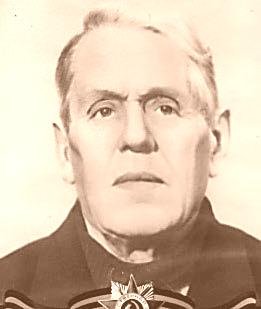
Pavel Romanovich Bartosh was born in 1924. Participant of the Second World War. Grade title: a second lieutenant. Branch of service: Artillery. Subunit: the 195th Red Banner rifle division of Novomoskovsk. He fell in battle in the February of 1944. On the 24th of September, 1942, Pavlik was called up into the Red Army by the Atbasar district military Commissariat and sent to the city of Chardzhou (Uzbekistan) to attend the accelerated officer courses at a snipe school. His sister Anna Romanovna, who turned 89 in 2015, recalls that when Pavlik was leaving the village on a cart he was looking back until his native places passed out of sight. On the 13th of January, 1944, Pavel Romanovich Bartosh in the rank of second lieutenant was appointed commander of the machine-gun platoon of the 604th rifle regiment of the 195th Red Banner rifle division of Novomoskovsk of the 3rd Ukrainian front which were fighting that time in the native country of his parents. Just at that time the division was preparing for an offensive. Troops and sometimes even battalions took turns to be withdrawn to the neighbor home front for training and exercises, which were held around the clock, often at night, in all weather conditions. Commanders sought for cohesion of units. According to the plan of General Rodion Malinovsky, the commander of the 3rd Ukrainian front, the army were to make the main attack in the direction of the city of Apostolovo; the offensive front was to merge into a single powerful stream with the offensive of the 4th Ukrainian front, to bring down the entrenched defense of the 6th German Army and to result ultimately in the liberation of all of the southern Ukraine with the large industrial centers of Nikopol and Krivoy Rog. The fighting activities of the two fronts were named the Nikopol-Kryvorozhsky operation. The 195th rifle division was to advance from the Petrov Dolina and Sofiyevka lines towards the settlements of Novo-Khortytsia and Zeleny Kut. In the early morning of the 31st of January, 1944, the offensive began. The fightings went on day and night. Here is an extract from the award list dated the 7th of February, 1944: "On the 1st and 2nd of February, 1944, in the battles for the village of Alekseyevka and for the farm of Novo-Khortytsia, second lieutenant Bartosh showed courage and bravery commanding a machine-gun platoon which was in the infantry battle formations and helping the infantry to move forward. By skillfull advance of the machine guns onto the flanks he managed to suppress two enemy machine guns with detachments and therefore contributed to the capture of the villages of Alekseevka and Novo-Khortytsia and to the success of the unit combat mission. He deserves the government award of Medal for Bravery. Commander of the 604th rifle regiment, major Kerimov." The offensive continued, there were fierce battles. On the 8th of February, 1944, Pavel was killed, and on the 9th of February there came order No.010/n for the parts of the 195th Red Banner rifle division of Novomoskovsk of the 3rd Ukrainian front: "on behalf of the Chairman of the Supreme Soviet of the USSR for the exemplary performance of fighting tasks of the Command at the front of struggle with German invaders and for the valor and courage displayed: “Medal for Bravery” is awarded to second lieutenant Pavel Romanovich Bartosh, commander of a machine-gun platoon of the 604th rifle regiment. Guards colonel Suchkov, commander of the 195th Red Banner rifle division of Novomoskovsk." And Pavel was not even twenty years old at that time. There a death notice came home, the Komsomol membership card pierced by a bullet was delivered that was later sent to the regional museum. There were only letters left - from Uzbekistan about what beautiful mountains, amazing trees and fruits there were; most often he wrote about how he missed home and family, the endless grasslands and the Zhabayka river. And also that "not a single fascist I see will remain alive." It is known from the archives that he was buried in the territory of the Dnepropetrovsk region, Sofiyevsky district, Lensky village. Pavel's parents lived a long life and his photo always stood in the red corner on an embroidered towel next to the icon. The village of Poltavka carefully preserves the memory of those who were killed during the Great Patriotic War. In 1970 a monument to fellow countrymen who died in the fight against fascism was opened on the Central square.
Bartosh Pavel Romanovich
Pavel Romanovich Bartosh was born in 1924. Participant of the Second World War. Grade title: a second lieutenant. Branch of service: Artillery. Subunit: the 195th Red Banner rifle division of Novomoskovsk. He fell in battle in the February of 1944. On the 24th of September, 1942, Pavlik was called up into the Red Army by the Atbasar district military Commissariat and sent to the city of Chardzhou (Uzbekistan) to attend the accelerated officer courses at a snipe school. His sister Anna Romanovna, who turned 89 in 2015, recalls that when Pavlik was leaving the village on a cart he was looking back until his native places passed out of sight. On the 13th of January, 1944, Pavel Romanovich Bartosh in the rank of second lieutenant was appointed commander of the machine-gun platoon of the 604th rifle regiment of the 195th Red Banner rifle division of Novomoskovsk of the 3rd Ukrainian front which were fighting that time in the native country of his parents. Just at that time the division was preparing for an offensive. Troops and sometimes even battalions took turns to be withdrawn to the neighbor home front for training and exercises, which were held around the clock, often at night, in all weather conditions. Commanders sought for cohesion of units. According to the plan of General Rodion Malinovsky, the commander of the 3rd Ukrainian front, the army were to make the main attack in the direction of the city of Apostolovo; the offensive front was to merge into a single powerful stream with the offensive of the 4th Ukrainian front, to bring down the entrenched defense of the 6th German Army and to result ultimately in the liberation of all of the southern Ukraine with the large industrial centers of Nikopol and Krivoy Rog. The fighting activities of the two fronts were named the Nikopol-Kryvorozhsky operation. The 195th rifle division was to advance from the Petrov Dolina and Sofiyevka lines towards the settlements of Novo-Khortytsia and Zeleny Kut. In the early morning of the 31st of January, 1944, the offensive began. The fightings went on day and night. Here is an extract from the award list dated the 7th of February, 1944: "On the 1st and 2nd of February, 1944, in the battles for the village of Alekseyevka and for the farm of Novo-Khortytsia, second lieutenant Bartosh showed courage and bravery commanding a machine-gun platoon which was in the infantry battle formations and helping the infantry to move forward. By skillfull advance of the machine guns onto the flanks he managed to suppress two enemy machine guns with detachments and therefore contributed to the capture of the villages of Alekseevka and Novo-Khortytsia and to the success of the unit combat mission. He deserves the government award of Medal for Bravery. Commander of the 604th rifle regiment, major Kerimov." The offensive continued, there were fierce battles. On the 8th of February, 1944, Pavel was killed, and on the 9th of February there came order No.010/n for the parts of the 195th Red Banner rifle division of Novomoskovsk of the 3rd Ukrainian front: "on behalf of the Chairman of the Supreme Soviet of the USSR for the exemplary performance of fighting tasks of the Command at the front of struggle with German invaders and for the valor and courage displayed: “Medal for Bravery” is awarded to second lieutenant Pavel Romanovich Bartosh, commander of a machine-gun platoon of the 604th rifle regiment. Guards colonel Suchkov, commander of the 195th Red Banner rifle division of Novomoskovsk." And Pavel was not even twenty years old at that time. There a death notice came home, the Komsomol membership card pierced by a bullet was delivered that was later sent to the regional museum. There were only letters left - from Uzbekistan about what beautiful mountains, amazing trees and fruits there were; most often he wrote about how he missed home and family, the endless grasslands and the Zhabayka river. And also that "not a single fascist I see will remain alive." It is known from the archives that he was buried in the territory of the Dnepropetrovsk region, Sofiyevsky district, Lensky village. Pavel's parents lived a long life and his photo always stood in the red corner on an embroidered towel next to the icon. The village of Poltavka carefully preserves the memory of those who were killed during the Great Patriotic War. In 1970 a monument to fellow countrymen who died in the fight against fascism was opened on the Central square.
0 comment



2026 © Russian Military Historical Society Developed by Jetmix