


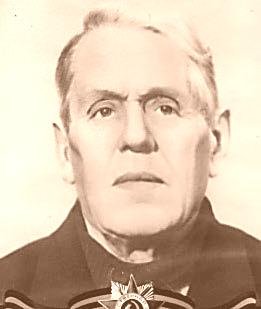


Bodrov Victor Grigorievich
Grade title: sergeant-major. Branch of service: land forces, military air forces (except for naval aviation), coast service, troops of the People's commissariat of internal affairs, border troops. My dad, when he was twelve years old, was actually left an orphan with a younger sister in his arms. They lived with different relatives. He did well at school, was very athletic and active. Engaged in self-education. In general, he was a real member of the Komsomol of his time. He graduated from school in May of 1943 and on the 7th of November, 1943, was called up into the army. As a seventeen-year-old boy, he went to the front (born in 1926 were the last to be called up to the front). The good academic performance at school did its part. He was selected for the radio regiment. He started the war as a cadet of the 62nd separate radio regiment. In July of 1944 he was sent to the front as a radio operator in the 103rd tank brigade of the 3rd Belorussian front. He finished fighting in June of 1945. On the 17th of March, 1945, he received his first wound in the right hand. According to my father's story, during the shootout he didn't notice it at first. Then, he saw that the quilted jacket on the left side was turned upside down - a fragment flew between the arm and side and tore both the arm and side. He quickly recovered and went back into the battle! The second wound was caused in the right thigh on the 17th of April, 1945, (one month later exactly). And the small fragment remained under the knee reminding of itself all his life. After going through all the horrors of the war at a very young age, dad did not like to talk about the war. And if he did, it was less scary stories, just episodes when he was lucky to stay alive. The experienced lieutenant tried to protect him like a son. During the next offensive he ordered to check the communication line, thereby actually saving my dad. And, perhaps, the funniest case. I remember it from my childhood. Story from the first person: - “We are driving once at night down a forest road and literally come accross with German cars head-on. Everyone jumped out of the cars and into the ditch. We are on one side, the Germans on the other, and all started to shoot in the dark. In short, the Germans were repulsed from their cars, none of our people were injured. The Krauts did not especially resist toward the end. Well, we climbed into their trucks and there was canned food and chocolate. I can't tell you how much we ate that day. In a word - children! That day I also found an officer's hanger but when I was demobilized they took it away”. When the war ended, dad remained in service until 1951. He came to the city of Zhukovsky in the Moscow region and worked at the Central Aerohydrodynamic Institute until the age of 63. I always wondered that having passed such a difficult life path my father was such a real intellectual, a lover of life. He played sports, did not drink, did not smoke, and was professionally engaged in photography. A wonderful, honest, kind and sympathetic person with a capital P! Back home in the city of Ozery there is an exhibition about my dad in the local history museum. Countrymen honor the memory of their veterans! Let our fathers’ heroic deeds live through the ages!
Bodrov Victor Grigorievich
Grade title: sergeant-major. Branch of service: land forces, military air forces (except for naval aviation), coast service, troops of the People's commissariat of internal affairs, border troops. My dad, when he was twelve years old, was actually left an orphan with a younger sister in his arms. They lived with different relatives. He did well at school, was very athletic and active. Engaged in self-education. In general, he was a real member of the Komsomol of his time. He graduated from school in May of 1943 and on the 7th of November, 1943, was called up into the army. As a seventeen-year-old boy, he went to the front (born in 1926 were the last to be called up to the front). The good academic performance at school did its part. He was selected for the radio regiment. He started the war as a cadet of the 62nd separate radio regiment. In July of 1944 he was sent to the front as a radio operator in the 103rd tank brigade of the 3rd Belorussian front. He finished fighting in June of 1945. On the 17th of March, 1945, he received his first wound in the right hand. According to my father's story, during the shootout he didn't notice it at first. Then, he saw that the quilted jacket on the left side was turned upside down - a fragment flew between the arm and side and tore both the arm and side. He quickly recovered and went back into the battle! The second wound was caused in the right thigh on the 17th of April, 1945, (one month later exactly). And the small fragment remained under the knee reminding of itself all his life. After going through all the horrors of the war at a very young age, dad did not like to talk about the war. And if he did, it was less scary stories, just episodes when he was lucky to stay alive. The experienced lieutenant tried to protect him like a son. During the next offensive he ordered to check the communication line, thereby actually saving my dad. And, perhaps, the funniest case. I remember it from my childhood. Story from the first person: - “We are driving once at night down a forest road and literally come accross with German cars head-on. Everyone jumped out of the cars and into the ditch. We are on one side, the Germans on the other, and all started to shoot in the dark. In short, the Germans were repulsed from their cars, none of our people were injured. The Krauts did not especially resist toward the end. Well, we climbed into their trucks and there was canned food and chocolate. I can't tell you how much we ate that day. In a word - children! That day I also found an officer's hanger but when I was demobilized they took it away”. When the war ended, dad remained in service until 1951. He came to the city of Zhukovsky in the Moscow region and worked at the Central Aerohydrodynamic Institute until the age of 63. I always wondered that having passed such a difficult life path my father was such a real intellectual, a lover of life. He played sports, did not drink, did not smoke, and was professionally engaged in photography. A wonderful, honest, kind and sympathetic person with a capital P! Back home in the city of Ozery there is an exhibition about my dad in the local history museum. Countrymen honor the memory of their veterans! Let our fathers’ heroic deeds live through the ages!
0 comment



2026 © Russian Military Historical Society Developed by Jetmix