


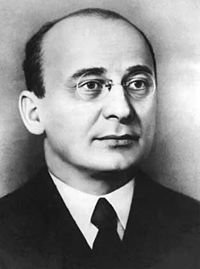


Boris Fyodorovich Bokov
Rank: Senior Lieutenant
Type of troops: Armoured and mechanized troops.
Boris Fedorovich Bokov was born on April 10, 1923 in the village of Sitovka, Lipetsk district of Voronezh (now Lipetsk) region in a peasant family. His father, Bokov Fedor Nikolaevich, died from Botkin's disease (Hepatitis A) in 1932, and 9-year-old Boris remained the only man in the family. His family consisted of Boris, his mother and two younger sisters. In September 1938, B.Bokov, after finishing the 7th grade, was admitted to the school of FZU (now Professional technical school) of the Lipetsk Metallurgical Plant "Svobodny Sokol" as a student-driver of an electric crane. I would like to note that the family of B.Bokov lived very poor. That was proved by the fact that in the fall of 1938, his grandmother presented 15-year-old Boris new rubbers, so he could go to study in the city in a bad weather. The rubbers were an unimaginable luxury for him (he used to wear the lapti - bast shoes through all his life). Boris was so happy, that almost bowed to his grandmother at the feet for the gift. B.Bokov tried to get a job at the Lipetsk Metallurgical Plant "Svobodny Sokol" after 2 years of studies in FZU, but he couldn’t be admitted there because of the young age. From May 1940 to February 1941 - B.Bokov worked as a labourer at the Military Academy of Mechanization and Motorization of the Workers 'and Peasants' Red Army named after J. Stalin. On February 20, 1941, B.Bokov was nevertheless hired by the Lipetsk Metallurgical Plant "Svobodny Sokol" as an electrician in a blast furnace shop. Very soon, already in October 1941, he was drafted into the ranks of the Red Army to fight the enemy. For the period from 1941 to 1943. B.Bokov showed himself as a very brave man, a true patriot of his Motherland. He appeared in the most critical and difficult sectors of the battle, inspiring the personnel with his presence and fearlessness. In 1942, Bokov's great uncle, Bokov Dmitry Nikolaevich, died on the war fronts. Upon learning of this, B.Bokov vowed to be the first in all battles and mercilessly take revenge on the Nazis for the death of his uncle. To take revenge until the fascist army is completely defeated. By 1944, B.Bokov had the rank of Guard Senior Lieutenant and was the commander of a company of machine gunners, a motorized battalion of machine gunners of the 40th Guards Tank Red Banner Chertkov Order of Bogdan Khmelnitsky and the Red Star Brigade. But B.Bokov most vividly showed his ability to lead a company in battles from July to August 1944 on the territory of Poland. On July 18, 1944, his company was the first to cross the Western Bug river. On the next day, Bokov's company was the first to break into the village of Baratin. Comrade B.Bokov himself showed a personal example and, with soft pressure and energy, led the soldiers of his company along with him. B.Bokov's company showed resilience and tenacity during the battles for the village of Ostrow and expansion of the bridgehead on the left bank of the Son River. When the Germans launched a counterattack in the area of the city of Radomna, despite the superior strength of the enemy, Bokov's company did not retreat a single step from the held territory, repulsed the Germans' counterattack and inflicted heavy damage on the enemy. B.Bokov's company defended the intersection of the highways between the cities of Tornobrzeg and Kopsevnica in August 1944 during the battles for holding the bridgehead on the left bank of the Vistula River. The Germans came close to the company of B.Bokov in a counterattack having superior strength with the aim to reach the river crossing. His fighters, inspired by their fearless commander, stood to their death and hold the line, inflicting heavy losses on the Nazis. For the entire period of battles from July 17, 1944 to August 12, 1944, in the smoke and fire, everyone could see the young slender figure of Boris. There were 170 German soldiers killed and about 10 light and tank machine guns destroyed on his company’s combat account. A fragment of an enemy shell interrupted young, ebullient life of Boris in fierce battles on August 22, 1944. This is how my great-grandfather died in the battle for the Socialist Motherland, being faithful to the military oath, showing heroism and courage. B.Bokov was buried with military honours in a solitary grave in the village of Gurki, Klimontuv area in Poland. The Motherland highly appreciated his merits and gave him with a high government award for the shown courage and bravery. The Guards Senior Lieutenant Boris Fedorovich Bokov was awarded the Order of the Patriotic War of the 1st class by of the Supreme Soviet of the USSR of 09/19/1944, for the exemplary performance of the Command’s combat missions at the front of the fight against the German invaders, for the valour and courage shown. Also in his homeland, local authorities erected a monument at the cemetery of the village of Ilyino in 1979. It had the names of all residents of the villages. Sitovka, Vvedenka, Ilyino and Nikolskoye, who died during the war. The name of Boris Fedorovich Bokov is among them.
Boris Fyodorovich Bokov
Rank: Senior Lieutenant
Type of troops: Armoured and mechanized troops.
Boris Fedorovich Bokov was born on April 10, 1923 in the village of Sitovka, Lipetsk district of Voronezh (now Lipetsk) region in a peasant family. His father, Bokov Fedor Nikolaevich, died from Botkin's disease (Hepatitis A) in 1932, and 9-year-old Boris remained the only man in the family. His family consisted of Boris, his mother and two younger sisters. In September 1938, B.Bokov, after finishing the 7th grade, was admitted to the school of FZU (now Professional technical school) of the Lipetsk Metallurgical Plant "Svobodny Sokol" as a student-driver of an electric crane. I would like to note that the family of B.Bokov lived very poor. That was proved by the fact that in the fall of 1938, his grandmother presented 15-year-old Boris new rubbers, so he could go to study in the city in a bad weather. The rubbers were an unimaginable luxury for him (he used to wear the lapti - bast shoes through all his life). Boris was so happy, that almost bowed to his grandmother at the feet for the gift. B.Bokov tried to get a job at the Lipetsk Metallurgical Plant "Svobodny Sokol" after 2 years of studies in FZU, but he couldn’t be admitted there because of the young age. From May 1940 to February 1941 - B.Bokov worked as a labourer at the Military Academy of Mechanization and Motorization of the Workers 'and Peasants' Red Army named after J. Stalin. On February 20, 1941, B.Bokov was nevertheless hired by the Lipetsk Metallurgical Plant "Svobodny Sokol" as an electrician in a blast furnace shop. Very soon, already in October 1941, he was drafted into the ranks of the Red Army to fight the enemy. For the period from 1941 to 1943. B.Bokov showed himself as a very brave man, a true patriot of his Motherland. He appeared in the most critical and difficult sectors of the battle, inspiring the personnel with his presence and fearlessness. In 1942, Bokov's great uncle, Bokov Dmitry Nikolaevich, died on the war fronts. Upon learning of this, B.Bokov vowed to be the first in all battles and mercilessly take revenge on the Nazis for the death of his uncle. To take revenge until the fascist army is completely defeated. By 1944, B.Bokov had the rank of Guard Senior Lieutenant and was the commander of a company of machine gunners, a motorized battalion of machine gunners of the 40th Guards Tank Red Banner Chertkov Order of Bogdan Khmelnitsky and the Red Star Brigade. But B.Bokov most vividly showed his ability to lead a company in battles from July to August 1944 on the territory of Poland. On July 18, 1944, his company was the first to cross the Western Bug river. On the next day, Bokov's company was the first to break into the village of Baratin. Comrade B.Bokov himself showed a personal example and, with soft pressure and energy, led the soldiers of his company along with him. B.Bokov's company showed resilience and tenacity during the battles for the village of Ostrow and expansion of the bridgehead on the left bank of the Son River. When the Germans launched a counterattack in the area of the city of Radomna, despite the superior strength of the enemy, Bokov's company did not retreat a single step from the held territory, repulsed the Germans' counterattack and inflicted heavy damage on the enemy. B.Bokov's company defended the intersection of the highways between the cities of Tornobrzeg and Kopsevnica in August 1944 during the battles for holding the bridgehead on the left bank of the Vistula River. The Germans came close to the company of B.Bokov in a counterattack having superior strength with the aim to reach the river crossing. His fighters, inspired by their fearless commander, stood to their death and hold the line, inflicting heavy losses on the Nazis. For the entire period of battles from July 17, 1944 to August 12, 1944, in the smoke and fire, everyone could see the young slender figure of Boris. There were 170 German soldiers killed and about 10 light and tank machine guns destroyed on his company’s combat account. A fragment of an enemy shell interrupted young, ebullient life of Boris in fierce battles on August 22, 1944. This is how my great-grandfather died in the battle for the Socialist Motherland, being faithful to the military oath, showing heroism and courage. B.Bokov was buried with military honours in a solitary grave in the village of Gurki, Klimontuv area in Poland. The Motherland highly appreciated his merits and gave him with a high government award for the shown courage and bravery. The Guards Senior Lieutenant Boris Fedorovich Bokov was awarded the Order of the Patriotic War of the 1st class by of the Supreme Soviet of the USSR of 09/19/1944, for the exemplary performance of the Command’s combat missions at the front of the fight against the German invaders, for the valour and courage shown. Also in his homeland, local authorities erected a monument at the cemetery of the village of Ilyino in 1979. It had the names of all residents of the villages. Sitovka, Vvedenka, Ilyino and Nikolskoye, who died during the war. The name of Boris Fedorovich Bokov is among them.
0 comment




2026 © Russian Military Historical Society Developed by Jetmix