

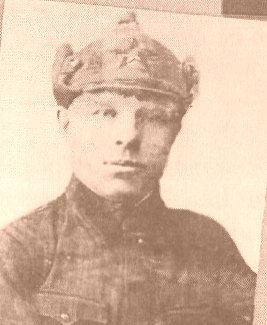


Timchenko Ksenia Petrova
Ksenia Timchenko, a veteran of the Great Patriotic war, was born in 1923 and was awarded the medal "For the defense of the Caucasus". At the beginning of the Great Patriotic war, 17-year-old Ksenia Timchenko went to an evening school for warking young people and worked as a nurse in the first city clinic in Sukhum. "When the war started, we moved on to the military situation. We were on duty for days, we were trained to handle the wounded. The front was approaching Abkhazia, and they started bombing Sukhum, " - the veteran recalls. In April 1942, Ksenia Timchenko was drafted into the army and sent to the 33rd Separate Searchlight Battalion in Batumi. "Our unit was in the mountains. When the German planes flew in, we turned on the searchlights," - the veteran says excitedly. After 40 days of training, Ksenia Timchenko wass accepted into the Air Surveillance and Warning Communications Battalion, where she served until the end of the war. "After training, we were assigned to posts. The first post I was in a Gale, and then we were transferred to Tkuarchal. We stood on towers, if there was no wooden tower, then we removed roofs from houses and watched the planes. We had to determine from what course the German plane took off and at what course it was flying, at what altitude, loaded or not. We passed this information to the battalion, and they were already anti-aircraft gunners who were standing in the mountains. After the front became quieter, all our posts were collected in Sukhum and distributed around the city. Our battalion was scattered from Batumi to Gagra," says Timchenko. The veteran notes that the goal of the German fascists was the Sukhumi pier. "The goal of the Nazis was to bomb the pier so that ships could not approach our shore. One bomb fell in Stalin Park, there were many evacuees, another bomb hit the house of culture on Frunze street, another bomb fell in the Komsomol city Committee on Mira Avenue, " Timchenko shares his memories of the bombing of Sukhum. In February 1943, Ksenia Timchenko's battalion was sent through Dagestan to Mineralnye Vody, where they came under heavy bombardment by German aircraft. "The bombing started when we were in the cars. We were ordered to get off the train and lie down on the ground. It was very cold, we all got into the mud and waited for the bombing to end. Then we were told that the Germans tried to destroy a nearby bakery, " the veteran says with a heavy sigh. Ksenia Timchenko's battalion arrived in Krasnodar by train, but the Red Army had liberated the city by that time, and then the soldiers reached Rostov on foot. "We were advised to go on the sleepers, not on the paved road, as they could get lost. We walked 43 kilometers, " says Timchenko. Ksenia Timchenko's battalion went to the second Ukrainian Front, then the second Belarusian Front. "There was a strong German air raid in Vitebsk and Velikiye Luki. The front was moving West, and the Germans were trying to stop the Soviet troops, " says the veteran. After the liberation of Belarus, Ksenia Timchenko's military career continued in Poland, and then in Latvia. In Latvia, the veteran was until the end of the war. For her heroism in the great Patriotic war, Ksenia Timchenko was awarded the medal "For the defense of the Caucasus". More than 55 thousand residents of Abkhazia fought on the fronts of the great Patriotic war of 1941-1945, of which more than 17 thousand did not return from the battlefields, 22 residents of the Republic were awarded the title of Hero of the Soviet Union.
Timchenko Ksenia Petrova
Ksenia Timchenko, a veteran of the Great Patriotic war, was born in 1923 and was awarded the medal "For the defense of the Caucasus". At the beginning of the Great Patriotic war, 17-year-old Ksenia Timchenko went to an evening school for warking young people and worked as a nurse in the first city clinic in Sukhum. "When the war started, we moved on to the military situation. We were on duty for days, we were trained to handle the wounded. The front was approaching Abkhazia, and they started bombing Sukhum, " - the veteran recalls. In April 1942, Ksenia Timchenko was drafted into the army and sent to the 33rd Separate Searchlight Battalion in Batumi. "Our unit was in the mountains. When the German planes flew in, we turned on the searchlights," - the veteran says excitedly. After 40 days of training, Ksenia Timchenko wass accepted into the Air Surveillance and Warning Communications Battalion, where she served until the end of the war. "After training, we were assigned to posts. The first post I was in a Gale, and then we were transferred to Tkuarchal. We stood on towers, if there was no wooden tower, then we removed roofs from houses and watched the planes. We had to determine from what course the German plane took off and at what course it was flying, at what altitude, loaded or not. We passed this information to the battalion, and they were already anti-aircraft gunners who were standing in the mountains. After the front became quieter, all our posts were collected in Sukhum and distributed around the city. Our battalion was scattered from Batumi to Gagra," says Timchenko. The veteran notes that the goal of the German fascists was the Sukhumi pier. "The goal of the Nazis was to bomb the pier so that ships could not approach our shore. One bomb fell in Stalin Park, there were many evacuees, another bomb hit the house of culture on Frunze street, another bomb fell in the Komsomol city Committee on Mira Avenue, " Timchenko shares his memories of the bombing of Sukhum. In February 1943, Ksenia Timchenko's battalion was sent through Dagestan to Mineralnye Vody, where they came under heavy bombardment by German aircraft. "The bombing started when we were in the cars. We were ordered to get off the train and lie down on the ground. It was very cold, we all got into the mud and waited for the bombing to end. Then we were told that the Germans tried to destroy a nearby bakery, " the veteran says with a heavy sigh. Ksenia Timchenko's battalion arrived in Krasnodar by train, but the Red Army had liberated the city by that time, and then the soldiers reached Rostov on foot. "We were advised to go on the sleepers, not on the paved road, as they could get lost. We walked 43 kilometers, " says Timchenko. Ksenia Timchenko's battalion went to the second Ukrainian Front, then the second Belarusian Front. "There was a strong German air raid in Vitebsk and Velikiye Luki. The front was moving West, and the Germans were trying to stop the Soviet troops, " says the veteran. After the liberation of Belarus, Ksenia Timchenko's military career continued in Poland, and then in Latvia. In Latvia, the veteran was until the end of the war. For her heroism in the great Patriotic war, Ksenia Timchenko was awarded the medal "For the defense of the Caucasus". More than 55 thousand residents of Abkhazia fought on the fronts of the great Patriotic war of 1941-1945, of which more than 17 thousand did not return from the battlefields, 22 residents of the Republic were awarded the title of Hero of the Soviet Union.
0 comment



2026 © Russian Military Historical Society Developed by Jetmix