Back to
album
album
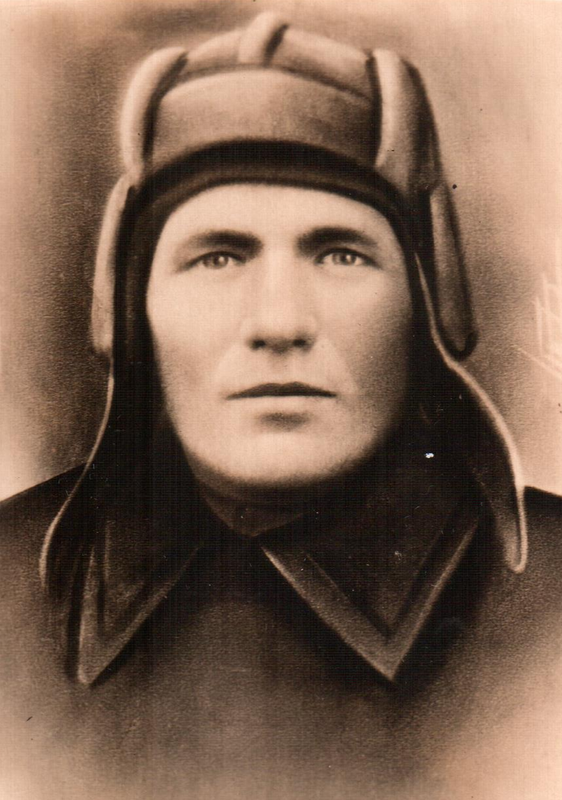
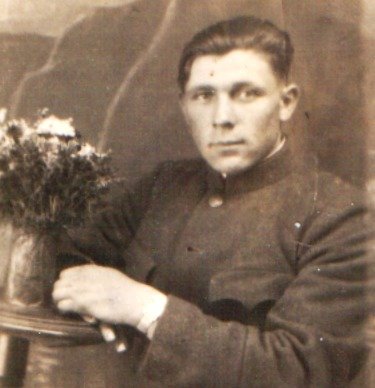
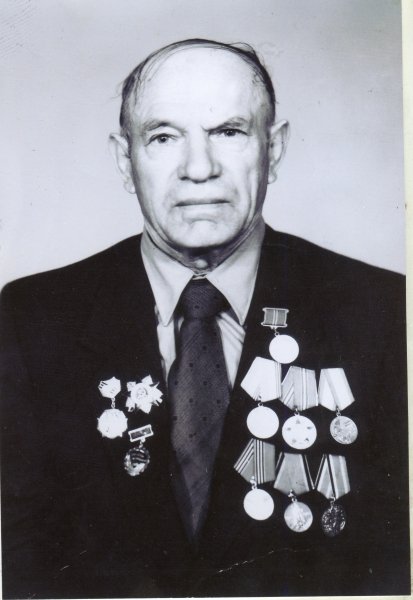
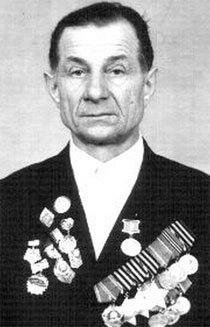
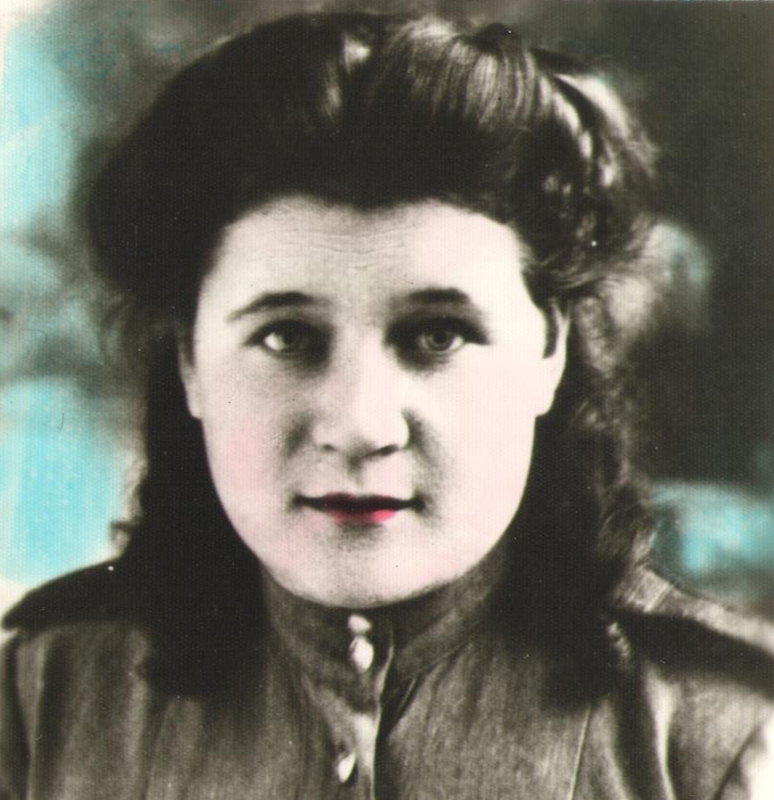
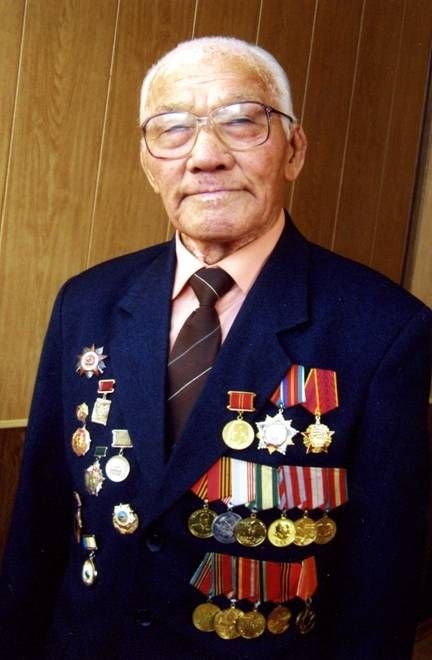


Zhuravleva (Labunskaya) Vladislava Ivanovna
BACKGROUND: Rank: Senior Sergeant Troops: Military Medicine Valentina Ivanovna Zhuravleva (Vladislava Ivanovna Labunskaya) was born on December 21, 1922 in Ukraine in Kamenets-Podolsk region. (now Khmelnitsky region) Starokonstantinovsky district, village Maly Chernyatin. In the family of a mid-range peasant. By nationality, Polish. She entered the Maly Chernyatinskaya elementary school in 1930. After completing four years, she studied at a secondary school in the village of Bolshoi Chernyatin. In 1938, her father - Ivan Pavlovich Labunsky was repressed (rehabilitated in 1956 by a decree of the Supreme Court of the Ukrainian SSR). In 1939, after finishing 8th grade of school, entered the Staro-Konstantinovsky 2-year College of nurses. On June 22, 1941 a disaster came - fascists attacked our country. On June 30, 1941 all examinations had to be passed in one day. A young girl volunteered to join the ranks of the Red Army. She began her service in 4 separate construction railway brigade, in 69th railway construction track battalion. From the very first days she found herself in the thick of the events of the beginning of the war, heavy defensive battles in Ukraine, retreats, breakthroughs from the surroundings, on the fragile shoulders of the girl immediately fell the hardships of war and hard work to help the wounded, saving the lives of our soldiers. As part of the sanitary platoon of the 69th Railway Construction Track Battalion, she took part in the defensive battles for Ukraine, in the north - in the battle for Karelia, in the battles near Moscow, Kalinin Front, Western Front, Smolensk, Belarus. In 1943, during the organization of the Polish divisions by nationality was seconded from the unit, but due to the fact that she did not know Polish, was not drafted into the Polish army and was sent to the 202 reserve regiment, from which she was sent to the 3rd Assault Engineering and Spatial Order of Kutuzov 2nd degree Neman brigade of the Reserve of the Supreme Command (3 SHISB RVGK), as a nurse of a separate medical sanitary platoon. On June 28, due to the dissolution of the platoon's medical staff, was transferred to the 15th Independent Kovnoe Mechanical Engineer Battalion (oshisb)3 SHISB RVGK. As part of the brigade, she fought first on the 3rdBelarusian front, and later on the 2ndBelarusian front. She fought in Lithuania, Poland and Germany. There she met her future husband Boris Semionovich Zhuravlev. Valentina Ivanovna marched a fighting way from Starokonstantinov almost to Berlin the town of Templin. Was awarded fighting awards "For military merits", the Order of the Red star. In her presentation to the medal “For Military Merits” was noted that she, as a devoted nurse, gives all her efforts and experience to restore the health of wounded and sick soldiers and officers. Up to 3,000 wounded and sick people passed through her hands, all of whom received proper help and care. In addition to her basic work, she also had to work in a dressing room where she provided direct care for the wounded. She was awarded the Order of the Red Star for her sacrifice, energy and initiative in saving the life of Brigade Commander Colonel Nemirovsky. After the war, she became an officer's wife and lived with her husband in Kaliningrad (formerly Koenigsberg), Tver, Moscow and Katava-Ivanovs in the Chelyabinsk region. She worked in the Katava-Ivanovo Medical Association. Raised two sons. For many years she regularly came to Moscow to meet her frontline friends at the Bolshoi Theater. She died on 9.06.1989. She was awarded: Medal "For Combat Services", Order of the Red Star, Order of the Great Patriotic War of the 2nd degree, Medal "For the Defense of Kiev", Medal "For the seizure of Koenigsberg", Medal "For the victory over Germany in the Great Patriotic War 1941-1945", Medal "Twenty years of victory in the Great Patriotic War 1941-1945", a sign" 25 years of a victory in the Great Patriotic War ", a medal" 50 years of armed forces of the USSR ", a sign" the Veteran of Karelian front 1941-1945 ", an anniversary medal" for conscientious work in commemoration of the 100 anniversary of V.I.Lenin's birth. Medal "Thirty Years of Victory in the Great Patriotic War 1941-1945", Medal "Veteran of Labor", Medal "Forty Years of Victory in the Great Patriotic War 1941-1945", Medal "60 years of the Armed Forces of the USSR", Medal "70 years of the Armed Forces of the USSR". Memories: When Germany attacked our country, I was 18 years old. I was finishing medical school in Starokonstantinov. Four girls were studying from our village Maly Chernyatin. We had a therapy exam scheduled for June 22, but since the teacher was a military doctor, he was urgently called on alarm and our exam failed. The next day other doctors were already taking exams. In one day we passed three exams without preparation. The first time our city was bombed on June 22 at night. They bombed us very badly, and on the ninth day the Germans were already at the approaches to the city, twelve kilometers away, just where my homeland is. Everything burned everywhere. We, four girls: Anya, Lida, Lena and I, decided that we have no way home, voluntarily went to the military committee and said: "Send us to the front, we are nurses.” The city was evacuated, the military registration and enlistment office was already on wheels ... documents were loaded into cars, the telephone connection was not working. The military officer looked at us with pity, said with a sigh: "Go to the station and ask the commandant of the station. Pass the word about your enrollment in the part. Say that I sent you, and act there.” At the station by the railway part evacuation work was carried out. The 69th Independent Railway Construction Battalion, arriving from the Far East during the first days of the war, was performing a mission in the West, when our troops were retreating, the battalion was blowing up the railway, bridges and preventing the enemy from advancing. We came to the commandant, Captain Georgy Mikhailovich Molozhavy, who was also commander of the 4th Company, 69th Battalion. The commandant handed us over to the paramedic: "Here, take the replenishment... give them everything they need for work and set the task. Get down to the task.” This is how we joined the ranks of defenders of the Motherland. Our combat weapons - medical bags with a red cross, in the bag "ammunition": bandages, cotton, hems, harnesses and other necessary things to provide first aid in case of injury and bandages. After a short briefing, we began to work independently to help the wounded soldiers and officers. There were a lot of wounded at the station. Everyone was waiting for help and sending to the rear hospital. All you could hear was: "Sis, bandage me, put the dressing on". I answer: "Now, dear, now dear, be patient a little...". And my hands trembled with fear, bandages without a habit flew off, and there is no one to tell me how to do it right. The first day of our "battles". From somewhere, both ingenuity and courage came. And the Germans hit with long-range guns, every three or four hours planes came and bombed. The wounded are arriving and arriving, if possible, they come by themselves, are dragged - just have the time to bandage. But we coped with our work. All the wounded were bandaged, loaded into the echelon and sent. There was a lot of work to do, it was difficult, no time to ask, and there was no one to tell, the conditions were terrible. I remember one of my first bandages. The soldier was shot in the head with a shrapnel. He was a pretty boy, a curly blond. I cut the hair on the wound, put pillows from the bag and started bandaging. I finish, and the bandage slips off, three times bandaged him with shaking hands, and it still falls off. This is all because - I was thinking - his hair is golden and soft ... And the soldier calms me down: - Do not worry sister. Everything is fine. Once a soldier came to the medical station - the commissar's contact was just scratched a little, we need to urgently apply a bandage. I come - the commissioner seems to be forty years old, on the loops there were two sticks, the finger is broken and dangling on the bandage (some kind of bandage), the wound is fresh - blood oozes through a bandage. At first, I was confused at the sight of such a large boss, but quickly coped with the excitement .I do not know how, but in my hands I had “zelyonka”. I quickly applied it on the wounded finger, bandaged it, and put a splint on it. That was it. On the next bandage, he went to the chief of the sanitary service. Then the doctor told me that I should not use herbs with such wounds on Commissioner. There many wounded. And bandages had to be applied after the bombings. We were bombed very often, several times a day. The bombing lasted eight to nine hours, a moment of silence, and then we started bandaging. We start in the first light and end in the dark; we had to bandage almost all night until morning. At the station, there were trains with ammunition going to the front, trains with the wounded and equipment for evacuation. And daily bombing for many hours. The horror was what was happening. Our Railway Battalion was on a mission to destroy or restore railway tracks and railway bridges to provide a way to advance trains and block the way to prevent the movement of enemy trains. Our squadron was not large - 8 cars. The cars had everything necessary to carry out the work. Day and night we had to restore and destroy the tracks. FASHISTIC PLANES - SPIES flew in all the time. After them, the bombers arrived. We would go 1 km away. Stopped. Soldiers of the subversive team blew up the station and the railway track. We moved on. And the Germans were right behind us. We blew up the stations and the tracks, prevented the Germans to move on. So kilometer by kilometer we drove them a hundred fifty - a hundred sixty. On the fifth day of our trip near the station Monastery - Christinovka, the Germans cut our way, our train began to be bombarded... We are on a hill, and the Germans were in a hollow, not letting us move on. Our train - eight cars and three locomotives, two in front and one in the tail. The cars had equipment for railroads and bridges, food... The moment we went to the crossing, the Germans would start firing at the train... We went back. At this crossing we fought for two days and could not pass. We lost two front locomotives. On the third day at five o'clock in the morning we decided to slip through this unfortunate crossing. We could not. The last steam locomotive failed. Our echelon remained standing, on fire. Two steam locomotives were out of order. We were cut off the way to retreat. It was a group of fascist parachutists. We were ordered to go to the left side into a hollow, to the nearest forest by ditches and take up defense. And in this forest we fought for two days without food, without a piece of bread - everything remained in the burnt-out echelon. These days, we lost three fighters and a driver, who was heavily scalded. There were twelve wounded, including our company commander Captain Molozhavy and my friend Lida. By the end of the day, another group of our soldiers joined our group and we captured almost all of this German landing party. Only then we got out of this trap. We got out on a freeway somewhere else. The seriously wounded and some of the wounded, including Captain Molozhavy, were sent to hospital in trains to the rear. They were accompanied by one of my friends, Lida. And so just three of us girls, were left. We, the girls, were sent to the forest. There were two trains with wounded people who could not be sent to the rear, because the road was cut off by the Germans. Some of our soldiers made their way as far forward as they could into their units. We stayed here with three nurses, one doctor and two paramedics and with wounded in the echelon. From morning till night we walked along the wagons providing first aid. But the trains here in the woods stood for three days without hot meals, the soldiers were fed with dry rations of crackers and canned food, many wounded people needed a bandage, garter. On the third day in the afternoon, there was a way for the train with the wounded to be sent to the next station only by car. The way was forty kilometers long. My friends and I agreed to meet at the destination station. With the first portion of the wounded Lena went, with the other - Anya, I went with the third part only at the end of the day. . I came with the wounded already in the evening, after dark. While the wounded were being unloaded, it became completely dark. Of course, I walked along the station, along the echelons, went to the commandant, asked "did the girls come" ... That's how we lost each other. This day there was a raid of German bombers three times. A train with ammunition stood at the station and was bombed. There was a strong explosion and fire at the station. In the afternoon, I went to the military commandant to be assigned to some unit. Fortunately, I met the commander of one of the platoons of the unit where the girls and I were in the first days, Lieutenant Kovalev with a group of eight soldiers. They were also braking through to their unit, but they could not find its location. They gave us an order – get to the battalion any way you can, its somewhere ahead. The Komendant explained to us that we have to go to Poltava, to the Zolotonosha station, where our unit is being formed. We got a dry ration of food and went on our way. Somewhere we drove by car, somewhere by train, somewhere we walked. So on the third day of the way we arrived to Zolotonosha in our part. . At Zolotonosha station our battalion was preparing to move to the North. Again the train consisting of 8 cars. We moved to the North. The squadron was bombed every day, several times at each crossing. In August, they stood on the Dnieper. Guards of the famous Kanevsky bridge, where every minute, every hour they were subjected to artillery fire and bombing. Many people were injured and killed. We had to work day and night. Under the pressure of enemy power, we had to retreat. At that time one of my colleagues was wounded in the chest, forty minutes later she died. We stood on this bridge for a long time, but we also had to blow up this bridge. Finally, we arrived in Petrozavodsk (Karelian front), then Medvezhegorsk, Belomorsk, Kandalaksha. Battalion began its duties .Again every day… bombing. I was a sanitary instructor in late December 1941. We were transferred from the North to Moscow - Volokolamsk direction – here for the first time I saw several people who were tortured by fascists. We were looking, looking to remember it. I saw the stone faces of Soviet soldiers, saying only one word: "revenge". Then there were the Kalinin Front, the Western Front ... In February 1942 I took the oath of allegiance before the formation, before the banner of the unit. In August in the forest in a dugout in a combat situation, I was given a Komsomol ticket. .The head of the political department said: - You are not only a soldier, you are a Komsomol. I swore an oath to my Homeland. We didn’t of becoming heroes, but the circumstances forced us. One day, a soldier blew up on a mine and needed urgent medical aid. And I ran, forgetting about any danger. There were shout behind me: Where are you running? There are mines! " But then I forgot about the fear and ran to help a man. I remember: 4th Railway Brigade, 69th Battalion. The battalion's commander, Major Markov; the chief of staff, Captain Alexandrovsky; later, Captain Letyagin; Commissar Major Maksimov; Company commander, Captain Shlokhin; Company commander, 4th Company, Senior Leutenant Zukerman (from Leningrad); and Lt Serbo. My girlfriend, the dentist of the battalion Efimova Ekaterina Sergeyevna (from Karelia), now lives in the village of Shunga, Medvezhegorskiy district. ABOUT FRIENDS I met my friends after the war, when I was on vacation in my homeland. We shared our impressions and remembered our adventures during the first days of the war. Our frontline biographies differed from one another. One of my friends was wounded and sent to hospital, where she worked until the end of the war, which she welcomed in Estonia. The other one was taken to the evacuation hospital in Uralsk, where she worked during the war. The third girlfriend ended up in a partisan detachment in Belorussia. I fought in the combat unit of the Railway Troops in the 69th Battalion platoon, and then from the end of 1943, in the Assault Engineering-Demining unit, as a company sanitary technician...
Zhuravleva (Labunskaya) Vladislava Ivanovna
BACKGROUND: Rank: Senior Sergeant Troops: Military Medicine Valentina Ivanovna Zhuravleva (Vladislava Ivanovna Labunskaya) was born on December 21, 1922 in Ukraine in Kamenets-Podolsk region. (now Khmelnitsky region) Starokonstantinovsky district, village Maly Chernyatin. In the family of a mid-range peasant. By nationality, Polish. She entered the Maly Chernyatinskaya elementary school in 1930. After completing four years, she studied at a secondary school in the village of Bolshoi Chernyatin. In 1938, her father - Ivan Pavlovich Labunsky was repressed (rehabilitated in 1956 by a decree of the Supreme Court of the Ukrainian SSR). In 1939, after finishing 8th grade of school, entered the Staro-Konstantinovsky 2-year College of nurses. On June 22, 1941 a disaster came - fascists attacked our country. On June 30, 1941 all examinations had to be passed in one day. A young girl volunteered to join the ranks of the Red Army. She began her service in 4 separate construction railway brigade, in 69th railway construction track battalion. From the very first days she found herself in the thick of the events of the beginning of the war, heavy defensive battles in Ukraine, retreats, breakthroughs from the surroundings, on the fragile shoulders of the girl immediately fell the hardships of war and hard work to help the wounded, saving the lives of our soldiers. As part of the sanitary platoon of the 69th Railway Construction Track Battalion, she took part in the defensive battles for Ukraine, in the north - in the battle for Karelia, in the battles near Moscow, Kalinin Front, Western Front, Smolensk, Belarus. In 1943, during the organization of the Polish divisions by nationality was seconded from the unit, but due to the fact that she did not know Polish, was not drafted into the Polish army and was sent to the 202 reserve regiment, from which she was sent to the 3rd Assault Engineering and Spatial Order of Kutuzov 2nd degree Neman brigade of the Reserve of the Supreme Command (3 SHISB RVGK), as a nurse of a separate medical sanitary platoon. On June 28, due to the dissolution of the platoon's medical staff, was transferred to the 15th Independent Kovnoe Mechanical Engineer Battalion (oshisb)3 SHISB RVGK. As part of the brigade, she fought first on the 3rdBelarusian front, and later on the 2ndBelarusian front. She fought in Lithuania, Poland and Germany. There she met her future husband Boris Semionovich Zhuravlev. Valentina Ivanovna marched a fighting way from Starokonstantinov almost to Berlin the town of Templin. Was awarded fighting awards "For military merits", the Order of the Red star. In her presentation to the medal “For Military Merits” was noted that she, as a devoted nurse, gives all her efforts and experience to restore the health of wounded and sick soldiers and officers. Up to 3,000 wounded and sick people passed through her hands, all of whom received proper help and care. In addition to her basic work, she also had to work in a dressing room where she provided direct care for the wounded. She was awarded the Order of the Red Star for her sacrifice, energy and initiative in saving the life of Brigade Commander Colonel Nemirovsky. After the war, she became an officer's wife and lived with her husband in Kaliningrad (formerly Koenigsberg), Tver, Moscow and Katava-Ivanovs in the Chelyabinsk region. She worked in the Katava-Ivanovo Medical Association. Raised two sons. For many years she regularly came to Moscow to meet her frontline friends at the Bolshoi Theater. She died on 9.06.1989. She was awarded: Medal "For Combat Services", Order of the Red Star, Order of the Great Patriotic War of the 2nd degree, Medal "For the Defense of Kiev", Medal "For the seizure of Koenigsberg", Medal "For the victory over Germany in the Great Patriotic War 1941-1945", Medal "Twenty years of victory in the Great Patriotic War 1941-1945", a sign" 25 years of a victory in the Great Patriotic War ", a medal" 50 years of armed forces of the USSR ", a sign" the Veteran of Karelian front 1941-1945 ", an anniversary medal" for conscientious work in commemoration of the 100 anniversary of V.I.Lenin's birth. Medal "Thirty Years of Victory in the Great Patriotic War 1941-1945", Medal "Veteran of Labor", Medal "Forty Years of Victory in the Great Patriotic War 1941-1945", Medal "60 years of the Armed Forces of the USSR", Medal "70 years of the Armed Forces of the USSR". Memories: When Germany attacked our country, I was 18 years old. I was finishing medical school in Starokonstantinov. Four girls were studying from our village Maly Chernyatin. We had a therapy exam scheduled for June 22, but since the teacher was a military doctor, he was urgently called on alarm and our exam failed. The next day other doctors were already taking exams. In one day we passed three exams without preparation. The first time our city was bombed on June 22 at night. They bombed us very badly, and on the ninth day the Germans were already at the approaches to the city, twelve kilometers away, just where my homeland is. Everything burned everywhere. We, four girls: Anya, Lida, Lena and I, decided that we have no way home, voluntarily went to the military committee and said: "Send us to the front, we are nurses.” The city was evacuated, the military registration and enlistment office was already on wheels ... documents were loaded into cars, the telephone connection was not working. The military officer looked at us with pity, said with a sigh: "Go to the station and ask the commandant of the station. Pass the word about your enrollment in the part. Say that I sent you, and act there.” At the station by the railway part evacuation work was carried out. The 69th Independent Railway Construction Battalion, arriving from the Far East during the first days of the war, was performing a mission in the West, when our troops were retreating, the battalion was blowing up the railway, bridges and preventing the enemy from advancing. We came to the commandant, Captain Georgy Mikhailovich Molozhavy, who was also commander of the 4th Company, 69th Battalion. The commandant handed us over to the paramedic: "Here, take the replenishment... give them everything they need for work and set the task. Get down to the task.” This is how we joined the ranks of defenders of the Motherland. Our combat weapons - medical bags with a red cross, in the bag "ammunition": bandages, cotton, hems, harnesses and other necessary things to provide first aid in case of injury and bandages. After a short briefing, we began to work independently to help the wounded soldiers and officers. There were a lot of wounded at the station. Everyone was waiting for help and sending to the rear hospital. All you could hear was: "Sis, bandage me, put the dressing on". I answer: "Now, dear, now dear, be patient a little...". And my hands trembled with fear, bandages without a habit flew off, and there is no one to tell me how to do it right. The first day of our "battles". From somewhere, both ingenuity and courage came. And the Germans hit with long-range guns, every three or four hours planes came and bombed. The wounded are arriving and arriving, if possible, they come by themselves, are dragged - just have the time to bandage. But we coped with our work. All the wounded were bandaged, loaded into the echelon and sent. There was a lot of work to do, it was difficult, no time to ask, and there was no one to tell, the conditions were terrible. I remember one of my first bandages. The soldier was shot in the head with a shrapnel. He was a pretty boy, a curly blond. I cut the hair on the wound, put pillows from the bag and started bandaging. I finish, and the bandage slips off, three times bandaged him with shaking hands, and it still falls off. This is all because - I was thinking - his hair is golden and soft ... And the soldier calms me down: - Do not worry sister. Everything is fine. Once a soldier came to the medical station - the commissar's contact was just scratched a little, we need to urgently apply a bandage. I come - the commissioner seems to be forty years old, on the loops there were two sticks, the finger is broken and dangling on the bandage (some kind of bandage), the wound is fresh - blood oozes through a bandage. At first, I was confused at the sight of such a large boss, but quickly coped with the excitement .I do not know how, but in my hands I had “zelyonka”. I quickly applied it on the wounded finger, bandaged it, and put a splint on it. That was it. On the next bandage, he went to the chief of the sanitary service. Then the doctor told me that I should not use herbs with such wounds on Commissioner. There many wounded. And bandages had to be applied after the bombings. We were bombed very often, several times a day. The bombing lasted eight to nine hours, a moment of silence, and then we started bandaging. We start in the first light and end in the dark; we had to bandage almost all night until morning. At the station, there were trains with ammunition going to the front, trains with the wounded and equipment for evacuation. And daily bombing for many hours. The horror was what was happening. Our Railway Battalion was on a mission to destroy or restore railway tracks and railway bridges to provide a way to advance trains and block the way to prevent the movement of enemy trains. Our squadron was not large - 8 cars. The cars had everything necessary to carry out the work. Day and night we had to restore and destroy the tracks. FASHISTIC PLANES - SPIES flew in all the time. After them, the bombers arrived. We would go 1 km away. Stopped. Soldiers of the subversive team blew up the station and the railway track. We moved on. And the Germans were right behind us. We blew up the stations and the tracks, prevented the Germans to move on. So kilometer by kilometer we drove them a hundred fifty - a hundred sixty. On the fifth day of our trip near the station Monastery - Christinovka, the Germans cut our way, our train began to be bombarded... We are on a hill, and the Germans were in a hollow, not letting us move on. Our train - eight cars and three locomotives, two in front and one in the tail. The cars had equipment for railroads and bridges, food... The moment we went to the crossing, the Germans would start firing at the train... We went back. At this crossing we fought for two days and could not pass. We lost two front locomotives. On the third day at five o'clock in the morning we decided to slip through this unfortunate crossing. We could not. The last steam locomotive failed. Our echelon remained standing, on fire. Two steam locomotives were out of order. We were cut off the way to retreat. It was a group of fascist parachutists. We were ordered to go to the left side into a hollow, to the nearest forest by ditches and take up defense. And in this forest we fought for two days without food, without a piece of bread - everything remained in the burnt-out echelon. These days, we lost three fighters and a driver, who was heavily scalded. There were twelve wounded, including our company commander Captain Molozhavy and my friend Lida. By the end of the day, another group of our soldiers joined our group and we captured almost all of this German landing party. Only then we got out of this trap. We got out on a freeway somewhere else. The seriously wounded and some of the wounded, including Captain Molozhavy, were sent to hospital in trains to the rear. They were accompanied by one of my friends, Lida. And so just three of us girls, were left. We, the girls, were sent to the forest. There were two trains with wounded people who could not be sent to the rear, because the road was cut off by the Germans. Some of our soldiers made their way as far forward as they could into their units. We stayed here with three nurses, one doctor and two paramedics and with wounded in the echelon. From morning till night we walked along the wagons providing first aid. But the trains here in the woods stood for three days without hot meals, the soldiers were fed with dry rations of crackers and canned food, many wounded people needed a bandage, garter. On the third day in the afternoon, there was a way for the train with the wounded to be sent to the next station only by car. The way was forty kilometers long. My friends and I agreed to meet at the destination station. With the first portion of the wounded Lena went, with the other - Anya, I went with the third part only at the end of the day. . I came with the wounded already in the evening, after dark. While the wounded were being unloaded, it became completely dark. Of course, I walked along the station, along the echelons, went to the commandant, asked "did the girls come" ... That's how we lost each other. This day there was a raid of German bombers three times. A train with ammunition stood at the station and was bombed. There was a strong explosion and fire at the station. In the afternoon, I went to the military commandant to be assigned to some unit. Fortunately, I met the commander of one of the platoons of the unit where the girls and I were in the first days, Lieutenant Kovalev with a group of eight soldiers. They were also braking through to their unit, but they could not find its location. They gave us an order – get to the battalion any way you can, its somewhere ahead. The Komendant explained to us that we have to go to Poltava, to the Zolotonosha station, where our unit is being formed. We got a dry ration of food and went on our way. Somewhere we drove by car, somewhere by train, somewhere we walked. So on the third day of the way we arrived to Zolotonosha in our part. . At Zolotonosha station our battalion was preparing to move to the North. Again the train consisting of 8 cars. We moved to the North. The squadron was bombed every day, several times at each crossing. In August, they stood on the Dnieper. Guards of the famous Kanevsky bridge, where every minute, every hour they were subjected to artillery fire and bombing. Many people were injured and killed. We had to work day and night. Under the pressure of enemy power, we had to retreat. At that time one of my colleagues was wounded in the chest, forty minutes later she died. We stood on this bridge for a long time, but we also had to blow up this bridge. Finally, we arrived in Petrozavodsk (Karelian front), then Medvezhegorsk, Belomorsk, Kandalaksha. Battalion began its duties .Again every day… bombing. I was a sanitary instructor in late December 1941. We were transferred from the North to Moscow - Volokolamsk direction – here for the first time I saw several people who were tortured by fascists. We were looking, looking to remember it. I saw the stone faces of Soviet soldiers, saying only one word: "revenge". Then there were the Kalinin Front, the Western Front ... In February 1942 I took the oath of allegiance before the formation, before the banner of the unit. In August in the forest in a dugout in a combat situation, I was given a Komsomol ticket. .The head of the political department said: - You are not only a soldier, you are a Komsomol. I swore an oath to my Homeland. We didn’t of becoming heroes, but the circumstances forced us. One day, a soldier blew up on a mine and needed urgent medical aid. And I ran, forgetting about any danger. There were shout behind me: Where are you running? There are mines! " But then I forgot about the fear and ran to help a man. I remember: 4th Railway Brigade, 69th Battalion. The battalion's commander, Major Markov; the chief of staff, Captain Alexandrovsky; later, Captain Letyagin; Commissar Major Maksimov; Company commander, Captain Shlokhin; Company commander, 4th Company, Senior Leutenant Zukerman (from Leningrad); and Lt Serbo. My girlfriend, the dentist of the battalion Efimova Ekaterina Sergeyevna (from Karelia), now lives in the village of Shunga, Medvezhegorskiy district. ABOUT FRIENDS I met my friends after the war, when I was on vacation in my homeland. We shared our impressions and remembered our adventures during the first days of the war. Our frontline biographies differed from one another. One of my friends was wounded and sent to hospital, where she worked until the end of the war, which she welcomed in Estonia. The other one was taken to the evacuation hospital in Uralsk, where she worked during the war. The third girlfriend ended up in a partisan detachment in Belorussia. I fought in the combat unit of the Railway Troops in the 69th Battalion platoon, and then from the end of 1943, in the Assault Engineering-Demining unit, as a company sanitary technician...
0 comment




2026 © Russian Military Historical Society Developed by Jetmix