Back to
album
album
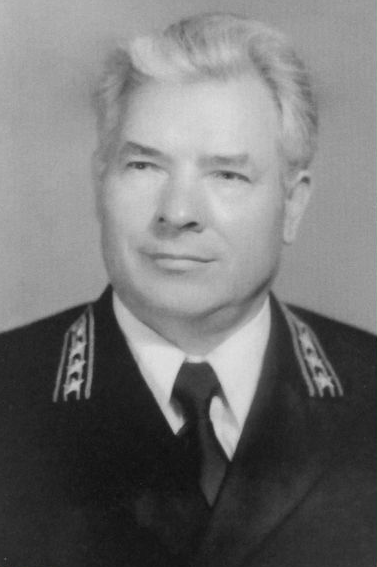
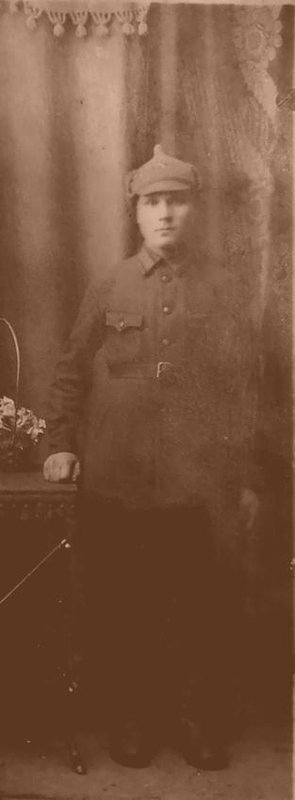
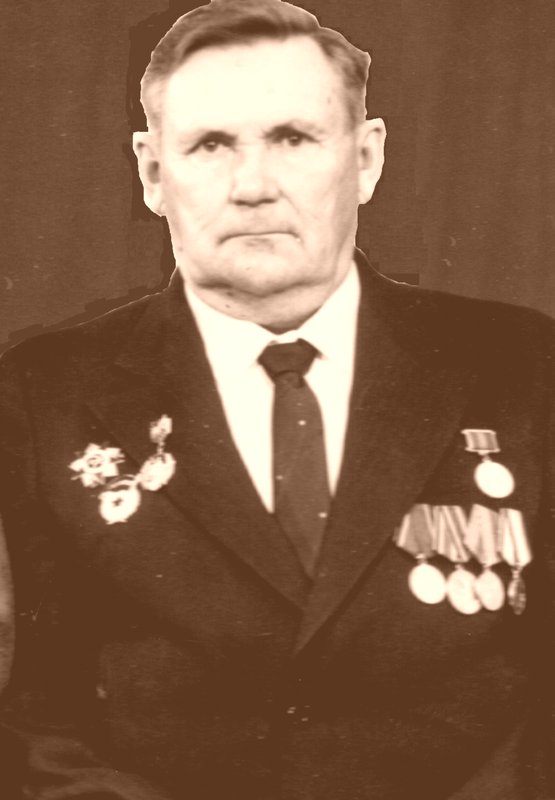
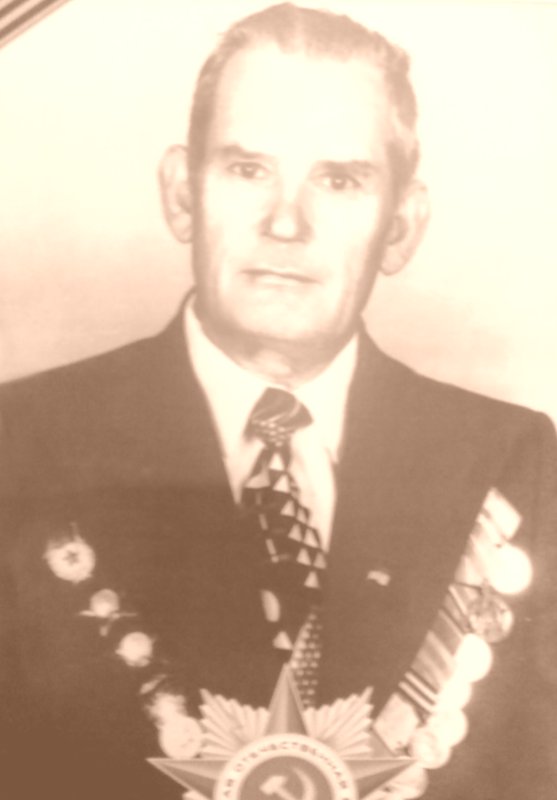
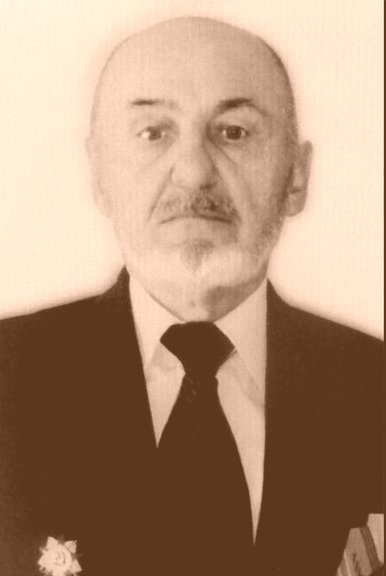
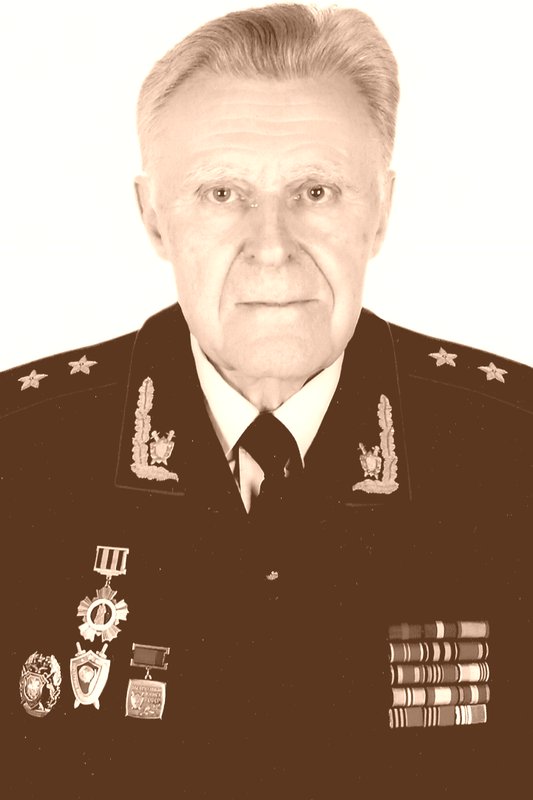

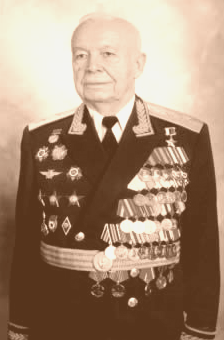
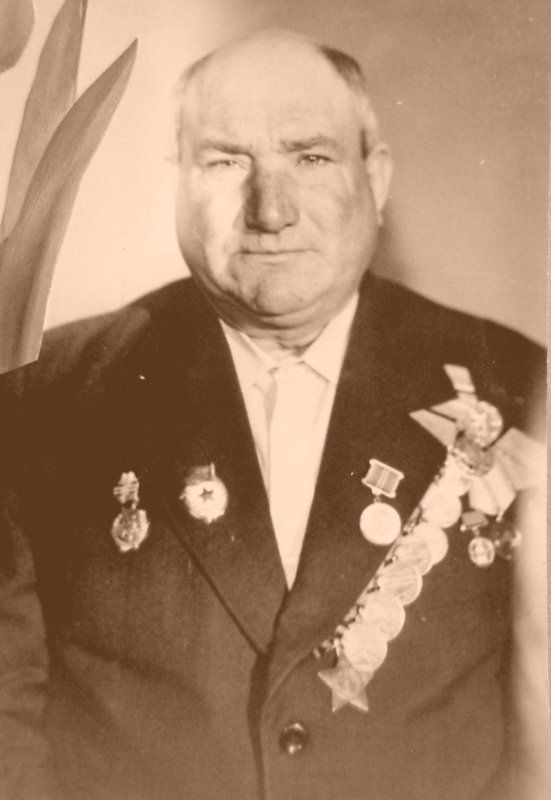
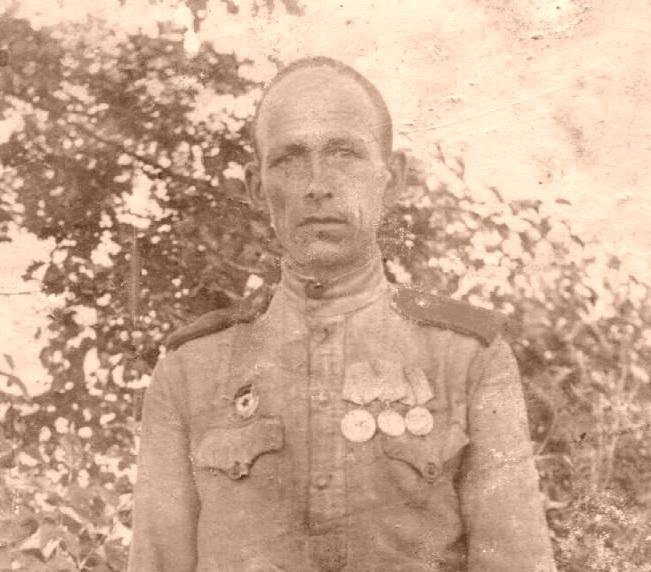
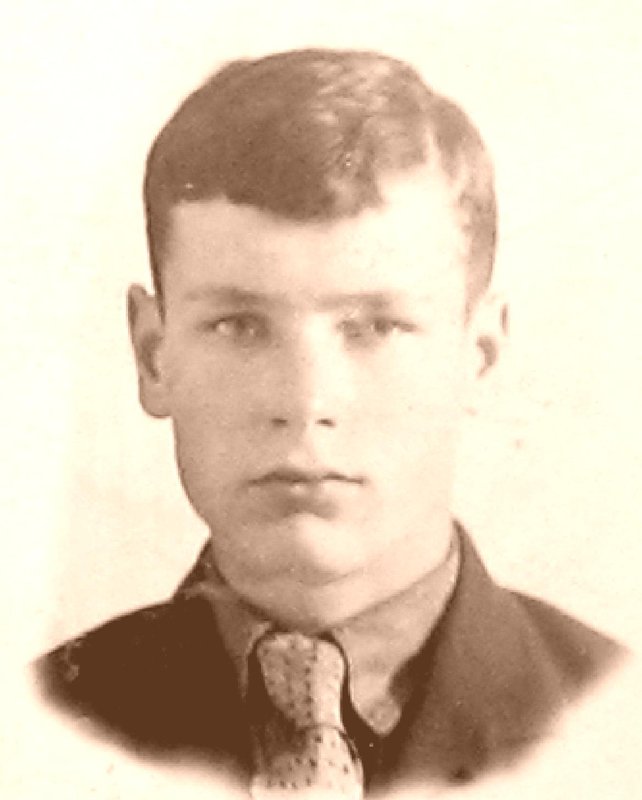
Tyurin Sergey Vasilievich
Tyurin Sergey Vasilievich was born on October 14, 1923 in the village of Asovitsa, Komarichsky district, Bryansk region. In 1941, he graduated from high school in Moscow (10 classes) and in October 1941 he was drafted into the Red Army, where he served until February 1945. In December 1941, he graduated from the Leningrad courses of political personnel (which at that time were in the city of Melekess, Ulyanovsk region) - and then, as a deputy political instructor of a company of machine gunners of the 335th rifle regiment of the 58th rifle division, participated in battles on the Western Front, during February -April 1942. In April 1942, he was seriously wounded for the first time and was undergoing treatment in the hospital for a long time. In May 1944 he graduated from the 2nd Moscow Infantry School and then, in June-November 1944, fought in the 158th Infantry Division on the 3rd Belorussian and 1st Baltic fronts - as a divisional reconnaissance platoon commander. Participated in Operation Bagration, in the liberation of Belarus and the Baltic States. In November 1944 he was seriously wounded for the second time and, after being cured in the hospital, in February 1945 he was demobilized as an invalid of the Patriotic War. In 1950 he graduated from the evening department of the Moscow Law Institute. He served in the prosecutor's office for 42 years, of which 40 years in the central apparatus of the USSR Prosecutor's Office. He began work in the prosecutor's office in April 1950 as a senior investigator of the prosecutor's office of the WHITLK of the Moscow region. From December 1951 to January 1992 he worked in the USSR Prosecutor's Office, first as a prosecutor of various departments and departments, then, for 8 years - from 1967 to 1974, as deputy head of the investigation department, and from 1974 as head of the statistics department. Later he was the head of the information and analytical department - senior assistant to the Prosecutor General of the USSR. In total, he served in the prosecutor's office for 42 years, including 40 years in the central office of the Prosecutor's Office of the USSR. He was a member of the regional public organization "Union of Investigation Veterans". State Counselor of Justice of the 2nd class, Honored Lawyer of the RSFSR, Honorary Worker of the Prosecutor's Office. He was awarded the Orders of the Patriotic War of the 1st degree and the Red Star, the Order of Honor, medals For Labor Valor, For Victory over Germany in the Great Patriotic War of 1941-1945, as well as the Veteran of the Prosecutor's Office medal, the distinction loyalty to the law ”I degree and other medals. Died in 2108. From the memoirs of Sergei Vasilyevich Tyurin: "On June 21, 1941, in our 660th Moscow secondary school, then located in Granatny Lane (which is right behind the mansion of the Ministry of Foreign Affairs on Spiridonovka Street), a graduation party took place. We celebrated the end of secondary school - 10 classes .We all, students and teachers, had fun, rejoiced at the end of our first youthful period of life and prepared to enter a big life. We thanked our teachers (and our teachers were really good and were like family to us) - and the teachers, in turn, praised us and wished success in life. We were full of plans for the future, were inspired by the opportunities opening up before us. Someone dreamed of becoming a pilot, someone a polar explorer, someone an artist. I remember Fedya Listvoy. He dreamed of becoming an artist and already lived in some character. And we believed him and were convinced that he would fulfill his dream. All night we walked around Moscow, went to Red Square. In the morning, already at dawn, I returned home.at that time we lived on Patriarch's Ponds. I didn't want to go home and, filled with feelings of joy and hope, I sat down on a bench on the Patriarch's Ponds and admired the surrounding beauty for some time and dreamed. Finally, I went up to my house and went to bed. I fell asleep and slept like a dead man. At 12 o'clock in the afternoon my father woke me up and said: "Get up, son, your time has come to go to war." At this time, Minister of Foreign Affairs Vyacheslav Mikhailovich Molotov spoke on the radio. He spoke of Germany's treacherous attack on the Soviet Union. This is how all our plans and dreams ended. And Fyodor Listvoy, my friend, died in the war, never realizing his dream of becoming an artist (and he could have become - and, probably, not bad). On July 19, 1941, my father absurdly died, falling under the car of a military convoy on the Garden Ring. The bombing of Moscow soon began. We began guarding the courtyards and rooftops, dropping incendiary bombs into a box of sand. But then a mass evacuation of the population from Moscow began - and we also ended up in Kuibyshev (now Samara). The district committee of the Komsomol of the Kuibyshev region sent me to work as an accountant at a state farm near Kuibyshev. And in October 1941 I received a summons from the military registration and enlistment office and an invitation from the district committee of the Komsomol. There I was offered a referral to the Leningrad police officers' courses, which at that time were located in the city of Melekess, Ulyanovsk region (now it is the city of Dmitrovgrad). So I became a cadet in the course of the political staff. After three months of intensive military training, we were awarded the rank of deputy political commander of the company and sent to combat units (the deputy political commander of the company was roughly equal to the rank of the company sergeant major with four triangles on the buttonholes and an asterisk on the sleeve). I was sent to the 58th Rifle Division, which was forming in the forest near Melekess. I remember walking there at night. I found the dugout of the commander of the 335th regiment, in which I was assigned. It turned out to be Major Tatarinov. He was alone in the dugout. I reported to him and was amazed at the reception he gave me. He met me as a son, left me in his dugout for the night, gave me tea and put me to bed, saying that tomorrow he would send me to a company of submachine gunners. I will remember this fatherly reception for the rest of my life. The division was re-formed and underwent intensive and reinforced training. And that meant three more months of such preparation for me. In March 1942, the division was loaded into wagons and we headed to the Western Front. By this time, the Moscow counter-offensive of the Red Army had just ended, as a result of which the enemy was driven back from Moscow at a great distance. We drove to the Sukhinichi. All around was destroyed, burnt houses, villages, chimneys of burnt houses stuck out. In front of Sukhinichi, our echelon was attacked by two German aircraft. Calmly and with impunity, they shot our train, shot the locomotive and just as calmly flew away. We felt our defenselessness. At night another steam locomotive came from Sukhinichy and we were taken to our destination. And then there was night unloading - and we went on foot to the front line, which was 100 kilometers from Sukhninichy. March. Melting snow, country roads were blown away, and at night, across ruined terrain, without any food supply, hungry and cold, we moved to the front. And at the same time, an endless line of wounded soldiers was moving towards us. And everyone said that they were coming from Zaitseva Gora. Our division was also thrown on this "Zaitseva Gora" in the area of Meshchevsk-Mosalsk. There were heavy battles, the enemy was entrenched in an advantageous position after the retreat from Moscow. Endless attempts to knock him down from these positions ended in vain, especially since our offensives took place without any preparation. Neither artillery nor aircraft supported the offensive, and our tanks, which were stationed in the grove of the river floodplain, could not move along the swampy soil of this floodplain, and only themselves were subjected to frantic bombing by German aircraft. In one of our next attacks, I was seriously wounded. And it happened like this. At night, our unit made a march to another section of the front line. On our way there was unexpectedly a wide ditch filled with seething spring water. Some not very reliable pole was thrown across the ditch. We had no choice but to cross this pole. I went first (after all, I am the company's deputy political instructor). A PPSh submachine gun was hanging around my neck. In the middle of the ditch, I lost my balance, fell off the pole and fell into the ditch, sinking up to my throat into the water. Climbing out of the ditch, I poured the water out of my boots, tried to wring out my overcoat. But none of this helped. It was already early morning. It began to freeze. The overcoat stuck on me. In this state, me, with the unit, reached the front line and, drowning in the swampy soil of the river floodplain, went on the attack on the very "Zaitseva Gora" where I was wounded. The second time I went to the front was in May 1944, after graduating from the 2nd Moscow Infantry School. At first it was the 3rd Belorussian Front, Operation Bagration and the liberation of Belarus, then the 1st Baltic Front and the liberation of the Baltic. Me, in the 158th Infantry Division, as the commander of a divisional reconnaissance platoon, participated in battles and in November 1944 was seriously wounded for the second time. This time, in February 1945, I was discharged from the hospital as an invalid of the Patriotic War and demobilized from the army. Victory Day - May 9, 1945, I met on the streets of Moscow with my friends from the hospital, already demobilized. "
Tyurin Sergey Vasilievich
Tyurin Sergey Vasilievich was born on October 14, 1923 in the village of Asovitsa, Komarichsky district, Bryansk region. In 1941, he graduated from high school in Moscow (10 classes) and in October 1941 he was drafted into the Red Army, where he served until February 1945. In December 1941, he graduated from the Leningrad courses of political personnel (which at that time were in the city of Melekess, Ulyanovsk region) - and then, as a deputy political instructor of a company of machine gunners of the 335th rifle regiment of the 58th rifle division, participated in battles on the Western Front, during February -April 1942. In April 1942, he was seriously wounded for the first time and was undergoing treatment in the hospital for a long time. In May 1944 he graduated from the 2nd Moscow Infantry School and then, in June-November 1944, fought in the 158th Infantry Division on the 3rd Belorussian and 1st Baltic fronts - as a divisional reconnaissance platoon commander. Participated in Operation Bagration, in the liberation of Belarus and the Baltic States. In November 1944 he was seriously wounded for the second time and, after being cured in the hospital, in February 1945 he was demobilized as an invalid of the Patriotic War. In 1950 he graduated from the evening department of the Moscow Law Institute. He served in the prosecutor's office for 42 years, of which 40 years in the central apparatus of the USSR Prosecutor's Office. He began work in the prosecutor's office in April 1950 as a senior investigator of the prosecutor's office of the WHITLK of the Moscow region. From December 1951 to January 1992 he worked in the USSR Prosecutor's Office, first as a prosecutor of various departments and departments, then, for 8 years - from 1967 to 1974, as deputy head of the investigation department, and from 1974 as head of the statistics department. Later he was the head of the information and analytical department - senior assistant to the Prosecutor General of the USSR. In total, he served in the prosecutor's office for 42 years, including 40 years in the central office of the Prosecutor's Office of the USSR. He was a member of the regional public organization "Union of Investigation Veterans". State Counselor of Justice of the 2nd class, Honored Lawyer of the RSFSR, Honorary Worker of the Prosecutor's Office. He was awarded the Orders of the Patriotic War of the 1st degree and the Red Star, the Order of Honor, medals For Labor Valor, For Victory over Germany in the Great Patriotic War of 1941-1945, as well as the Veteran of the Prosecutor's Office medal, the distinction loyalty to the law ”I degree and other medals. Died in 2108. From the memoirs of Sergei Vasilyevich Tyurin: "On June 21, 1941, in our 660th Moscow secondary school, then located in Granatny Lane (which is right behind the mansion of the Ministry of Foreign Affairs on Spiridonovka Street), a graduation party took place. We celebrated the end of secondary school - 10 classes .We all, students and teachers, had fun, rejoiced at the end of our first youthful period of life and prepared to enter a big life. We thanked our teachers (and our teachers were really good and were like family to us) - and the teachers, in turn, praised us and wished success in life. We were full of plans for the future, were inspired by the opportunities opening up before us. Someone dreamed of becoming a pilot, someone a polar explorer, someone an artist. I remember Fedya Listvoy. He dreamed of becoming an artist and already lived in some character. And we believed him and were convinced that he would fulfill his dream. All night we walked around Moscow, went to Red Square. In the morning, already at dawn, I returned home.at that time we lived on Patriarch's Ponds. I didn't want to go home and, filled with feelings of joy and hope, I sat down on a bench on the Patriarch's Ponds and admired the surrounding beauty for some time and dreamed. Finally, I went up to my house and went to bed. I fell asleep and slept like a dead man. At 12 o'clock in the afternoon my father woke me up and said: "Get up, son, your time has come to go to war." At this time, Minister of Foreign Affairs Vyacheslav Mikhailovich Molotov spoke on the radio. He spoke of Germany's treacherous attack on the Soviet Union. This is how all our plans and dreams ended. And Fyodor Listvoy, my friend, died in the war, never realizing his dream of becoming an artist (and he could have become - and, probably, not bad). On July 19, 1941, my father absurdly died, falling under the car of a military convoy on the Garden Ring. The bombing of Moscow soon began. We began guarding the courtyards and rooftops, dropping incendiary bombs into a box of sand. But then a mass evacuation of the population from Moscow began - and we also ended up in Kuibyshev (now Samara). The district committee of the Komsomol of the Kuibyshev region sent me to work as an accountant at a state farm near Kuibyshev. And in October 1941 I received a summons from the military registration and enlistment office and an invitation from the district committee of the Komsomol. There I was offered a referral to the Leningrad police officers' courses, which at that time were located in the city of Melekess, Ulyanovsk region (now it is the city of Dmitrovgrad). So I became a cadet in the course of the political staff. After three months of intensive military training, we were awarded the rank of deputy political commander of the company and sent to combat units (the deputy political commander of the company was roughly equal to the rank of the company sergeant major with four triangles on the buttonholes and an asterisk on the sleeve). I was sent to the 58th Rifle Division, which was forming in the forest near Melekess. I remember walking there at night. I found the dugout of the commander of the 335th regiment, in which I was assigned. It turned out to be Major Tatarinov. He was alone in the dugout. I reported to him and was amazed at the reception he gave me. He met me as a son, left me in his dugout for the night, gave me tea and put me to bed, saying that tomorrow he would send me to a company of submachine gunners. I will remember this fatherly reception for the rest of my life. The division was re-formed and underwent intensive and reinforced training. And that meant three more months of such preparation for me. In March 1942, the division was loaded into wagons and we headed to the Western Front. By this time, the Moscow counter-offensive of the Red Army had just ended, as a result of which the enemy was driven back from Moscow at a great distance. We drove to the Sukhinichi. All around was destroyed, burnt houses, villages, chimneys of burnt houses stuck out. In front of Sukhinichi, our echelon was attacked by two German aircraft. Calmly and with impunity, they shot our train, shot the locomotive and just as calmly flew away. We felt our defenselessness. At night another steam locomotive came from Sukhinichy and we were taken to our destination. And then there was night unloading - and we went on foot to the front line, which was 100 kilometers from Sukhninichy. March. Melting snow, country roads were blown away, and at night, across ruined terrain, without any food supply, hungry and cold, we moved to the front. And at the same time, an endless line of wounded soldiers was moving towards us. And everyone said that they were coming from Zaitseva Gora. Our division was also thrown on this "Zaitseva Gora" in the area of Meshchevsk-Mosalsk. There were heavy battles, the enemy was entrenched in an advantageous position after the retreat from Moscow. Endless attempts to knock him down from these positions ended in vain, especially since our offensives took place without any preparation. Neither artillery nor aircraft supported the offensive, and our tanks, which were stationed in the grove of the river floodplain, could not move along the swampy soil of this floodplain, and only themselves were subjected to frantic bombing by German aircraft. In one of our next attacks, I was seriously wounded. And it happened like this. At night, our unit made a march to another section of the front line. On our way there was unexpectedly a wide ditch filled with seething spring water. Some not very reliable pole was thrown across the ditch. We had no choice but to cross this pole. I went first (after all, I am the company's deputy political instructor). A PPSh submachine gun was hanging around my neck. In the middle of the ditch, I lost my balance, fell off the pole and fell into the ditch, sinking up to my throat into the water. Climbing out of the ditch, I poured the water out of my boots, tried to wring out my overcoat. But none of this helped. It was already early morning. It began to freeze. The overcoat stuck on me. In this state, me, with the unit, reached the front line and, drowning in the swampy soil of the river floodplain, went on the attack on the very "Zaitseva Gora" where I was wounded. The second time I went to the front was in May 1944, after graduating from the 2nd Moscow Infantry School. At first it was the 3rd Belorussian Front, Operation Bagration and the liberation of Belarus, then the 1st Baltic Front and the liberation of the Baltic. Me, in the 158th Infantry Division, as the commander of a divisional reconnaissance platoon, participated in battles and in November 1944 was seriously wounded for the second time. This time, in February 1945, I was discharged from the hospital as an invalid of the Patriotic War and demobilized from the army. Victory Day - May 9, 1945, I met on the streets of Moscow with my friends from the hospital, already demobilized. "
0 comment



2026 © Russian Military Historical Society Developed by Jetmix