Back to
album
album


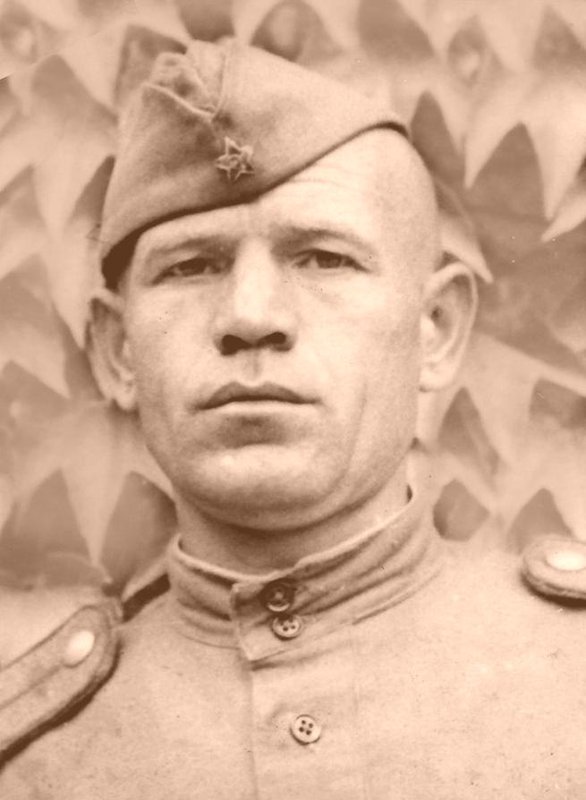
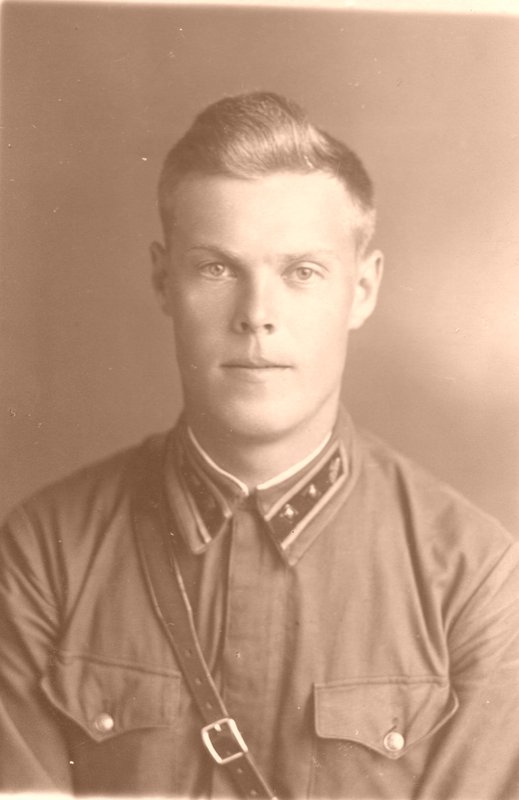
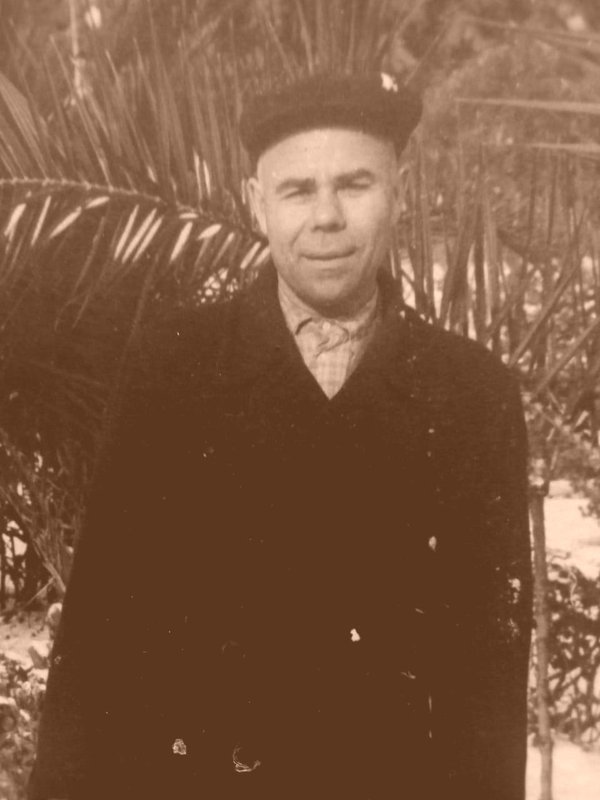
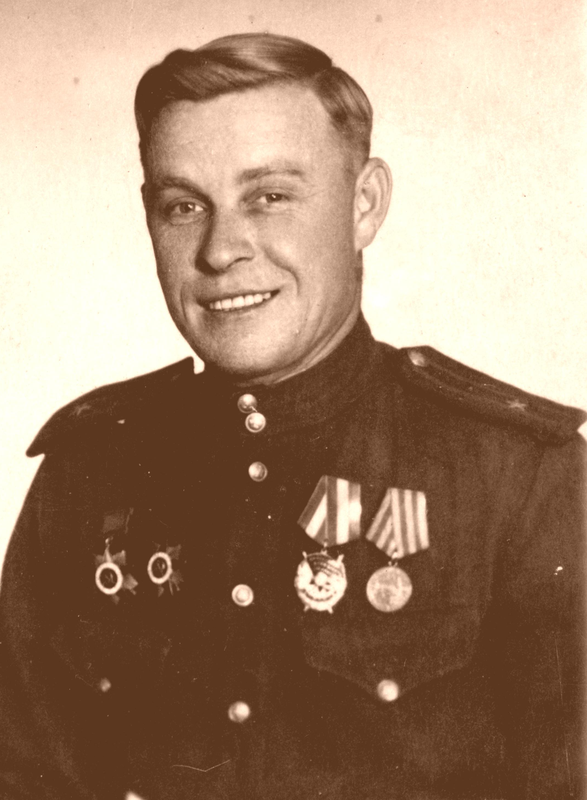
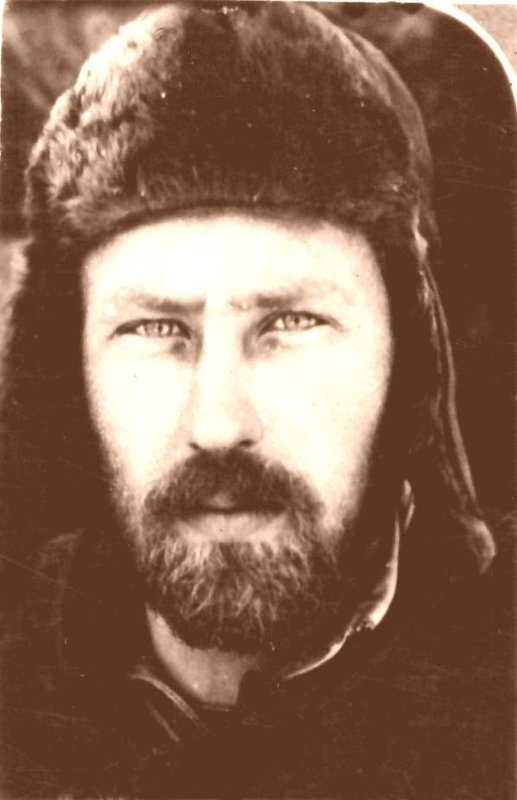
Ivan Tretyakov
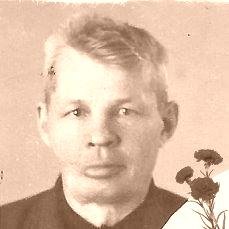
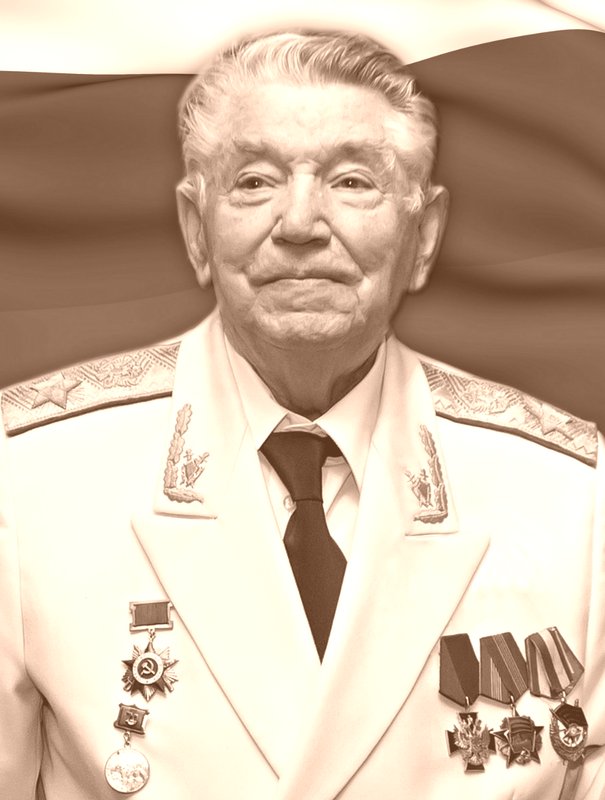
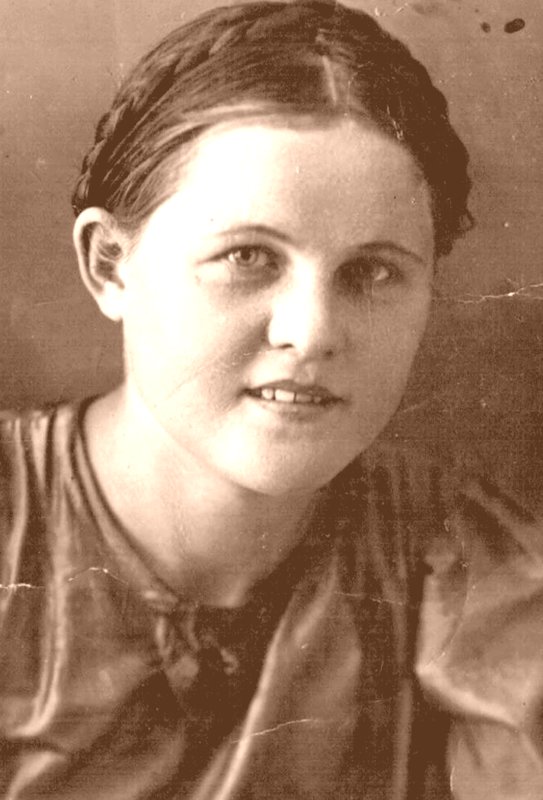
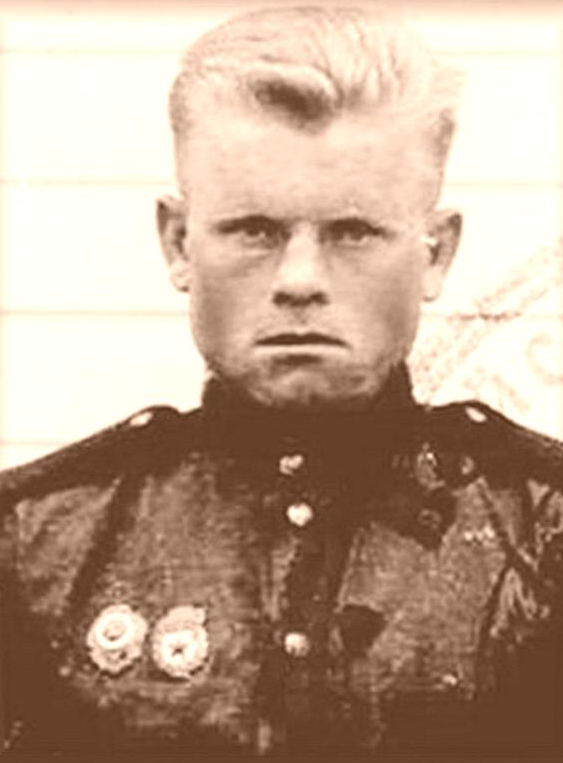
I would like to tell you about the most wonderful person in my life — my grandfather Ivan Tretyakov, a participant of the Great Patriotic War, a Red Army guard, a hero who liberated our Homeland from the Nazis.
This man for me has always been, is and will be a model of incredible courage, bravery and perseverance.
My grandfather was born on January 19, 1926 in the village of Makarovo in the Ust-Alekseevskiy District of the Vologda Region in a large strong peasant family.
He had four brothers and two sisters. Since childhood, he was not afraid of the hard work in the village. During the Stalinist collectivization, when his father's farm was ruined, grandfather had to go to work on a collective farm at the age of 12, earning workdays.
When the Great Patriotic War began, the first to go to the front was his older brother, who soon died. At the end of 1943, at the age of 17, my grandfather was drafted into the Red Army. He studied in the Arkhangelsk Reserve Regiment of the 45th Division of the 30th Separate Guards Shock Corps. After training as a soldier of the 45th Division, he was sent to the Leningrad Front.
During one of the battles, an enemy shell exploded near him. From the blast wave, Ivan received a severe concussion. He got to the hospital in Leningrad. After recovering from a serious injury, he had to return to the front. At that time, Soviet troops were suffering heavy losses in Poland. And recovered soldiers were sent there. Since my grandfather was a guardsman in the shock corps, he had the right to return to his own unit. Therefore, after being wounded, he continued to serve in the 30th Shock Corps, only in the 64th Division. As part of the 30th Guards Corps of the Leningrad Front, he liberated the North-Western part of our country and the Baltic States from the Nazi invaders.
Grandpa did not like to talk about the war. It was only after much coaxing and appealing to his awards that I managed to get him to talk.
From these stories, I learned that war was a hard physical labor. The weak were the first to die. It was necessary to carry weapons and ammunition, pull guns and equipment out of the mud, dig full-length trenches in the rocky ground, and much more. He also said that war was the most difficult psychological test. Any normal person could not get used to death all around them overnight.
My grandfather was a machine gunner (he had a Degtyarev machine gun). The machine-gun crew consisted of two people: number one was the machine-gunner himself, and number two was the fighter responsible for the ammunition for the machine-gun. During just one year of the war, three of my grandfather "second numbers" were killed. He himself thought that one day it would be his turn. Looking at how his comrades were killed by bullets and shrapnel, he then could not have imagined that he would survive in this meat grinder and live almost seventy years after the war.
I asked if he was afraid of being killed. To that my grandfather replied that no one wanted to die, but it seemed that it was simply impossible to survive in this war because of the huge number of soldiers who died every day. There was a terrible hatred for the enemy. It intensified when our soldiers walked on their land and saw burned villages, half-naked children running through the ashes without parents. A sense of hatred, a blunted sense of fear, and selflessness, coupled with physical endurance, were the qualities that kept him alive and victorious.
One day their unit was on the march, when they were got under heavy fire from three sides: front, left, and right. It was a bag ambush. The enemy expected that the Red Army men, demoralized by the unexpected attack, would get scared and run back. With this in mind, the Germans set up their guns and mortars to deal the main blow to the retreating troops. And so it happened. The soldiers who rushed back came under fire and almost all were killed. My grandfather did something else, which saved his life. Immediately after the start of the attack, he fell near a tree and took the fight. With fire from his machine gun, he began to suppress the enemy's firing points located in front of him. Then he and several of his comrades, moving away from the shelling, did not rush back, as many did, but forward at the Germans who did not expect such a turn of events. This maneuver allowed the remnants of the unit, although with a fight, but still break out of the "bag".
In war, everything was decided by chance. One winter, a German saboteur in a white camouflage coat tried to get close to the trenches of my grandfather's squad to attack at close range. At that very moment, my grandfather was in the trench. Suddenly, out of the corner of his eye, he saw what appeared to be moving snow not far away. Without thinking twice, he grabbed a hand grenade, threw it in the direction of the moving snow — and killed the German. As he talked about it, he was surprised to say that he did not know how he had noticed this German, who could easily have killed him first. It was probably just a happy accident.
The next episode could also be called happy. They were coming. Their task was to master a strategically important height. Their path was blocked by a German machine-gun pillbox located on the top. According to my grandfather, the commander ordered one of the soldiers to take a grenade, crawl as close as possible to the pillbox and blow it up. The soldier went to carry out the order, but was killed soon by a machine gun fire. The commander sent a second soldier with the same order, and then, after the second soldier died, my grandfather volunteered to go. He told how he crawled slowly with a grenade, burrowing into the mud. As he got closer, he threw a grenade, and pillbox fell silent. When I asked him why he volunteered to go, so he might have been killed, he said that he did not want anyone else from his squad to die.
And what was the order given for? It was in Latvia. The Soviet army continued to advance on all fronts. It was necessary to dislodge the fascists from their fortified area. The offensive began. Grandfather as a machine gunner was given a special task to support the offensive with fire. With huge losses, scattered groups of the Red Army soldiers reached the Nazis trenches. Close combat ensued. After a while, the trenches were half filled with the corpses of Soviet and German soldiers. The Germans retreated, preparing to attack again. My grandfather was alone in one of these trenches. In an effort to find his own, he began to move through the trenches in search of survivors. Getting from the trench into the trench, every time he risked his life getting in sight of the sniper. Realizing that he could not get out of the trenches and would only have to die as soon as the Germans went on the offensive, he made the best possible decision.
Through the trench he reached the German pillbox, which on one side served as a shelter, and on the other — a convenient point for firing. When the Germans launched a counter-offensive to dislodge the Russians and regain their positions, machine-gun fire was opened on them from the German pillbox. Grandfather's firing position was so successful that he managed to destroy 12 enemy soldiers and officers and thus force the rest to retreat. Meanwhile, our reserves arrived. For showing the courage and heroism in the battle, the gunner of the 197th Guards Order of Kutuzov III degree Rifle Regiment of 64th Guards Krasnoselskaya Red Banner Rifle Division Guards private Ivan Tretyakov was awarded the Order of Glory III degree.
From the award list: "In the battle near the Vartaya River in the Latvian SSR, when repelling enemy counterattacks, he skillfully chose a firing position for a machine gun, using it to destroy 12 German soldiers and officers, which ensured the successful completion of the task. In the battles for the Motherland, he was seriously wounded. For his courage and bravery in the battles with the German invaders, he deserves to be awarded a government award."
Grandfather met Victory Day in the Baltic States, where his 30th Guards Shock Corps participated in the destruction of the enemy's Kurland group. After the end of the war, he served in the intelligence service for several years, because, as he said, he was a good skier. Once, at a demonstration shooting, he received a reward for his excellent result. He was given a leave of absence so that he could go home and visit his family.
After demobilization, my grandfather did not want to return to his village, but decided to change his life by taking a train North to the Komi Republic. He got off the train in Ukhta. Got a job in the geological party. Worked as a motorist on a drilling rig. He drilled search and exploration wells. Here he met my grandmother, and in 1953, my mother was born. When my grandmother received an apartment, they moved to Sosnogorsk, and my grandfather decided to learn the profession of a driver in order to work in the city closer to his family, and as a driver he worked until his retirement. Now the company for which he worked and from which he retired is called Gazprom Transgaz Ukhta LLC (Department of technological transport and special equipment).
In 1985, as a veteran of the Great Patriotic War, my grandfather was awarded the Oorder of the Patriotic war 1st degree.
My grandfather died at the age of 88 years old on March 22, 2013 in Primorsk of Zaporizhzhie Region (Ukraine) and was buried there. He had a very difficult fate: a hungry childhood, war, hard work in the post-war years. It hardened his character. He was not used to ask too much from life. He just wanted to live and manage his life as he saw fit. An ordinary village boy. He bravely endured the hardships of childhood, he defeated fascism, he changed his rural past and participated in the development of the economic potential of the North, he had two sons and a daughter, and four grandchildren.
Already in retirement, he built a house on the shore of the Sea of Azov and planted a garden where cherries, apricots, and Apple trees grow.
He left behind a good memory and showed his life an example to follow. I am proud that I had such a grandfather.
Ivan Tretyakov
I would like to tell you about the most wonderful person in my life — my grandfather Ivan Tretyakov, a participant of the Great Patriotic War, a Red Army guard, a hero who liberated our Homeland from the Nazis.
This man for me has always been, is and will be a model of incredible courage, bravery and perseverance.
My grandfather was born on January 19, 1926 in the village of Makarovo in the Ust-Alekseevskiy District of the Vologda Region in a large strong peasant family.
He had four brothers and two sisters. Since childhood, he was not afraid of the hard work in the village. During the Stalinist collectivization, when his father's farm was ruined, grandfather had to go to work on a collective farm at the age of 12, earning workdays.
When the Great Patriotic War began, the first to go to the front was his older brother, who soon died. At the end of 1943, at the age of 17, my grandfather was drafted into the Red Army. He studied in the Arkhangelsk Reserve Regiment of the 45th Division of the 30th Separate Guards Shock Corps. After training as a soldier of the 45th Division, he was sent to the Leningrad Front.
During one of the battles, an enemy shell exploded near him. From the blast wave, Ivan received a severe concussion. He got to the hospital in Leningrad. After recovering from a serious injury, he had to return to the front. At that time, Soviet troops were suffering heavy losses in Poland. And recovered soldiers were sent there. Since my grandfather was a guardsman in the shock corps, he had the right to return to his own unit. Therefore, after being wounded, he continued to serve in the 30th Shock Corps, only in the 64th Division. As part of the 30th Guards Corps of the Leningrad Front, he liberated the North-Western part of our country and the Baltic States from the Nazi invaders.
Grandpa did not like to talk about the war. It was only after much coaxing and appealing to his awards that I managed to get him to talk.
From these stories, I learned that war was a hard physical labor. The weak were the first to die. It was necessary to carry weapons and ammunition, pull guns and equipment out of the mud, dig full-length trenches in the rocky ground, and much more. He also said that war was the most difficult psychological test. Any normal person could not get used to death all around them overnight.
My grandfather was a machine gunner (he had a Degtyarev machine gun). The machine-gun crew consisted of two people: number one was the machine-gunner himself, and number two was the fighter responsible for the ammunition for the machine-gun. During just one year of the war, three of my grandfather "second numbers" were killed. He himself thought that one day it would be his turn. Looking at how his comrades were killed by bullets and shrapnel, he then could not have imagined that he would survive in this meat grinder and live almost seventy years after the war.
I asked if he was afraid of being killed. To that my grandfather replied that no one wanted to die, but it seemed that it was simply impossible to survive in this war because of the huge number of soldiers who died every day. There was a terrible hatred for the enemy. It intensified when our soldiers walked on their land and saw burned villages, half-naked children running through the ashes without parents. A sense of hatred, a blunted sense of fear, and selflessness, coupled with physical endurance, were the qualities that kept him alive and victorious.
One day their unit was on the march, when they were got under heavy fire from three sides: front, left, and right. It was a bag ambush. The enemy expected that the Red Army men, demoralized by the unexpected attack, would get scared and run back. With this in mind, the Germans set up their guns and mortars to deal the main blow to the retreating troops. And so it happened. The soldiers who rushed back came under fire and almost all were killed. My grandfather did something else, which saved his life. Immediately after the start of the attack, he fell near a tree and took the fight. With fire from his machine gun, he began to suppress the enemy's firing points located in front of him. Then he and several of his comrades, moving away from the shelling, did not rush back, as many did, but forward at the Germans who did not expect such a turn of events. This maneuver allowed the remnants of the unit, although with a fight, but still break out of the "bag".
In war, everything was decided by chance. One winter, a German saboteur in a white camouflage coat tried to get close to the trenches of my grandfather's squad to attack at close range. At that very moment, my grandfather was in the trench. Suddenly, out of the corner of his eye, he saw what appeared to be moving snow not far away. Without thinking twice, he grabbed a hand grenade, threw it in the direction of the moving snow — and killed the German. As he talked about it, he was surprised to say that he did not know how he had noticed this German, who could easily have killed him first. It was probably just a happy accident.
The next episode could also be called happy. They were coming. Their task was to master a strategically important height. Their path was blocked by a German machine-gun pillbox located on the top. According to my grandfather, the commander ordered one of the soldiers to take a grenade, crawl as close as possible to the pillbox and blow it up. The soldier went to carry out the order, but was killed soon by a machine gun fire. The commander sent a second soldier with the same order, and then, after the second soldier died, my grandfather volunteered to go. He told how he crawled slowly with a grenade, burrowing into the mud. As he got closer, he threw a grenade, and pillbox fell silent. When I asked him why he volunteered to go, so he might have been killed, he said that he did not want anyone else from his squad to die.
And what was the order given for? It was in Latvia. The Soviet army continued to advance on all fronts. It was necessary to dislodge the fascists from their fortified area. The offensive began. Grandfather as a machine gunner was given a special task to support the offensive with fire. With huge losses, scattered groups of the Red Army soldiers reached the Nazis trenches. Close combat ensued. After a while, the trenches were half filled with the corpses of Soviet and German soldiers. The Germans retreated, preparing to attack again. My grandfather was alone in one of these trenches. In an effort to find his own, he began to move through the trenches in search of survivors. Getting from the trench into the trench, every time he risked his life getting in sight of the sniper. Realizing that he could not get out of the trenches and would only have to die as soon as the Germans went on the offensive, he made the best possible decision.
Through the trench he reached the German pillbox, which on one side served as a shelter, and on the other — a convenient point for firing. When the Germans launched a counter-offensive to dislodge the Russians and regain their positions, machine-gun fire was opened on them from the German pillbox. Grandfather's firing position was so successful that he managed to destroy 12 enemy soldiers and officers and thus force the rest to retreat. Meanwhile, our reserves arrived. For showing the courage and heroism in the battle, the gunner of the 197th Guards Order of Kutuzov III degree Rifle Regiment of 64th Guards Krasnoselskaya Red Banner Rifle Division Guards private Ivan Tretyakov was awarded the Order of Glory III degree.
From the award list: "In the battle near the Vartaya River in the Latvian SSR, when repelling enemy counterattacks, he skillfully chose a firing position for a machine gun, using it to destroy 12 German soldiers and officers, which ensured the successful completion of the task. In the battles for the Motherland, he was seriously wounded. For his courage and bravery in the battles with the German invaders, he deserves to be awarded a government award."
Grandfather met Victory Day in the Baltic States, where his 30th Guards Shock Corps participated in the destruction of the enemy's Kurland group. After the end of the war, he served in the intelligence service for several years, because, as he said, he was a good skier. Once, at a demonstration shooting, he received a reward for his excellent result. He was given a leave of absence so that he could go home and visit his family.
After demobilization, my grandfather did not want to return to his village, but decided to change his life by taking a train North to the Komi Republic. He got off the train in Ukhta. Got a job in the geological party. Worked as a motorist on a drilling rig. He drilled search and exploration wells. Here he met my grandmother, and in 1953, my mother was born. When my grandmother received an apartment, they moved to Sosnogorsk, and my grandfather decided to learn the profession of a driver in order to work in the city closer to his family, and as a driver he worked until his retirement. Now the company for which he worked and from which he retired is called Gazprom Transgaz Ukhta LLC (Department of technological transport and special equipment).
In 1985, as a veteran of the Great Patriotic War, my grandfather was awarded the Oorder of the Patriotic war 1st degree.
My grandfather died at the age of 88 years old on March 22, 2013 in Primorsk of Zaporizhzhie Region (Ukraine) and was buried there. He had a very difficult fate: a hungry childhood, war, hard work in the post-war years. It hardened his character. He was not used to ask too much from life. He just wanted to live and manage his life as he saw fit. An ordinary village boy. He bravely endured the hardships of childhood, he defeated fascism, he changed his rural past and participated in the development of the economic potential of the North, he had two sons and a daughter, and four grandchildren.
Already in retirement, he built a house on the shore of the Sea of Azov and planted a garden where cherries, apricots, and Apple trees grow.
He left behind a good memory and showed his life an example to follow. I am proud that I had such a grandfather.
0 comment



2026 © Russian Military Historical Society Developed by Jetmix