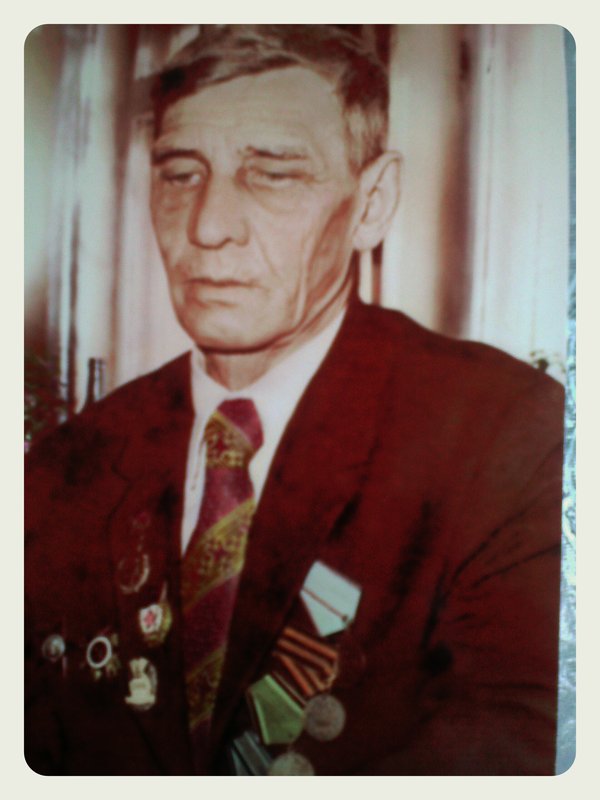
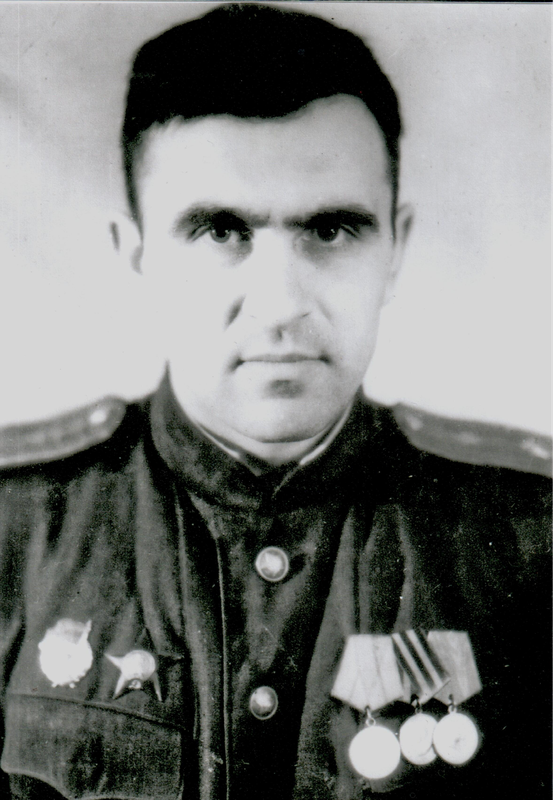
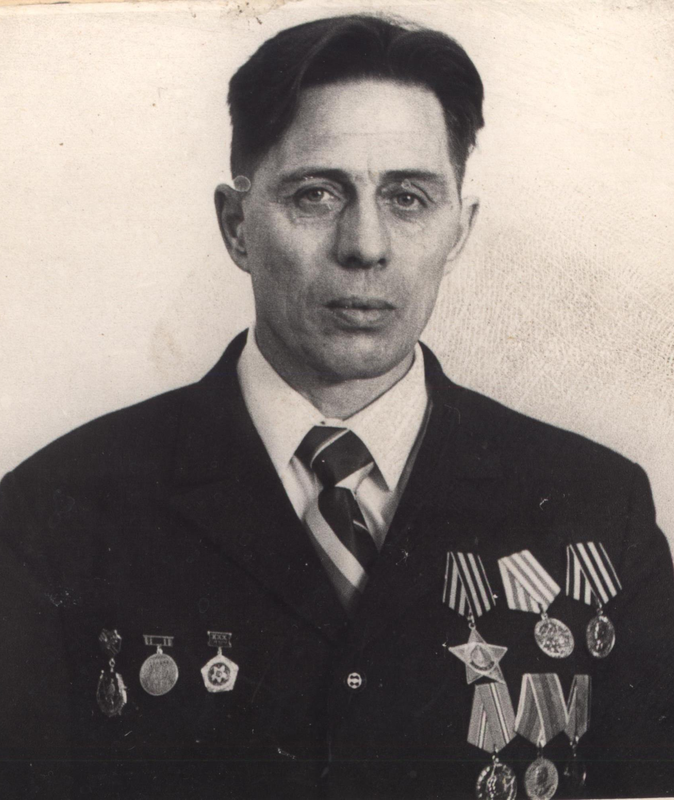
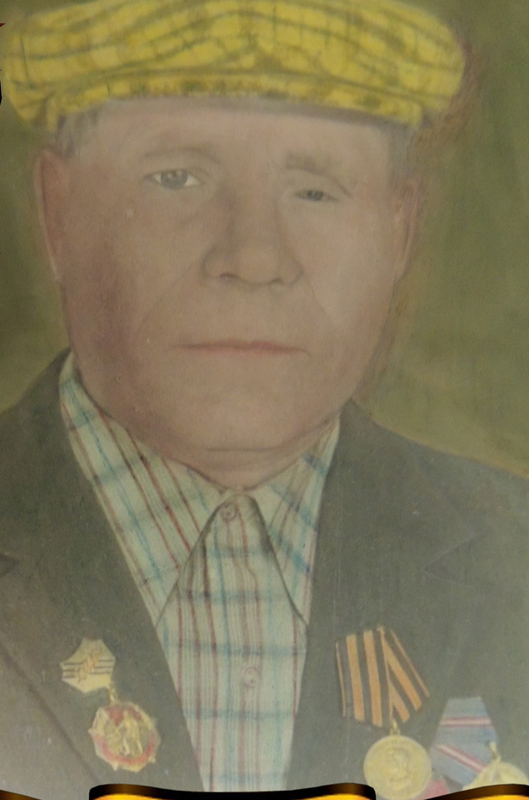
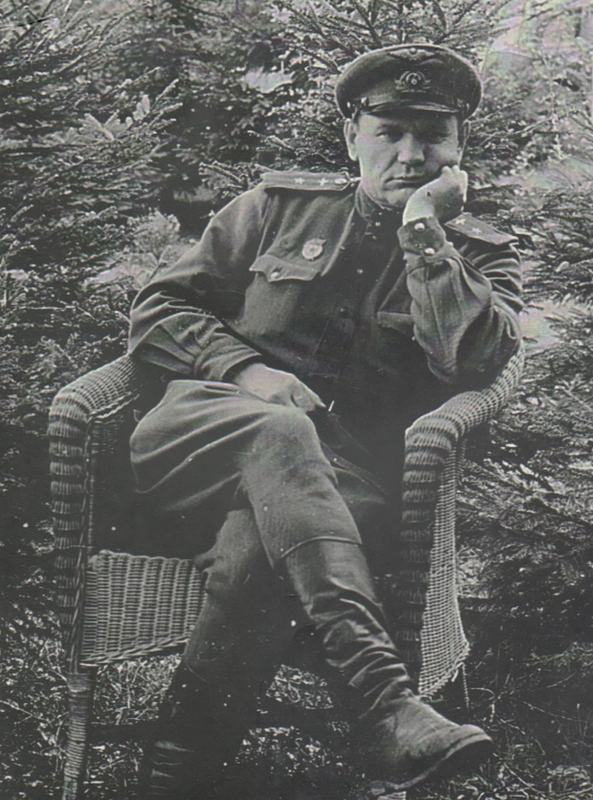
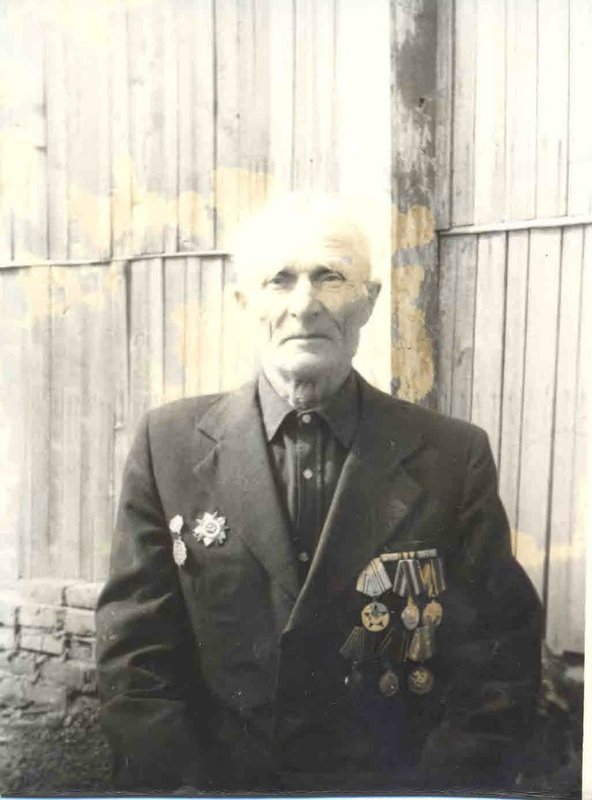
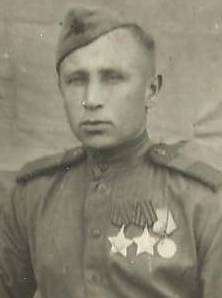
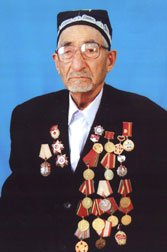
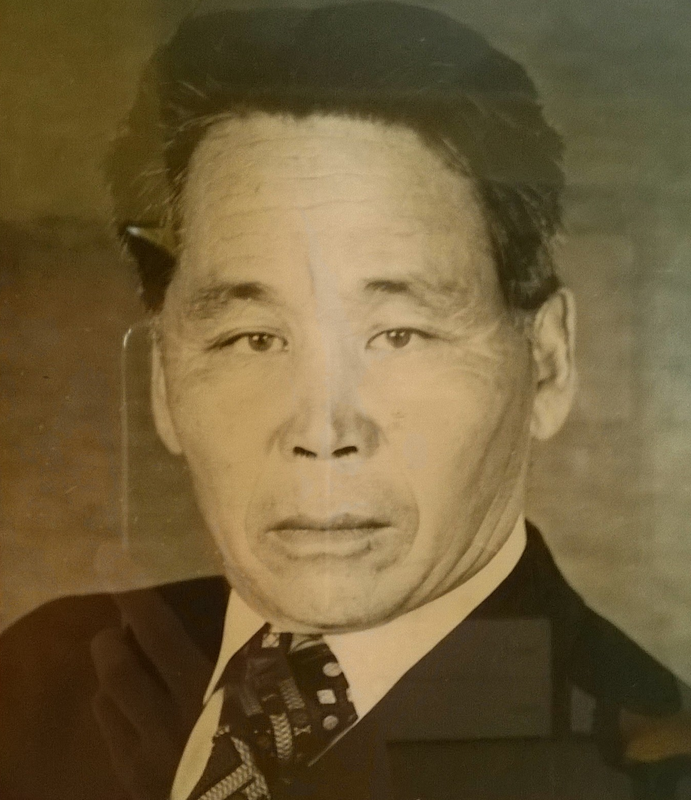
Averyanov Boris Fedorovich
CITY: Penza region, Bessonovsky district, village Kologreevka DATE OF BIRTH: 08/02/1918 DATE OF DEATH: 02/28/1993 HISTORY: From the memoirs of B.F. Averyanov In September 1939. I was drafted into the ranks of the Red Army. For the first time I happily rode from Penza on the FD paravoz to the east. Passing city after city along the Trans-Siberian Railway, it became clear that we were following in the direction of Vladivostok. It took us eighteen days to get to our destination: in Novosibirsk we washed in a bathhouse, in big cities we were fed hot food at stops. At the end of September, we got out of the car at the designated place, the station Chita-1, and brought us to the place "Sukhaya Pad". We saw a panorama of the center of Transbaikalia. The wide Trans-Baikal steppes stretched to the west. In a large pine forest, in summer camps, in established tents, the army life of recruits began. The war in Mongolia has just ended, the Red Army has taught the Japanese samurai a lesson on the river Kholkhin-Gol. Many Red Army men who had returned from the war were now serving with us, and many of us young soldiers told how they fought and defeated the Japanese. The regiment took part in the war at Kholkhin-Gol, many pilot officers had military awards. At the headquarters of the Trans-Baikal Military District, they assigned us to groups and began taking exams on the basis of secondary education. Dictation was written first, then mathematics, geography and history. From our regiment passed the exams: I, Pyotr Prokhorov and Ivan Kleimenov, and we were enrolled as cadets in the Smolensk Military-Political School. Molotov. On the last day, before departure, on Sunday, we rested at the large stadium where the concert was taking place. Suddenly the concert was interrupted and it was announced that Germany had attacked the USSR. The Great Patriotic War began. On June 23, 1941, we left for Smolensk. With us was Mr. Butenko, who had been recruited from the reserve, appointed as a flight theory instructor at the same school. Already on the way we were sent to the company of Captain Sinelnikov, so the intensive combat training began. Mr. Butenko taught "flight theory" and until the end of his studies did not lose sight of us: he asked about studies, life, etc. Soon the school was transferred to Saratov and placed on Lenin street not far from the station. Here we studied, worked and lived. The training program was accelerated, they were engaged in 12-18 hours a day. free time remained only for sleep. There were heavy fighting at the front. In November 1941, the Germans began to stubbornly rush to Moscow, the Nazis captured Kharkov on the southwestern front. The cadets raised their voices about sending everyone to the front. The winter of 1941-1942 was cold, the frosts in Saratov reached -30-40g. In November, they began to dig in the city of Saratov. Fortifications were built: anti-tank ditches, trenches, pillboxes, machine-gun points, all earthworks by hand. The city was preparing for defense. It was a difficult time for us cadets, but the residents of Saratov also invested a lot of work in the construction of engineering structures. The time of study was coming to an end, in February 1942. exams have come. The certification began, but I was a candidate for the party, and they were not certified as deputy commanders for the political part of the squadron. At the direction of the heads of PURKKA, they allowed excellent students to go to places where the cadet could receive recommendations to the party. In early February, I left for Penza with a passing train in a freight car with evacuated citizens. At school, on the third day after arrival, a party meeting was held and I was accepted into the party. Two days later, an order was announced for the assignment of an officer rank and sending to the front. Therefore, at school I was not able to fully complete the documents for the party and completed them already at 417 SD (Rifle Division) in March 1942, in the unit that was being formed for the front. At the end of February, they sent us from school to Tbilisi to the North Caucasian Front. I ended up at 417 S.D. and was appointed to serve in the 1376 regiment, to the post of deputy. the commander of a rifle company in the watered part. Having received a direction in personnel, we drove in an organized way to the Vaziani station. In the early summer of 1942, I was already at the front. They brought us to the station Bislan, a large city located in North Ossetia with a large treacle plant. The stop was made in the village of Arkhonskaya, located in a picturesque place. It was completely defeated, and the entire 5th Guards Brigade of the 10th Guards Corps was concentrated there. So we reached the starting line, preparations began for the offensive. From time to time we already heard high shots, explosions of mines and shells. Our battalion commander was Captain Gamzatov, 45 years old, a high Ossetian, originally from these places. He announced to us that the battalion was placed at the disposal of the 5th Guards Brigade, i.e. we became part of the 10th Guards Corps .... The Caucasus, how well it engraved itself in my memory, almost the entire Caucasus moved, fell in love and studied. I was glad when in 1944 I was awarded the medal "For the Defense of the Caucasus". Indeed: Archonka and Ishcherskaya, Gizel and Molkabek, Mozdok and Sukhumi, Tuapse and Gagra, Hot Springs and Maykop, Krasnadar and the Crimean village, and finally, the village of Shanzhi, where I was seriously wounded.With difficulty then the soldiers dragged me away from the fascists who were pressing on us. I had to wander around hospitals for a long time ... Caucasus! My beloved Caucasus! Once we were on the defensive against the large Caucasian mountain - Kazbek, mountains like mountains, did not make a sound and only shook from the explosions of shells. And what bloody battles were there .. The fascists tried to seize the city of Grozny, were eager for the Grozny oil. The German army was strong and in 1942 it was not easy for us. Continuous air raids on the leading edge, continuous fire from artillery, mortars, tanks and self-propelled guns and small arms were not silent. And we lost friends and comrades ... The hardships of life at the front did not bother me, during this time I gained command confidence. From the Arkhon stanitsa we moved to the village of Rassvet. Fierce battles were going on for the village, and they could not take it. Having created a strong point, and the village was located on an elevated place, the Germans had a good view of the area around them. There was a large plain around the village, and it was along it that we had to advance on Rassvet. In the defense of the Germans, in addition to a large number of mining troops, dug-in tanks, artillery and self-propelled guns participated. The Nazis mowed down the advancing units with powerful fire and it was difficult to approach the village. The combat mission of the offensive was set for us by Captain Gamzatov, the officers were lying on the embankment of the anti-tank ditch. The battalion's personnel were concentrated at the bottom of the ditch. Lying on the beams, the captain indicated the place of concentration and the location of the mouths during the attack. The Nazis apparently noticed us and opened mortar-artillery fire. Gamzatov quickly gave the command to go down into the ditch, which we did. The battalion commander gave the command: "Get to your places, get ready for the attack!" The morning was clear and sunny, and small white clouds floated across the sky. We started to attack. We moved along the ditch to the place of the attack, at the end of it we jumped out and began to swing into a chain in short dashes. German machine guns and assault rifles started working. We came close to the village along the ditch, but the thought was still in my head that it would be hard for us to get it if we got there, since they had been trying to attack it for several days. It must have happened, luckily for us, fog fell on the plain. He appeared very quickly and lay tight and dense, covered everything, it became nothing to be seen. The fascists still felt that we were advancing and did not weaken the fire. The enemy's tracer bullets pierced the thick air, momentarily showing the path of the advance. Only the whistle of bullets made me cuddle tightly to the ground, the minutes seemed like an eternity. The shooting of the fascists, although it was furious, but not aimed, which, in essence, saved us and made it possible to approach the village, i.e. penetrate deeply into the enemy's defenses. However, the Fritzes forced us to lie down, pouring fire on large-caliber machine guns from buried tanks. Kolya Zabolotny and I lay down badly, our feet were in the water of a fast flowing stream. The fact is that the Terek River has a lot of small tributaries, so we didn’t have time to run one of them. The Germans began shelling us with artillery. Each burst of a shell made the ground shudder, lifting up columns of smoke with the ground and debris, which whistled around us. Our artillery started working and a firefight began. This and the fog helped us to come to our senses, orient ourselves, determine the location of the company and dig in, bury ourselves in the ground. This was the first short respite. Then again a green rocket, a signal for an offensive, and we run forward, but the solid fire of the Germans makes us lie down. The company commander, Lt. Nasonov, and I ran the entire chain of fighters, checking their condition, both physical and maral. A day passed in continuous attacks on the village of Rassvet. They moved slowly, but moved, suffering heavy losses. Many were knocked out of the company of soldiers, we were missing fighters: Ovchinnikov, Konesov, Sidenkin, Petrov, Razvyazov and many others, whose names are difficult to list, were also killed. At night they took us off the front edge, replaced us with other units, and we moved in the direction of the village of Ischerskaya. By dawn, they took up defenses of the newly liberated village. German trenches, communications, dugouts and dugouts are equipped with comfort. Height 3 km. from Ishcherskaya, it was dug round about with trenches and communication trenches, pillboxes and bunkers were made, platforms for guns were equipped. A trench was dug into the village from this hill, through which they received ammunition and food from the village. There were a lot in the dugouts: blankets, pillows and mattresses looted from the population, obviously the Nazis were waiting for the best time to attack again later. They lived boldly, heaps of bottles and cans of canned food with European labels, plundered in France, Holland, Belgium, lay near the dugouts. , Denmark. There were many different parcel boxes lying around, the return addresses on which testified that they were sent from the occupied countries of Europe, which the Germans robbed for good. I managed to find shaving soap, a necessary and indispensable thing in the field. We stopped waiting for the full concentration of all the brigade's divisions.
Gamzatov at the command post gathered us and announced that a big march was ahead, but did not say where: either he did not know himself, or the route had not yet been precisely established. Upon returning from the command post, we gave a command to prepare for the campaign. Autumn, November 1942, it is raining and snowing, but a poncho with a cord around our neck saved us. They walked in full combat gear: heavy machine guns, cartridges for them, weapons and ammunition were all on the soldier. We stretched out in a marching column and walk along the Mozdok steppes. Was it hard to walk? Yes, it was hard, they walked in silence, waiting for the arrival at the place where they would put us on the defensive or offensive. Sometimes you walk, hold on to each other, take a little nap or forget and immediately feel relief. And we walked and walked. The infantry had no means of transportation, machine guns, machine guns, ships and ammunition were carried on themselves and on foot. Drenched and chilled, resting on short halts, they walked, walked and walked. Roads, roads, roads ... they have no end. You will see artillerymen and you will be jealous, they ride in cars with trailers or on horses and shout, making fun of us: "Hey, the infantry is not dust!" The Caucasus, how long we walked over you, we all endured and never thought about death, we said: "Seven deaths will never happen, but one cannot be avoided." There were battles near Gizil and Dawn. When moving around North Ossetia, we passed auls and villages, stopped in them to rest and got to know the life and life of the mountain people well, they were friendly to us and treated us to national dishes. There were also many Caucasians in the company, both from the Caucasus itself and from the Transcaucasus: Georgians, Armenians, Azeris, Ossetians.
Averyanov Boris Fedorovich
CITY: Penza region, Bessonovsky district, village Kologreevka DATE OF BIRTH: 08/02/1918 DATE OF DEATH: 02/28/1993 HISTORY: From the memoirs of B.F. Averyanov In September 1939. I was drafted into the ranks of the Red Army. For the first time I happily rode from Penza on the FD paravoz to the east. Passing city after city along the Trans-Siberian Railway, it became clear that we were following in the direction of Vladivostok. It took us eighteen days to get to our destination: in Novosibirsk we washed in a bathhouse, in big cities we were fed hot food at stops. At the end of September, we got out of the car at the designated place, the station Chita-1, and brought us to the place "Sukhaya Pad". We saw a panorama of the center of Transbaikalia. The wide Trans-Baikal steppes stretched to the west. In a large pine forest, in summer camps, in established tents, the army life of recruits began. The war in Mongolia has just ended, the Red Army has taught the Japanese samurai a lesson on the river Kholkhin-Gol. Many Red Army men who had returned from the war were now serving with us, and many of us young soldiers told how they fought and defeated the Japanese. The regiment took part in the war at Kholkhin-Gol, many pilot officers had military awards. At the headquarters of the Trans-Baikal Military District, they assigned us to groups and began taking exams on the basis of secondary education. Dictation was written first, then mathematics, geography and history. From our regiment passed the exams: I, Pyotr Prokhorov and Ivan Kleimenov, and we were enrolled as cadets in the Smolensk Military-Political School. Molotov. On the last day, before departure, on Sunday, we rested at the large stadium where the concert was taking place. Suddenly the concert was interrupted and it was announced that Germany had attacked the USSR. The Great Patriotic War began. On June 23, 1941, we left for Smolensk. With us was Mr. Butenko, who had been recruited from the reserve, appointed as a flight theory instructor at the same school. Already on the way we were sent to the company of Captain Sinelnikov, so the intensive combat training began. Mr. Butenko taught "flight theory" and until the end of his studies did not lose sight of us: he asked about studies, life, etc. Soon the school was transferred to Saratov and placed on Lenin street not far from the station. Here we studied, worked and lived. The training program was accelerated, they were engaged in 12-18 hours a day. free time remained only for sleep. There were heavy fighting at the front. In November 1941, the Germans began to stubbornly rush to Moscow, the Nazis captured Kharkov on the southwestern front. The cadets raised their voices about sending everyone to the front. The winter of 1941-1942 was cold, the frosts in Saratov reached -30-40g. In November, they began to dig in the city of Saratov. Fortifications were built: anti-tank ditches, trenches, pillboxes, machine-gun points, all earthworks by hand. The city was preparing for defense. It was a difficult time for us cadets, but the residents of Saratov also invested a lot of work in the construction of engineering structures. The time of study was coming to an end, in February 1942. exams have come. The certification began, but I was a candidate for the party, and they were not certified as deputy commanders for the political part of the squadron. At the direction of the heads of PURKKA, they allowed excellent students to go to places where the cadet could receive recommendations to the party. In early February, I left for Penza with a passing train in a freight car with evacuated citizens. At school, on the third day after arrival, a party meeting was held and I was accepted into the party. Two days later, an order was announced for the assignment of an officer rank and sending to the front. Therefore, at school I was not able to fully complete the documents for the party and completed them already at 417 SD (Rifle Division) in March 1942, in the unit that was being formed for the front. At the end of February, they sent us from school to Tbilisi to the North Caucasian Front. I ended up at 417 S.D. and was appointed to serve in the 1376 regiment, to the post of deputy. the commander of a rifle company in the watered part. Having received a direction in personnel, we drove in an organized way to the Vaziani station. In the early summer of 1942, I was already at the front. They brought us to the station Bislan, a large city located in North Ossetia with a large treacle plant. The stop was made in the village of Arkhonskaya, located in a picturesque place. It was completely defeated, and the entire 5th Guards Brigade of the 10th Guards Corps was concentrated there. So we reached the starting line, preparations began for the offensive. From time to time we already heard high shots, explosions of mines and shells. Our battalion commander was Captain Gamzatov, 45 years old, a high Ossetian, originally from these places. He announced to us that the battalion was placed at the disposal of the 5th Guards Brigade, i.e. we became part of the 10th Guards Corps .... The Caucasus, how well it engraved itself in my memory, almost the entire Caucasus moved, fell in love and studied. I was glad when in 1944 I was awarded the medal "For the Defense of the Caucasus". Indeed: Archonka and Ishcherskaya, Gizel and Molkabek, Mozdok and Sukhumi, Tuapse and Gagra, Hot Springs and Maykop, Krasnadar and the Crimean village, and finally, the village of Shanzhi, where I was seriously wounded.With difficulty then the soldiers dragged me away from the fascists who were pressing on us. I had to wander around hospitals for a long time ... Caucasus! My beloved Caucasus! Once we were on the defensive against the large Caucasian mountain - Kazbek, mountains like mountains, did not make a sound and only shook from the explosions of shells. And what bloody battles were there .. The fascists tried to seize the city of Grozny, were eager for the Grozny oil. The German army was strong and in 1942 it was not easy for us. Continuous air raids on the leading edge, continuous fire from artillery, mortars, tanks and self-propelled guns and small arms were not silent. And we lost friends and comrades ... The hardships of life at the front did not bother me, during this time I gained command confidence. From the Arkhon stanitsa we moved to the village of Rassvet. Fierce battles were going on for the village, and they could not take it. Having created a strong point, and the village was located on an elevated place, the Germans had a good view of the area around them. There was a large plain around the village, and it was along it that we had to advance on Rassvet. In the defense of the Germans, in addition to a large number of mining troops, dug-in tanks, artillery and self-propelled guns participated. The Nazis mowed down the advancing units with powerful fire and it was difficult to approach the village. The combat mission of the offensive was set for us by Captain Gamzatov, the officers were lying on the embankment of the anti-tank ditch. The battalion's personnel were concentrated at the bottom of the ditch. Lying on the beams, the captain indicated the place of concentration and the location of the mouths during the attack. The Nazis apparently noticed us and opened mortar-artillery fire. Gamzatov quickly gave the command to go down into the ditch, which we did. The battalion commander gave the command: "Get to your places, get ready for the attack!" The morning was clear and sunny, and small white clouds floated across the sky. We started to attack. We moved along the ditch to the place of the attack, at the end of it we jumped out and began to swing into a chain in short dashes. German machine guns and assault rifles started working. We came close to the village along the ditch, but the thought was still in my head that it would be hard for us to get it if we got there, since they had been trying to attack it for several days. It must have happened, luckily for us, fog fell on the plain. He appeared very quickly and lay tight and dense, covered everything, it became nothing to be seen. The fascists still felt that we were advancing and did not weaken the fire. The enemy's tracer bullets pierced the thick air, momentarily showing the path of the advance. Only the whistle of bullets made me cuddle tightly to the ground, the minutes seemed like an eternity. The shooting of the fascists, although it was furious, but not aimed, which, in essence, saved us and made it possible to approach the village, i.e. penetrate deeply into the enemy's defenses. However, the Fritzes forced us to lie down, pouring fire on large-caliber machine guns from buried tanks. Kolya Zabolotny and I lay down badly, our feet were in the water of a fast flowing stream. The fact is that the Terek River has a lot of small tributaries, so we didn’t have time to run one of them. The Germans began shelling us with artillery. Each burst of a shell made the ground shudder, lifting up columns of smoke with the ground and debris, which whistled around us. Our artillery started working and a firefight began. This and the fog helped us to come to our senses, orient ourselves, determine the location of the company and dig in, bury ourselves in the ground. This was the first short respite. Then again a green rocket, a signal for an offensive, and we run forward, but the solid fire of the Germans makes us lie down. The company commander, Lt. Nasonov, and I ran the entire chain of fighters, checking their condition, both physical and maral. A day passed in continuous attacks on the village of Rassvet. They moved slowly, but moved, suffering heavy losses. Many were knocked out of the company of soldiers, we were missing fighters: Ovchinnikov, Konesov, Sidenkin, Petrov, Razvyazov and many others, whose names are difficult to list, were also killed. At night they took us off the front edge, replaced us with other units, and we moved in the direction of the village of Ischerskaya. By dawn, they took up defenses of the newly liberated village. German trenches, communications, dugouts and dugouts are equipped with comfort. Height 3 km. from Ishcherskaya, it was dug round about with trenches and communication trenches, pillboxes and bunkers were made, platforms for guns were equipped. A trench was dug into the village from this hill, through which they received ammunition and food from the village. There were a lot in the dugouts: blankets, pillows and mattresses looted from the population, obviously the Nazis were waiting for the best time to attack again later. They lived boldly, heaps of bottles and cans of canned food with European labels, plundered in France, Holland, Belgium, lay near the dugouts. , Denmark. There were many different parcel boxes lying around, the return addresses on which testified that they were sent from the occupied countries of Europe, which the Germans robbed for good. I managed to find shaving soap, a necessary and indispensable thing in the field. We stopped waiting for the full concentration of all the brigade's divisions.
Gamzatov at the command post gathered us and announced that a big march was ahead, but did not say where: either he did not know himself, or the route had not yet been precisely established. Upon returning from the command post, we gave a command to prepare for the campaign. Autumn, November 1942, it is raining and snowing, but a poncho with a cord around our neck saved us. They walked in full combat gear: heavy machine guns, cartridges for them, weapons and ammunition were all on the soldier. We stretched out in a marching column and walk along the Mozdok steppes. Was it hard to walk? Yes, it was hard, they walked in silence, waiting for the arrival at the place where they would put us on the defensive or offensive. Sometimes you walk, hold on to each other, take a little nap or forget and immediately feel relief. And we walked and walked. The infantry had no means of transportation, machine guns, machine guns, ships and ammunition were carried on themselves and on foot. Drenched and chilled, resting on short halts, they walked, walked and walked. Roads, roads, roads ... they have no end. You will see artillerymen and you will be jealous, they ride in cars with trailers or on horses and shout, making fun of us: "Hey, the infantry is not dust!" The Caucasus, how long we walked over you, we all endured and never thought about death, we said: "Seven deaths will never happen, but one cannot be avoided." There were battles near Gizil and Dawn. When moving around North Ossetia, we passed auls and villages, stopped in them to rest and got to know the life and life of the mountain people well, they were friendly to us and treated us to national dishes. There were also many Caucasians in the company, both from the Caucasus itself and from the Transcaucasus: Georgians, Armenians, Azeris, Ossetians.
0 comment




2026 © Russian Military Historical Society Developed by Jetmix