


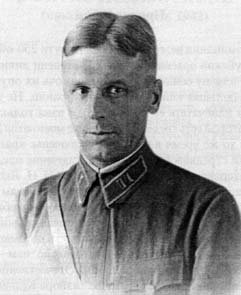

Kadatsky Ivan Dmitrievich
Born in 1910 in the city of Chigirin (Ukraine, Cherkasy region) in a family of workers. Ukrainian. Education: 6 classes. He graduated from the Novo-Peterhof military and political school of the NKVD of the USSR. Member of the Liberation campaign in Western Belarus and the great Patriotic war. Battle route - Western, Central, South – Western, Bryansk, Voronezh and 1st Ukrainian front. Until September 1940, he served in the ranks of the 17th red banner Timkovichi border detachment of the border troops Department of the NKVD of the Belorussian district. Since September 9, 1940-political instructor, Deputy political commander of the 1st border section of the 17th red banner Brest border detachment of the border troops of the NKVD of the Belarusian SSR, with the location of the commandant's office in the town of Volchin in the Brest region of the Belarusian SSR, personal number 386 [1]. On the first day of the War, he led the defense of the third Outpost in the village of Velichkovichi, now kamyanetsky district of the Brest region of the Republic of Belarus. The Outpost under his command during the first day of the war caused significant damage to the enemy. With part of the personnel, retreating from the border with battles, at the end of July 1941, he went to the place of concentration of the border detachment near the city of Gomel. In August-September 1941, as part of the detachment, he fought in defensive battles in the Gomel direction, guarded the rear of the 21st army, and escaped from the encirclement near Pyriatyn. From October 15, 1941-military Commissar of the 1st rifle battalion of the 17th Red Banner border regiment of the NKVD Directorate for the protection of the rear of the 6th army of the South-Western front, and then the 13th, 5th and 38th armies of the Bryansk front [2]. At the end of 1942, he was sent to form a Separate army of the NKVD of the USSR in the city of Sverdlovsk, now Yekaterinburg. On February 1, 1943, as the 70th combined arms army, it was incorporated into the Red Army. In 1943, he was Deputy political commander of the supposedly 1st rifle battalion of the 277th rifle regiment of the 175th Ural rifle division of the 70th army of the Central front. In March 1943, as part of the regiment, he participated in the fighting on the Orel-Kursk bulge. On March 8, 1943, in a battle near the village of Muravchik in the Kursk region, he was seriously wounded and evacuated to a hospital in the city of Gorky, now Nizhny Novgorod. After 6 months of treatment, he continued to serve in the red Army. In February 1945, he was Deputy political commander of the military commandant of the city of Fraustadt, now Vshova in Poland. In 1951-Deputy commander of a tank regiment in the city of Feodosia, the Crimean region of the RSFSR. In 1956, he was dismissed to the reserve of the Armed Forces of the USSR on seniority. Retired Lieutenant Colonel. Lived in the city of Chigirin. For a long time he worked as the Chairman of the Chigirinsky district Executive Committee of the Ukrainian SSR. Raised and raised two daughters and a son. He died in 1985. He was buried in Odessa, Ukrainian SSR. Awarded the order of the Patriotic War I and II degrees (2.11.1945), the Red Star, and medals.
Kadatsky Ivan Dmitrievich
Born in 1910 in the city of Chigirin (Ukraine, Cherkasy region) in a family of workers. Ukrainian. Education: 6 classes. He graduated from the Novo-Peterhof military and political school of the NKVD of the USSR. Member of the Liberation campaign in Western Belarus and the great Patriotic war. Battle route - Western, Central, South – Western, Bryansk, Voronezh and 1st Ukrainian front. Until September 1940, he served in the ranks of the 17th red banner Timkovichi border detachment of the border troops Department of the NKVD of the Belorussian district. Since September 9, 1940-political instructor, Deputy political commander of the 1st border section of the 17th red banner Brest border detachment of the border troops of the NKVD of the Belarusian SSR, with the location of the commandant's office in the town of Volchin in the Brest region of the Belarusian SSR, personal number 386 [1]. On the first day of the War, he led the defense of the third Outpost in the village of Velichkovichi, now kamyanetsky district of the Brest region of the Republic of Belarus. The Outpost under his command during the first day of the war caused significant damage to the enemy. With part of the personnel, retreating from the border with battles, at the end of July 1941, he went to the place of concentration of the border detachment near the city of Gomel. In August-September 1941, as part of the detachment, he fought in defensive battles in the Gomel direction, guarded the rear of the 21st army, and escaped from the encirclement near Pyriatyn. From October 15, 1941-military Commissar of the 1st rifle battalion of the 17th Red Banner border regiment of the NKVD Directorate for the protection of the rear of the 6th army of the South-Western front, and then the 13th, 5th and 38th armies of the Bryansk front [2]. At the end of 1942, he was sent to form a Separate army of the NKVD of the USSR in the city of Sverdlovsk, now Yekaterinburg. On February 1, 1943, as the 70th combined arms army, it was incorporated into the Red Army. In 1943, he was Deputy political commander of the supposedly 1st rifle battalion of the 277th rifle regiment of the 175th Ural rifle division of the 70th army of the Central front. In March 1943, as part of the regiment, he participated in the fighting on the Orel-Kursk bulge. On March 8, 1943, in a battle near the village of Muravchik in the Kursk region, he was seriously wounded and evacuated to a hospital in the city of Gorky, now Nizhny Novgorod. After 6 months of treatment, he continued to serve in the red Army. In February 1945, he was Deputy political commander of the military commandant of the city of Fraustadt, now Vshova in Poland. In 1951-Deputy commander of a tank regiment in the city of Feodosia, the Crimean region of the RSFSR. In 1956, he was dismissed to the reserve of the Armed Forces of the USSR on seniority. Retired Lieutenant Colonel. Lived in the city of Chigirin. For a long time he worked as the Chairman of the Chigirinsky district Executive Committee of the Ukrainian SSR. Raised and raised two daughters and a son. He died in 1985. He was buried in Odessa, Ukrainian SSR. Awarded the order of the Patriotic War I and II degrees (2.11.1945), the Red Star, and medals.
0 comment




2026 © Russian Military Historical Society Developed by Jetmix