

Kosyachenko Vasily Egorovich
Rank: Colonel.
Branch of military: aviation.
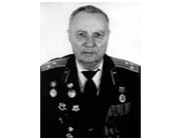
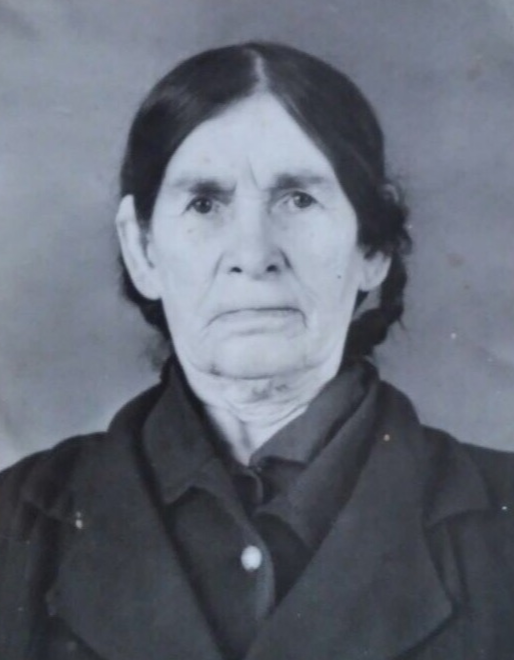
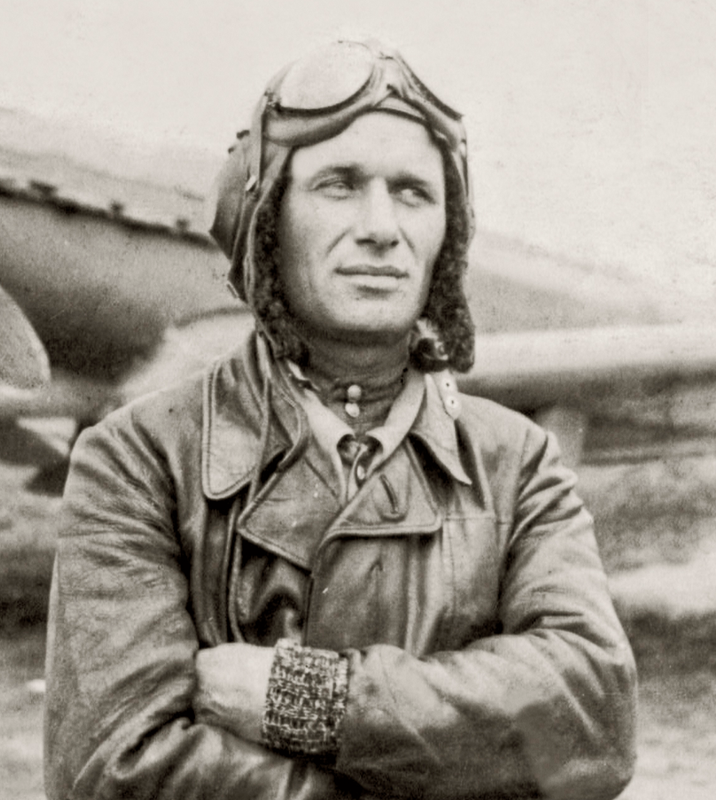
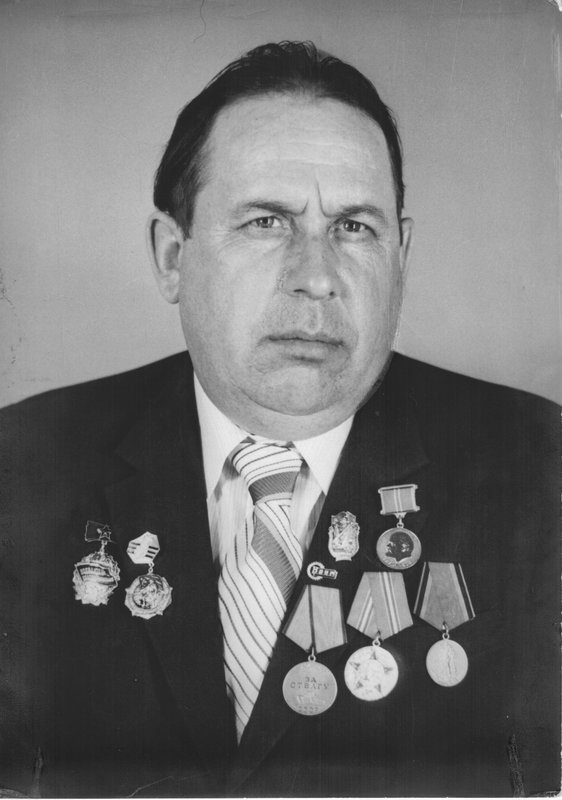
Vasily Kosyachenko (25.02.1907-10.04.1974)-Colonel, military bomber pilot. He was born in the village of Krasny Khutor in the Kursk region in a family of peasants. Father Yegor Mikhailovich died in 1914 in the First German war, and mother Melania Matveevna was killed by bandits in 1919. Vasya was raised by his grandmother Praskovya. He went to work early and was not afraid of any work. He worked at a factory in Zaporozhye as a laborer, foundry worker, locksmith, tinsmith. Since 1929, he served in the army in the coastal defense of the Baltic Fleet in the city of Peterhof. In the army, he first sat at the controls of an airplane and realized that this is his vocation. In 1931, he entered the Gatchina pilot school and successfully completed it. After graduating from school, Vasily Yegorovich worked as an instructor pilot. In 1937, he was appointed commander of a ship of a heavy aviation squadron in Zaporozhye. In the same year, he married Zoya Nikitichna Manokhina (my great-grandmother). In 1938, they had a daughter (my grandmother), who was named Stalin, and three years later the war began. Vasily Yegorovich got into the bomber aviation regiment, under the command of Lieutenant Colonel B. V. Bitsky. The Bitsky group was called the Bitsky night bomber hunter group. Together with Vasily Yegorovich, his wife Zoya Nikitichna also went to the front. She was a radio operator during the war years. Bitsky's group began fighting to repel the German offensive on Moscow in October 1941. on 06.12.1941, Bitsky's regiment received its own number and became known as the 750th long-range aviation regiment. Tsykin Alexey Dmitrievich in his brief essay on the history of long - Range Aviation-From "Ilya Muromets" to the rocket carrier wrote: "During the counteroffensive, the 750th long-range bombardment regiment of the 1st air division under the command of Lieutenant Colonel B. V. Bitsky achieved high results. Flights of hunter crews were widely used. They operated at night, bombed and shelled columns of troops, searched for trains on railway lines, fired at and destroyed trains, arranged "traffic jams" and congestion on railway sections. Sniper bombed the enemy, the crews of captains E. V. Kosyachenko, N. D. Avdeev, P. P. Glazkov and E. p. Fedorov. They made two flights a night...". Alexey Fedorov in his book "aviation in the battle of Moscow" also mentioned the famous 750th aviation regiment and my great-grandfather: "the 750th long-range bombardment regiment, which was later transformed into the 3rd guards regiment of the same division under the command of Lieutenant Colonel B. V. Bitsky, distinguished Itself in the defense of Moscow. Airships under the command of captain V. E. Kosyachenko, senior lieutenants N. D. Avdeev, P. p. Glazkov and others from the squadron of the Hero of the Soviet Union captain E. P. Fedorov repeatedly delivered effective strikes against enemy troops in the area of Mozhaisk, Mtsensk. By the end of October alone, the regiment had flown 277 sorties with an average bomb load of more than 900 kg. The crews of long-range bombers showed high morale and combat qualities when performing tasks. Often flights to the target were performed in very difficult weather conditions. Bombing was sometimes carried out from extremely low altitudes (250-300 m), with strong opposition from enemy air defense and small arms. The division developed a method of striking enemy targets: sorties were usually made by single aircraft on a dark night. This made it possible to maneuver freely on the flight route and in the target area, as well as to choose objects for repeated attacks from low altitudes. The applied method of striking increased the probability of hitting the target...". Vasily Yegorovich in 1942 was appointed Deputy squadron commander of the 3rd guards long-range aviation regiment. And in 1943 – Deputy commander of the 890 heavy bomber aviation Bryansk regiment. In his book "PE-8. Test of war " Vladimir Ratkin wrote about the operation carried out by the 890th air regiment, where my great-grandfather served. "On the night of 07.02.1944, in order to withdraw Finland from the war and facilitate the deblocking of Leningrad, the ADD subjected Helsinki to a massive bombardment. The commanders of the ships of the 890th aviation regiment and the 25th guards regiment dropped high-explosive FAB-5000 air bombs on military facilities located in Helsinki. One bomb exploded in the area of the cable factory, the other-in the area of railway workshops. The combat mission was to deliver separate strikes in small groups of aircraft. It was the operation to destroy. Military-industrial facilities in the capital of Finland – Helsinki, was held for three nights. Three massive air strikes were carried out. As a result, many objects were put out of action, which prompted Finland to withdraw from the German Union." From the award lists of my great-grandfather: "during the Great Patriotic War Kosyachenko Vasily Yegorovich made 162 sorties, of which: 15 sorties during the day and 147 sorties at night. He flew 144 flights on an IL-4, 8 flights on a PE-8, and 10 flights on a B-25. Of all the sorties, 11 he made in the deep rear of the enemy on the political and industrial centers of the enemy: in Danzig – 1 departure 18.08.1942, in Warsaw – 2 departures 21.08.1942 and 01.09.1942,in Berlin – 1 departure 29.08.1942, in Budapest – 1 departure 04.09.1942,in Konigsberg – 1 departure 09.09.1942, in Insterburg – 1 departure 24.10.1942, in Helsinki – 1 departure 06.02.1944, to Constanta – 1 departure 11.04.1944, to lechin – 1 departure 06.04.1945, to Svinemund – 1 departure 27.04.1945. 4 departures were made for alternate targets: Daugavpils, Shvedepiyul, Kiev and Tarnovo, due to bad weather conditions and the failure of the material part. Combat missions were completed successfully. Combat flights to both long-range and short-range targets were provided with excellent communication with the ground. He is fluent in night flying in bad weather conditions. Perfectly knows the technique of piloting, a good practitioner and an expert in flying. Awarded the title of a pilot of the first class. Thanks to the rich experience of flight instructor work, he mastered the B-25 aircraft and invested a lot of work in retraining the flight crew on new equipment and building up combat crews...". During the second world war, Vasily Yegorovich made 2,415 hours of flight during the day and 881 hours at night. Also, he trained and commissioned 3 commanders on the PE-8 aircraft and 21 pilots and ship commanders on the B-25 aircraft, who successfully completed combat missions. After the end of the war in 1945, a son, Boris, was born in the Kosyachenko family. In 1949, Kosyachenko Vasily Yegorovich graduated from the Higher officer flight and tactical school of unit commanders and after graduation served as a military test pilot of the 1st class at the Aviation plant No. 51 (later the Sukhoi machine-Building plant). Once Vasily Yegorovich was testing a new bomber plane, and when he began to land, the plane's landing gear jammed and it was impossible to land it. Then Vasily Yegorovich told the dispatcher that he would land the plane on the "belly". Vasily Yegorovich and another pilot who was in the cockpit with him were ordered to leave the plane, even though it cost a lot of money. No one believed that it was possible to land a plane without landing gear and still survive. But Vasily Yegorovich convinced the authorities to put the plane on the "belly" and landed, while saving their own lives and the plane. For this, he was awarded the second order of Lenin and was presented with the title Hero of the Soviet Union (but unfortunately never received it). Later, when his health no longer allowed Vasily Yegorovich to fly, he worked as an engineer at the same factory until his retirement. On February 23, 1968, O. Chekmarev published an essay about my great-grandfather in the newspaper "For shock rates" of the Kuibyshev machine-Building plant. From O. Chekmareva's essay: "- Only today I went to the military enlistment office, I received medals, - Vasily Yegorovich explains, - these two for the twentieth anniversary of the victory over Nazi Germany I received on myself and my wife. She also served in a military unit during the war. And this is a medal for the 50th anniversary of the Armed Forces. I have nine medals now, and six more orders. Naturally, the conversation turned to orders. Under what circumstances and for what reason did you receive them? A long pause. Then the unexpected answer: "I don't know." And then: «For work». Yes, it is difficult to say where that feat, that display of courage was, for which you could directly give the order and say: "we reward you For such actions."
Kosyachenko Vasily Egorovich
Rank: Colonel.
Branch of military: aviation.
Vasily Kosyachenko (25.02.1907-10.04.1974)-Colonel, military bomber pilot. He was born in the village of Krasny Khutor in the Kursk region in a family of peasants. Father Yegor Mikhailovich died in 1914 in the First German war, and mother Melania Matveevna was killed by bandits in 1919. Vasya was raised by his grandmother Praskovya. He went to work early and was not afraid of any work. He worked at a factory in Zaporozhye as a laborer, foundry worker, locksmith, tinsmith. Since 1929, he served in the army in the coastal defense of the Baltic Fleet in the city of Peterhof. In the army, he first sat at the controls of an airplane and realized that this is his vocation. In 1931, he entered the Gatchina pilot school and successfully completed it. After graduating from school, Vasily Yegorovich worked as an instructor pilot. In 1937, he was appointed commander of a ship of a heavy aviation squadron in Zaporozhye. In the same year, he married Zoya Nikitichna Manokhina (my great-grandmother). In 1938, they had a daughter (my grandmother), who was named Stalin, and three years later the war began. Vasily Yegorovich got into the bomber aviation regiment, under the command of Lieutenant Colonel B. V. Bitsky. The Bitsky group was called the Bitsky night bomber hunter group. Together with Vasily Yegorovich, his wife Zoya Nikitichna also went to the front. She was a radio operator during the war years. Bitsky's group began fighting to repel the German offensive on Moscow in October 1941. on 06.12.1941, Bitsky's regiment received its own number and became known as the 750th long-range aviation regiment. Tsykin Alexey Dmitrievich in his brief essay on the history of long - Range Aviation-From "Ilya Muromets" to the rocket carrier wrote: "During the counteroffensive, the 750th long-range bombardment regiment of the 1st air division under the command of Lieutenant Colonel B. V. Bitsky achieved high results. Flights of hunter crews were widely used. They operated at night, bombed and shelled columns of troops, searched for trains on railway lines, fired at and destroyed trains, arranged "traffic jams" and congestion on railway sections. Sniper bombed the enemy, the crews of captains E. V. Kosyachenko, N. D. Avdeev, P. P. Glazkov and E. p. Fedorov. They made two flights a night...". Alexey Fedorov in his book "aviation in the battle of Moscow" also mentioned the famous 750th aviation regiment and my great-grandfather: "the 750th long-range bombardment regiment, which was later transformed into the 3rd guards regiment of the same division under the command of Lieutenant Colonel B. V. Bitsky, distinguished Itself in the defense of Moscow. Airships under the command of captain V. E. Kosyachenko, senior lieutenants N. D. Avdeev, P. p. Glazkov and others from the squadron of the Hero of the Soviet Union captain E. P. Fedorov repeatedly delivered effective strikes against enemy troops in the area of Mozhaisk, Mtsensk. By the end of October alone, the regiment had flown 277 sorties with an average bomb load of more than 900 kg. The crews of long-range bombers showed high morale and combat qualities when performing tasks. Often flights to the target were performed in very difficult weather conditions. Bombing was sometimes carried out from extremely low altitudes (250-300 m), with strong opposition from enemy air defense and small arms. The division developed a method of striking enemy targets: sorties were usually made by single aircraft on a dark night. This made it possible to maneuver freely on the flight route and in the target area, as well as to choose objects for repeated attacks from low altitudes. The applied method of striking increased the probability of hitting the target...". Vasily Yegorovich in 1942 was appointed Deputy squadron commander of the 3rd guards long-range aviation regiment. And in 1943 – Deputy commander of the 890 heavy bomber aviation Bryansk regiment. In his book "PE-8. Test of war " Vladimir Ratkin wrote about the operation carried out by the 890th air regiment, where my great-grandfather served. "On the night of 07.02.1944, in order to withdraw Finland from the war and facilitate the deblocking of Leningrad, the ADD subjected Helsinki to a massive bombardment. The commanders of the ships of the 890th aviation regiment and the 25th guards regiment dropped high-explosive FAB-5000 air bombs on military facilities located in Helsinki. One bomb exploded in the area of the cable factory, the other-in the area of railway workshops. The combat mission was to deliver separate strikes in small groups of aircraft. It was the operation to destroy. Military-industrial facilities in the capital of Finland – Helsinki, was held for three nights. Three massive air strikes were carried out. As a result, many objects were put out of action, which prompted Finland to withdraw from the German Union." From the award lists of my great-grandfather: "during the Great Patriotic War Kosyachenko Vasily Yegorovich made 162 sorties, of which: 15 sorties during the day and 147 sorties at night. He flew 144 flights on an IL-4, 8 flights on a PE-8, and 10 flights on a B-25. Of all the sorties, 11 he made in the deep rear of the enemy on the political and industrial centers of the enemy: in Danzig – 1 departure 18.08.1942, in Warsaw – 2 departures 21.08.1942 and 01.09.1942,in Berlin – 1 departure 29.08.1942, in Budapest – 1 departure 04.09.1942,in Konigsberg – 1 departure 09.09.1942, in Insterburg – 1 departure 24.10.1942, in Helsinki – 1 departure 06.02.1944, to Constanta – 1 departure 11.04.1944, to lechin – 1 departure 06.04.1945, to Svinemund – 1 departure 27.04.1945. 4 departures were made for alternate targets: Daugavpils, Shvedepiyul, Kiev and Tarnovo, due to bad weather conditions and the failure of the material part. Combat missions were completed successfully. Combat flights to both long-range and short-range targets were provided with excellent communication with the ground. He is fluent in night flying in bad weather conditions. Perfectly knows the technique of piloting, a good practitioner and an expert in flying. Awarded the title of a pilot of the first class. Thanks to the rich experience of flight instructor work, he mastered the B-25 aircraft and invested a lot of work in retraining the flight crew on new equipment and building up combat crews...". During the second world war, Vasily Yegorovich made 2,415 hours of flight during the day and 881 hours at night. Also, he trained and commissioned 3 commanders on the PE-8 aircraft and 21 pilots and ship commanders on the B-25 aircraft, who successfully completed combat missions. After the end of the war in 1945, a son, Boris, was born in the Kosyachenko family. In 1949, Kosyachenko Vasily Yegorovich graduated from the Higher officer flight and tactical school of unit commanders and after graduation served as a military test pilot of the 1st class at the Aviation plant No. 51 (later the Sukhoi machine-Building plant). Once Vasily Yegorovich was testing a new bomber plane, and when he began to land, the plane's landing gear jammed and it was impossible to land it. Then Vasily Yegorovich told the dispatcher that he would land the plane on the "belly". Vasily Yegorovich and another pilot who was in the cockpit with him were ordered to leave the plane, even though it cost a lot of money. No one believed that it was possible to land a plane without landing gear and still survive. But Vasily Yegorovich convinced the authorities to put the plane on the "belly" and landed, while saving their own lives and the plane. For this, he was awarded the second order of Lenin and was presented with the title Hero of the Soviet Union (but unfortunately never received it). Later, when his health no longer allowed Vasily Yegorovich to fly, he worked as an engineer at the same factory until his retirement. On February 23, 1968, O. Chekmarev published an essay about my great-grandfather in the newspaper "For shock rates" of the Kuibyshev machine-Building plant. From O. Chekmareva's essay: "- Only today I went to the military enlistment office, I received medals, - Vasily Yegorovich explains, - these two for the twentieth anniversary of the victory over Nazi Germany I received on myself and my wife. She also served in a military unit during the war. And this is a medal for the 50th anniversary of the Armed Forces. I have nine medals now, and six more orders. Naturally, the conversation turned to orders. Under what circumstances and for what reason did you receive them? A long pause. Then the unexpected answer: "I don't know." And then: «For work». Yes, it is difficult to say where that feat, that display of courage was, for which you could directly give the order and say: "we reward you For such actions."
0 comment




2026 © Russian Military Historical Society Developed by Jetmix